Understanding Acid Corrosion and Its Prevention
This guide explains 산 부식, the deterioration of metals and other materials through chemical or electrochemical reactions involving acids. It examines how acid concentration, temperature, contaminants, flow, material selection, and protective systems influence damage. The article also outlines inspection methods, risk controls, repair planning, and design practices used in industrial, laboratory, infrastructure, and maintenance settings. Recommendations are framed around established engineering principles and recognized safety guidance rather than unsupported performance claims.
Executive Overview
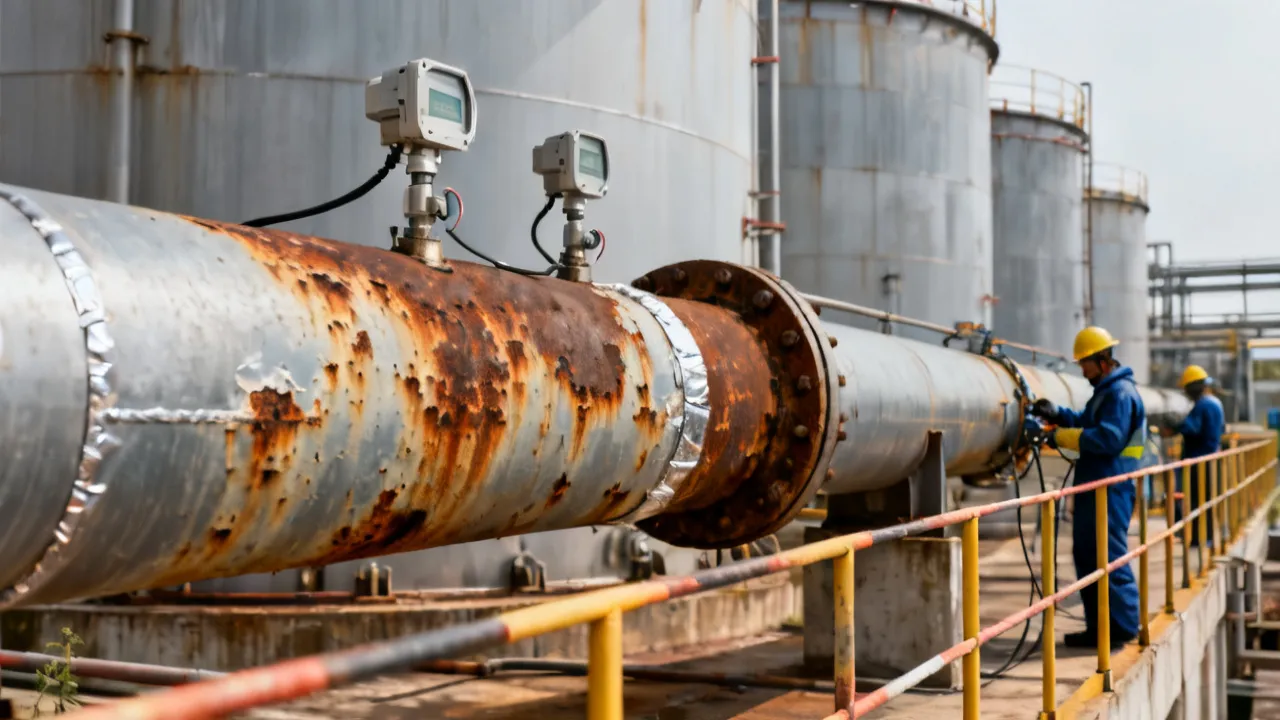
산 부식, commonly translated as acid corrosion, is the loss of metal or material integrity caused by exposure to acidic environments. It can affect carbon steel, stainless steel, galvanized surfaces, copper alloys, aluminum, concrete reinforcement, coatings, seals, and other construction materials. The damage may appear as general thinning, localized pits, crevices, stress-corrosion cracking, hydrogen-related cracking, erosion-corrosion, or rapid attack around welds and joints.
The most important conclusion for asset owners is that acid corrosion should be managed as a system problem rather than treated only after visible rust appears. A durable control strategy combines hazard identification, compatible material selection, sound design, process control, protective coatings or linings, inspection, and disciplined maintenance. Painting over a contaminated surface or replacing one failed component without investigating the corrosive environment can leave the underlying cause unchanged.
Acid corrosion is particularly important in chemical processing, metal finishing, mining, wastewater treatment, oil and gas operations, battery production, laboratories, food processing, building services, and industrial cleaning. The presence of an acid does not automatically determine the corrosion rate. Concentration, temperature, water content, oxygen availability, impurities, velocity, surface condition, and exposure duration can alter the mechanism substantially. In some cases, a concentrated acid is less aggressive to a particular alloy than a diluted solution; in other cases, dilution increases the reaction rate. For that reason, broad assumptions should not replace material compatibility testing and engineering review.
Corrosion control also requires attention to changing conditions. A system may operate safely for years and then experience rapid attack after a raw-material change, an altered cleaning cycle, loss of an inhibitor, a temperature increase, a new insulation system, or contamination by chlorides or oxidizing agents. The original design basis should therefore be reviewed whenever the process, equipment duty, chemical supplier, or maintenance method changes.
What Is 산 부식?
산 부식 refers to corrosion promoted by acidic conditions. Corrosion is an electrochemical process in which metal atoms lose electrons at anodic areas, while a reduction reaction occurs at cathodic areas. In an acidic aqueous environment, hydrogen ions may participate in the cathodic reaction, producing hydrogen gas or atomic hydrogen at the metal surface. Dissolved oxygen can also support cathodic reduction. The resulting current may be distributed over a broad surface or concentrated at small sites, depending on the material and environment.
For iron and carbon steel, a simplified anodic reaction is:
Fe → Fe2+ + 2e−
A simplified cathodic reaction in an acidic, oxygen-limited environment is:
2H+ + 2e− → H2
These equations describe only part of the process. Actual corrosion involves surface films, dissolved gases, deposits, microorganisms, fluid movement, alloy composition, and local electrical conditions. Corrosion products may form protective layers in one environment and porous, nonprotective deposits in another.
Acid corrosion is therefore not identical to ordinary atmospheric rusting. Atmospheric corrosion often depends strongly on moisture, oxygen, salts, pollutants, and wet-dry cycles. Acid corrosion can proceed more rapidly because the acidic solution supports electrochemical reactions and may dissolve protective oxide films. Nevertheless, the two forms can overlap. An industrial structure exposed to acidic condensation, chloride-bearing moisture, and repeated temperature changes may experience several mechanisms at once.
pH is useful as an initial indicator, but it is not a complete corrosion prediction tool. The pH scale describes hydrogen-ion activity under particular conditions, while corrosion resistance depends on the complete chemical system. Two solutions with similar pH may affect an alloy very differently because one contains chlorides, oxidizers, complexing agents, or abrasive solids. Conversely, a solution with a relatively moderate pH may still cause severe localized corrosion if it creates a stable deposit or concentrates inside a crevice.
Why Acid Corrosion Matters in Industrial Assets
The primary concern is loss of containment or structural capacity. A corroded tank wall can leak. A thinned pipe may rupture under pressure. A weakened support can deform. A failed lining can expose the substrate to an aggressive chemical. Corrosion can also affect instrumentation, fasteners, heat exchangers, valves, pumps, ventilation systems, and electrical enclosures.
Beyond direct equipment damage, acid corrosion may create operational and safety consequences:
- Unexpected shutdowns caused by leaks or equipment isolation.
- Exposure of employees to corrosive chemicals or contaminated residues.
- Secondary damage to floors, foundations, insulation, cables, and nearby equipment.
- Reduced process reliability and loss of product quality.
- Higher maintenance demand when temporary repairs become repeated repairs.
- Environmental releases requiring containment, reporting, and remediation under applicable law.
An industry expert normally begins with consequence rather than appearance. A small pit in a noncritical bracket may have limited significance, while the same pit in a pressurized acid line can require immediate engineering assessment. Inspection priorities should account for stored energy, chemical toxicity, operating pressure, temperature, accessibility, failure mode, and the possibility of hidden corrosion beneath insulation or coatings.
Financial consequences can extend well beyond the cost of replacing corroded metal. A leak may contaminate a production batch, damage electrical systems, require hazardous-waste removal, interrupt deliveries, or cause a lengthy investigation. In regulated facilities, a failure may also trigger reporting obligations, enforcement action, or a requirement to demonstrate that similar equipment has been evaluated. A well-designed corrosion-management program is therefore both a safety measure and a business-continuity measure.
Common Acids Associated With Corrosion
Different acids produce different corrosion behavior. The name of the acid alone is not enough to determine compatibility, but several broad categories are useful for initial screening.
Hydrochloric Acid
Hydrochloric acid is highly aggressive to many common metals, including carbon steel and several stainless-steel grades. Chloride ions can interfere with passive films and may promote localized corrosion or stress-corrosion cracking in susceptible alloys. Vapors and condensation can damage equipment even when direct liquid contact is limited. Material selection requires careful attention to concentration, temperature, aeration, impurities, and mechanical stress.
Hydrochloric acid service also presents a design challenge because vapor exposure may not resemble liquid immersion. A vessel may have one material requirement below the liquid level and another in the vapor space, especially when temperature changes cause repeated condensation. Flanges, vents, sight glasses, level instruments, and tank roofs should be evaluated separately rather than assumed to experience the same environment.
Sulfuric Acid
Sulfuric acid shows strongly concentration-dependent behavior. Carbon steel may be used in selected sulfuric acid services under carefully controlled conditions, while other concentrations and temperatures can cause severe attack. Water contamination, velocity, oxidizing species, and local heating may change the expected performance. Equipment design should rely on validated service data rather than a generic statement that a material is “acid resistant.”
Mixing and dilution are especially important. Diluting sulfuric acid can release substantial heat, potentially creating a high-temperature zone that is more corrosive than the surrounding solution. Injection points, mixing tees, recirculation loops, and areas where water enters the system should receive specific engineering attention. The chemical introduction sequence, not merely the final concentration, can control local damage.
Nitric Acid
Nitric acid is an oxidizing acid and can passivate certain stainless steels under suitable conditions. However, contamination, chloride presence, elevated temperature, weld condition, and concentration changes may reduce resistance. Materials that perform well in a nonoxidizing acid may not be suitable for nitric acid service, and the reverse can also be true.
Fabrication cleanliness is particularly important in oxidizing acid service. Free iron, carbon-steel grinding dust, shop dirt, and residues from previous manufacturing operations can create localized corrosion sites or contaminate the process. Dedicated tools, controlled cleaning, suitable weld procedures, and post-fabrication inspection may be required for critical equipment.
Hydrofluoric Acid
Hydrofluoric acid presents exceptional chemical and health hazards. It can attack glass, silica-containing materials, and many metals, while exposure to the human body can cause serious systemic injury. Equipment selection, containment, emergency planning, and specialized training are essential. This article does not replace site-specific procedures, regulatory requirements, or professional safety guidance for hydrofluoric acid service.
Because hydrofluoric acid can penetrate tissue and produce serious effects that may not initially appear severe, emergency response arrangements must be established before operations begin. Storage, transfer, sampling, line breaking, waste handling, and maintenance should all be covered by written procedures. Compatibility decisions should include valves, gaskets, hoses, instruments, secondary containment, and decontamination equipment.
Organic Acids
Acetic, formic, lactic, and other organic acids can cause corrosion, particularly when water, oxygen, elevated temperature, or contaminants are present. Organic acids may be encountered in food production, chemical manufacturing, biomass processing, and wastewater systems. Their effect on metals varies widely, so concentration and process conditions must be documented.
Organic-acid systems may also support microbial activity. Microorganisms can change local chemistry, produce acidic metabolites, generate deposits, or create differential-aeration cells. In food and wastewater applications, cleaning frequency, biological loading, solids accumulation, and sanitation chemicals should be considered together when evaluating corrosion.
Key Factors That Control Acid Corrosion
Acid Concentration
Concentration affects the availability of hydrogen ions, the stability of surface films, solution conductivity, and the chemical form of corrosion products. It is unsafe to assume that increasing concentration always increases corrosion. Certain metals can show different behavior across concentration ranges, and a process upset involving dilution may be more damaging than normal operation.
Temperature
Higher temperature commonly accelerates chemical reaction rates and diffusion. It may also reduce the stability of protective films, increase vapor formation, and intensify attack at hot spots. Heat exchangers, steam-traced lines, vessel walls near heating coils, and areas exposed to exothermic reactions deserve particular attention.
Temperature gradients can create localized conditions even when the average process temperature appears acceptable. A cold surface may collect acidic condensation, while a heated surface may experience accelerated dissolution. Thermal cycling can also fatigue coatings, loosen lining systems, and open small gaps at joints. Corrosion reviews should examine both temperature values and the way temperature changes over time.
Water and Moisture
Many acid corrosion mechanisms require an aqueous phase. A dry gas may be relatively benign to a particular metal, while cooling below the dew point creates an acidic condensate. Small amounts of moisture can collect beneath insulation, around supports, inside dead legs, or under deposits. Process design should therefore consider startup, shutdown, cleaning, condensation, and atmospheric exposure, not only steady-state operation.
Chlorides and Other Contaminants
Chloride ions, fluorides, sulfides, oxidizers, metal ions, and suspended solids can change corrosion behavior. Contamination may destabilize passive films, increase conductivity, or create deposits that produce differential aeration cells. A material that performs adequately in a controlled laboratory solution may perform poorly in a process stream containing impurities.
Flow and Velocity
Flow can remove protective films and corrosion products, particularly where turbulence occurs at elbows, reducers, valves, or pump discharge points. High velocity combined with suspended particles may produce erosion-corrosion. Conversely, low-flow zones and stagnant pockets can support deposits, concentration cells, and localized attack. Good design limits dead legs and avoids abrupt geometry where practical.
Flow changes caused by control-valve throttling, pump replacement, process debottlenecking, or altered production rates should trigger a corrosion review. A line designed for one velocity may experience a very different mechanism after a capacity increase. Similarly, a reduction in flow can increase residence time and permit deposits to settle in areas that previously remained relatively clean.
Surface Condition and Fabrication
Weld discoloration, embedded iron, crevices, grinding marks, rough surfaces, scale, and residues can influence corrosion initiation. Stainless steel depends on a stable passive film, and poor fabrication practice may compromise that film. Carbon steel can suffer accelerated attack at damaged coatings or areas contaminated with salts. Surface preparation and fabrication quality are therefore part of corrosion control, not cosmetic activities.
Mechanical Stress
Stress can combine with a corrosive environment to produce cracking. Residual stress from welding, cold forming, machining, tightening, or thermal gradients may be significant even when applied operating stress appears moderate. Cracking can be more dangerous than uniform thinning because a relatively small crack may lead to sudden failure.
Electrical and Galvanic Conditions
Unintended electrical connections can accelerate corrosion. Dissimilar metals immersed in the same conductive acidic solution may form a galvanic couple, with the less noble metal acting as the anode. External stray currents from grounding systems, welding equipment, or nearby electrical installations can also produce localized attack. Electrical continuity, bonding, isolation washers, and grounding arrangements should be reviewed where dissimilar materials are used.
Typical Forms of Acid Corrosion
| Corrosion form | Typical appearance | Engineering concern |
|---|---|---|
| General corrosion | Relatively uniform loss across a broad surface | Wall thinning and reduced pressure or structural capacity |
| Pitting corrosion | Small, deep cavities surrounded by less damaged metal | Hidden penetration and possible leak before broad thinning is obvious |
| Crevice corrosion | Attack in narrow gaps, lap joints, gaskets, or deposits | Localized damage that may be difficult to inspect |
| Galvanic corrosion | Accelerated attack near contact between dissimilar metals | Small-anode damage when area ratios are unfavorable |
| Erosion-corrosion | Grooves, horseshoe-shaped areas, or directional thinning | Rapid loss at high-flow or turbulent locations |
| Stress-corrosion cracking | Fine cracks, branching cracks, or unexpected fractures | Potential for sudden failure with limited visible metal loss |
| Hydrogen-related damage | Blisters, cracking, or loss of ductility | Reduced toughness and fracture risk in susceptible materials |
| Under-deposit corrosion | Attack beneath sludge, scale, salts, or process residue | Concealed localized corrosion and difficult inspection |
General corrosion is often the easiest mechanism to estimate because thickness loss can be averaged over a broad area. Localized corrosion is more difficult because the deepest point may be missed by sparse measurements. A component with an acceptable average thickness can still contain a critical pit, crack, or groove. Inspection planning should therefore be based on the expected damage morphology rather than on a single standard technique.
Acid corrosion can also interact with fatigue. Repeated pressure fluctuations, vibration, thermal cycles, or pump pulsations may cause small corrosion features to grow into fatigue cracks. A pit can act as a stress concentrator, while a crack can expose fresh metal and accelerate local chemical attack. Where cyclic loading exists, fracture-mechanics or fatigue assessment may be required in addition to ordinary wall-thickness calculations.
Materials Used to Resist Acid Corrosion
Material selection should begin with a complete service description. This includes the chemical identity, concentration range, temperature range, pressure, flow, contaminants, cleaning agents, upset conditions, and expected service life. The selection should also consider fabrication, welding, repairability, availability, inspection access, and consequences of failure.
Carbon Steel
Carbon steel is widely used because of its strength, availability, and relatively low acquisition cost. Its suitability in acid service is highly dependent on the specific chemical and operating window. It may require an internal lining, corrosion inhibitor, controlled chemistry, or a design allowance for wall loss. Inhibitors should not be treated as a universal solution; their effectiveness depends on concentration, temperature, fluid composition, dosage control, and distribution.
Stainless Steels
Stainless steels rely on passive chromium-rich oxide films. They can provide excellent resistance in many environments, but “stainless” does not mean immune to acid corrosion. Chlorides, reducing acids, weld heat-affected zones, stagnant conditions, and elevated temperatures can cause pitting, crevice corrosion, or cracking. Grade selection must be based on service-specific data.
Nickel Alloys
Nickel-based alloys can offer strong resistance in selected acidic and high-temperature services. Their cost and fabrication requirements are usually higher than those of carbon steel, so they are often reserved for severe or critical duties. Compatibility must still be verified because no alloy is resistant to every combination of acid, contaminant, temperature, and stress.
Plastics and Composite Materials
Thermoplastics, thermosets, fiberglass-reinforced plastic, and fluoropolymer-lined systems can resist many acids. Their limitations may include temperature, permeation, mechanical loading, ultraviolet exposure, impact resistance, joining method, and support requirements. A polymer may resist the liquid chemically but fail because of swelling, softening, blistering, or mechanical deformation.
Permeation is especially important in lined equipment. A lining may prevent immediate metal dissolution while allowing acid molecules or moisture to pass gradually through the polymer. Over time, this can create blistering, delamination, bond failure, or corrosion at the interface. Lining selection should therefore consider permeation data, pressure cycling, temperature cycling, and the condition of the substrate beneath the lining.
Concrete and Cementitious Materials
Acids can dissolve cement paste and expose aggregate or reinforcement. Acid attack on concrete may occur in industrial floors, wastewater structures, secondary containment, drainage systems, and foundations. Surface treatments, polymer-modified systems, dense materials, suitable drainage, and chemical-resistant linings may reduce exposure, but design must consider cracking, joints, abrasion, and substrate moisture.
Elastomers and Seals
Gaskets, O-rings, hoses, diaphragms, and valve seats may deteriorate through swelling, embrittlement, compression set, permeation, or chemical extraction. A metal body can remain sound while a seal fails first. Compatibility charts should be used as an initial reference and confirmed for the actual concentration, temperature, pressure, and cycling conditions.
Protective Methods for 산 부식
Coatings and Linings
Coatings create a barrier between the corrosive medium and the substrate. Their performance depends on surface preparation, profile, cleanliness, mixing, application thickness, curing, holiday detection, adhesion, and service compatibility. A coating selected for immersion may not be suitable for vapor exposure, thermal cycling, or abrasion.
Linings are often used inside tanks, ducts, sumps, pipes, and secondary-containment areas. The lining system must be compatible with the acid and any cleaning chemicals. Edges, welds, corners, drains, penetrations, and fasteners commonly require special detailing because they are difficult to coat uniformly.
Coating failures should be classified rather than described only as “paint peeling.” Common failure modes include osmotic blistering, pinholing, underfilm corrosion, cathodic disbondment, cracking, abrasion, impact damage, and chemical softening. Each failure mode suggests a different corrective action. For example, applying a thicker coating may not solve osmotic blistering if moisture and soluble salts remain at the interface.
Corrosion Inhibitors
Inhibitors reduce corrosion through adsorption, film formation, reaction control, or modification of the electrochemical environment. They are most effective when concentration and distribution are monitored. An inhibitor program should define injection points, dosage control, sampling, performance criteria, and response to process changes.
Cathodic Protection
Cathodic protection can reduce corrosion of certain metallic structures by shifting the electrochemical potential so that the protected metal acts primarily as a cathode. It is more commonly associated with buried, immersed, or continuously electrolytic structures. Acid service requires careful engineering because excessive polarization can create hydrogen-related damage or interfere with coatings.
Process Control
Controlling temperature, acidity, oxygen ingress, chloride contamination, residence time, and flow can substantially reduce risk. Automated alarms, interlocks, sampling, and chemical dosing controls may prevent an operating condition from moving outside the qualified material envelope. Process control is often more reliable when supported by independent inspection and maintenance rather than treated as the only safeguard.
Design for Drainage and Inspection
Equipment should avoid liquid traps, inaccessible crevices, sharp internal transitions, unnecessary dead legs, and uninspectable supports. Drainage reduces the time that acidic liquid remains on a surface. Removable covers, inspection ports, thickness-monitoring locations, and clearly documented weld maps improve long-term management.
Environmental Isolation
Where practical, equipment should be separated from sources of acidic fumes, wash water, salt deposits, and incompatible chemicals. Suitable ventilation can reduce condensation, while sealed enclosures and correctly sloped roofs can limit water entry. Insulation jacketing should be designed to shed water, and penetrations should be sealed without trapping moisture against the substrate.
Inspection and Monitoring Strategy
An effective inspection program combines visual examination with measurements appropriate to the suspected mechanism. The choice depends on material, geometry, accessibility, coating condition, and consequence of failure.
- Visual inspection: Identifies discoloration, blistering, rust staining, deposits, leaks, coating damage, distortion, and residue patterns.
- Ultrasonic thickness measurement: Estimates remaining wall thickness and can track thinning at defined locations.
- Radiographic testing: Helps identify selected internal features, weld conditions, or density changes where the method is suitable.
- Dye penetrant testing: Detects surface-breaking cracks on nonporous materials.
- Magnetic particle testing: Detects surface and near-surface discontinuities in suitable ferromagnetic materials.
- Eddy-current testing: May identify cracks, thinning, or tube damage in conductive materials under appropriate conditions.
- Corrosion coupons and probes: Provide process-specific indications of corrosion tendency when properly installed and interpreted.
- Solution analysis: Measures acidity, chlorides, dissolved metals, contaminants, temperature, and other variables relevant to the corrosion mechanism.
Inspection results should be trended rather than stored as isolated readings. A single thickness value has limited meaning without the original thickness, measurement uncertainty, location, equipment geometry, and prior readings. Qualified personnel should evaluate whether apparent changes represent actual metal loss, instrument variation, surface roughness, or altered measurement position.
Monitoring locations should be selected using process knowledge. Typical locations include the bottom of vessels, liquid-level interfaces, outlet nozzles, elbows, pump discharges, dead legs, drains, vapor spaces, low points, insulation terminations, supports, and welds. A formal corrosion circuit or corrosion loop drawing can help connect these locations to a common chemical and operating environment.
Risk-Based Prioritization
Not every component requires the same inspection interval. A risk-based approach considers the probability of failure and the consequence if failure occurs. Key questions include:
- What chemical is present, and what is the credible concentration range?
- Could the chemical become more aggressive during startup, shutdown, cleaning, dilution, or contamination?
- What is the operating pressure and temperature?
- Is the component part of a pressure boundary or a secondary containment system?
- Could a leak injure personnel, damage the environment, or interrupt critical operations?
- Is the suspected mechanism uniform thinning, pitting, cracking, erosion, or lining failure?
- Can the location be inspected without removing insulation, deposits, or internal components?
- What safeguards detect a leak or abnormal corrosion before failure?
Critical equipment may need multiple layers of protection, such as compatible material, protective lining, leak detection, secondary containment, scheduled thickness measurements, and emergency isolation. Inspection intervals should be established by competent engineers using applicable codes, standards, operating history, and site risk criteria.
Risk ranking should be revisited after a process change or an incident. A pipe that was previously low risk may become high risk if its service changes from a dilute solution to a hot concentrated solution, if production increases, or if a nearby piece of equipment begins releasing corrosive vapor. Risk assessments should also account for aging infrastructure, declining inspection quality, and changes in workforce experience.
Step-by-Step Acid Corrosion Investigation
Step 1: Make the Area Safe
Before inspection or repair, identify the chemical hazard, isolate the equipment, control energy sources, and establish the required personal protective equipment. Chemical-resistant gloves, face and eye protection, protective clothing, respiratory protection, and ventilation must be selected according to the substance and task. Personal protective equipment is not a substitute for isolation, engineering controls, or safe work procedures.
Step 2: Document the Service
Record the chemical name, concentration, temperature, pressure, flow, contaminants, operating cycles, cleaning methods, and any recent process deviations. Review safety data sheets, process diagrams, equipment specifications, maintenance records, and previous inspection reports.
Step 3: Map the Damage
Identify the exact locations, dimensions, orientation, and distribution of corrosion. Note whether damage is concentrated at welds, supports, liquid levels, bends, drains, gaskets, insulation terminations, or vapor spaces. Photographs and scaled sketches improve later comparison.
Step 4: Determine the Mechanism
Use visual evidence, thickness data, chemical analysis, metallurgical examination, and process history to distinguish general corrosion from pitting, erosion-corrosion, cracking, or under-deposit attack. Misidentifying the mechanism can lead to an ineffective repair.
Step 5: Assess Remaining Integrity
A qualified engineer should compare measured condition with design requirements, minimum allowable thickness, pressure or load calculations, and applicable codes. Where cracking or severe localized damage is suspected, a simple average thickness may be insufficient.
Step 6: Select Corrective Action
Options may include process adjustment, chemical control, coating renewal, lining replacement, component replacement, geometry modification, material upgrade, improved drainage, insulation redesign, or inspection enhancement. The selected action should address both immediate integrity and the cause of recurrence.
Step 7: Verify the Repair
Verification may include surface preparation checks, coating thickness measurements, holiday testing, adhesion testing, weld examination, pressure testing where appropriate, leak testing, and chemical-resistance confirmation. The acceptance criteria should be defined before work begins.
Step 8: Update the Management System
Record the failure mechanism, repair materials, operating limits, inspection points, photographs, test results, and lessons learned. Update drawings, maintenance plans, training, and process safeguards so that the same condition is less likely to return.
Conditions and Requirements for Reliable Corrosion Control
- Accurate chemical identification: Do not rely solely on trade names or informal descriptions.
- Defined operating envelope: Include normal, startup, shutdown, cleaning, upset, and emergency conditions.
- Qualified material selection: Review compatibility for the exact environment, not merely the acid family.
- Controlled fabrication: Manage welding, heat treatment, surface cleanliness, crevices, and contamination.
- Suitable protective system: Confirm coating or lining compatibility, curing, thickness, and inspection requirements.
- Safe access: Provide isolation, ventilation, drainage, lighting, platforms, and inspection ports.
- Competent inspection: Use trained personnel and calibrated equipment appropriate to the suspected damage.
- Documented acceptance criteria: Define when equipment may continue operating, require monitoring, or must be removed from service.
- Emergency planning: Include spill containment, evacuation, first aid, decontamination, communication, and disposal procedures.
Repair Approaches and Their Limitations
Repair decisions must be based on the mechanism and the equipment’s role. Local welding may restore thickness but can introduce residual stress, heat-affected-zone changes, distortion, or new crevices. Weld repair is especially sensitive in acid service where metallurgical condition and contamination influence resistance.
Composite repairs, clamps, patches, and temporary wraps may provide a controlled interim measure in some applications, but their suitability depends on pressure, temperature, chemical exposure, substrate condition, adhesion, and regulatory requirements. A temporary repair should have a defined scope, inspection interval, expiry condition, and permanent-repair plan.
Coating renewal is effective only when the substrate is adequately prepared and the corrosion source is controlled. If active corrosion remains beneath the coating, or if moisture continues to enter through a defect, premature failure is likely. Replacement with a more compatible material may be justified when the operating environment cannot be controlled reliably.
Repairs should be reviewed for unintended consequences. A replacement spool made from a more noble alloy may create a galvanic couple with existing carbon steel. A new gasket may reduce leakage but create a narrow crevice that accelerates localized corrosion. A thicker lining may restrict flow or interfere with instrumentation. Repair engineering should therefore evaluate the entire assembly, not just the visibly damaged part.
Design Lessons From Industry Experience
Several recurring lessons are relevant across sectors. First, corrosion often begins at details rather than large, uniform surfaces. Weld toes, nozzle connections, brackets, supports, drains, bolted joints, and lining terminations deserve deliberate design attention.
Second, maintenance teams need access to the locations most likely to corrode. Equipment that cannot be drained, opened, inspected, or isolated safely will eventually accumulate uncertainty. Inspection access should be included during design review rather than added after commissioning.
Third, chemical compatibility must include cleaning and sanitation agents. A tank may handle a process liquid satisfactorily but suffer damage from an aggressive cleaning cycle. The same principle applies to temporary storage, flushing, chemical transfer, and waste treatment.
Fourth, data quality matters. A corrosion rate calculated from inconsistent measurement locations or changing operating conditions may produce a misleading maintenance decision. Standardized monitoring points, repeatable techniques, and clear records are essential.
Finally, corrosion control is an interdisciplinary responsibility. Process engineers understand chemistry, materials engineers understand compatibility, maintenance teams understand practical access, inspection specialists understand detection limits, and safety professionals understand exposure controls. Strong programs connect these perspectives.
Design reviews should include corrosion-control requirements from the earliest project stages. The equipment specification should identify the chemical service, allowable materials, lining requirements, corrosion allowance, weld requirements, surface-finish expectations, inspection access, and preservation method during storage. Early decisions are generally less expensive to change than installed equipment, and they reduce the likelihood of relying on emergency modifications later.
Management of Change and Corrosion Programs
A formal management-of-change process is one of the most effective ways to prevent unexpected acid corrosion. Changes that may appear unrelated to materials can have significant effects. Examples include increasing throughput, modifying a cleaning chemical, changing a supplier, adding recycled water, removing a filtration step, altering a heating profile, installing new insulation, or changing the frequency of equipment washing.
Each relevant change should be screened for effects on concentration, temperature, impurities, flow, residence time, wetting, condensation, and stress. The review should identify whether existing materials, coatings, seals, and inspection intervals remain suitable. If the change introduces uncertainty, representative laboratory testing, pilot trials, or intensified monitoring may be appropriate before full-scale implementation.
A corrosion-management program should define ownership and accountability. It may include a materials database, corrosion circuits, inspection plans, chemical-monitoring limits, approved repair materials, coating specifications, incident reviews, and performance indicators. Useful indicators include overdue inspections, repeated leaks, inhibitor excursions, coating failures, corrosion-rate trends, and the percentage of critical equipment with current integrity assessments.
Standards and Technical References
Organizations commonly use recognized engineering and safety references when managing acid corrosion. Depending on the equipment and jurisdiction, relevant sources may include standards and recommended practices from ASTM International, AMPP, ASME, ISO, NACE legacy publications, OSHA, NIOSH, national occupational-safety authorities, and environmental regulators. Pressure equipment may also be governed by local legislation and inspection rules.
These references should be consulted in their current editions and applied by qualified professionals. They may address coating qualification, nondestructive examination, pressure-boundary assessment, material testing, chemical exposure, respiratory protection, confined spaces, and hazardous waste handling. A general article cannot determine the legally required procedure for a particular facility.
Technical data should be interpreted carefully. A compatibility table may describe static immersion at room temperature, while actual service may involve pressure cycling, abrasion, thermal shocks, or contaminated chemicals. Laboratory testing can support a decision but may not reproduce every field condition. When the consequence of failure is high, the engineering basis should be documented, independently reviewed, and linked to inspection and operating controls.
Common Mistakes to Avoid
- Choosing material by acid name alone: Concentration, temperature, impurities, and stress may change compatibility.
- Assuming stainless steel is universally resistant: Passive alloys can suffer pitting, crevice corrosion, cracking, or attack in specific conditions.
- Painting without preparation: Contamination, salts, rust, and moisture can undermine adhesion and conceal active damage.
- Ignoring vapor spaces: Acidic condensation may damage areas above the normal liquid level.
- Measuring only easy locations: Accessible areas are not necessarily representative of the highest-risk areas.
- Relying on one corrosion coupon: A single location may not represent dead legs, welds, vapor spaces, or high-velocity zones.
- Overlooking temporary conditions: Startup, shutdown, cleaning, and dilution can create more severe exposure than normal operation.
- Using unverified inhibitor claims: Performance should be demonstrated under the actual process conditions.
- Repairing symptoms only: Repeated failures indicate that the mechanism or process condition needs further investigation.
Another common mistake is confusing visual cleanliness with corrosion control. A surface may look clean after washing while retaining soluble salts or being chemically active beneath a thin residue. Conversely, dark discoloration may be a stable oxide rather than active corrosion. Surface condition should be evaluated using appropriate inspection and preparation criteria, not appearance alone.
Environmental and Worker-Safety Considerations
Acid corrosion management must protect people as well as equipment. Acid residues can remain hazardous after draining, and corrosion products may retain chemical contamination. Work planning should cover isolation, flushing or neutralization where appropriate, ventilation, atmospheric testing, access control, emergency communication, and waste classification.
Neutralization should be performed only under an approved procedure because mixing acids with bases can generate heat, splashing, or violent reactions. Some acids also react dangerously with metals, oxidizers, organic materials, or water under specific circumstances. Site safety personnel and chemical specialists should determine the appropriate method.
Environmental controls may include secondary containment, leak detection, compatible drainage, spill response materials, controlled waste transport, and reporting procedures. Disposal decisions should follow local requirements and the chemical’s safety documentation. Corroded equipment should not be dismantled or discarded until residual hazards are evaluated.
Confined spaces require special attention. Tanks, pits, sumps, and vessels may contain acidic vapors, depleted oxygen, toxic decomposition products, or residues that become hazardous when disturbed. Entry should occur only under an approved confined-space program with atmospheric testing, retrieval arrangements, communication, trained attendants, and a rescue plan. Cleaning or scraping deposits can release concentrated chemicals unexpectedly.
Training and Competence
Personnel who operate, inspect, maintain, or repair acid-service equipment should understand both the chemical hazard and the equipment’s corrosion mechanisms. Operators should know the normal concentration and temperature limits, alarm responses, sampling precautions, spill actions, and signs of abnormal corrosion. Maintenance personnel should understand isolation, decontamination, material compatibility, and the limitations of temporary repairs.
Inspectors should be competent in the selected nondestructive examination methods and aware of method limitations. A thickness gauge cannot reliably characterize every pit, and a visual inspection cannot rule out subsurface cracking. Engineers responsible for fitness-for-service decisions should have the appropriate technical background and access to reliable process and inspection data.
Training should be refreshed after incidents, process changes, equipment modifications, or the introduction of new chemicals. Lessons learned are most valuable when translated into practical actions, such as revised inspection locations, improved labeling, updated work permits, or changes to the approved-material list.
FAQs About 산 부식
What does 산 부식 mean in English?
산 부식 means acid corrosion. It describes material deterioration caused by acidic chemical or electrochemical conditions. The term is often used for metal attack, but acids can also damage concrete, coatings, polymers, elastomers, and composite materials.
Is acid corrosion the same as rust?
No. Rust is primarily the group of iron oxides and hydroxides that form when iron or steel corrodes. Acid corrosion is a broader description of the environment or mechanism that promotes material deterioration. Acid exposure can produce rust on carbon steel, but it can also cause metal dissolution, pitting, cracking, or damage to nonmetallic materials without producing conventional rust.
Does a higher acid concentration always cause more corrosion?
No. Corrosion behavior can change across concentration ranges. Protective films, solution chemistry, water content, temperature, and impurities may produce non-linear behavior. Material selection should use service-specific technical data or testing.
Can stainless steel prevent acid corrosion?
Stainless steel can reduce corrosion risk in suitable environments, but it is not universally resistant. The grade, weld condition, chloride level, acid chemistry, temperature, flow, and crevice design all matter. A qualified materials engineer should review the complete service condition.
How can acid corrosion be detected early?
Early detection may involve visual inspection, thickness measurements, corrosion probes, coupons, solution analysis, coating surveys, leak monitoring, and process alarms. The best combination depends on the suspected mechanism and equipment design. Monitoring should focus on representative and high-consequence locations.
Are coatings a permanent solution?
Coatings are protective systems with a service life, not an assurance of permanent protection. Their performance depends on substrate preparation, application quality, chemical compatibility, curing, mechanical damage, temperature, and inspection. A failed coating may require complete removal and renewal rather than another surface layer.
What is the first action when acid corrosion is discovered?
Protect people first. Control access, identify the substance, stop or isolate the source when safe, prevent contact, and follow the site emergency procedure. The equipment should then be assessed by qualified personnel before continued operation or repair is approved.
Can corrosion inhibitors solve every acid-corrosion problem?
No. Inhibitors may be useful in carefully controlled systems, but they require correct dosage, distribution, compatibility, monitoring, and process discipline. They may not protect vapor spaces, stagnant zones, deposits, or areas where the chemical environment changes unexpectedly.
Why does corrosion occur under insulation?
Insulation can retain water and contaminants against a metal surface. If acidic condensation or contaminated moisture enters through damaged jacketing, corrosion may proceed while remaining hidden. Inspection programs should consider insulation condition, drainage, temperature cycling, and locations with a history of wetting.
When is replacement better than repair?
Replacement may be preferable when damage is widespread, the mechanism is difficult to control, the remaining thickness is uncertain, the component is safety-critical, or the existing material is fundamentally incompatible. The decision should consider integrity assessment, lifecycle cost, downtime, and regulatory requirements.
Can acid corrosion occur without visible liquid?
Yes. Acidic vapors can condense on cooler surfaces, and thin moisture films can support electrochemical corrosion. Corrosive deposits may also absorb water from humid air. Vapor spaces, insulation systems, enclosed cabinets, roof structures, and areas near vents should therefore be included in corrosion evaluations.
Why can a recently repaired area corrode again?
Recurrence may result from incomplete surface preparation, incompatible repair materials, residual contamination, a persistent process upset, a new galvanic couple, poor drainage, coating damage during installation, or an incorrectly diagnosed mechanism. Repeat failure should prompt a formal investigation rather than another identical repair.
Conclusion
산 부식 is a complex form of material degradation governed by chemistry, electrochemical reactions, design, fabrication, operating conditions, and maintenance quality. Effective management begins with accurate identification of the acidic environment and continues through compatible materials, controlled processes, protective systems, accessible design, qualified inspection, and documented repair decisions.
The most reliable approach is preventive and evidence-based. Facilities should not judge corrosion severity solely by surface appearance, nor should they select materials from simplified labels such as “acid resistant.” Instead, they should evaluate the full service envelope, identify credible failure mechanisms, prioritize high-consequence equipment, and verify that controls perform under actual operating conditions. When acid corrosion is discovered, safe isolation and professional integrity assessment should come before cleaning, coating, welding, or returning equipment to service.
By treating corrosion as a managed engineering risk, organizations can improve equipment reliability, protect workers and the environment, and make maintenance decisions based on documented condition rather than assumption. The strongest programs combine good design with disciplined operation: they prevent corrosive conditions where possible, detect deterioration before it becomes critical, and ensure that every repair is compatible with the environment that caused the original damage.