Understanding Acid Corrosion in Industrial Materials
This guide explains 산 부식, the Korean term commonly translated as acid corrosion, with emphasis on its mechanisms, affected materials, inspection methods, prevention strategies, and safe control practices. Acid corrosion occurs when acidic environments accelerate electrochemical metal dissolution, often causing localized attack, hydrogen-related damage, or rapid loss of wall thickness. The article distinguishes acid corrosion from acid cleaning and etching, evaluates material choices, and outlines monitoring requirements based on recognized engineering and occupational-safety principles.
What 산 부식 Means in Industrial Engineering
산 부식 is a Korean expression generally translated into English as acid corrosion. It describes the deterioration of a metal or alloy caused or accelerated by contact with an acidic solution, acidic vapor, contaminated moisture, or an environment that creates acidic electrochemical conditions. The term is used across chemical processing, metal fabrication, mining, energy, water treatment, electronics manufacturing, food processing, pharmaceutical production, and maintenance operations.
Acid corrosion may occur on exposed equipment surfaces, inside pipes, beneath deposits, at welds, under insulation, inside storage tanks, or within small crevices that retain liquid. It can also affect components that are not normally considered part of the process boundary, including bolts, thermowells, instrument diaphragms, gaskets, pump components, heat-exchanger tubes, support brackets, and protective coatings.
The most important practical point is that 산 부식 is not defined only by the measured pH of a liquid. Corrosion behavior also depends on acid concentration, temperature, flow velocity, dissolved oxygen, impurities, pressure, surface condition, alloy composition, weld quality, and the duration of exposure. Two solutions with the same pH may produce very different corrosion rates because pH measures hydrogen-ion activity in a specific way, while corrosion is governed by a broader set of electrochemical and transport conditions.
From an industry expert’s perspective, acid corrosion should be treated as a system problem rather than a simple material defect. A tank, pipe, heat exchanger, or fastener may perform well in one acid service and fail quickly in another. Reliable control therefore begins with identifying the exact chemical environment and continues through material selection, design review, operating discipline, inspection, and documented maintenance.
Why Acid Corrosion Requires Early Attention
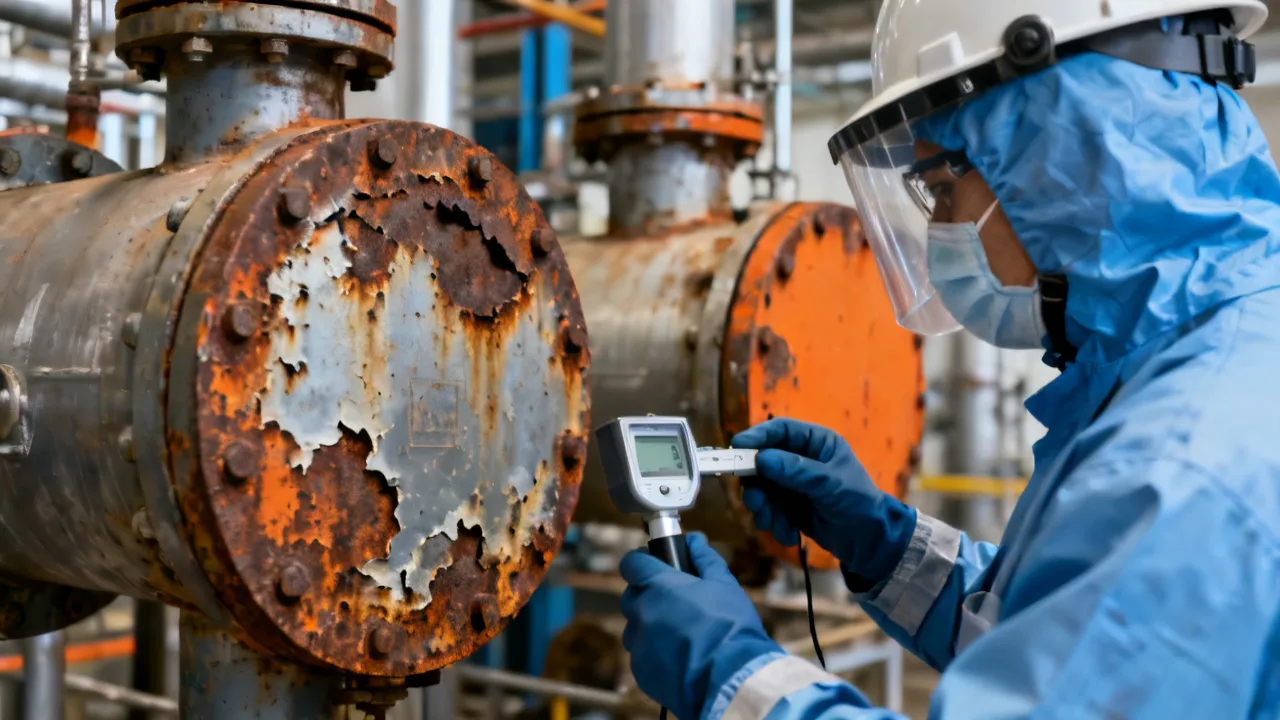
Acid corrosion can reduce structural thickness, perforate containment equipment, contaminate products, damage instruments, and create exposure hazards. Its visual appearance may range from uniform surface roughening to isolated pits, grooves, cracks, blisters, or deposits. The most dangerous cases are not always the most visible. Localized attack can create a small area of deep penetration while the surrounding surface appears acceptable.
In process facilities, a small leak can have consequences beyond the affected component. Acid may react with concrete, insulation, coatings, neighboring metals, or standing water. A release can also generate irritating or toxic vapors depending on the chemical involved. For this reason, corrosion control should be connected to process safety management, emergency planning, environmental protection, and occupational hygiene.
Acid corrosion can also produce indirect operational problems. Deposits formed by corrosion products may obstruct valves, reduce heat-transfer efficiency, damage mechanical seals, or interfere with flow meters. Dissolved metal ions can contaminate a product stream or poison a catalyst. In electrical and electronic systems, acidic moisture may increase contact resistance, attack solder joints, and create intermittent faults that are difficult to diagnose.
Recognized engineering practice supports a layered approach:
- Identify the chemical and physical conditions accurately.
- Choose materials using verified compatibility data and qualified engineering judgment.
- Design equipment to avoid stagnant zones, crevices, and difficult-to-inspect surfaces.
- Control operating temperature, concentration, contamination, and flow where practical.
- Apply coatings, linings, inhibitors, or cathodic protection only when they are technically suitable.
- Establish inspection intervals based on credible damage mechanisms and measured degradation.
- Document findings and revise the corrosion-control plan when service conditions change.
The Electrochemical Mechanism Behind 산 부식
Most acid corrosion of metals is electrochemical. At an anodic site, metal atoms lose electrons and enter the solution as ions. At a cathodic site, a reduction reaction consumes the electrons. In acidic environments, hydrogen ions commonly participate in the cathodic reaction, producing hydrogen gas or hydrogen absorbed into the metal under certain conditions.
For iron or carbon steel, a simplified anodic reaction can be written as:
Fe → Fe2+ + 2e−
A simplified cathodic reaction in an acidic solution is:
2H+ + 2e− → H2
These equations are useful for understanding the basic process, but actual industrial corrosion often includes several simultaneous reactions. Dissolved oxygen may support oxygen reduction, while sulfate, chloride, fluoride, sulfide, oxidizing agents, or organic acids can alter the reaction pathway. Corrosion products may form a protective layer, a porous deposit, or an unstable film that repeatedly breaks down.
Corrosion requires an electrochemical circuit. This circuit includes an anodic region, where metal dissolves; a cathodic region, where a reduction reaction occurs; an electrolyte, such as water containing dissolved acid; and an electrically conductive path through the metal. If any one of these elements is interrupted, corrosion can be reduced. In practice, however, industrial systems usually contain many possible circuits. A coating may interrupt contact temporarily, but a pinhole or scratch can restore the circuit at a highly concentrated local site.
Acid concentration does not always have a linear relationship with corrosion rate. Some highly concentrated acids can create passivating or dehydrating conditions for particular alloys, while dilute solutions may be more aggressive. This behavior is strongly material-specific. It is unsafe to assume that a higher concentration always produces greater damage or that a lower concentration is automatically benign.
Acid corrosion may also be controlled by mass transfer. A protective film can form when reaction products remain on the surface, but high velocity or turbulence may remove that film. Conversely, low-flow conditions may allow contaminants and corrosion products to accumulate. The chemistry immediately next to the metal surface can therefore differ from the chemistry measured in a process sample.
Acid Types Associated With Corrosion
Different acids produce different corrosion risks. The following categories are common in industrial assessment.
| Acid or Environment | Typical Corrosion Considerations | Important Variables |
|---|---|---|
| Hydrochloric acid | Often aggressive toward carbon steel and many stainless steels; chloride can support localized attack. | Concentration, temperature, aeration, chloride activity, wet-dry cycling |
| Sulfuric acid | Material performance can change substantially with concentration and temperature. | Concentration, temperature, velocity, oxidizing contaminants |
| Nitric acid | Some stainless steels may passivate, while contamination or unsuitable conditions can cause severe attack. | Concentration, temperature, fluoride contamination, alloy condition |
| Hydrofluoric acid | Highly hazardous and capable of attacking glass, silica-containing materials, and selected metals. | Concentration, water content, temperature, material compatibility |
| Organic acids | Acetic, formic, and related acids may cause corrosion that depends on water content and impurities. | Acid dissociation, temperature, oxygen, dissolved salts |
| Acidic process water | Can create broad corrosion or localized attack when combined with dissolved gases and salts. | pH, alkalinity, conductivity, oxygen, flow, deposits |
This comparison is an initial orientation, not a substitute for a compatibility assessment. A design engineer should verify the intended material against the exact chemical composition and operating envelope. Supplier data may be useful, but it should be reviewed critically because generic compatibility charts often use different test temperatures, exposure times, surface finishes, and acceptance criteria.
Mixed-acid environments deserve special attention. A process stream may contain a principal acid together with dissolved gases, salts, organic compounds, oxidizers, or metallic ions. These additions can produce a corrosion response that cannot be predicted by examining each chemical separately. For example, a material that performs acceptably in a single-acid laboratory test may suffer localized attack when chloride or fluoride is introduced as a process impurity.
Acidic vapors can be as significant as liquid exposure. Condensation on a cooler surface may produce a thin, highly conductive film with a different composition from the bulk process. Vapor-space corrosion is common near tank roofs, vents, condensers, overhead lines, and areas where hot acidic gas contacts cold metal. Inspection plans should therefore include both liquid-contact and vapor-contact zones.
Materials Commonly Affected by Acid Corrosion
Carbon Steel
Carbon steel is widely used because of its strength, availability, weldability, and comparatively low acquisition cost. It can, however, corrode rapidly in many acidic solutions. The attack may appear as general thinning, pitting, grooving near welds, or corrosion beneath deposits. Carbon steel selection should never be based only on the fact that it has been used successfully in another plant.
Acid service involving carbon steel may require a corrosion allowance, internal lining, inhibitor program, controlled operating conditions, or a different alloy. The suitability of any measure depends on whether the acid is continuously present, intermittently introduced, diluted during cleaning, or concentrated during evaporation.
Carbon steel is also sensitive to local conditions. A pipe may have acceptable thickness along its straight run but severe attack at an elbow, reducer, injection point, or low point. Acid injection should be designed to mix safely and avoid directing a concentrated stream against a single wall location. Drainage and flushing arrangements are especially important when the process is periodically shut down.
Stainless Steel
Stainless steels depend on a passive chromium-rich oxide film for much of their corrosion resistance. Acidic environments can destabilize this film, particularly when chloride, fluoride, reducing conditions, deposits, or high temperatures are present. The term “stainless” therefore does not mean resistant to every acid.
Welded areas may behave differently from the parent material because of heat-affected zones, surface oxidation, contamination, or inadequate post-weld treatment. Surface finish and cleanliness can be important, especially in food, pharmaceutical, semiconductor, and high-purity chemical applications.
Different stainless grades provide different levels of resistance. Molybdenum-containing grades may improve resistance to certain localized forms of attack, but no grade should be selected by name alone. Ferritic, martensitic, duplex, and austenitic stainless steels have different strength, weldability, phase stability, and cracking characteristics. The fabricated condition may be as important as the nominal grade.
Nickel Alloys
Nickel-based alloys can offer strong resistance in selected acid services, but their performance varies significantly by alloy and environment. Some are suitable for reducing acids, while others are selected for oxidizing conditions or mixed-acid exposure. Nickel alloys may be technically appropriate when failure consequences are severe, but selection should be supported by verified data and an engineering assessment of fabrication, welding, availability, and lifecycle maintenance.
Nickel alloys may also require specialized welding procedures and control of dilution, heat input, interpass temperature, and post-weld cleaning. A sound parent-metal selection can still fail if fabrication introduces susceptible microstructures or surface contamination.
Copper and Copper Alloys
Copper and its alloys may be vulnerable to certain acids, ammonia-containing environments, oxidizing conditions, or combinations of acidity and dissolved oxygen. They can also create galvanic effects when connected to less noble metals. Such materials require careful consideration in heat-transfer equipment, instrumentation, tubing, and electrical components.
Aluminum
Aluminum develops a protective oxide film in many environments, but strong acids and alkaline solutions can damage that film. Localized attack may occur when the surface is contaminated, mechanically damaged, or exposed to incompatible chemicals. Aluminum should not be selected for acid service without a specific compatibility review.
Polymers, Elastomers, and Linings
Nonmetallic materials can provide valuable resistance to acid corrosion, but they introduce different failure modes. A polymer may swell, soften, crack, permeate, lose adhesion, or become brittle. Elastomers are particularly sensitive to temperature, concentration, cyclic exposure, and chemical combinations. A lining that resists the acid itself may still fail because of vacuum conditions, thermal expansion, poor surface preparation, or mechanical impact.
Permeation is an important consideration for polymeric materials. Acid may slowly pass through a lining without producing an immediate visible defect. Once it reaches the substrate, under-lining corrosion can progress unseen. Lining systems should therefore be evaluated for permeation resistance, bond strength, operating temperature, pressure cycling, and inspection requirements.
Forms of Damage Caused by 산 부식
Uniform Corrosion
Uniform corrosion removes material across a broad surface. It is often easier to estimate than localized corrosion because thickness measurements may represent the general condition. Nevertheless, a modest average loss can become serious when the original wall is thin or when the component supports pressure, weight, or thermal stress.
Uniform corrosion is sometimes underestimated because it may appear visually regular. A smooth, evenly thinned wall can still fall below the minimum required thickness. In tanks and vessels, the bottom course, liquid line, and vapor-space region may corrode at different rates even when they are made from the same material.
Pitting Corrosion
Pitting produces small surface openings that lead to deeper cavities. Pits may initiate at inclusions, deposits, scratches, weld defects, or damaged passive films. They are difficult to detect with visual inspection alone and can penetrate a wall before a major change in average thickness is recorded.
Pitting is affected by the ratio of cathodic surface area to anodic pit area. A relatively small active pit surrounded by a large passive surface can support a concentrated local reaction. As the pit deepens, its chemistry may become increasingly aggressive. Cleaning can remove deposits and expose the pit, but it does not necessarily stop the underlying mechanism.
Crevice Corrosion
Crevices under gaskets, lap joints, deposits, clamps, and threaded connections can retain acidic liquid and restrict replenishment of the surrounding solution. Chemistry inside the crevice may become more aggressive than the bulk environment. Equipment design should minimize narrow gaps and provide practical drainage and inspection access.
Crevice corrosion is common at flanges and bolted connections because these locations combine restricted fluid movement, deposits, residual stress, and sometimes dissimilar materials. A flange that is dry and clean during installation may later retain acidic condensate beneath insulation or a damaged gasket. Inspection should consider the condition beneath removable components rather than examining only exposed surfaces.
Galvanic Corrosion
When dissimilar metals are electrically connected in an electrolyte, the less noble metal may corrode preferentially. Acidic moisture increases the likelihood of an active electrochemical circuit. Insulating materials, compatible fasteners, proper drainage, and suitable area ratios can help manage this risk.
Area ratio is important. A small area of less noble metal connected to a large area of more noble metal can experience a high local current density and rapid attack. Conversely, the arrangement may behave differently if the larger surface is the active metal. Electrical isolation should be verified after assembly because washers, contamination, wet supports, or damaged coatings can unintentionally reconnect the metals.
Hydrogen-Related Damage
Acid corrosion can generate atomic hydrogen at a metal surface. Some hydrogen may enter the material rather than immediately combining into molecular hydrogen. Depending on material strength, microstructure, stress, and exposure conditions, this can contribute to hydrogen embrittlement, blistering, cracking, or loss of ductility.
High-strength steels and stressed components require particular care. A surface that appears intact may still contain subsurface damage. Non-destructive examination, material verification, hardness review, and fracture-control procedures may be needed where hydrogen-related mechanisms are credible.
Hydrogen damage is not limited to pressure vessels. Springs, bolts, shafts, lifting components, and plated fasteners may be vulnerable when acid cleaning, pickling, or electroplating generates hydrogen. Post-treatment controls, baking requirements where applicable, material strength limits, and exposure duration should be reviewed for critical components.
Stress Corrosion Cracking
Stress corrosion cracking requires a susceptible material, a compatible environment, and tensile stress. Acidic environments can contribute to cracking, but the exact mechanism depends on alloy and chemistry. Residual welding stress, forming operations, pressure cycling, and thermal gradients may increase susceptibility.
Cracks can initiate at pits, weld toes, sharp corners, thread roots, or areas with residual tensile stress. Because crack growth may occur with limited general metal loss, routine thickness measurement alone may not detect the problem. Where cracking is credible, inspection methods capable of detecting surface-breaking or subsurface discontinuities should be selected specifically for the expected crack orientation and material.
Erosion-Corrosion
Erosion-corrosion occurs when fluid movement removes protective films or exposes fresh metal faster than the surface can repassivate. It is often concentrated at elbows, valves, tees, pump outlets, reducers, and injection points. Suspended solids, gas bubbles, cavitation, and turbulence can accelerate the damage.
The resulting surface may have directional grooves, horseshoe-shaped patterns, or a smooth but rapidly thinning appearance. Reducing velocity, improving mixing, changing geometry, removing solids, or selecting a more resistant material may be necessary. Simply increasing corrosion allowance may be inadequate if the local flow condition remains unchanged.
Factors That Control Acid Corrosion Rate
A corrosion engineer normally evaluates the following factors together rather than in isolation.
- Acidity: pH is useful, but it does not fully describe acid strength or buffering behavior.
- Concentration: Corrosion may increase, decrease, or change mechanism as concentration changes.
- Temperature: Reaction rates commonly increase with temperature, although passivation and phase behavior can complicate the relationship.
- Flow: High velocity can remove protective films, while low flow can create deposits and stagnant chemistry.
- Impurities: Chloride, fluoride, sulfide, oxidizers, and metal ions can materially change performance.
- Oxygen: Aeration may intensify cathodic reactions and alter passive-film behavior.
- Water content: Some acids become more aggressive when diluted, while others behave differently in concentrated form.
- Surface condition: Roughness, scale, weld discoloration, scratches, and contamination affect initiation sites.
- Time: Short laboratory exposure may not represent long-term cycling, deposits, or start-up and shutdown conditions.
- Mechanical stress: Pressure, vibration, thermal expansion, and residual stress can convert corrosion into cracking.
Transient conditions should be considered separately from steady-state operation. Start-up may introduce air and water into a system that normally contains a concentrated chemical. Shutdown may leave acid trapped in low points. Cleaning may use a different acid, a higher temperature, or a more oxidizing solution. A temporary condition lasting only a few hours can initiate damage that continues during normal service.
Wet-dry cycling is particularly important. During evaporation, dissolved salts and acids may become concentrated at the surface. Repeated condensation and drying can create deposits that retain moisture and establish localized cells. Outdoor equipment may experience this condition beneath insulation, under weatherproofing defects, or around flanges and supports.
How to Investigate 산 부식 Step by Step
A disciplined investigation reduces the risk of replacing a damaged part without correcting the cause.
- Make the area safe. Isolate the equipment according to the facility’s procedures, control exposure, and confirm that personnel have appropriate chemical and respiratory protection.
- Define the affected component. Record the equipment identification, material grade, thickness, weld locations, coating or lining type, service history, and operating role.
- Reconstruct the chemical history. Review normal concentration, cleaning chemicals, water quality, contaminants, temperature, pressure, flow, upset conditions, and start-up or shutdown events.
- Map the damage. Photograph the surface, identify deposits, mark pits or grooves, and create a grid for thickness measurements.
- Measure remaining thickness. Use qualified ultrasonic thickness testing or another appropriate technique. Calibrate instruments and account for surface condition and geometry.
- Examine welds and high-stress areas. Select visual, liquid penetrant, magnetic particle, radiographic, or ultrasonic methods according to the suspected mechanism and material.
- Collect representative samples where appropriate. Deposits, residues, or process liquids may reveal contaminants that were absent from routine operating records.
- Compare findings with design limits. Assess minimum required thickness, pressure-retaining requirements, corrosion allowance, local pit depth, and remaining service life.
- Identify the root cause. Determine whether the initiating factor was wrong material, contamination, temperature excursion, coating failure, stagnant flow, poor drainage, process change, or inspection weakness.
- Implement and verify corrective action. Confirm that the selected repair, lining, inhibitor, operating change, or replacement material addresses the mechanism rather than only its visible symptoms.
Investigators should distinguish between observation, interpretation, and conclusion. For example, “dark deposit observed beneath the flange” is an observation. “Possible crevice corrosion” is an interpretation. “Failure caused by chloride-contaminated acidic condensate” is a conclusion that should be supported by chemical analysis, process history, and examination findings.
Failure analysis may include metallography, hardness testing, scanning electron microscopy, energy-dispersive analysis, deposit characterization, and fracture-surface examination. These methods are not required for every case, but they can be valuable when a failure is unexpected, repeated, safety-critical, or associated with cracking.
Inspection should be performed by competent personnel using procedures appropriate to the equipment and damage mechanism. For pressure equipment, applicable jurisdictional rules and recognized inspection codes must be followed. API 510, API 570, API 653, API 580, and API 581 may be relevant in petroleum and process facilities, while other industries may use different regulatory or sector standards. The appropriate standard depends on equipment type, location, legal requirements, and the organization’s engineering basis.
Inspection and Monitoring Methods
Visual Examination
Visual examination is often the first method used because it can identify discoloration, deposits, coating blistering, leaks, staining, weld attack, and unusual flow patterns. It cannot reliably measure subsurface damage or determine the deepest pit. Good visual inspection includes adequate lighting, access, cleaning controls, photographs, and consistent reporting terminology.
Ultrasonic Thickness Measurement
Ultrasonic testing is widely used to estimate remaining wall thickness. It is particularly useful for trend monitoring when measurement locations are permanently identified. Readings should account for calibration, couplant, surface roughness, curvature, temperature, and access limitations. A single reading should not be treated as a complete corrosion assessment.
Repeated thickness surveys are most meaningful when the same locations, instrument settings, surface conditions, and data-quality practices are used. Digital mapping can help identify thinning patterns around nozzles, welds, elbows, and low points. When corrosion is highly localized, conventional spot readings may miss the deepest area, making scanning or a denser grid necessary.
Radiographic Testing
Radiography can identify selected volumetric conditions and may help evaluate welds, deposits, or internal features. Its usefulness depends on geometry, access, safety controls, and the type of damage. It is not automatically the best method for every corrosion problem.
Liquid Penetrant and Magnetic Particle Testing
Liquid penetrant testing can detect surface-breaking discontinuities in nonporous materials. Magnetic particle testing is used for surface and near-surface discontinuities in ferromagnetic materials. Both methods require suitable surface preparation and trained interpretation.
Electrochemical Monitoring
Corrosion coupons, electrical resistance probes, linear polarization methods, and related systems can provide process information. These tools are most useful when installed and interpreted within a defined monitoring plan. They should support, not replace, direct inspection of critical equipment.
Chemical and Process Monitoring
Routine measurement of pH, concentration, conductivity, temperature, dissolved metals, contaminants, and flow can reveal changing conditions before physical damage becomes obvious. Sampling locations must represent the actual environment inside the equipment. A laboratory result from a convenient drain point may not describe a hot spot, dead leg, or vapor-liquid interface.
Trend analysis is more informative than isolated measurements. A gradual increase in dissolved iron, nickel, chromium, or copper may indicate active metal loss even when pH remains stable. A sudden change can signal contamination, a failed dosing system, a temperature excursion, or an unintended chemical addition.
Material Selection for Acid Service
Material selection begins with a complete service description. At minimum, the design record should identify the chemical name, concentration range, impurities, temperature range, pressure, flow regime, phase condition, exposure duration, cleaning chemistry, expected contaminants, and consequences of leakage.
Compatibility data should be treated as evidence rather than an automatic approval. Published tables may classify a material as suitable, conditionally suitable, or unsuitable, but the test conditions may differ from the proposed application. When the consequences of failure are substantial, laboratory immersion testing, electrochemical testing, pilot trials, or consultation with a qualified materials specialist may be appropriate.
The following questions are particularly important:
- Will the material be exposed continuously or only during cleaning?
- Can acid become concentrated through evaporation?
- Will dilution produce a more aggressive condition?
- Are chloride, fluoride, sulfide, oxidizers, or metal ions present?
- Does the equipment experience hot spots, condensation, or wet-dry cycling?
- Will welding change the corrosion resistance?
- Can the selected lining withstand thermal cycling and mechanical impact?
- Are gaskets, seals, bolts, instruments, and supports compatible as a complete system?
- Can the material be inspected, repaired, and sourced consistently?
- What happens if the process deviates from the normal operating envelope?
An experienced engineer also evaluates lifecycle implications. A material with a higher initial purchase price may reduce replacement frequency, production interruption, inspection burden, and environmental risk. Conversely, an expensive alloy is not automatically the best solution if fabrication quality, weld procedures, or contamination control are inadequate.
Welding deserves separate review. Heat input and cooling rate can affect microstructure, passive-film behavior, residual stress, and susceptibility to localized attack. Weld spatter, heat tint, embedded iron, and inadequate cleaning can create initiation sites. Fabrication specifications should identify approved filler metals, surface-cleaning methods, inspection requirements, and any required post-weld treatment.
Prevention and Mitigation Strategies
Process Control
Maintaining concentration, temperature, flow, and contamination within defined limits is often the first line of defense. Alarms should be linked to meaningful operating boundaries, and operators should understand the corrosion consequences of dilution, chemical substitution, and abnormal shutdown.
Process control should include management of change. A new raw material, cleaning agent, supplier, catalyst, water source, or operating temperature may alter corrosion behavior even when the equipment design remains unchanged. Every significant process change should trigger a review of material compatibility and inspection consequences.
Design Improvements
Equipment should be designed to drain completely where possible. Dead legs, narrow crevices, sharp flow transitions, and locations that trap deposits deserve specific review. Adequate access for inspection and cleaning is a corrosion-control feature, not merely a maintenance convenience.
Good design also controls heat distribution. Local hot spots near steam jackets, electrical heaters, exothermic reactions, or poorly mixed injection points can greatly increase corrosion rates. Baffles, mixing arrangements, temperature monitoring, and controlled ramp rates may reduce these gradients.
Protective Coatings and Linings
Coatings and linings can isolate metal from acidic service. Their performance depends on correct product selection, substrate preparation, application thickness, curing, holiday detection, adhesion, and inspection. A lining may fail at seams, penetrations, welds, or damaged areas even when the broad surface appears sound.
Surface preparation is frequently the decisive factor. Oil, dust, salts, rust, moisture, and abrasive residue can prevent adhesion. Environmental conditions during application, including humidity and substrate temperature, should be controlled and documented. After installation, the lining should be inspected before the equipment is returned to service and monitored for blistering, cracking, discoloration, and underfilm attack.
Corrosion Inhibitors
Inhibitors can reduce corrosion in some acid systems by adsorbing on the metal surface or changing electrochemical reactions. Their effectiveness depends on concentration, temperature, flow, acid type, metal condition, contamination, and exposure time. Inhibitor programs require dosing control and performance verification. They should not be introduced without confirming compatibility with the process, downstream equipment, product quality, and wastewater treatment.
Inhibitor effectiveness can decline when the process is diluted, heated, aerated, or contaminated. A dosing pump may operate normally while delivering an ineffective concentration because of an incorrect calibration, blocked injection point, or changed process flow. Coupons or probes positioned in representative locations can help verify actual performance.
Cathodic Protection
Cathodic protection may be effective for selected structures in conductive electrolytes, such as tanks, buried systems, and marine equipment. It is not a universal solution for every acid-corrosion problem. Excessive protection current can create coating damage or hydrogen-related risks in susceptible materials. System design and monitoring should be performed by qualified specialists.
Isolation and Drainage
Electrical isolation between dissimilar metals can reduce galvanic corrosion. Drainage prevents acidic liquid from remaining in contact with surfaces during shutdown. Ventilation and vapor management can also reduce condensation-related attack in enclosed spaces.
Drainage design should account for actual equipment orientation and settlement. A nominally sloped vessel may develop low spots after installation or thermal cycling. Small pockets beneath stiffeners, supports, and reinforcement pads can remain wet even when the main vessel has been drained. Drain points should be accessible, protected from blockage, and included in inspection planning.
Operational Conditions and Requirements
| Control Area | Recommended Requirement | Verification Evidence |
|---|---|---|
| Chemical identity | Maintain an accurate inventory and current safety documentation. | Process records, labels, safety data sheets, laboratory confirmation |
| Concentration | Define normal and alarm limits for acid strength and contaminants. | Routine sampling, calibrated analysis, trend charts |
| Temperature | Prevent operation outside the material qualification range. | Instrument records, alarm history, thermal survey |
| Material condition | Verify alloy, weld quality, coating, lining, gasket, and fastener compatibility. | Material certificates, inspection reports, fabrication records |
| Inspection | Set intervals according to damage rate, criticality, and legal requirements. | Thickness maps, non-destructive examination reports, review approvals |
| Emergency response | Maintain isolation, spill control, exposure response, and communication procedures. | Training records, drills, equipment checks, incident reviews |
Operating procedures should identify actions that can create an acid-corrosion event. Examples include adding water to concentrated acid, introducing acid into an empty or cold vessel, changing the order of chemical additions, bypassing a temperature interlock, leaving a system partially drained, or using an unapproved cleaning chemical. The procedure should define acceptable sequence, mixing, ventilation, flushing, and inspection requirements.
Operators are often the first people to observe symptoms such as unusual staining, a metallic odor, changes in pump vibration, increasing filter blockage, unexplained pressure loss, or discoloration of a product. A reporting culture that treats these observations seriously can prevent a small corrosion problem from becoming a leak or shutdown.
Workplace Safety During Acid-Corrosion Activities
Acid-corrosion inspection and repair must be separated from ordinary mechanical maintenance planning. Personnel may face liquid splashes, corrosive residues, hazardous vapors, stored pressure, confined spaces, contaminated insulation, and unexpected chemical reactions.
Before work begins, the responsible team should verify isolation, depressurization, draining, flushing requirements, atmospheric testing, access controls, and the correct personal protective equipment. The selection of gloves, face protection, protective clothing, footwear, and respiratory equipment should be based on the specific chemical and the task. Safety data sheets and applicable workplace regulations provide essential hazard information, but site-specific risk assessment remains necessary.
Acid residues should not be neutralized casually. Neutralization can generate heat, splashing, gas evolution, or a rapidly changing pH. The method, chemical quantity, ventilation, containment, and waste route should be approved by competent personnel. Emergency showers, eyewash stations, communication systems, and first-aid arrangements should be accessible and maintained.
Where work occurs in a confined space, acid corrosion may coexist with oxygen deficiency or toxic gases. A confined-space permit, atmospheric monitoring, rescue plan, attendant, and appropriate entry controls may be required under local law and company procedures.
Removing insulation from acid-service equipment may expose workers to hidden liquid or corrosive deposits. Insulation should be treated as potentially contaminated until evaluated. Cutting, grinding, welding, or abrasive blasting can spread residues and create hazardous dust or fumes. Decontamination, waste classification, and ventilation should be addressed before mechanical work begins.
Repair Decisions and Remaining Service Life
When acid corrosion is discovered, the correct response may be repair, replacement, lining, operating restriction, process modification, or continued operation under a documented monitoring plan. The decision should consider minimum thickness, structural loads, pressure, temperature, pit geometry, crack evidence, leak history, corrosion rate, inspection uncertainty, and the consequences of failure.
Corrosion rate is commonly estimated by comparing reliable thickness measurements over time. The calculation should use comparable measurement locations and account for uncertainty. A short interval between two readings may produce an apparent rate that reflects measurement variation rather than actual material loss. Conversely, a long interval can conceal a change in mechanism.
Localized pits require special treatment. Average thickness may remain acceptable while a deep pit approaches penetration. Engineers may need pit-depth measurements, profile mapping, fitness-for-service analysis, or a conservative replacement decision. Pressure equipment assessments should use the applicable code or recognized engineering method rather than an informal judgment.
Repairs should address the initiating mechanism. Replacing a carbon-steel spool with the same grade may not solve a contamination or temperature problem. Applying a new lining over an inadequately prepared substrate may delay failure only briefly. A durable repair combines technical suitability with quality assurance, inspection, and operational follow-up.
Temporary repairs require particular control. A clamp, composite wrap, welded patch, or reduced operating limit may restore containment for a defined period, but it should have an approved engineering basis, inspection interval, expiry date, and permanent-repair plan. Temporary measures should not become indefinite simply because the component remains in service without another visible leak.
Common Mistakes in Acid-Corrosion Management
Relying on pH Alone
pH is valuable but incomplete. It does not identify all corrosive species, concentration effects, temperature influence, or the behavior of concentrated acids. Chemical composition and process history are essential.
Assuming Stainless Steel Is Universally Resistant
Stainless steel can suffer pitting, crevice corrosion, stress corrosion cracking, weld-related attack, and general corrosion in unsuitable acid conditions. The exact grade and fabricated condition matter.
Using a Generic Compatibility Chart Without Checking Conditions
Charts may be based on static tests at room temperature and may not represent high velocity, contamination, cyclic exposure, or welded assemblies. They are a starting point for review, not a final design approval.
Inspecting Only After a Leak
Reactive maintenance increases the chance of an unplanned release. Risk-based inspection and thickness trending can identify deterioration before containment is lost.
Ignoring Nonmetallic Components
Gaskets, seals, hoses, coatings, linings, instrument diaphragms, and plastic supports can be the first components to fail. Compatibility must be reviewed for the entire fluid-contact system.
Overlooking Shutdown and Cleaning Conditions
Equipment may experience a more damaging condition during washing, draining, condensation, or chemical changeover than during normal production. These transient conditions belong in the corrosion assessment.
Repairing Symptoms Instead of Causes
Painting over a stained surface, replacing a leaking gasket, or installing a new section of pipe may restore short-term operation without stopping the mechanism. Each repair should be followed by a review of why the damage occurred and whether nearby components are exposed to the same condition.
Failing to Preserve Evidence
Cleaning, grinding, or replacing a failed component before photographs and samples are collected can eliminate evidence needed for root-cause analysis. Where safety permits, the original condition should be documented before repair.
Industry Standards and Reliable Technical Sources
Organizations that manage acid-corrosion risks commonly consult recognized standards and official guidance. Relevant sources may include ASTM methods for corrosion testing, ISO standards for corrosion protection and evaluation, AMPP standards and technical practices, pressure-equipment inspection codes from API where applicable, and occupational-safety guidance issued by national regulators.
For workplace chemical hazards, official authorities such as the United States Occupational Safety and Health Administration, the European Chemicals Agency, the United Kingdom Health and Safety Executive, or the competent regulator in the relevant jurisdiction may provide authoritative requirements. Environmental discharge and waste controls should be checked with the applicable environmental authority.
These sources should be used according to their scope. A laboratory test method does not by itself establish fitness for a pressure vessel, and a safety data sheet does not replace a process-specific materials assessment. The strongest technical basis combines recognized standards, supplier documentation, operating data, inspection evidence, and qualified engineering review.
Document control is also important. Engineering teams should know which material specification, process chemistry, inspection procedure, and acceptance criterion were used for a decision. Old compatibility tables and superseded drawings can create hidden risk when equipment is modified. Revision history, approval signatures, and links to inspection records help maintain a reliable technical basis.
A Practical Corrosion-Control Workflow
The following workflow can be incorporated into a plant or workshop management system:
- Create a corrosion loop. Group equipment that shares similar chemistry, materials, temperature, and flow conditions.
- Define credible damage mechanisms. Consider uniform attack, pitting, crevice corrosion, galvanic effects, hydrogen-related damage, erosion-corrosion, and cracking.
- Rank consequence and likelihood. Consider personnel exposure, environmental impact, production interruption, equipment criticality, and detectability.
- Set inspection locations. Include inlets, outlets, low points, welds, supports, vapor-liquid interfaces, dead legs, and areas beneath deposits.
- Establish baseline data. Record original thickness, material identification, coating condition, process chemistry, and inspection quality.
- Monitor trends. Compare measurements and process data using consistent methods.
- Review deviations. Investigate changes in supplier, acid concentration, cleaning practice, temperature, residence time, or water quality.
- Audit controls. Confirm that operators, inspectors, maintenance staff, and engineers understand their responsibilities.
- Update the program. Revise inspection intervals and material assumptions after repairs, process changes, or unexpected findings.
This workflow is most effective when corrosion records are integrated with asset-management and maintenance systems. A photograph without location data, a thickness reading without calibration information, or a chemical result without a sampling date has limited long-term value.
A mature program also assigns ownership. Operations may control chemistry and temperature, maintenance may manage repairs and coatings, inspection personnel may monitor thickness and cracking, procurement may verify material certificates, and engineering may approve design changes. Clearly defined responsibilities prevent the assumption that another department is managing the risk.
Examples of Acid-Corrosion Scenarios
Storage Tank Bottom Attack
A carbon-steel tank may store a liquid that appears only mildly acidic during normal sampling. Water and heavier contaminants can settle at the bottom, creating a separate phase with higher conductivity and a different chemical composition. Corrosion may concentrate around the tank floor, annular plate, drain area, or sludge line. Bottom scanning, settlement review, water removal, and scheduled internal inspection can be more informative than a single bulk-liquid pH measurement.
Heat-Exchanger Tube Failure
Acidic cooling water or process condensate may attack tubes, especially where deposits create crevices or where flow changes at tube entrances. A pinhole can allow cross-contamination between streams, potentially damaging downstream equipment. Tube inspection methods, water chemistry control, velocity review, and leak testing should be considered together.
Acid Cleaning of Stainless Equipment
A stainless vessel that performs well during production may be damaged during an unapproved cleaning cycle. Excessive temperature, extended contact time, chloride contamination, or inadequate rinsing can destabilize the passive film. Cleaning procedures should specify chemical concentration, temperature, contact time, rinse quality, and verification before return to service.
Corrosion Under Insulation
Acidic vapor or contaminated water can enter damaged insulation and remain against a warm metal surface. The outer jacket may look intact while hidden corrosion progresses underneath. Inspection may require targeted insulation removal, moisture surveys, guided-wave methods, or risk-based inspection of susceptible locations.
Acid Injection Point
A concentrated acid injection stream may strike a pipe wall before sufficient mixing occurs. Local turbulence and high acid concentration can create rapid thinning at a small area. A mixing spool, properly positioned injection quill, dilution arrangement, and localized thickness monitoring can reduce the risk.
Frequently Asked Questions About 산 부식
Is 산 부식 the same as acid etching?
No. 산 부식 generally refers to unwanted or damaging acid corrosion, while acid etching is a controlled surface-treatment process intended to modify texture, remove oxides, prepare a surface, or create a pattern. Etching can still damage equipment if exposure time, concentration, temperature, or rinsing is poorly controlled.
Does a low pH always mean rapid corrosion?
No. Low pH indicates acidic conditions, but corrosion rate also depends on acid species, concentration, temperature, alloy, impurities, flow, oxygen, and surface condition. A compatibility assessment must consider the complete service environment.
Can carbon steel be used with acid?
In some controlled applications, carbon steel may be used with an appropriate corrosion allowance, inhibitor, lining, or operating limitation. In other applications, it may deteriorate quickly. The decision requires verified data for the exact acid and operating conditions.
Is stainless steel a safe default?
No. Stainless steel grades differ, and acidic environments containing chloride, fluoride, oxidizers, or deposits can cause severe localized attack or cracking. Grade selection, fabrication condition, welding, and surface treatment should all be reviewed.
How can acid corrosion be detected before leakage?
Useful methods include visual examination, ultrasonic thickness measurement, radiography, penetrant testing, magnetic particle testing, corrosion coupons, electrical monitoring, and process-chemistry analysis. The most appropriate combination depends on the equipment and suspected damage mechanism.
Can a coating eliminate acid corrosion?
A suitable coating or lining can substantially reduce contact between acid and the substrate, but it does not eliminate risk. Application defects, holidays, pinholes, poor adhesion, thermal cycling, mechanical damage, and chemical permeation can lead to underfilm corrosion or lining failure.
Are acid inhibitors suitable for every process?
No. Inhibitors are chemistry-specific and may affect product quality, downstream treatment, emissions, or waste handling. Their performance should be demonstrated through testing and monitored during operation.
What should be recorded during an inspection?
Records should include equipment identification, date, inspector qualification, method, instrument details, measurement locations, readings, surface condition, photographs, chemical and operating conditions, anomalies, acceptance criteria, and recommended follow-up.
When should damaged equipment be removed from service?
Removal may be necessary when remaining thickness, pit depth, cracking, lining failure, leakage, or uncertainty exceeds the applicable engineering or regulatory limit. The decision should be made by qualified personnel using the relevant design code, inspection standard, and risk assessment.
What is the most effective first step in preventing 산 부식?
The first step is to document the real service environment accurately. Without reliable information about chemical composition, concentration, temperature, contaminants, flow, and exposure cycles, material selection and inspection planning remain speculative.
Can acid corrosion be stopped after it has started?
It can often be slowed or controlled, but the appropriate action depends on the mechanism. Removing contamination, correcting temperature, improving drainage, restoring a lining, adjusting inhibitor dosage, or replacing a susceptible material may stop further damage. Existing metal loss, pits, and cracks do not disappear, so the remaining integrity must still be evaluated.
Why can corrosion occur even when the process pH is stable?
A stable bulk pH does not guarantee stable surface chemistry. Flow may change, deposits may form, oxygen may enter during shutdown, or a contaminant may concentrate at a local site. Corrosion can therefore accelerate without a large change in the recorded bulk pH.
Conclusion
산 부식 is a broad and technically significant form of material degradation. Its effects range from general metal loss to deep pitting, hydrogen-related damage, coating failure, erosion-corrosion, and environmentally assisted cracking. The most reliable protection comes from combining chemical knowledge, suitable materials, sound equipment design, controlled operating conditions, qualified inspection, and disciplined maintenance.
Organizations should avoid treating acid corrosion as an isolated maintenance issue. It is connected to process control, fabrication quality, occupational safety, environmental stewardship, and asset reliability. When the chemical environment changes, the corrosion assessment should change with it. A documented, evidence-based program allows engineers to detect deterioration earlier, select proportionate controls, and make repair or replacement decisions with greater confidence.
The practical meaning of 산 부식 is therefore more comprehensive than “metal exposed to acid.” It represents the interaction of chemistry, materials, design, stress, temperature, flow, time, and human decision-making. Effective control depends on understanding that interaction before equipment is commissioned, during routine operation, and after every significant process or maintenance change.