Understanding Acid Corrosion and Its Control
This guide explains 산 부식, the Korean term commonly associated with acid corrosion, including its electrochemical mechanisms, material effects, detection methods, prevention strategies, and workplace controls. Acid corrosion occurs when acidic environments accelerate metal dissolution, often causing localized damage, hydrogen-related risks, or rapid loss of structural integrity. The article presents an objective framework for selecting materials, inhibitors, coatings, inspection methods, and operating conditions across industrial, laboratory, and infrastructure applications.
What Acid Corrosion Means
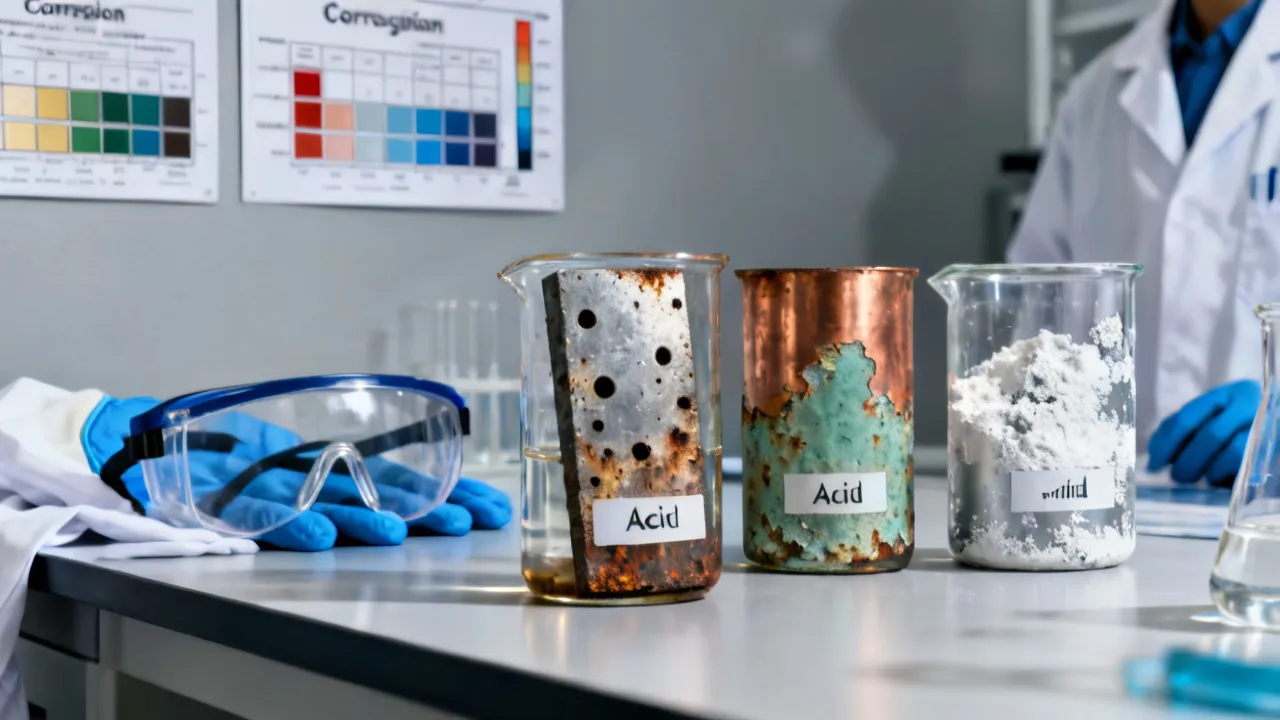
산 부식 is commonly translated into English as acid corrosion. It describes the deterioration, dissolution, weakening, or cracking of a metal or alloy through chemical and electrochemical reactions promoted by an acidic environment. The acid may be present as a process chemical, an industrial emission, contaminated water, acidic condensate, soil moisture, a cleaning solution, a battery electrolyte, or a residue left after chemical processing. Although the phrase appears simple, acid corrosion is not a single failure mechanism. Its severity depends on acidity, acid species, temperature, oxygen availability, flow, contaminants, material composition, surface condition, stress, geometry, and exposure time.
The most important practical conclusion is that acid corrosion should be managed at the design stage rather than treated only after visible damage appears. A material that performs well in neutral water may deteriorate rapidly in a low-pH process stream. Conversely, a metal that appears unsuitable in a laboratory screening test may perform adequately under controlled temperature, low flow, and carefully monitored chemistry. Sound decisions therefore require a combination of corrosion science, process knowledge, inspection, maintenance experience, and documented operating limits.
For industrial users, the immediate priorities are to identify the acid species, determine the likely corrosion form, verify the compatibility of construction materials, and establish controls for temperature, concentration, contamination, and residence time. Protective measures may include alloy selection, nonmetallic linings, coatings, corrosion inhibitors, cathodic protection in suitable systems, process control, improved drainage, electrical isolation, and scheduled inspection. No single measure is appropriate for every application.
Acid corrosion can occur in both liquid and vapor environments. A process vessel may be exposed to liquid acid on its lower walls and to acidic vapor or condensate near its headspace. External surfaces can corrode when acid-containing gases pass through insulation or condense on a cooler section of pipe. This means that an equipment specification should identify not only the composition of the main process liquid but also the chemistry of vapor spaces, drains, vents, wash water, and shutdown residues.
Why Acid Corrosion Matters
Acid corrosion can reduce wall thickness, damage fasteners, weaken welds, obstruct valves, contaminate products, and create leaks in vessels or piping. It can also affect equipment that is not intended to carry acid directly. For example, acidic vapors may condense on the underside of roofs, instrument enclosures, external pipe supports, or insulated equipment. A system can therefore experience corrosion even when the bulk liquid is contained and the surrounding atmosphere appears dry.
From an engineering perspective, the principal concern is not simply whether a material corrodes. Nearly all structural metals can react under some conditions. The more useful questions are:
- How rapidly does metal loss occur under the actual operating conditions?
- Is the attack uniform or concentrated in pits, crevices, welds, liquid interfaces, or deposits?
- Does the environment promote hydrogen absorption, cracking, or embrittlement?
- Will corrosion products remain protective, detach, or contaminate the process?
- Can the equipment be inspected and maintained before the remaining thickness becomes unsafe?
- What happens during startup, shutdown, cleaning, dilution, storage, and abnormal operation?
A reliable assessment distinguishes between general corrosion and localized or environmentally assisted failure. Uniform thinning may be comparatively predictable, while a small pit or crack can create a serious integrity problem before a large amount of total metal has been lost. The consequences also vary by equipment. A small leak in an open drain may be manageable, while a pinhole in a pressurized acid line can expose workers, damage nearby equipment, and interrupt an entire production unit.
Economic effects should also be considered. Acid corrosion may cause unplanned shutdowns, increased maintenance labor, replacement of expensive components, loss of process chemicals, environmental releases, and product rejection. A low-cost material can become the most expensive choice if it requires frequent repair or creates a high consequence of failure. Life-cycle cost, not only initial purchase price, should guide decisions.
The Electrochemical Basis of Acid Corrosion
Acid corrosion usually involves anodic metal dissolution and a cathodic reduction reaction occurring at different locations on the same metal surface. At anodic sites, metal atoms enter the solution as ions:
M → Mn+ + ne−
In acidic environments, hydrogen ions commonly participate in the cathodic reaction:
2H+ + 2e− → H2
The overall effect is the conversion of metallic material into dissolved ions, corrosion products, or both. The exact reaction depends on the acid, alloy, dissolved oxygen, temperature, and other chemical species. In oxidizing acids, additional cathodic reactions may occur, and some acids can produce protective surface films under certain conditions.
Low pH generally increases the availability of hydrogen ions, but pH alone does not determine corrosion behavior. Two solutions with the same measured pH may have different corrosion rates because their acid strength, buffering capacity, conductivity, oxidizing potential, impurities, and temperature differ. A process engineer should therefore record the complete chemical composition rather than relying on pH as the only indicator.
Electrical conductivity also matters. A conductive solution can support electrochemical current between anodic and cathodic regions. Chloride ions, dissolved oxygen, sulfide species, metal ions, and deposits may alter the surface reactions and destabilize passive films. Flow can remove protective products or increase the supply of reactants. At other locations, low flow can create stagnant zones where concentration cells and deposits intensify localized attack.
Surface condition affects the electrochemical response as well. Scratches, weld discoloration, embedded iron particles, scale, oil, and incomplete cleaning can create sites with different electrochemical activity. A polished laboratory specimen may perform better than a rough, contaminated, welded production surface. Material qualification should therefore consider the condition in which the component will actually be installed and operated.
Common Forms of Acid Corrosion
Uniform Corrosion
Uniform corrosion produces relatively even material loss across a broad surface. It is often associated with carbon steel exposed to strong mineral acids under conditions where no stable protective film forms. Although this form may appear less dramatic than pitting, it can cause predictable but serious wall thinning in tanks, pipework, heat exchangers, and structural components.
Uniform corrosion can sometimes be managed through a corrosion allowance, but that approach is appropriate only when the corrosion rate is sufficiently understood and remains stable. An allowance should not be used to justify indefinite operation in an uncontrolled environment. The rate should be confirmed using inspection data, representative tests, or reliable operating experience, and the calculation should account for manufacturing tolerances, measurement uncertainty, and the required minimum thickness.
Pitting Corrosion
Pitting is a localized form of attack that creates small cavities with substantial depth. It may begin at inclusions, scratches, deposits, damaged coatings, or passive-film defects. Chloride contamination is a well-known contributor for many stainless steels, particularly when temperature and surface conditions favor passive-film breakdown.
Pits are difficult to detect through ordinary visual inspection because their openings may be narrow. Ultrasonic thickness mapping, surface examination, dye penetrant testing where appropriate, and targeted cleaning may be needed. A low average corrosion rate does not rule out a dangerous pit depth. Pit morphology, pit density, depth distribution, and the likelihood of pit growth should be considered when evaluating remaining life.
Crevice Corrosion
Crevice corrosion occurs in shielded regions such as gasket interfaces, lap joints, threaded connections, deposits, and poorly drained supports. The restricted chemistry inside a crevice can differ sharply from the surrounding solution. Oxygen depletion, acidification, and the accumulation of aggressive ions may cause rapid localized deterioration.
Design measures are often more effective than chemical treatment. Avoiding unnecessary crevices, using suitable gasket designs, improving drainage, and allowing inspection access can reduce the likelihood of attack. Bolted joints, pipe clamps, instrument connections, and vessel internals should be reviewed because they can retain acid after the main system has been drained.
Galvanic Corrosion
When dissimilar metals are electrically connected in an electrolyte, the less noble metal may become the anode and corrode more rapidly. Acidic solutions commonly provide the conductivity needed for this galvanic interaction. The risk increases when a small anodic area is connected to a large cathodic area, such as a small carbon-steel fastener attached to a large corrosion-resistant alloy surface.
Galvanic control may involve material pairing, electrical isolation, compatible fasteners, barrier coatings, and careful management of exposed area ratios. The outcome depends on the particular metals and environment; a generic ranking should not replace application-specific evaluation. Isolation devices also need to remain effective after installation, because damaged washers, wet deposits, or conductive contamination can bypass an intended electrical break.
Intergranular Corrosion
Intergranular corrosion follows grain boundaries when alloy chemistry or thermal history causes those regions to become more reactive. Certain stainless steels can become susceptible after inappropriate thermal exposure, particularly when chromium-rich carbides form near grain boundaries and reduce local chromium availability.
Material certification, welding procedure control, heat treatment, and appropriate alloy selection are central preventive measures. The problem may not be apparent during ordinary visual inspection, so fabrication records and targeted examinations are valuable. If a component has experienced an uncertain thermal cycle, testing or metallographic review may be needed before it is approved for aggressive acid service.
Erosion-Corrosion
High velocity, turbulence, impingement, suspended solids, and abrupt changes in flow direction can remove protective films and accelerate acid corrosion. Elbows, reducers, pump outlets, valve restrictions, and mixing zones are frequent areas of concern.
Reducing unnecessary turbulence, selecting suitable geometry, controlling suspended solids, and avoiding excessive velocity can help. In some cases, a more resistant alloy or internal lining is needed because flow control alone cannot maintain surface protection. Flow conditions should be examined during both normal and maximum-rate operation, since a component that is acceptable at ordinary throughput may suffer severe attack during short high-flow periods.
Hydrogen-Related Damage
Acid reactions may generate hydrogen at the metal surface. Some metals and high-strength components can absorb hydrogen, increasing the risk of blistering, cracking, or loss of ductility. The risk is influenced by material strength, microstructure, welding condition, stress level, acid chemistry, temperature, and exposure duration.
Hydrogen-related damage deserves particular attention in pressure equipment, high-strength bolts, springs, hardened components, and welded structures. Material selection should consider both corrosion resistance and susceptibility to hydrogen effects. A component can retain most of its original wall thickness and still fail if hydrogen-assisted cracking develops in a stressed region.
Stress Corrosion Cracking
Stress corrosion cracking occurs when a susceptible material, a specific environment, and tensile stress act together. Acidic chloride environments, acidic sulfide-containing systems, and certain oxidizing solutions can contribute to cracking in susceptible alloys. Residual stress from welding, cold forming, machining, or assembly may be sufficient even when the applied operating stress is modest.
Crack-like indications require a different response from ordinary wall thinning. Increasing corrosion allowance will not necessarily prevent cracking. The assessment may require crack-sensitive non-destructive examination, stress analysis, hardness measurements, metallurgical evaluation, and immediate control of the environment.
Acids Commonly Associated With Corrosion
Different acids produce different corrosion behavior. The word “acid” does not identify a single exposure category.
| Acid or acidic environment | Important corrosion considerations | Engineering questions |
|---|---|---|
| Hydrochloric acid | Often aggressive toward carbon steel and many common alloys; chloride can intensify localized attack and stress-related problems. | What concentration, temperature, aeration, and chloride contamination are present? |
| Sulfuric acid | Corrosivity can vary substantially with concentration and temperature; concentrated conditions may behave differently from dilute solutions. | Is the process stable, diluted by water, or subject to condensation? |
| Nitric acid | Oxidizing conditions may passivate some stainless steels while aggressively attacking other materials. | Is the alloy in a stable passive condition, and are contaminants present? |
| Phosphoric acid | Impurities, temperature, concentration, and process by-products can significantly affect material performance. | What is the full process composition rather than the nominal acid name? |
| Organic acids | Acetic, formic, and other organic acids may cause corrosion influenced by water content, temperature, dissociation, and biological activity. | Are oxygen, chlorides, sulfur compounds, or microorganisms also involved? |
| Acidic condensate | Thin films formed from vapor condensation can produce highly localized external corrosion. | Where can vapor cool below its dew point, and can drainage be improved? |
| Acid mine drainage | Low pH may occur together with dissolved iron, sulfate, metals, oxygen, and suspended solids. | Will deposits, abrasion, or biological activity alter the corrosion mechanism? |
This comparison is a starting point, not a material approval list. The same alloy may show different performance in laboratory immersion, flowing process liquid, vapor exposure, and intermittent wetting. A qualified corrosion specialist should review critical applications using representative data.
Acid mixtures deserve special caution. A mixture may behave very differently from either component alone because of changes in activity, oxidation potential, conductivity, or protective-film stability. Additives used for cleaning, pickling, plating, or production may also contain inhibitors or contaminants that alter performance. The technical specification should therefore identify concentrations, impurities, maximum and minimum temperatures, and possible mixing events.
Materials Used in Acidic Service
Carbon Steel
Carbon steel is widely used because of its availability, mechanical properties, fabricability, and comparatively manageable procurement requirements. Its performance in acid service, however, is highly dependent on the acid and operating range. It may require a substantial corrosion allowance, an inhibitor, an internal lining, or a change in material when exposed to aggressive acids.
Carbon steel should not be selected solely because it has performed acceptably in another plant. Differences in acid concentration, temperature, impurities, flow, cleaning cycles, and shutdown conditions can change the result. Welding consumables and heat-affected zones should also be considered, particularly when hydrogen generation or localized corrosion is possible.
Stainless Steels
Stainless steels rely on a thin passive film that can protect the underlying alloy in many environments. Passivity is not universal. Reducing acids, chloride-rich solutions, crevices, deposits, and elevated temperatures can destabilize the film. Weld condition and surface contamination also influence performance.
Higher-alloy stainless steels may offer improved resistance in some environments, but alloy upgrades should be based on documented compatibility rather than assumed superiority. Surface finishing, weld cleaning, pickling, passivation, and avoidance of carbon-steel contamination may be important in systems that depend on passive behavior.
Nickel-Based Alloys
Nickel-based alloys can provide strong resistance in selected acidic and high-temperature conditions. Their cost, fabrication requirements, welding considerations, and availability must be assessed alongside corrosion performance. A more expensive alloy may be justified when it reduces inspection burden, leakage risk, contamination, or replacement frequency.
Nickel alloys are not universally immune. Certain oxidizing contaminants, sulfur-bearing conditions, fluoride species, or combinations of temperature and stress can produce unexpected attack. The selected grade should be matched to the exact service chemistry and fabrication condition.
Copper Alloys
Copper and copper alloys perform well in certain water and heat-transfer applications but may be vulnerable to specific acids, oxidizing conditions, ammonia, sulfides, or high flow. Their use in acid service requires a chemistry-specific review. Copper ions released into a process may also affect product quality or cause galvanic attack on downstream materials.
Titanium
Titanium forms a highly stable oxide film in many oxidizing environments. It can perform well in selected acidic systems, but reducing acids, fluoride-containing environments, crevices, and high-temperature conditions may create limitations. Titanium is also sensitive to fabrication and surface conditions in particular applications.
Nonmetallics and Linings
Polymers, fluoropolymers, glass-lined steel, ceramics, rubber linings, and fiber-reinforced materials can offer excellent resistance to selected acids. Their limits may involve temperature, permeation, mechanical impact, vacuum conditions, thermal cycling, ultraviolet exposure, or bonding quality.
A lining should be evaluated as a complete system. The substrate, adhesive, seams, penetrations, supports, curing process, and inspection plan all affect performance. A chemically resistant lining can still fail if it blisters, cracks, delaminates, or is damaged during maintenance. Mechanical design is especially important because a material with excellent chemical resistance may have limited resistance to impact or concentrated loads.
How Temperature and Concentration Change Risk
Temperature commonly accelerates reaction rates and can reduce the protective character of corrosion products or passive films. It may also increase vapor formation, condensation, diffusion, and thermal cycling. In some acid systems, concentration has a non-linear effect. A diluted solution may be more aggressive than a concentrated one, or the reverse may occur, depending on the acid and alloy.
Water contamination is particularly important. An apparently controlled acid can become more corrosive after dilution, condensation, or washdown. During startup and shutdown, the equipment may pass through chemical conditions that are more damaging than those experienced during steady operation. A corrosion review should therefore consider the complete operating envelope, including cleaning, flushing, storage, emergency dilution, and maintenance.
Temperature gradients can create local concentration differences. A hot section may evaporate water and concentrate dissolved acid, while a cool section may collect condensate. Heat exchangers require special attention because the metal surface temperature may differ significantly from the measured bulk-fluid temperature. Thermal insulation can reduce heat loss but may also conceal external corrosion or retain acidic moisture.
Pressure can influence boiling, flashing, gas solubility, and the formation of vapor-liquid interfaces. Changes in pressure during depressurization may produce rapid cooling and condensation. Such transient effects should be included in hazard and corrosion reviews when process equipment operates near boiling conditions.
Inspection and Diagnosis
Effective inspection begins with a credible damage mechanism review. Inspectors should know which surfaces are wetted, where vapor may condense, which areas have restricted flow, and which components carry high stress. A general visual inspection is useful but rarely sufficient for acid corrosion in critical equipment.
Visual and Surface Examination
Visual examination can reveal discoloration, deposits, blistering, coating failure, weld attack, leaks, and external rust patterns. The absence of visible damage does not establish that the equipment is sound. Surfaces may need cleaning before examination, and localized damage can remain hidden beneath deposits or insulation.
Photographs should include an identifiable reference, location, scale, and date. Consistent photography helps compare changes over time. Drain points, low spots, supports, nozzles, weld toes, and gasket boundaries should be documented separately because small changes in these areas may be significant.
Ultrasonic Thickness Measurement
Ultrasonic testing can identify wall thinning and support corrosion-rate trending. Readings should be taken at repeatable locations and interpreted with attention to surface roughness, geometry, calibration, temperature, and access. A single measurement is less valuable than a well-documented baseline and a consistent monitoring program.
Where pitting is suspected, a grid or scanning survey is generally more informative than a few isolated points. The inspection plan should record the minimum value, the surrounding thickness distribution, and the uncertainty associated with the instrument and surface condition.
Radiographic Examination
Radiography can help identify certain forms of wall loss, deposits, geometry-related defects, and weld discontinuities. Its suitability depends on component shape, access, thickness, radiation controls, and the type of suspected damage. Interpretation should be performed by qualified personnel using an appropriate procedure.
Dye Penetrant and Magnetic Particle Testing
Dye penetrant testing is useful for surface-breaking defects in nonporous materials. Magnetic particle testing applies to suitable ferromagnetic materials and can reveal surface or near-surface discontinuities. Neither method should be selected without considering the material, surface condition, coating, and suspected failure mechanism.
Corrosion Coupons and Probes
Coupons provide an indication of mass loss over a defined exposure period. Electrical resistance probes, linear polarization methods, and other monitoring tools may provide additional process information. These techniques require correct installation and interpretation. A coupon placed in a calm, representative location may not reflect conditions at a turbulent elbow or a vapor-liquid interface.
Monitoring devices should be inspected because the probe itself can become shielded by deposits or positioned outside the most damaging flow path. Data should be correlated with process chemistry and operating events rather than reviewed as isolated numerical trends.
Sampling and Chemical Analysis
Process samples should be collected safely and analyzed for pH, acid concentration, conductivity, dissolved metals, chlorides, sulfides, oxidizing species, and other relevant contaminants. Sampling frequency should reflect process variability. Infrequent sampling can miss transient conditions that cause disproportionate damage.
Sample containers, preservation methods, transport time, and laboratory procedures can affect results. A sample that changes temperature or loses volatile components may not represent the actual process environment. Sampling points should be selected to capture both bulk chemistry and, where practical, conditions at suspected high-risk locations.
Step-by-Step Acid Corrosion Assessment
- Define the equipment boundary. Identify tanks, pipes, valves, pumps, heat exchangers, instruments, supports, insulation interfaces, vents, drains, and connected components.
- Map every exposure condition. Record liquid contact, vapor contact, intermittent wetting, condensation, deposits, splash zones, and external atmospheric exposure.
- Characterize the chemistry. Document acid identity, concentration, pH, temperature, pressure, oxygen level, contaminants, conductivity, solids, and cleaning chemicals.
- Review operating history. Include startup, shutdown, batch changes, upset conditions, flushing, maintenance, and previous leaks or repairs.
- Identify susceptible materials. Confirm alloy grade, heat treatment, weld condition, lining type, coating system, gasket material, and fastener composition.
- Determine the likely damage mechanism. Consider general corrosion, pitting, crevice attack, galvanic effects, erosion-corrosion, hydrogen damage, and stress-related cracking.
- Collect representative evidence. Combine inspection data with process samples, corrosion coupons, failed-part analysis, and maintenance records.
- Compare protection options. Evaluate material substitution, process control, inhibitors, coatings, linings, improved drainage, electrical isolation, and inspection intervals.
- Set acceptance criteria. Define allowable thickness, leak-tightness requirements, coating condition, chemical limits, and escalation triggers.
- Document and review. Record assumptions, test methods, limitations, responsibilities, and the date for reassessment.
This process should be led by competent personnel when equipment is safety-critical, pressurized, difficult to inspect, or exposed to chemicals capable of causing serious injury. The assessment should also identify who has authority to stop operation, impose temporary limits, approve repairs, and return equipment to service.
Prevention and Control Strategies
Control the Environment
The most direct control is often stabilization of the process chemistry. Maintaining acid concentration within a validated range, preventing accidental dilution, reducing dissolved oxygen where appropriate, controlling temperature, removing contaminants, and improving drainage can reduce corrosion risk. Process controls should be supported by alarms, interlocks, sampling, and documented response procedures.
Control limits should distinguish normal operating values from alarm and shutdown values. An acid concentration that is acceptable for short-term operation may be unsuitable for continuous service. Operators should know how long equipment can remain exposed during a deviation and what flushing or neutralization procedure is required.
Select Materials by Compatibility Data
Material selection should rely on supplier data, recognized corrosion handbooks, published laboratory studies, plant experience, and representative testing. Generic statements such as “stainless steel is acid resistant” are inadequate. The relevant alloy, weld condition, surface finish, acid composition, temperature, velocity, and exposure pattern must all be specified.
Material selection should include non-pressure parts as well. Gaskets, valve seats, pump seals, sight glasses, instrument diaphragms, bolts, linings, and sample tubing may fail before the main pressure boundary. A compatibility matrix can help prevent the accidental use of a component that is chemically unsuitable even though the primary vessel material is acceptable.
Use Corrosion Inhibitors Carefully
Inhibitors can reduce corrosion by adsorbing on the metal surface, altering electrochemical reactions, or promoting a protective film. Their effectiveness may depend on dosage, temperature, acid concentration, flow, contamination, and metal type. Inhibitors can also affect downstream treatment, product quality, emissions, wastewater, and worker exposure.
An inhibitor program requires controlled dosing, storage, compatibility review, monitoring, and contingency planning. It should not be treated as a substitute for correcting a fundamentally unsuitable material or an uncontrolled process. Inhibitor effectiveness should be verified through corrosion monitoring rather than assumed from the dosing rate alone.
Apply Coatings and Linings Correctly
Coatings and linings require surface preparation, thickness control, curing, holiday detection where appropriate, adhesion assessment, and repair procedures. Edges, welds, nozzles, drains, bolts, and transitions deserve special attention because coating defects often begin at geometric discontinuities.
Inspection should continue after installation. Blistering, underfilm corrosion, permeation, cracking, pinholes, impact damage, and chemical degradation can reduce protection long before the substrate becomes visibly damaged. The lining specification should state the allowable surface preparation, application temperature, cure time, service temperature, and repair method.
Improve Equipment Design
Design modifications may include sloped surfaces, adequate drains, removable deposits, accessible inspection points, reduced crevice geometry, compatible gasket arrangements, and suitable flow transitions. Dead legs and stagnant zones should be minimized where they are likely to concentrate acid or contaminants.
Drainage is particularly important. Equipment that appears empty may retain acid in low points, threaded connections, valve cavities, or support channels. Designs should provide safe, complete drainage and, when necessary, controlled flushing. Inspection access should be included during the original design rather than added after corrosion has occurred.
Manage Galvanic Couples
Electrical isolation, compatible fasteners, insulating washers, barrier coatings, and controlled drainage can limit galvanic attack. Isolation devices must be selected for the chemical, temperature, pressure, and mechanical conditions. An insulating component that absorbs liquid or fails under compression may not provide reliable separation.
Establish Inspection Intervals
Inspection intervals should reflect the observed corrosion rate, uncertainty, equipment criticality, accessibility, and consequences of failure. If the damage mechanism is uncertain, an initial shorter interval may be appropriate while data are collected. Intervals should be revised when process chemistry, materials, operating temperature, or maintenance practices change.
Inspection results should be trended and reviewed by someone capable of recognizing changes in mechanism. A gradual increase in wall-loss rate, a change from uniform thinning to pitting, or the appearance of cracks should trigger technical reassessment rather than routine data entry only.
Conditions and Requirements for a Reliable Program
| Program element | Required information or condition | Reason for inclusion |
|---|---|---|
| Chemical characterization | Acid identity, concentration, temperature, pH, contaminants, oxygen, and conductivity | Determines the likely electrochemical reactions and material compatibility |
| Material records | Alloy grade, weld details, lining type, coating system, gasket, and fastener materials | Prevents incorrect assumptions about construction materials |
| Exposure mapping | Liquid, vapor, condensate, splash, intermittent, and external atmospheric zones | Identifies areas that may be missed by bulk-liquid analysis |
| Inspection baseline | Repeatable thickness points, photographs, surface condition, and defect records | Enables trend analysis and early intervention |
| Process controls | Limits for temperature, concentration, flow, contamination, and residence time | Reduces excursions that can accelerate acid corrosion |
| Safety procedures | Hazard assessment, protective equipment, isolation, ventilation, spill response, and training | Protects personnel during inspection, sampling, and maintenance |
| Change management | Technical review before changing acid, supplier, cleaning agent, alloy, coating, or operating range | Prevents unrecognized changes in corrosion behavior |
| Emergency response | Leak detection, isolation points, neutralization or containment plan, and communication procedures | Limits consequences when corrosion causes an unexpected release |
Relevant Standards and Technical Sources
Acid corrosion programs should be aligned with applicable laws, engineering codes, and recognized technical practices. Depending on the industry and equipment type, organizations may consult standards and guidance from bodies such as ASTM International, AMPP, ISO, API, ASME, the International Electrotechnical Commission, and relevant national safety authorities. The correct document depends on whether the subject is laboratory corrosion testing, pressure equipment, pipeline integrity, coating qualification, non-destructive examination, or chemical handling.
Standards do not eliminate the need for engineering judgment. Test conditions may not reproduce the combined effects of temperature cycling, deposits, welds, flow, contaminants, and intermittent exposure found in service. Published data should therefore be treated as evidence within a broader assessment, not as an automatic guarantee of performance.
For safety-critical equipment, records should identify the edition of each standard used, the acceptance criteria, the responsible reviewer, and any limitations. If an assessment relies on supplier corrosion tables, the exact product form, alloy condition, test environment, and exposure duration should be retained in the technical file.
Personnel carrying out inspection and testing should be appropriately qualified for the selected method. A technically correct method can produce unreliable results when the instrument is poorly calibrated, the surface is inadequately prepared, or the inspector is unfamiliar with the expected damage morphology.
Health, Safety, and Environmental Considerations
Acid corrosion control is inseparable from chemical safety. Opening equipment, removing deposits, collecting samples, or inspecting a damaged surface can expose workers to liquid acid, vapor, contaminated residue, hydrogen, or toxic reaction products. A safe work plan should address isolation, depressurization, draining, flushing, ventilation, atmospheric testing, protective equipment, emergency washing facilities, and waste handling.
Protective equipment should be selected through a hazard assessment rather than by appearance or convenience. Gloves, face protection, chemical-resistant clothing, respiratory protection, and footwear must be compatible with the specific chemical and task. Equipment should be inspected before use and replaced when degraded.
Waste acid, rinsate, corrosion products, spent inhibitors, and contaminated coatings may require controlled collection and treatment. Environmental requirements vary by jurisdiction and process. Disposal decisions should follow applicable regulations and the organization’s environmental management procedures.
Acid dilution also requires careful planning. Adding water to concentrated acid can generate substantial heat and splashing, while uncontrolled neutralization can release heat and gases. Any flushing or neutralization procedure should be written for the specific system, approved by competent personnel, and performed with suitable containment and monitoring.
Common Errors in Acid Corrosion Management
Relying on pH Alone
pH is useful but incomplete. It does not fully describe acid reserve, temperature effects, oxidizing potential, chloride content, or flow-related behavior. A pH reading should be interpreted with composition and process history.
Assuming One Alloy Works Everywhere
Material performance is environment-specific. A grade that performs well in one acid concentration may fail in another, especially after contamination or temperature change. Even different product forms of the same alloy can behave differently because of heat treatment, inclusions, surface finish, or welding.
Ignoring Startup and Shutdown
Transient conditions may involve condensation, dilution, oxygen ingress, stagnant liquid, or deposits. These periods can cause damage that is not predicted by steady-state conditions. Batch operations should be reviewed step by step because the chemistry may change several times during one cycle.
Inspecting Only Easy-to-Reach Surfaces
Hidden areas, supports, crevices, insulation interfaces, and low points frequently deserve more attention than broad, accessible surfaces. Inspection planning should be based on damage mechanism, not convenience.
Using Corrosion Allowance Without Reliable Data
A corrosion allowance is not a substitute for understanding the corrosion rate. If localized attack, cracking, or unstable chemistry is possible, additional controls and examination methods are necessary.
Treating Coatings as Permanent
All coatings have application limits and service lives. Inspection, repair, and compatibility with cleaning procedures remain necessary. A coating that performs well during immersion may fail under vapor exposure, thermal cycling, or repeated mechanical cleaning.
Changing Chemicals Without Technical Review
A substitute acid, cleaning agent, inhibitor, or supplier formulation may contain impurities or additives that alter corrosion behavior. Procurement changes should pass through management-of-change procedures. The same review applies to changes in water source, recycled process liquid, antifoam, biocide, and contamination-control practices.
Repairing Symptoms Instead of Causes
Replacing a leaking spool or applying a local patch may restore operation temporarily, but the same mechanism may remain active elsewhere. After an unexpected failure, the investigation should address chemistry, flow, material identity, fabrication, inspection history, and operating deviations before selecting a permanent repair.
How Experts Interpret Corrosion Data
An industry expert does not judge acid corrosion from one visual observation or one laboratory number. The interpretation begins by testing whether the data represent the real service environment. Important questions include whether the test used the same alloy condition, whether the solution was refreshed, whether the temperature was controlled, whether oxygen was present, and whether the specimen included welds or surface damage.
Experts also separate average metal loss from maximum local penetration. A measured average rate may support life estimation for uniform corrosion, but it may be inadequate for pitting or cracking. The confidence level of the conclusion should reflect the quality and representativeness of the data.
When evidence is incomplete, a conservative approach is appropriate. This may involve additional sampling, shorter inspection intervals, a coupon or probe program, temporary operating restrictions, or a controlled materials test. The objective is not to eliminate every uncertainty but to identify and manage the uncertainties that could affect safety, reliability, or regulatory compliance.
Experts also compare corrosion data with process events. A sudden increase in dissolved iron may correspond to an acid concentration excursion, a failed inhibitor pump, a water leak, or a change in residence time. Correlating inspection findings with control-system records, laboratory analyses, maintenance logs, and production changes can reveal causes that are not visible on the metal surface.
Laboratory Testing for 산 부식
Laboratory testing can compare candidate materials, inhibitors, coatings, and linings. Common approaches include immersion tests, electrochemical measurements, cyclic exposure, flow-loop testing, and examination of metallographic cross-sections. Each method answers different questions.
Immersion testing may provide mass-loss data over a defined period, but it may not reproduce turbulence or deposits. Electrochemical tests can indicate polarization behavior and passivity, although their interpretation requires specialist knowledge. Flow-loop tests can evaluate velocity effects and erosion-corrosion. Cyclic testing may better represent intermittent wetting, drying, and condensation.
Test specimens should reflect the intended product form and fabrication condition. Welded samples, heat-affected zones, surface finishes, fasteners, gaskets, and coating interfaces may be important. Testing should also include realistic contaminant levels when those contaminants are expected in service.
Results should be reported with exposure conditions, specimen preparation, solution composition, temperature, duration, flow, aeration, cleaning method, mass-loss calculation, localized damage observations, and uncertainty. A result without these details has limited value for design decisions.
Testing should be designed around a decision. For example, a screening test may determine whether a candidate alloy is clearly unsuitable, while a longer-term test may be needed to establish a corrosion allowance or maintenance interval. If a laboratory result will be used to justify a high-consequence design, the test should be reviewed for scale effects and similarity to actual service.
Maintenance Planning
Maintenance teams should receive clear instructions for acid-service equipment. These may include approved cleaning methods, prohibited tools, surface preparation requirements, coating repair products, gasket replacement criteria, flushing procedures, and post-maintenance inspection steps.
Mechanical cleaning can damage passive films, linings, and coatings. Abrasive tools may embed contaminants or create scratches that become initiation sites for localized corrosion. Chemical cleaning can also introduce a more aggressive solution than the original process. Maintenance procedures should therefore be reviewed for both immediate cleaning performance and subsequent corrosion risk.
When a component is replaced, the replacement should match the specified material, heat treatment, dimensions, joining method, and surface condition. Mixing materials without reviewing galvanic compatibility can create a new damage mechanism. Material certificates should be retained, and positive material identification may be appropriate for critical components.
After repair, the system should be inspected before returning to service. Depending on the equipment, this may include visual examination, pressure or leak testing, lining holiday detection, weld non-destructive examination, flushing verification, and confirmation that instruments and safety devices are functional. The repair record should state what caused the damage and whether the operating procedure or inspection plan has been updated.
Decision Framework for Selecting Controls
| Observed condition | Potential priority | Typical review focus |
|---|---|---|
| Stable, predictable uniform thinning | Inspection and life assessment | Corrosion rate, remaining thickness, allowance, and inspection repeatability |
| Deep pits with low average metal loss | Localized inspection and mechanism control | Deposits, chlorides, crevices, passive-film breakdown, and surface mapping |
| Coating blistering or delamination | Barrier-system investigation | Surface preparation, permeation, substrate corrosion, curing, and chemical compatibility |
| Attack near dissimilar-metal joints | Galvanic mitigation | Electrical continuity, area ratio, isolation, drainage, and material pairing |
| Cracks or brittle failures | Immediate integrity review | Hydrogen effects, stress, weld condition, hardness, and fracture risk |
| Rapid damage after process change | Management-of-change investigation | New acid, impurity, temperature, flow, cleaning agent, or supplier formulation |
| Corrosion beneath insulation | External exposure investigation | Water entry, acidic condensate, insulation condition, and inspection access |
Frequently Asked Questions
What is 산 부식 in English?
산 부식 is commonly translated as acid corrosion. It refers to metal deterioration promoted by acidic chemical conditions. The exact mechanism may include general dissolution, pitting, crevice corrosion, galvanic attack, erosion-corrosion, or hydrogen-related damage.
Does a lower pH always mean faster corrosion?
No. Lower pH often increases the potential for metal dissolution, but corrosion rate also depends on acid type, concentration, temperature, oxygen, conductivity, inhibitors, flow, alloy condition, and protective films. pH should not be used as the sole basis for material selection.
Is stainless steel suitable for acid service?
Sometimes, but not universally. Stainless steel depends on passivation, and certain acids, chlorides, temperatures, crevices, deposits, and weld conditions can cause failure. The specific grade and service environment must be evaluated together.
Can a corrosion inhibitor solve the problem?
An inhibitor may reduce corrosion in a suitable system, but it cannot be assumed to protect every alloy or operating condition. Dosage, mixing, temperature, flow, contamination, product quality, wastewater, and monitoring requirements must be considered.
How can acid corrosion be detected early?
Useful methods include visual examination, ultrasonic thickness measurements, corrosion coupons, electrical probes, process sampling, coating inspection, and targeted non-destructive testing. The best combination depends on the suspected damage mechanism and equipment design.
Why are welds important in acid corrosion assessments?
Welds and heat-affected zones may differ from the base metal in chemistry, microstructure, surface condition, and residual stress. Improper fabrication or post-weld treatment can increase susceptibility to localized or intergranular corrosion.
Are plastic linings always safer than metal?
No. Linings can provide strong chemical resistance but may be limited by temperature, permeation, impact, vacuum, thermal cycling, seams, or installation defects. The complete lining system and inspection plan require evaluation.
What should be done when unexpected corrosion is discovered?
Protect personnel first, control the process if necessary, isolate the affected equipment, document the condition, and obtain a competent technical assessment. Do not assume that a local repair addresses the underlying chemistry or damage mechanism.
How often should acid-service equipment be inspected?
There is no universal interval. The schedule should reflect corrosion rate, uncertainty, equipment criticality, accessibility, applicable codes, previous findings, and process stability. Inspection intervals should be revised when operating conditions or materials change.
Can corrosion data from another facility be applied directly?
Usually not without review. Differences in acid concentration, temperature, impurities, flow, alloy condition, fabrication, cleaning, and inspection methods can produce different outcomes. External data are useful evidence but require technical comparison before adoption.
Does neutralizing an acid residue eliminate corrosion risk?
Not necessarily. Neutralization may leave salts, moisture, heat, or residues that continue to support corrosion. The equipment may require controlled rinsing, drying, inspection, and verification that the neutralizing chemical is compatible with the material and downstream waste system.
Conclusion
산 부식, or acid corrosion, is best understood as a system problem involving chemistry, materials, design, operation, inspection, and safety. Effective management begins with a complete description of the exposure rather than a general label such as “acid service.” Engineers should identify the chemical conditions, distinguish uniform from localized damage, examine transient operating states, and verify the suitability of metals, coatings, linings, inhibitors, and nonmetallic materials.
The most dependable program combines prevention with measurement. Process controls limit aggressive conditions; compatible materials and sound design reduce vulnerability; coatings and inhibitors provide additional protection where appropriate; and inspection confirms whether the strategy is working. When data are uncertain, conservative operating limits and additional evidence are preferable to unsupported assumptions. This disciplined approach improves equipment reliability while reducing the likelihood of leaks, unplanned shutdowns, product contamination, environmental releases, and unsafe maintenance exposure.
Acid corrosion should also be treated as a continuing management responsibility rather than a one-time design calculation. Chemistry changes, production rates vary, coatings age, repairs introduce new materials, and inspection findings reveal information that was not available during original construction. Periodic review, effective change management, accurate records, and communication between operations, maintenance, materials engineering, and safety personnel are essential to keeping acidic-service equipment reliable throughout its useful life.