Alginate Advantages and Disadvantages in Dentistry
This guide explains the main alginate advantages and disadvantages, including its composition, working time, accuracy, patient comfort, storage requirements, and appropriate dental applications. Alginate is an elastic irreversible hydrocolloid commonly used for preliminary impressions, study models, orthodontic records, and custom-tray planning. The article also distinguishes alginate impressions from implant treatment, reviews practical quality-control steps, and compares selected resources for researching lower-cost individual dental implants.
Why Alginate Still Matters in Modern Dentistry
Alginate remains one of the most widely recognized dental impression materials because it combines simple handling, relatively low material expense, patient acceptability, and rapid clinical application. Although digital intraoral scanners and elastomeric impression materials have expanded the range of available techniques, alginate continues to play an important role in preliminary impressions, orthodontic documentation, diagnostic casts, removable prosthodontic planning, opposing-arch impressions, and the fabrication of some custom trays.
The central question is not whether alginate is universally good or bad. Rather, the clinical value of alginate depends on the purpose of the impression, the required level of dimensional accuracy, the time between impression taking and model pouring, and the clinician’s control of mixing, tray selection, seating, removal, disinfection, and storage. An impression that is suitable for a study model may be unsuitable for a definitive crown, bridge, or implant-supported prosthesis.
In practical terms, the most important advantages of alginate are its straightforward manipulation, short setting time, elastic recovery, economical use, and generally acceptable patient experience. Its most important disadvantages are its irreversible setting reaction, limited dimensional stability, lower tear strength than many elastomeric materials, sensitivity to water balance, and inability to reproduce fine margins as consistently as high-precision materials.
Modern dentistry has not eliminated the need for conventional impressions. Instead, it has encouraged clinicians to become more selective. Digital scanning may be ideal for some restorative and orthodontic workflows, while alginate remains efficient for other records. The best approach is therefore a purpose-driven one: select the material or technology that provides an adequate record for the specific clinical decision without adding unnecessary complexity or compromising accuracy.
What Is Alginate Impression Material?
Dental alginate is an irreversible hydrocolloid. Its primary source is usually an alginate salt derived from alginic acid, a polysaccharide associated with certain seaweeds. When the powder is mixed with water, a chemical reaction converts soluble components into an insoluble calcium alginate gel. Once the material has set, it cannot be returned to its original powder-and-water state.
Commercial alginate powders generally contain several functional ingredients. The exact formulation differs by manufacturer, but common components may include:
- Soluble alginate: the principal polymer that contributes to gel formation.
- Calcium sulfate: a reactor that supplies calcium ions for the setting reaction.
- Sodium phosphate or another retarder: helps provide workable mixing and seating time.
- Filler particles: such as diatomaceous earth, which influence body, texture, strength, and handling.
- Potassium titanium fluoride or related additives: may improve the surface quality of gypsum casts.
- Pigments, flavorings, and disinfectant-related additives: included to improve identification, patient acceptance, or clinical workflow.
Manufacturers may offer normal-set and fast-set formulations. Some products are chromatic, meaning the material changes color during stages such as mixing, working, and setting. These color changes can help guide the operator, but they do not replace proper timing, accurate water measurement, or visual assessment of the material.
The setting reaction is influenced by several variables. Water temperature, the ratio of powder to water, the vigor and duration of spatulation, and the time needed to load and seat the tray all affect the final result. Warmer water generally shortens the setting time, while cooler water generally lengthens it. Excessive manipulation may also influence the working characteristics of the material. The manufacturer’s instructions should therefore be treated as the controlling reference for each product.
Alginate Advantages and Disadvantages at a Glance
| Area | Clinical assessment |
|---|---|
| Handling | Generally simple to mix and load, making it practical for routine impressions. |
| Setting time | Often short, which can improve efficiency but may reduce seating time for inexperienced operators. |
| Patient comfort | Usually well tolerated when the tray is properly selected and the material is not overfilled. |
| Accuracy | Appropriate for many diagnostic purposes but less reliable for highly detailed definitive margins. |
| Dimensional stability | Limited; impressions should be managed and poured promptly according to the manufacturer’s instructions. |
| Elasticity | Allows removal over modest undercuts, although thin sections may tear during removal. |
| Cost control | Often supports economical routine care, but material price should not outweigh the requirements of the procedure. |
| Reusability | Not reusable after setting; alginate is an irreversible material. |
| Laboratory compatibility | Commonly compatible with gypsum products when the impression is processed promptly and correctly. |
| Storage | Requires careful humidity control because drying or water absorption can alter dimensions. |
Key Advantages of Alginate
1. Straightforward Clinical Handling
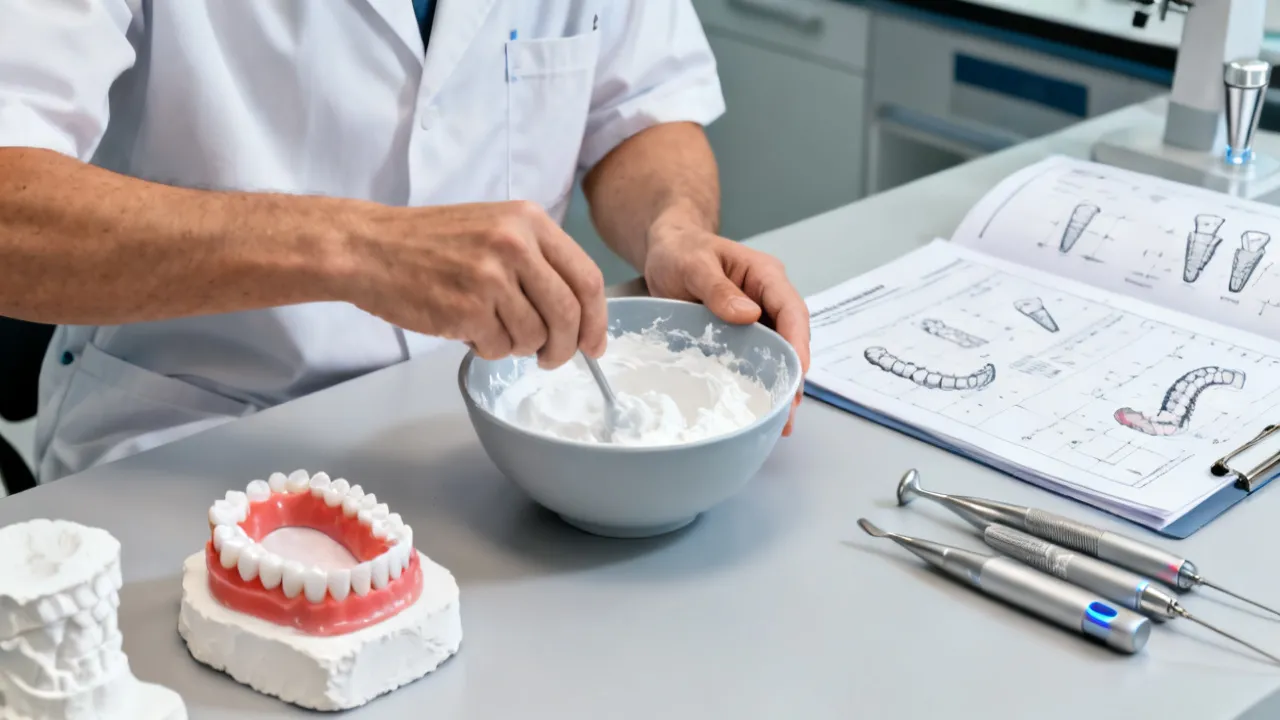
Alginate is familiar to students, dental assistants, laboratory technicians, and clinicians in many practice settings. The powder-and-water system is uncomplicated compared with some multi-component elastomeric materials. With a clean bowl, an appropriate spatula, measured water, and a properly sized tray, the impression can be prepared quickly.
This simplicity is valuable in general dentistry and orthodontics, where a large number of diagnostic impressions may be required. It also makes alginate useful when the clinician needs an opposing-arch impression or a preliminary record before a more advanced procedure. Staff members can be trained to prepare the material consistently, and most laboratories are accustomed to receiving and pouring alginate impressions.
Alginate does not normally require a dispensing gun, mixing tips, a heating unit, or specialized digital hardware. That lower equipment burden can be particularly important in smaller offices, mobile clinics, educational programs, and settings where treatment must remain accessible. Nevertheless, simple equipment does not mean that the procedure is technique-free. The material still requires accurate measurement, adequate mixing, and prompt seating.
2. Efficient Working and Setting Times
Many alginate products set within a clinically convenient period. A short setting time may reduce chair time and allow the operator to proceed efficiently. Fast-setting products can be particularly useful when a patient has a strong gag reflex or difficulty maintaining an open mouth.
However, a short setting time also creates a practical limitation: once the material has reached the tray, the operator has little room for delay. Efficient preparation is therefore essential. The tray should be selected, adhesive applied when indicated, and the patient positioned before mixing begins. The assistant should have suction, gauze, a timer, and any necessary accessories ready before the powder is introduced to the water.
Setting time should not be judged solely by the clock. The product may be affected by room temperature, water temperature, spatulation, and the amount of material being mixed. When uncertain, the dental team should follow the manufacturer’s stated working and setting times rather than improvising.
3. Elastic Recovery
After setting, alginate has sufficient elasticity to be removed from many areas of the mouth without permanent deformation. This characteristic is helpful when the impression crosses modest undercuts around teeth. It also supports routine diagnostic records in dentate patients.
Elastic recovery is not unlimited. Excessive undercuts, inadequate bulk, prolonged removal, or poorly supported material may cause distortion. The operator should remove the tray with a firm, controlled motion rather than rocking it repeatedly from side to side. Before removal, the seal around the tray should be loosened where possible so that unnecessary force is not transferred to the set material or the patient’s tissues.
4. Broad Diagnostic Use
Alginate is commonly used for preliminary casts, orthodontic assessment, occlusal analysis, diagnostic wax-ups, removable appliance planning, bleaching-tray planning in appropriate cases, and the fabrication of certain custom impression trays. It can record the general arch form, tooth arrangement, palate, vestibular anatomy, and opposing dentition adequately for many non-definitive purposes.
For these applications, the material’s balance of speed and practicality may be more clinically relevant than the extreme detail reproduction offered by a high-performance elastomer. A study model may be used to evaluate tooth alignment, estimate available space, examine arch symmetry, or communicate with a patient. Such objectives do not always require the same precision as a definitive preparation impression.
Alginate can also help create a baseline record before treatment. Orthodontic patients, patients receiving removable appliances, and individuals beginning extensive restorative care may benefit from physical casts that document the initial condition. The casts can assist communication among the dentist, specialist, technician, and patient.
5. Generally Acceptable Patient Experience
Alginate is available in a range of flavors and setting speeds. When mixed correctly and placed in a well-fitting tray, it can be reasonably comfortable. The material does not require the same extended intraoral setting period as some slower systems.
Patient comfort also depends on communication. Explaining that the tray will remain in place briefly, asking the patient to breathe through the nose, and avoiding unnecessary overloading can reduce anxiety and gagging. The operator should position the patient so that the head and neck are supported and should avoid pressing the tray excessively against the posterior throat.
Some patients dislike the taste or texture of impression material, while others are concerned about gagging or feeling unable to breathe. A calm explanation, a rehearsed breathing technique, and the use of a fast-set product when clinically suitable may improve cooperation. If the patient has a history of severe gagging, the clinician may consider a different tray design, topical strategies, digital scanning, or another impression method.
6. Useful Moisture Tolerance for Routine Impressions
Alginate is hydrophilic, meaning it interacts well with moisture. This can be useful in the oral environment, where complete dryness is often difficult to achieve. The material can generally function in the presence of normal oral moisture more readily than some hydrophobic materials.
Hydrophilicity should not be interpreted as unlimited tolerance of saliva, blood, pooled water, or uncontrolled contamination. Excess moisture can dilute the mix, reduce surface quality, or create voids. Blood and heavy saliva can interfere with the recording of important anatomical areas. Gentle suction and appropriate patient positioning remain important even when alginate is selected.
7. Convenient Laboratory Workflow
When an alginate impression arrives at the laboratory promptly and is handled correctly, it can provide a useful working record for study casts and preliminary procedures. Its familiar workflow means that many laboratories can process it efficiently with dental stone or another compatible gypsum product.
The laboratory should receive information about the intended use, the time the impression was taken, the disinfectant used, and any special instructions. These details help the technician assess whether the impression is suitable for pouring or whether a new impression should be requested. A laboratory cannot restore anatomical information that was lost through a void, tear, distortion, or delayed processing.
Important Disadvantages of Alginate
1. Limited Dimensional Stability
The most important disadvantage of alginate is its limited dimensional stability. Because the material contains water, it may lose water through syneresis or absorb water through imbibition. Syneresis can cause shrinkage, while imbibition can cause expansion. Either process may reduce the accuracy of the resulting cast.
For this reason, the impression should generally be poured as soon as reasonably possible and stored only as directed by the manufacturer. Wrapping the impression in a damp environment may help reduce moisture loss for a limited period, but immersion in water is not an appropriate substitute for prompt laboratory processing. Excessive moisture can be absorbed by the impression and may produce an enlarged or otherwise inaccurate cast.
Dimensional changes may be especially significant when the cast is used for appliance fabrication or when measurements are compared over time. A minor change may not matter for a broad diagnostic assessment, but it can affect the fit of a device or the interpretation of a small space discrepancy. The required accuracy should therefore guide both material selection and laboratory timing.
2. Irreversible Setting
Once alginate has gelled, it cannot be remixed or reshaped. If the tray is seated incorrectly, the impression is contaminated, or a critical area is missed, the usual solution is to take another impression. This contrasts with some reversible materials, although reversible systems have their own equipment and handling requirements.
The irreversible nature of alginate makes preparation especially important. The team should check the tray, patient position, material quantity, and mixing sequence before starting. If the patient is not ready, it is better to delay mixing than to begin the setting reaction prematurely and then struggle to seat the tray.
3. Lower Tear Strength
Alginate can tear in thin interproximal areas, around deep gingival crevices, or where the material has not been supported adequately by the tray. A torn impression may lose important anatomical information and should not automatically be accepted merely because most of the arch appears visible.
Using sufficient material bulk, selecting the correct tray, avoiding excessive tray movement, and removing the impression decisively can reduce the risk. If a tear affects a preparation margin, implant site, undercut, or other clinically important region, the impression should be critically evaluated before use.
Tray adhesive may be useful when recommended by the manufacturer, particularly when the impression is likely to experience significant removal forces. Adhesive does not correct an undersized tray or inadequate material thickness, but it can help maintain the relationship between the set alginate and the tray during removal.
4. Less Fine Detail Than Definitive Elastomers
Alginate is not usually the first choice for highly precise final impressions of crown and bridge preparations. Polyvinyl siloxane, polyether, and other elastomeric materials may offer more dependable fine-detail reproduction and dimensional stability when used under appropriate conditions.
This distinction is central to the correct interpretation of alginate advantages and disadvantages. A material can be excellent for a preliminary cast and unsuitable for a definitive restoration. Material selection should follow the precision required, not simply the operator’s familiarity with the product.
Fine detail can also be affected by the surface of the gypsum cast. Even when the impression appears acceptable, the cast may show a rough or chalky surface if the impression was contaminated, improperly disinfected, delayed, or poured with incompatible gypsum. The impression and casting stages should therefore be viewed as one connected workflow.
5. Sensitivity to Mixing Technique
Incorrect powder-to-water ratios can change the consistency, setting time, strength, and accuracy of alginate. Too much water may produce a weak, runny mix. Too little water may produce a stiff mix that is difficult to adapt and more likely to trap air.
Water temperature also affects setting time. Warmer water generally accelerates the reaction, while cooler water generally slows it. These effects vary by product, so the manufacturer’s instructions should be treated as the primary reference. Measuring water and powder rather than estimating them by eye improves consistency.
Spatulation should be vigorous enough to create a smooth, homogeneous mix, but excessive whipping can incorporate air. Pressing the material against the sides of the bowl helps break up lumps and reduce bubbles. The bowl and spatula should be clean and free from remnants of previously set material, because contamination may affect the mix and introduce particles into the impression.
6. Storage and Transport Challenges
An alginate impression can change during transport if it is left exposed, stored in excessive moisture, or subjected to heat. A sealed container with appropriate humidity control may be used for a short interval when permitted by the product instructions. The impression should not be placed in direct sunlight or left in a hot vehicle.
Disinfection must also be compatible with the material. The dental team should follow the disinfectant manufacturer’s contact time and the alginate manufacturer’s recommendations. Excessive exposure to disinfectant may affect surface detail or dimensions. Rinsing before disinfection and removing visible debris may improve the effectiveness of the process, provided the impression is not damaged by aggressive handling.
7. Limited Suitability for Some Implant and Prosthodontic Procedures
Alginate may be helpful during the diagnostic phase of implant treatment, for example when recording the opposing arch, evaluating preliminary tooth position, or planning a study cast. It is generally not the preferred material for a definitive implant-level impression when the passive fit and three-dimensional precision of a fixed prosthesis are essential.
Implant impressions may require an elastomeric material, a digital scan, specialized impression copings, verification procedures, and careful control of implant angulation. The exact method depends on the implant system, the restoration design, the number and distribution of implants, and the clinician’s protocol.
How to Obtain a Reliable Alginate Impression
- Clarify the purpose. Decide whether the impression is for a study cast, an orthodontic record, an opposing arch, a preliminary prosthodontic step, or another purpose. Do not use alginate automatically when a definitive impression is required.
- Inspect the mouth. Identify mobile teeth, deep undercuts, prominent tori, restricted opening, excessive salivation, and areas that may trigger gagging.
- Select the tray carefully. The tray should cover the teeth and supporting tissues without impinging on movable soft tissue. It should allow adequate material thickness, especially over occlusal surfaces and the palate.
- Prepare the patient. Explain the procedure, position the patient appropriately, and establish nasal breathing. Suction or gauze may help control saliva without unnecessarily drying the tissues.
- Prepare the tray. Apply adhesive when indicated and allow it to become appropriately tacky according to the product directions. Confirm that the tray is clean and that the handle will not interfere with lip position.
- Measure accurately. Follow the product’s powder-to-water ratio. Do not add extra water simply to make the material easier to mix.
- Mix efficiently. Use a firm, rapid spatulation technique that presses the material against the bowl to reduce air incorporation. The mix should be smooth and sufficiently homogeneous.
- Load the tray evenly. Avoid excessive loading near the posterior border. A small amount may be placed over critical occlusal areas if appropriate, but overloading can increase gagging.
- Seat with controlled pressure. Center the tray and seat it along the planned path. Avoid repeated movement during gelation.
- Maintain stability. Hold the tray steadily until the material has set. The manufacturer’s setting time should be considered alongside the actual clinical temperature and mixing conditions.
- Break the seal and remove decisively. Loosen the peripheral seal where possible, then remove the tray with a firm motion along the path of withdrawal.
- Inspect immediately. Look for voids, pulls, tray show-through, tears, distortion, missing anatomy, and inadequate extension. A technically unacceptable impression should be repeated rather than rationalized.
- Rinse and disinfect correctly. Follow the applicable infection-control protocol and product directions. Avoid prolonged immersion unless specifically supported by the instructions.
- Pour promptly. Send the impression to the laboratory or pour it within the recommended period. Record relevant timing and disinfectant information.
Tray Selection and Impression Coverage
Tray selection is one of the most important factors in the success of an alginate impression. A tray that is too small may cause tray show-through, insufficient material thickness, compressed tissues, or missing posterior anatomy. A tray that is too large may be uncomfortable, difficult to control, and more likely to trigger gagging.
The tray should generally provide space for a reasonably uniform layer of material. The borders should extend far enough to capture the intended vestibular anatomy without impinging on movable tissues. In the maxillary arch, the posterior region and palatal vault should be covered adequately. In the mandibular arch, the lingual flange and retromylohyoid region may require particular attention when a preliminary denture impression is being made.
Stock trays may be perforated or nonperforated depending on the product and technique. The selected tray should be compatible with the alginate and should retain the material during removal. If a nonperforated tray is used, the recommended adhesive is especially important. Tray rigidity also matters because flexing during seating or removal can distort the impression.
Common Causes of Poor Alginate Impressions
Many impression failures result from a combination of small errors rather than one dramatic mistake. A rushed tray selection, a slightly incorrect water ratio, delayed seating, inadequate support, and poor storage may collectively produce a cast that appears acceptable at first glance but is clinically unreliable.
- Premature setting: the material begins to gel before the tray is fully seated.
- Insufficient mixing: unmixed powder creates weak or irregular areas.
- Air incorporation: bubbles produce voids on the impression and cast.
- Overloading: excess material increases discomfort and gagging.
- Underloading: thin areas tear or fail to record anatomy.
- Tray movement: movement during setting causes distortion.
- Delayed removal: prolonged loading may increase deformation during withdrawal.
- Delayed pouring: water exchange changes dimensions.
- Improper disinfection: unsuitable chemicals or excessive contact time damage the impression.
- Inadequate inspection: the team accepts an impression with a critical void or tear.
Quality control becomes easier when the practice uses a written protocol. The protocol can specify the preferred mixing method, water temperature range, tray selection criteria, disinfection steps, labeling requirements, and maximum acceptable delay before pouring. Consistent procedures are especially valuable when several assistants or multiple locations prepare impressions.
When Alginate Is an Appropriate Choice
Alginate is often appropriate when the clinician needs a preliminary or diagnostic record rather than a definitive high-precision impression. Common examples include:
- Initial orthodontic study models.
- Preliminary casts for removable partial or complete denture assessment.
- Opposing-arch impressions for selected restorative procedures.
- Diagnostic casts for occlusal evaluation.
- Records used to plan custom trays or certain oral appliances.
- Preliminary implant treatment planning when the final prosthetic impression will use another technique.
- Educational demonstrations and laboratory exercises.
- Models used to explain treatment options to patients.
- Preliminary records for selected whitening or protective appliances.
The decision should be adjusted for the patient’s anatomy and the intended outcome. A highly mobile tooth, a deep undercut, a limited opening, or a strong gag reflex may influence tray selection and material choice. In some cases, a digital scan or a more dimensionally stable impression material may be more suitable.
When Alginate May Be Inappropriate
Alginate may be inappropriate when exact margin reproduction, prolonged storage, or highly stable three-dimensional transfer is essential. Examples can include definitive impressions for some fixed prosthodontic restorations, complex implant-supported frameworks, and situations where the impression cannot reach the laboratory promptly.
It may also be unsuitable when the patient has anatomy that creates a significant risk of tearing or distortion. The operator should assess whether the material can be supported adequately and whether the tray can be removed along a safe path.
In implant dentistry, alginate can have a supporting role in diagnosis, but it should not be confused with the precision records required for definitive implant prostheses. Implant success involves surgical planning, bone evaluation, prosthetic design, hygiene maintenance, medical history, and long-term follow-up. An inexpensive preliminary impression does not make an unsuitable definitive technique acceptable.
Alginate Compared With Digital Scanning and Elastomeric Materials
| Method | Strengths and limitations |
|---|---|
| Alginate | Efficient and practical for many diagnostic impressions; limited dimensional stability and fine-detail performance. |
| Polyvinyl siloxane | Typically offers strong dimensional stability and detailed reproduction; technique, moisture control, and material cost require attention. |
| Polyether | Can provide detailed impressions and useful flow characteristics; may be relatively rigid and sensitive to removal conditions. |
| Intraoral scanning | Provides a digital record and can reduce physical impression handling; access, scan strategy, software, and equipment investment influence suitability. |
These categories should not be treated as a simple ranking. A digital scan may be efficient for a particular arch and restoration, while alginate may be entirely adequate for a diagnostic model. Conversely, a definitive implant case may demand a method with better control of implant position and soft-tissue information than a routine alginate impression can provide.
Digital scanning has its own limitations. Saliva, blood, reflective surfaces, limited access, deep margins, patient movement, and incomplete scan coverage can affect the result. The operator must also verify that the digital file contains all required anatomy and that the occlusal record is accurate. Replacing physical alginate with a digital scanner does not automatically eliminate technique sensitivity.
Elastomeric materials often provide superior dimensional stability and detail reproduction, but they may require more expensive components, longer procedures, careful tray adhesive application, and more stringent moisture control. Their greater performance is valuable when the clinical objective demands it. The additional expense may not be justified for every preliminary record.
How Alginate Relates to Lower-Cost Dental Implant Planning
Patients researching the alginate advantages and disadvantages may be at the beginning of a broader dental treatment journey. It is useful to clarify that impression material is only one part of treatment planning. The overall price of an individual dental implant may include consultation, imaging, extraction, bone preservation, bone grafting, implant placement, abutment, crown, temporary restoration, laboratory work, sedation, medication, and maintenance.
When a clinic advertises a low implant price, the patient should determine exactly which components are included. A quoted surgical fee may not include the final crown. A price for the implant fixture may not include the abutment. A promotional figure may apply only to a straightforward case with sufficient bone and no extraction or grafting. Comparisons become meaningful only when the scope of treatment is equivalent.
Alginate may be used to create preliminary diagnostic models before a treatment plan is finalized. However, its use should be determined by the dentist’s clinical objective. Choosing alginate solely to reduce a small material expense is not appropriate if a more precise record is needed for diagnosis or prosthetic fabrication.
Comparison of Websites Providing Dental Implant Information
The following resources represent different types of patient information: clinic websites, dental-tourism services, insurance education, and specialized implant practices. They should be read as starting points for questions rather than as substitutes for an examination by a licensed dental professional. Their service availability, prices, and regional coverage may change.
| Website or organization | Primary information features |
|---|---|
| Dental Views | Discusses lower-cost dental implants, treatment options, general benefits, process considerations, pricing topics, and common patient questions. |
| Atlantic Dental Group | Provides information about general dental care, implants, orthodontics, preventive services, emergency appointments, and clinic access. |
| DentaVacation | Explains dental-tourism options, international treatment planning, destination comparisons, travel arrangements, and potential cost considerations. |
| American Dental Health Plans | Offers information about dental-plan options, coverage topics, enrollment considerations, and ways patients may evaluate dental expenses. |
| Rockville Dental Arts | Spanish-language information about implants, teeth cleaning, whitening, orthodontics, emergency care, and comprehensive clinical services. |
| Union City Mini Dental Implants | Focuses on mini dental implant services and patient education concerning situations in which smaller implant designs may be considered. |
| Cigna Dental Implant Guide | Spanish-language educational material explaining implant concepts, treatment stages, and general considerations for patients. |
| Rubi Odonto | Portuguese-language clinic information covering orthodontics, whitening, implants, professional care, and services in Santo André, São Paulo. |
| Odontologia Velasco | Portuguese-language information about implants, prostheses, aesthetic dentistry, and the use of contemporary dental technologies. |
| DentalVidas | Portuguese-language information about dental plans for individuals, families, and companies, including network and emergency-service topics. |
Source: The comparison above is based on the website descriptions and URLs supplied for this article.
source: www.dentalviews.com/low-cost-dental-implants/
source: www.atlanticdentalgrp.com
source: www.dentavacation.com
source: rockvilledentalarts.com/es
source: unioncityminidentalimplants.com/es
source: www.cigna.com/es-us/knowledge-center/guide-to-dental-implants
source: www.rubiodonto.com.br
source: odontologiavelasco.com.br
source: dentalvidas.com.br
Indicative Prices for One Individual Dental Implant
The ranges below concern one individual dental implant and are presented in the local currency specified in the supplied reference information. They should not be interpreted as a universal quotation or as a complete treatment price. The meaning of “individual implant” may differ between sources: some figures may relate mainly to implant placement, while others may be discussed in the context of a broader restoration. Patients should ask whether imaging, extraction, grafting, abutment, crown, temporary teeth, medication, and follow-up are included.
| Country | Currency | Indicative price range for one individual dental implant |
|---|---|---|
| United States | USD | $3,000–$6,000 |
| United Kingdom | GBP | £2,000–£2,500 |
| Australia | AUD | AU$3,500–AU$6,500 |
| Canada | CAD | CA$3,000–CA$5,500 |
| Spain | EUR | €1,500–€2,500 |
| Chile | CLP | CLP$800,000–CLP$1,500,000 |
| Mexico | MXN | $15,000–$25,000 |
| Colombia | COP | $2,000,000–$4,000,000 |
| Peru | PEN | S/ 3,000–S/ 6,000 |
| Argentina | ARS | $80,000–$150,000 |
| Brazil | BRL | R$3,000–R$8,000 |
| Portugal | EUR | €1,000–€2,000 |
| Germany | EUR | €2,000–€3,500 |
| France | EUR | €1,500–€2,500 |
| Italy | EUR | €1,500–€3,000 |
| Japan | JPY | ¥300,000–¥700,000 |
Detailed Ways to Reduce Dental Implant Costs
1. Obtain a Complete Written Treatment Plan
The first cost-control step is to request a written, itemized plan. It should identify the tooth or site, diagnostic imaging, extraction requirements, bone grafting, implant brand or system, abutment, crown material, temporary restoration, anesthesia, laboratory fees, and review appointments. Without this information, a low initial figure may be difficult to compare with another clinic’s comprehensive quotation.
2. Compare Complete Treatment Packages
Patients should compare like with like. One clinic may quote the implant fixture and surgical placement separately, while another may quote placement, abutment, and crown together. Ask each provider to explain what is included and what may be billed later. Written estimates should also state whether complications or additional imaging could change the fee.
3. Consider Accredited Teaching or Public-Service Settings
Dental schools, university clinics, and public dental programs may offer treatment under supervision, depending on local eligibility rules and appointment availability. Treatment may take longer because students or residents work through structured clinical protocols, but qualified faculty typically review care. Patients should evaluate supervision, waiting times, case suitability, and continuity of care.
4. Ask About Staged Treatment
When clinically appropriate, treatment may be staged. For example, the dentist may first address infection, stabilize oral hygiene, or complete an extraction before implant placement. Staging does not remove necessary costs, but it can clarify priorities and help the patient plan payments responsibly. A clinician should decide whether delayed placement is biologically and prosthetically appropriate.
5. Investigate Dental-Plan Benefits Carefully
Dental plans may have exclusions, waiting periods, annual limits, network restrictions, or different reimbursement rules for surgical and restorative components. Patients should confirm whether implants are covered, whether bone grafting is covered, and whether the plan distinguishes between a missing tooth and replacement of a tooth lost before enrollment.
6. Request a Second Clinical Opinion
A second opinion is especially useful when the plan includes bone grafting, sinus augmentation, multiple implants, complex occlusion, or an alternative such as a bridge or removable prosthesis. The purpose is not simply to select the lowest fee. It is to confirm diagnosis, treatment sequence, prognosis, and the necessity of each proposed procedure.
7. Compare Local and International Treatment Realistically
Dental tourism websites may describe treatment in other regions where fees can appear lower. Patients must include airfare, accommodation, local transportation, meals, time away from work, companion expenses, currency exchange, and possible repeat visits. They should also establish who will manage complications after returning home.
Implant treatment often involves several appointments and biological healing. A short visit may be insufficient for diagnosis, surgery, prosthetic stages, and follow-up. The clinic should explain the credentials of the treating professionals, emergency arrangements, implant system, sterilization procedures, warranty terms, and access to records.
8. Maintain Oral Health Before and After Treatment
Good plaque control, smoking cessation, diabetes management where relevant, and regular professional maintenance can support long-term oral health. Preventing peri-implant inflammation and treating periodontal disease may reduce the risk of additional treatment. These measures do not guarantee a particular outcome, but they are important parts of responsible implant care.
9. Avoid Unclear Promotional Claims
Patients should be cautious when a provider emphasizes a very low price without explaining the implant system, clinician qualifications, restorative components, or follow-up arrangements. A responsible comparison focuses on safety, diagnosis, materials, maintenance, and total treatment scope rather than on a headline number alone.
Conditions and Requirements Before Implant Treatment
A dental professional normally reviews the patient’s medical and dental history, examines the proposed site, evaluates adjacent teeth and periodontal tissues, and orders imaging when indicated. Three-dimensional imaging may be considered when the anatomy, bone volume, nerve position, sinus region, or prosthetic plan requires additional information.
Patients should disclose medications and conditions that may affect healing or surgery. These may include anticoagulant therapy, uncontrolled metabolic disease, immune-related conditions, previous radiation treatment, osteoporosis medication, allergies, pregnancy status, and tobacco or nicotine use. The dentist may coordinate with the patient’s physician when necessary.
Oral hygiene and periodontal stability are also important. An implant does not replace the need for daily cleaning or professional maintenance. The surrounding tissues can develop inflammation, and the final restoration remains subject to mechanical and biological complications.
Where alginate is used during the diagnostic stage, the clinician should ensure that its limitations do not compromise the treatment plan. If the case requires accurate transfer of implant positions, a more stable impression or digital workflow may be selected. A preliminary model may help visualize the case, but it should not be mistaken for a definitive record when the final prosthesis requires a higher level of accuracy.
Industry Expert Perspective: Selecting the Material by Risk, Not Habit
From an industry and clinical quality perspective, the best impression material is the one that matches the required accuracy, the clinical environment, the laboratory workflow, and the patient’s anatomy. Alginate earns its place because it is efficient and versatile, not because it should replace every other material.
A useful decision framework is to ask four questions:
- What is the record being used for? Diagnostic, preliminary, definitive, surgical, or prosthetic?
- How much detail is essential? General arch form requires less precision than a finish line or implant connection.
- How quickly can the impression be processed? If delay is likely, dimensional stability becomes more important.
- What anatomical or patient factors increase risk? Undercuts, gagging, limited opening, saliva control, and tissue mobility affect the result.
Quality assurance should be built into the workflow. Clinics can standardize powder and water measurement, record lot numbers when required, train staff in mixing technique, monitor tray selection, and document disinfection procedures. Laboratories can establish acceptance criteria for voids, tears, distortion, and delayed pouring.
This approach is more reliable than choosing a material based solely on habit or material price. A failed impression may require a repeat appointment, additional laboratory work, and patient inconvenience. In that sense, the total cost of a procedure includes time and clinical reliability as well as the purchase price of the material.
Frequently Asked Questions
Is alginate suitable for every dental impression?
No. Alginate is suitable for many preliminary and diagnostic impressions, but it is not universally appropriate. Definitive restorations and complex implant prostheses may require elastomeric materials or digital techniques with greater dimensional stability and detail reproduction.
What is the principal advantage of alginate?
Its principal advantage is the combination of practical handling, rapid setting, elasticity, patient acceptability, and broad usefulness for diagnostic and preliminary procedures.
What is the most important disadvantage of alginate?
Limited dimensional stability is generally the most important disadvantage. The impression can change if moisture is lost or absorbed, so prompt and correct processing is essential.
Can alginate be stored overnight?
Storage time depends on the specific product and the manufacturer’s instructions. In general, prompt pouring is preferred. If a delay is unavoidable, the impression should be stored in the recommended controlled-humidity environment and not immersed in water unless the instructions explicitly permit it.
Why did my alginate impression tear?
Possible reasons include insufficient material thickness, deep undercuts, weak or over-wet mixing, inadequate tray support, premature removal, or repeated rocking during removal. The affected area should be assessed carefully; a critical tear usually warrants a repeat impression.
Does alginate reproduce fine detail?
Alginate can reproduce useful anatomical detail for many diagnostic purposes, but it is generally less dependable than high-precision elastomers for fine finish lines, implant components, and definitive fixed prosthodontic margins.
Can alginate be used for dental implants?
It may be used for preliminary records, opposing-arch impressions, and certain planning steps. It is not automatically appropriate for the definitive impression of an implant-supported restoration. The dentist should select the method according to the prosthetic design and required positional accuracy.
Is a lower-cost implant always the better option?
No. The appropriate comparison includes diagnosis, clinician training, implant and restorative components, laboratory quality, hygiene protocols, follow-up, and management of complications. A lower initial quote may exclude important stages.
What should be included in an implant quotation?
Ask whether the quotation includes consultation, imaging, extraction, grafting, implant placement, abutment, crown, temporary restoration, sedation, laboratory work, medication, and follow-up. Request written clarification before treatment begins.
How can patients compare clinics in different countries?
They should compare the complete treatment scope, professional credentials, regulatory status, implant system, infection-control standards, expected number of visits, travel requirements, language support, record transfer, warranty terms, and post-treatment care. Currency conversion alone is not sufficient.
Does insurance usually cover the full cost of an implant?
Coverage varies by plan and jurisdiction. Some plans exclude implants, while others apply limits, waiting periods, or partial benefits. Surgical and restorative stages may be treated differently. Patients should obtain a written benefit determination from the insurer.
How long does an implant procedure take?
The timeline varies with bone condition, infection, extraction needs, healing, implant stability, and restoration design. Some cases involve several stages over a number of months. A clinic that promises an identical timeline for every patient should be asked to explain the clinical conditions behind that estimate.
Practical Checklist for Patients and Dental Teams
- Define the purpose of the impression before selecting alginate.
- Check the product instructions for ratios, setting time, disinfection, and storage.
- Use a tray that provides sufficient support and material bulk.
- Control saliva without creating unnecessary dryness or contamination.
- Inspect the impression before sending it to the laboratory.
- Pour promptly whenever possible.
- Use a more dimensionally stable method when definitive precision is required.
- For implant treatment, request a complete written treatment plan.
- Distinguish the implant fixture fee from the total restored-tooth cost.
- Ask about follow-up and complication management, especially when considering treatment abroad.
- Verify insurance restrictions and plan exclusions in writing.
- Keep copies of imaging, implant records, prescriptions, and laboratory information.
Conclusion
The advantages and disadvantages of alginate are best understood through the intended clinical application. Its efficient handling, elastic recovery, patient-friendly setting time, and usefulness for diagnostic records make it a valuable material in everyday dentistry. Its irreversible setting, moisture-related dimensional change, limited tear strength, and lower precision for fine margins establish clear boundaries.
For implant dentistry, alginate may support early diagnosis and preliminary planning, but it should not be selected as a definitive technique without considering the accuracy requirements of the restoration. Similarly, choosing a lower-cost implant provider requires more than comparing advertised figures. Patients should evaluate the complete treatment scope, qualifications, materials, follow-up, travel implications, and long-term maintenance needs.
Used within its proper indications, alginate remains a practical and economical part of the dental impression system. Used outside those indications, it may create avoidable inaccuracies, repeat appointments, laboratory delays, or restoration problems. The most dependable clinical approach is therefore not to ask whether alginate is the cheapest or most modern material, but whether it is the right material for the record that must be made.
References and Links
The following links were supplied as reference resources for dental implant information and clinic or plan descriptions:
- Dental Views: Low-Cost Dental Implants
- Atlantic Dental Group
- DentaVacation
- Rockville Dental Arts, Spanish-language website
- Union City Mini Dental Implants, Spanish-language website
- Cigna Spanish-language Dental Implant Guide
- Rubi Odonto
- Odontologia Velasco
- DentalVidas
Disclaimer: The above information comes from online resources, and the data is as of October 2023. Dental implant prices are for reference only and may vary by region, clinic, and doctor. The material information in this article is educational and does not replace an examination, diagnosis, or treatment recommendation from a qualified dental professional.