Alginate Advantages and Disadvantages in Dentistry
This guide explains the main alginate advantages and disadvantages, its clinical uses, handling requirements, and limitations in dental impressions. Alginate is an economical, easy-to-mix hydrocolloid commonly used for preliminary impressions, study models, orthodontic records, and custom tray planning. The article also outlines how patients can compare dental implant costs, evaluate clinics, and reduce treatment expenses responsibly in English-, Spanish-, and Portuguese-speaking markets.
Executive Overview
Alginate advantages and disadvantages should be assessed according to the purpose of the impression, the required accuracy, the time available, the patient’s tolerance, and the way the material will be stored and poured. Alginate is a widely used irreversible hydrocolloid impression material. It is valued for its relatively low cost, simple manipulation, patient comfort, hydrophilic behavior, and ability to capture adequate detail for many preliminary dental procedures. However, it is less dimensionally stable and generally less precise than elastomeric impression materials such as addition silicone, polyvinyl siloxane, or polyether.
From an industry perspective, alginate is best regarded as a practical first-stage material rather than a universal substitute for high-precision impression systems. It is commonly suitable for diagnostic casts, orthodontic records, opposing-arch impressions, removable appliance planning, mouthguards, bleaching trays, study models, and preliminary impressions for dentures. When a restoration or implant component must be positioned with high accuracy, the clinician may select a more dimensionally stable material, a custom impression technique, or a digital scanning workflow.
The choice of impression material does not determine the total cost or success of dental implant treatment by itself. Implant planning depends on the patient’s bone volume, gum health, general medical history, diagnostic imaging, implant system, surgical complexity, restoration design, and the experience of the treating team. Patients seeking lower-cost dental implants should therefore compare complete treatment plans rather than focusing only on an advertised implant price.
Alginate is also a useful example of how dental materials are selected in real clinical practice. A material can be economical and convenient while still being inappropriate for a particular purpose. Conversely, a more expensive material may be unnecessary when the objective is only to obtain a broad diagnostic record. Understanding the material’s behavior helps clinicians avoid both under-treatment and unnecessary expense.
What Is Alginate?
Alginate is a water-based dental impression material derived from alginic acid salts, usually obtained from certain types of seaweed. In dental practice, the powder is mixed with water to form a paste. A chemical reaction then converts the paste into an elastic gel. The setting process is irreversible: once the material has gelled, it cannot be returned to its original powder-and-water state.
The powder normally contains soluble alginate, calcium salts, fillers, pigments, flavoring agents, and chemical modifiers that control the working and setting reaction. When water is added, the soluble alginate reacts with calcium ions to form an insoluble calcium alginate gel. Manufacturers include retarders and other ingredients to provide a clinically useful working time. The exact composition differs among products, so instructions should not be transferred casually from one brand to another.
The material is commonly supplied in regular-set and fast-set forms. The exact setting time depends on the product, water temperature, powder-to-water ratio, mixing method, room conditions, bowl temperature, and the clinician’s speed. Cooler water generally extends working time, while warmer water usually shortens it. Clinicians follow the manufacturer’s instructions because changing the ratio or temperature can affect the impression’s strength, elasticity, surface detail, and dimensional accuracy.
Alginate is normally placed in a perforated stock tray. The perforations help retain the set material when the tray is removed from the mouth. Adhesive may also be used when recommended by the manufacturer, particularly when the tray design or clinical situation could allow separation between the material and tray. After the impression is taken, it should be rinsed, disinfected according to clinical protocol, and poured promptly with dental stone when possible.
How Alginate Sets and Why That Matters
Alginate does not harden through evaporation. It sets through a chemical reaction that changes a viscous mix into an elastic gel. This distinction is important because the material may appear firm while still being vulnerable to distortion if it is removed too early, compressed during storage, or handled roughly.
After setting, alginate contains a substantial amount of water. This water is part of the reason the material is comfortable and relatively easy to mix, but it also creates a weakness: the gel can exchange moisture with its surroundings. If water is lost, the impression may shrink. If water is absorbed, it may expand. Either change can affect the resulting cast.
The setting reaction and moisture behavior also explain why an alginate impression should not be left uncovered for long periods. It should not be placed in a container filled with water for extended storage, because immersion can promote swelling. A properly sealed, humid environment may be used for short-term handling when permitted by the manufacturer, but prompt pouring remains the safest general approach.
Because alginate is elastic, it can be removed over modest undercuts without breaking like a rigid plaster material. Elasticity, however, does not mean that the material is immune to permanent deformation. If it is twisted, compressed, or removed slowly from a difficult undercut, it may not return completely to its original shape.
Major Advantages of Alginate
1. Relatively economical material
One of the most recognized alginate advantages is its comparatively low material cost. This makes it useful in high-volume clinical settings, educational institutions, community dental services, and practices that need preliminary impressions for many patients. Lower material expense can contribute to more efficient diagnostic workflows, although it does not automatically translate into a lower overall treatment fee.
The cost advantage is especially relevant when several impressions are needed during examination, orthodontic monitoring, denture planning, or appliance fabrication. A clinic may use alginate for initial records and reserve premium elastomeric materials for cases in which their additional accuracy and stability provide a meaningful clinical benefit.
2. Simple clinical manipulation
Alginate requires a straightforward mixing and loading sequence. With appropriate training, a dental assistant or clinician can prepare the material quickly. It does not require multiple cartridges, adhesive systems, light-curing units, or specialized equipment associated with some alternative materials.
The simplicity of the system can be valuable in clinics with limited space, mobile dental services, teaching environments, and practices that need a dependable material for routine records. It also makes alginate a common introductory material for dental students learning tray selection, retraction, impression seating, patient communication, and cast production.
3. Short working and setting times
Many alginate products are designed to set within a clinically convenient period. This can reduce the time a patient must tolerate a loaded tray. Fast-set formulations may be helpful for patients with a strong gag reflex, provided that the clinician has sufficient time to mix, load, and seat the tray correctly.
Short setting times can also improve appointment efficiency. However, speed is beneficial only when it does not lead to rushed mixing, incomplete tray loading, poor cheek retraction, or premature seating. A fast-set product is not automatically better than a regular-set product; the choice should match the operator’s experience and the patient’s needs.
4. Patient comfort in many routine situations
Alginate is generally soft and elastic after setting. It is often perceived as more comfortable than rigid impression materials because it can be removed from undercuts without fracturing like a brittle material. Comfort still depends on tray size, material quantity, operator technique, patient anatomy, and the presence of sensitive tissues.
Flavoring agents are commonly added to improve acceptance. Some products are available in formulations intended to reduce unpleasant taste or odor. Even so, patients may experience pressure, salivation, or a sensation of fullness. Clear explanation and a calm, efficient technique can make the procedure considerably easier.
5. Useful for preliminary impressions
Alginate can capture the broad shape of the dental arches and surrounding tissues well enough for many diagnostic purposes. A preliminary cast may help the dental team assess arch form, tooth position, occlusion, spacing, edentulous areas, and the need for a custom tray or further records.
Preliminary models are often used to plan trays, evaluate denture space, study tooth wear, discuss treatment options, and communicate with a laboratory. They can also provide a baseline record before extensive treatment begins. In these applications, the overall anatomy is usually more important than extremely fine restorative margins.
6. Suitable for orthodontic records
Orthodontic examinations often require study models or records of both arches. Alginate remains useful for these applications because the objective is usually an overall representation of tooth position and occlusion rather than the extremely fine margin detail needed for a definitive crown impression.
Orthodontic practices may use alginate for initial records, progress models, retainer planning, and appliance design. Digital scanning is increasingly common, but alginate remains accessible and effective when a physical model is preferred or when digital equipment is unavailable.
7. Hydrophilic behavior
Alginate generally performs well in the presence of small amounts of moisture. This hydrophilic behavior can be useful in the oral environment, where complete dryness is difficult to maintain. Nevertheless, saliva, blood, pooled water, and bubbles can still interfere with surface detail and should be managed carefully.
Hydrophilicity should not be misunderstood as the ability to reproduce every wet surface perfectly. Contamination can prevent intimate contact between the material and tooth surface. Saliva may create a film, blood may obscure gingival anatomy, and excess water may dilute the mix. Moisture tolerance is an advantage, but basic field control remains necessary.
8. No complex setting equipment
Unlike some impression systems, alginate sets through a chemical reaction and does not require a curing lamp or a mixing machine. This makes it practical for clinics with limited equipment or for basic diagnostic work in different care settings.
9. Easy removal in many undercut situations
Once set, alginate has enough elasticity to pass over many dental undercuts. This can be helpful when recording crowded dentitions, partially erupted teeth, or arches with moderate retentive areas. The clinician must still use an appropriate tray and a controlled removal technique because excessive undercut depth can cause tearing or permanent deformation.
10. Broad availability
Alginate is manufactured by numerous dental-material companies and is generally easy to obtain. Broad availability makes it practical for routine stock management and reduces dependence on a single supplier. Clinics can often select among different flavors, setting times, dust-control properties, colors, and mixing characteristics.
Important Alginate Disadvantages
1. Limited dimensional stability
The most important alginate disadvantage is its tendency to change dimension when moisture is lost or absorbed. Syneresis, which involves the release of liquid from the gel, can cause shrinkage. Imbibition, which involves the uptake of water, can cause expansion. For this reason, alginate impressions should not be left exposed on a bench or immersed in water for an extended period.
The preferred approach is to rinse and disinfect the impression using the product and practice protocol, control surface moisture, place it in a humid environment for a short period when necessary, and pour it as soon as reasonably possible. The manufacturer’s instructions should take priority because storage recommendations vary among formulations.
Dimensional change is not merely a laboratory concern. A distorted impression can lead to an inaccurate cast, and an inaccurate cast can affect appliance fit, occlusal analysis, denture design, or communication about tooth position. The shorter the period between impression taking and pouring, the more predictable the result generally becomes.
2. Lower precision than elastomeric materials
Alginate can reproduce clinically useful detail, but it is not normally selected when highly accurate margin capture is essential. Fixed prosthodontic preparations, implant-level records, and complex restorative procedures may require addition silicone, polyether, polyvinyl siloxane, or an intraoral scan, depending on the case and the clinician’s workflow.
Alginate may record the general form of a prepared tooth, but small discrepancies at a finish line can be clinically important. It is therefore usually used for diagnosis, preliminary planning, or opposing-arch records rather than as the definitive impression for a precision restoration.
3. Tearing in thin areas
Thin sections of set alginate may tear during removal, particularly around interproximal spaces, gingival contours, or undercut areas. A torn impression can lose important information and may require a repeat procedure. Adequate tray selection, sufficient material thickness, controlled seating, and a firm removal motion can reduce this risk.
Material should generally extend beyond the important anatomy without creating an unnecessarily bulky load. If the tray is too close to the teeth, the alginate may become thin and weak. If it is too far away, the impression may be uncomfortable and difficult to seat evenly.
4. Limited storage time
Alginate is not ideal when the impression must be transported over a long distance or stored for several days before pouring. If a laboratory delay is likely, the dental team may select a material with greater dimensional stability or use a digital record.
Transportation can create additional problems. The impression may be compressed inside packaging, exposed to heat, or accidentally submerged in disinfectant. The laboratory should be told when the impression was taken and how it was disinfected so that it can assess whether prompt pouring is required.
5. Dependence on water-to-powder ratio
Too much water can produce a weaker, softer material with reduced surface quality. Too little water may make the mix thick, difficult to spread, and more likely to trap voids. Measuring by guesswork is therefore inappropriate. A consistent scoop and measured water volume, as recommended by the manufacturer, are important for repeatable results.
Changes in consistency can alter working time and setting time. A thin mix may slump or fail to support itself, while a thick mix may be difficult to adapt around teeth. Standardized measuring and routine staff training are simple ways to reduce variability.
6. Potential for air bubbles and surface defects
Vigorous or incomplete mixing may introduce air. Bubbles can appear on the cast as nodules or voids, potentially obscuring occlusal anatomy or tooth surfaces. Mechanical mixing may improve consistency in some practices, but careful hand mixing can also be effective when the correct technique is used.
The bowl and spatula should be clean and dry before mixing. The operator should press the mix against the bowl wall rather than merely stirring it. This spreads the powder evenly through the water and helps create a smoother mass.
7. Patient gagging and anxiety
Even a short impression procedure can trigger gagging in some patients. A large tray, excessive material, posterior overextension, an uncomfortable posture, or anxiety can increase the problem. The clinician may consider a smaller tray, a fast-setting formulation, topical preparation, breathing instructions, distraction, or a digital scan when clinically appropriate.
Patients should be informed that they can breathe through the nose and that the tray will be removed as soon as the material has set. Keeping the patient upright, avoiding unnecessary conversation during setting, and preventing material from flowing toward the throat can improve tolerance.
8. Dust during handling
Some alginate powders can produce airborne dust when the container is opened or the powder is transferred. Dust-control formulations are available, but normal precautions remain appropriate. The container should be handled carefully, and the manufacturer’s safety instructions should be followed.
9. Limited ability to record fine soft-tissue detail
Although alginate can record general soft-tissue contours, it is not always the best material for highly detailed functional border molding or precision recording of mobile mucosa. Denture procedures that require careful control of border extension may use a custom tray and other materials for the definitive impression.
Alginate Compared With Other Impression Options
| Material or method | Typical strengths and limitations |
|---|---|
| Alginate | Economical, simple, comfortable, and suitable for preliminary records; limited storage stability and precision. |
| Polyvinyl siloxane | High detail reproduction and strong dimensional stability; generally higher material cost and technique sensitivity. |
| Polyether | Good detail and rigidity; may be less forgiving in pronounced undercuts and can feel firm during removal. |
| Condensation silicone | Useful detail and elastic recovery, but its setting reaction can release volatile by-products that affect dimensional stability over time. |
| Digital intraoral scanning | Immediate electronic record and potential patient comfort benefits; requires equipment, software, training, and suitable scanning conditions. |
The correct comparison is not simply “old material versus new technology.” A clinician considers the purpose of the record, access to equipment, patient tolerance, infection-control requirements, laboratory communication, and the accuracy threshold of the procedure. For a diagnostic cast, alginate may be entirely appropriate. For an implant-supported crown, the final record may require a more precise conventional or digital method.
Elastomeric materials generally provide improved elastic recovery and dimensional stability, but they may cost more and require careful tray preparation, adhesive use, moisture control, and cartridge management. Digital scanning eliminates some conventional impression problems, such as tearing and physical storage, but scans can be affected by saliva, blood, reflective surfaces, limited access, software stitching, and operator experience.
Clinical Workflow for a Reliable Alginate Impression
- Review the indication. Confirm that alginate is appropriate for the intended record. Do not use it automatically for a procedure that requires highly stable, fine-detail registration.
- Inspect the material. Check the expiration date, packaging, powder condition, and storage environment. A product exposed to moisture may clump or behave unpredictably.
- Select the tray. The tray should cover the arch without excessive pressure and should provide adequate material thickness. A tray that is too small may distort the impression, while one that is too large may increase discomfort.
- Try the tray before mixing. A dry trial helps confirm extension, posterior coverage, cheek clearance, and patient tolerance. It also prevents wasting material while searching for a suitable tray.
- Prepare the patient. Explain the steps, establish a breathing signal, position the patient upright, and manage saliva or removable appliances as needed.
- Prepare the field. Remove excess saliva and ask the patient to swallow before insertion. Excessive moisture is not a substitute for proper hydrophilicity.
- Measure accurately. Use the manufacturer’s powder and water recommendations. Avoid altering the ratio to extend material or accelerate setting.
- Mix consistently. Spatulate against the side of the bowl to create a smooth, homogeneous mix. The objective is to minimize lumps and trapped air.
- Load and seat decisively. Place the material evenly, retract the cheek, and seat the tray with controlled pressure. Excessive movement during setting can cause distortion.
- Maintain position. Support the tray without rocking or repeatedly lifting it. The patient should remain still while the material sets.
- Wait for complete setting. Removing the tray too early can deform the impression. The clinician should follow the stated setting time while considering the actual room and water temperature.
- Remove with a controlled motion. Break the seal where possible and remove the tray promptly along the path that minimizes drag over undercuts.
- Inspect immediately. Check that all required teeth and tissues are recorded, that there are no major tears or voids, and that the impression is securely attached to the tray.
- Disinfect and pour promptly. Follow the product instructions and local infection-control requirements. Delays can reduce dimensional accuracy.
The impression should be evaluated before the patient leaves whenever possible. A missing posterior tooth, an unrecorded tuberosity, a large void over a critical tooth, or a tear across an important area may not be obvious after the patient has gone. Repeating an impression immediately is often more efficient than discovering the defect after the laboratory has attempted to produce a model.
Common Technique Errors and Their Effects
Incorrect tray size can create uneven material thickness. When the tray presses directly against teeth, the impression may distort during removal. A tray that is excessively large may require too much material and increase gagging. Proper selection should allow sufficient thickness without unnecessary bulk.
Insufficient material can leave teeth or soft tissues exposed. This is especially common near the posterior region, where the operator may underload the tray to reduce gagging. A better approach is to select a suitable tray and load it adequately while controlling the posterior extension.
Overmixing or undermixing can change consistency and working time. A mix containing dry pockets may produce weak areas and surface defects. A mix that is repeatedly manipulated after it begins to set may lose its ability to adapt smoothly.
Tray movement during setting can produce a blurred or double outline. The tray should be stabilized until the material has fully gelled. The operator should also avoid asking the patient to speak or move the jaw unnecessarily during this period.
Premature removal may lead to elastic deformation. The material can feel firm at the surface before it has adequate strength throughout its mass. Waiting for complete set is particularly important in areas with undercuts or where the material is relatively thick.
Delayed pouring increases the probability of dimensional change. If a cast is needed for an appliance or diagnostic decision, prompt laboratory processing should be arranged before the impression is taken.
Relevance to Dental Implants
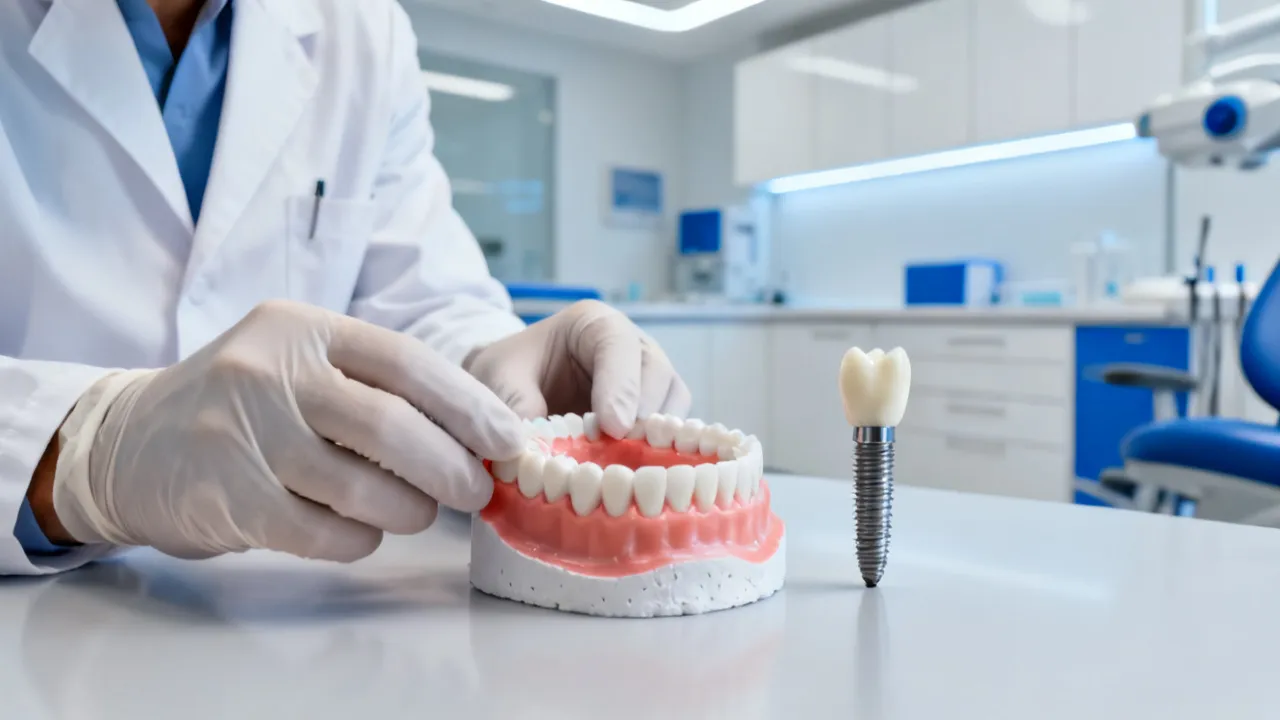
Alginate may be used during the early stages of implant planning, particularly for preliminary study models, opposing-arch records, diagnostic wax-ups, or fabrication of certain guides and trays. However, implant treatment often requires a more exact record of implant position, emergence profile, occlusion, and soft-tissue contours. The final impression or digital scan should be selected by the treating dentist or prosthodontist according to the restoration and implant system.
A patient should be cautious if a clinic presents one impression material as suitable for every implant case without discussing the surgical and restorative requirements. The material is only one part of a larger chain. Accurate imaging, communication between the surgeon and restorative clinician, appropriate implant components, a controlled laboratory workflow, and a well-maintained provisional or final restoration are also important.
For an implant-supported restoration, the accuracy requirement may differ depending on whether the restoration is for one tooth, several teeth, or a complete arch. A single implant crown may involve a relatively limited area, whereas a full-arch restoration requires careful coordination of multiple implant positions, occlusal relationships, soft-tissue contours, and vertical dimension. The clinician may combine a digital scan with conventional verification steps, depending on the situation.
Alginate can still be useful for the opposing arch. The opposing-arch record does not always require the same level of implant-position accuracy as the definitive implant impression, although it must be sufficiently complete to support occlusal planning. The decision should be made as part of the overall restorative workflow.
How to Obtain Dental Implants at Lower Cost in English-, Spanish-, and Portuguese-Speaking Markets
Lower-cost care should mean better value and transparent planning, not the removal of essential diagnostic or safety steps. The following process can help patients compare treatment responsibly.
Step 1: Define what the quoted price includes
Ask whether the quotation covers the consultation, radiographs or three-dimensional imaging, extraction, bone grafting, implant fixture, abutment, crown, temporary restoration, laboratory charges, medication, follow-up appointments, and management of complications. A price for the implant fixture alone is not the same as the price of a completed tooth.
Ask specifically whether the fee is per implant, per tooth, per arch, or per surgical stage. In a multiple-tooth treatment, one quoted figure may include several implants but exclude the prosthesis. A written itemization reduces the risk of comparing unlike services.
Step 2: Obtain a written treatment plan
The plan should identify the number and position of implants, the proposed restoration, the implant manufacturer or system when available, the anticipated treatment stages, and the conditions that could alter the estimate. Written information makes it easier to compare clinics across languages and regions.
The treatment plan should also explain alternatives. A bridge, removable partial denture, or preservation of the existing tooth may be considered in some circumstances. An implant consultation should be an opportunity for informed choice, not simply a sales presentation for one procedure.
Step 3: Verify professional credentials
Patients should confirm that the dentist is licensed in the relevant jurisdiction and determine whether the provider has training appropriate to implant surgery or implant restoration. Regulatory bodies, professional registers, and recognized dental associations can provide more dependable verification than anonymous testimonials.
Patients should also ask where surgery is performed, who provides sedation if it is used, and whether the facility has protocols for medical emergencies. A clinic’s website may provide useful background, but credential verification should come from an independent professional or regulatory source whenever possible.
Step 4: Compare diagnostic standards
A lower quote should not be accepted if it omits necessary assessment. The clinician may need a clinical examination, periodontal evaluation, medical-history review, radiographs, or cone-beam computed tomography. The imaging choice depends on the case, and radiation exposure should be justified according to clinical need.
Good planning should address the relationship between the proposed implant and nearby roots, nerves, sinuses, bone contours, and the future crown. Imaging alone does not replace clinical judgment. The dentist should explain how the information will influence the surgical and restorative plan.
Step 5: Ask about infection control and materials
Discuss sterilization procedures, disposable components, laboratory standards, implant-system documentation, and the way impressions or scans are transferred. These questions are appropriate whether treatment is provided locally or abroad.
Patients can request copies of relevant records, including radiographs, treatment notes, implant details, and restoration information. Such records may be important if the patient moves, changes dentists, or needs repair years later.
Step 6: Consider dental schools and teaching clinics
University dental centers may offer treatment under supervision at fees that differ from private practices. Appointments can take longer, and eligibility may be limited. Patients should ask who performs each stage, who supervises the treatment, and how follow-up is arranged.
Teaching clinics often use structured protocols and may provide access to specialists, but the patient should understand that treatment can involve multiple appointments and may be scheduled around academic terms. Lower fees should be weighed against time requirements and continuity of care.
Step 7: Compare regional clinics carefully
In large metropolitan areas, prices may differ from those in smaller cities because of rent, staffing, laboratory contracts, and local demand. A lower price in one region does not necessarily indicate lower clinical quality, just as a higher fee does not by itself prove superior care. The complete treatment process should be compared.
Patients should examine the clinic’s aftercare policy and not rely solely on online reviews. Reviews can describe communication and convenience, but they rarely provide a complete assessment of clinical indication, implant position, long-term maintenance, or complication management.
Step 8: Review insurance and financing conditions
Dental insurance may limit implant coverage, impose waiting periods, exclude bone grafting, or classify the crown and implant as separate benefits. Patients should request a written explanation of benefits and ask about annual maximums, deductibles, exclusions, and participating providers. Financing should be evaluated according to the total repayment amount rather than only the monthly figure.
Patients should also ask whether a discount applies only when treatment is paid in advance. A large upfront payment may create difficulty if the treatment plan changes or if the patient decides not to proceed. Payment terms should be written clearly.
Step 9: Evaluate dental tourism cautiously
Traveling for dental care can reduce some costs in certain circumstances, but transportation, accommodation, time away from work, currency conversion, language support, and follow-up visits must be included. Complications after returning home may create additional expense. Patients should ask who will provide aftercare, what happens if a component fails, and whether the original clinic will communicate with a local dentist.
Implant treatment may require multiple visits separated by healing periods. A short vacation schedule may be inadequate for diagnosis, surgery, healing assessment, and final restoration. Patients should be wary of plans that promise completion regardless of individual healing or anatomical findings.
Step 10: Avoid unnecessary urgency
Pressure to pay a deposit immediately, claims that an offer is available only for a very short time, or guarantees of a particular outcome should be treated cautiously. Implant decisions should be based on diagnosis and informed consent rather than promotional pressure.
Step 11: Maintain the result
Long-term maintenance includes daily plaque control, professional examinations, management of gum disease, and attention to bite-related problems. The cost of maintenance should be included in the patient’s planning. A lower initial fee may not represent good value if follow-up is unavailable or the restoration is difficult to repair.
Cost Ranges for One Dental Implant
The following figures are reference ranges for an individual dental implant in the listed countries. They should not be interpreted as universal quotes or as a guarantee that every component of treatment is included. Currency values are presented in the local format provided for comparison.
| Country | Currency | Reference price range for one implant |
|---|---|---|
| United States | USD | $3,000–$6,000 |
| United Kingdom | GBP | £2,000–£2,500 |
| Australia | AUD | AU$3,500–AU$6,500 |
| Canada | CAD | CA$3,000–CA$5,500 |
| Spain | EUR | €1,500–€2,500 |
| Chile | CLP | CLP$800,000–CLP$1,500,000 |
| Mexico | MXN | $15,000–$25,000 |
| Colombia | COP | $2,000,000–$4,000,000 |
| Peru | PEN | S/ 3,000–S/ 6,000 |
| Argentina | ARS | $80,000–$150,000 |
| Brazil | BRL | R$3,000–R$8,000 |
| Portugal | EUR | €1,000–€2,000 |
| Germany | EUR | €2,000–€3,500 |
| France | EUR | €1,500–€2,500 |
| Italy | EUR | €1,500–€3,000 |
| Japan | JPY | ¥300,000–¥700,000 |
These ranges concern an individual implant as a reference category, but terminology differs between clinics. One provider may use “implant” to mean the fixture only, while another may include the abutment and crown. Bone augmentation, sinus elevation, extraction, sedation, imaging, temporary teeth, laboratory work, and maintenance may be billed separately. Exchange rates and local economic conditions can also change the practical comparison.
Prices can also vary according to the material used for the crown, the laboratory’s manufacturing method, the complexity of the bite, the need for custom abutments, and whether a specialist is involved. A posterior molar may require a different restoration design from an anterior tooth, where appearance and soft-tissue contour may be particularly important.
When comparing international prices, patients should avoid converting currencies without considering purchasing power, taxes, payment methods, and exchange fees. A quote in one currency may exclude local taxes or include promotional conditions that are not available to every patient. The date of the quotation should be recorded because prices can change.
Examples of Information Sources for Lower-Cost Implant Research
The websites below represent different types of dental information providers, including clinic websites, dental-tourism services, insurance resources, and dental-plan organizations. They can help readers understand procedures, questions to ask, or possible service categories. They should not replace an examination by a licensed dental professional.
| Website or organization | Useful information and comparison focus |
|---|---|
| Dental Views | Discusses lower-cost dental implant options, treatment benefits, procedure categories, cost considerations, and common patient questions. |
| Atlantic Dental Group | Clinic-based information covering general dentistry, implants, orthodontics, cleaning, and emergency dental services. |
| DentaVacation | Provides dental-tourism information, international treatment comparisons, travel considerations, and destination-based planning. |
| American Dental Health Plans | Describes dental-plan and insurance-related considerations that may help patients review coverage and out-of-pocket expenses. |
| Rockville Dental Arts | Spanish-language clinic information covering implants, whitening, cleaning, orthodontics, and emergency care. |
| Union City Mini Dental Implants | Spanish-language information focused on mini dental implant services and related treatment discussions. |
| Cigna | Spanish-language educational material explaining dental implants, treatment stages, and questions patients may consider. |
| Rubi Odonto | Portuguese-language clinic information from a practice in Santo André, São Paulo, including implants, orthodontics, and cosmetic dentistry. |
| Odontologia Velasco | Portuguese-language information about implants, prostheses, aesthetic dentistry, and technology used in clinical services. |
| DentalVidas | Portuguese-language dental-plan information for individuals, families, and companies, including provider-network and emergency-service descriptions. |
source: www.dentalviews.com/low-cost-dental-implants/
source: www.atlanticdentalgrp.com
source: www.dentavacation.com
source: www.rockvilledentalarts.com/es/
source: www.unioncityminidentalimplants.com/es/
source: www.cigna.com/es-us/knowledge-center/guide-to-dental-implants
source: www.rubiodonto.com.br
source: www.odontologiavelasco.com.br
source: www.dentalvidas.com.br
How to Assess a Clinic’s Implant Proposal
Patients can use a structured checklist during a consultation. First, ask the clinician to explain why an implant is recommended instead of a bridge, removable partial denture, or another option. The answer should relate to the patient’s oral condition, preferences, prognosis, and general health.
Next, ask which professional performs the surgery and which professional designs and fits the final restoration. In some practices, one dentist manages the entire process; in others, an oral surgeon, periodontist, prosthodontist, general dentist, and laboratory work together. Neither arrangement is automatically superior, but the responsibilities should be clear.
Ask how long the complete sequence may take and what factors could extend it. Healing time differs between patients and may be affected by extraction, grafting, infection, smoking, diabetes control, medication, and the stability of the implant. A responsible explanation recognizes uncertainty rather than promising an identical schedule for every patient.
Request information about the implant system and replacement parts. Patients may need future maintenance many years after treatment. Records identifying the implant brand, model, diameter, length, and restorative components can be useful if care is later transferred to another clinic.
Finally, ask about post-treatment review. A clinic should be able to explain how it handles discomfort, loosening, fracture, infection, bite changes, or a restoration that needs adjustment. Written aftercare instructions and a reliable contact channel are important elements of value.
Conditions That May Affect Implant Eligibility or Cost
- Gum disease: Active periodontal inflammation should be evaluated and managed because the supporting tissues influence implant planning and maintenance.
- Bone volume: Insufficient height or width may lead to a recommendation for grafting or another approach, which can increase the treatment scope.
- Tooth extraction: Removing a damaged tooth may be a separate procedure. The timing of implant placement depends on infection, bone condition, and the treatment plan.
- Medical history: Conditions affecting healing, bleeding, immunity, or bone metabolism require individualized review.
- Medication: Patients should provide a complete medication list. They should not stop prescribed medication without advice from the relevant physician or dentist.
- Smoking and nicotine use: Nicotine exposure can affect oral tissues and healing. The clinician should discuss risk reduction before surgery.
- Occlusal forces: Bruxism, a strong bite, or an unfavorable opposing tooth may affect implant design and maintenance.
- Oral hygiene: Patients need a realistic plan for cleaning around the implant and attending follow-up examinations.
- Travel schedule: Treatment abroad may require multiple visits and sufficient time for assessment, surgery, healing, and restoration.
Where Alginate Fits in a Cost-Conscious Workflow
Alginate can support cost-conscious dentistry because it is practical for preliminary records and does not require sophisticated equipment. A clinic may use it to create study casts before deciding whether advanced imaging, a custom tray, or a definitive impression is needed. This can make the early diagnostic workflow efficient.
However, cost reduction should not involve using alginate when its limitations could compromise the restoration. For example, an implant crown requires a dependable record of the implant and surrounding anatomy. If the impression is distorted, the laboratory may produce a restoration that requires significant adjustment or remake. The apparent material saving could then be outweighed by chair time, laboratory fees, and patient inconvenience.
Intraoral scanning can also influence the economic calculation. The initial investment in equipment and training may be significant, but digital records can streamline communication with laboratories in appropriate cases. The best approach depends on the practice’s technology, clinician experience, laboratory relationship, and patient needs.
A sensible workflow may use different materials at different stages. An alginate impression can support a diagnostic cast and preliminary planning. A more precise impression or scan can then be obtained after tooth preparation, implant placement, soft-tissue healing, or final prosthetic design. This staged approach avoids demanding that one material perform every task.
Infection Control and Handling Considerations
Impressions can carry saliva, blood, and microorganisms from the oral cavity. They should be handled as contaminated clinical items until cleaned and disinfected according to accepted procedures. The dental team should use appropriate personal protective equipment, rinse the impression, apply a compatible disinfectant for the recommended contact time, and avoid methods that damage the material.
Disinfectant compatibility matters because some chemicals or prolonged immersion may alter alginate. The practice should follow the product’s instructions and local professional or regulatory guidance. The same principle applies to impression trays: reusable trays require proper cleaning, packaging, sterilization, and inspection before use.
Dental laboratories should receive information about the material, disinfection procedure, and any special handling requirements. Clear communication reduces the risk of accidental distortion or inappropriate storage before the cast is poured.
Storage containers should protect the impression from compression and excessive heat. Wrapping an impression too tightly can deform thin areas. Leaving it uncovered can accelerate moisture loss. A sealed environment that maintains appropriate humidity for a short period is generally preferable to either dry exposure or prolonged immersion, but the product instructions remain the governing source.
Frequently Asked Questions
Is alginate accurate enough for dental implants?
It may be appropriate for preliminary study models or opposing-arch records, but it is not automatically suitable for the definitive implant impression. The treating clinician chooses between conventional elastomeric materials and digital scanning according to the implant position, restoration, soft-tissue anatomy, and laboratory requirements.
What is the principal alginate disadvantage?
Its principal limitation is dimensional instability after setting. Moisture loss can cause shrinkage, while water absorption can cause expansion. Prompt, controlled handling and timely pouring are therefore essential.
Why do alginate impressions sometimes tear?
Tearing may result from thin material areas, deep undercuts, insufficient thickness, premature removal, or an unsuitable tray. The operator can reduce the risk by selecting an appropriate tray, maintaining adequate bulk, allowing complete setting, and removing the tray decisively.
Can an alginate impression be stored overnight?
Storage recommendations vary by product, but extended storage is generally undesirable. If an overnight delay cannot be avoided, the dental team should follow the manufacturer’s specific instructions and understand that accuracy may be affected.
Does a lower implant price mean lower quality?
Not necessarily. Regional labor costs, clinic overhead, laboratory arrangements, insurance structures, and treatment complexity can influence fees. Nevertheless, a low quotation should be examined carefully to determine whether it includes the complete restoration, diagnostics, follow-up, and management of additional procedures.
Are dental-tourism implant prices comparable with local prices?
Only after all costs are included. Patients should add flights, accommodation, local transportation, time away from work, translation, insurance limitations, and possible follow-up treatment. The legal and practical arrangements for managing complications should also be clarified.
What should a patient ask before accepting an implant quotation?
Ask what is included, who performs each stage, which implant system is used, whether imaging and grafting are included, how long the treatment may take, what warranty terms mean, how complications are handled, and how records will be transferred if future care occurs elsewhere.
Can insurance cover a dental implant?
Coverage varies by policy and jurisdiction. Some plans exclude implants, while others may cover selected components or provide benefits under specific conditions. Patients should consult the written plan documents and obtain a pre-treatment estimate where available.
What is the difference between an implant and an implant-supported crown?
The implant is the component placed in the jawbone. The abutment connects the implant to the visible restoration, and the crown replaces the visible part of the tooth. A clinic’s advertised “implant price” may include one component or the complete tooth, so terminology must be clarified.
Is a digital scan always better than alginate?
Digital scanning can offer immediate electronic records and may improve comfort for some patients, but its suitability depends on the case, software, operator training, access to equipment, and the quality of the scan. Alginate remains useful for many diagnostic purposes.
Can alginate be used for a crown impression?
Alginate may be used for an opposing-arch impression or preliminary model, but a definitive crown impression commonly requires a material with improved detail reproduction and dimensional stability. The clinician should select the material after evaluating the preparation, finish line, moisture control, and laboratory requirements.
Why is immediate pouring recommended?
Immediate pouring reduces the opportunity for syneresis, imbibition, evaporation, compression, and other forms of distortion. The cast is more likely to represent the patient’s anatomy when the impression is processed promptly and according to the manufacturer’s directions.
Practical Conclusions
The keyword 알지네이트 장단점, meaning the advantages and disadvantages of alginate, reflects a central issue in dental material selection: convenience must be balanced with accuracy and stability. Alginate remains a valuable material because it is economical, easy to manipulate, patient-friendly in many routine situations, and suitable for preliminary impressions. Its weaknesses—especially dimensional change, limited storage stability, tearing, and lower precision—become more important when the record will guide complex restorative or implant work.
For dental teams, reliable results depend on choosing the material according to the indication, using the correct tray, measuring powder and water consistently, mixing thoroughly, seating without movement, allowing complete setting, removing carefully, disinfecting compatibly, and pouring promptly. These steps are simple, but failure at any point can reduce the value of the impression.
For patients comparing lower-cost dental implants, the most reliable strategy is to evaluate the complete treatment plan, verify clinical credentials, compare included services, understand regional prices, and plan for maintenance. A well-informed decision is not based on the lowest headline figure. It is based on clear diagnosis, appropriate materials, transparent fees, safe clinical standards, and realistic long-term support.
Alginate can contribute to efficient and affordable dental care when its role is understood correctly. It is not a deficient material simply because newer technologies exist, and it is not a universal material simply because it is convenient. Its value lies in matching its capabilities to the clinical question. When the goal is a preliminary model or broad diagnostic record, alginate may offer an excellent balance of cost, speed, and performance. When the goal is definitive implant or fixed-restorative accuracy, a different material or digital method may be more appropriate.
Disclaimer
1. The information above comes from online resources, and the data is as of October 2023.
2. Dental implant prices are for reference only and may vary by region, clinic, and doctor. Alginate and implant treatment decisions should be discussed with a qualified dental professional after an individual examination. The listed websites are provided as informational references; inclusion does not constitute endorsement, accreditation, or a guarantee of treatment quality.