Understanding Apicoectomy Costs and Treatment Choices
This guide explains 치근단 절제술 비용, known in English as apicoectomy cost, including what the procedure involves, which factors influence the final bill, and how to compare treatment plans safely. It also distinguishes apicoectomy from dental implants, presents reference implant prices in selected language markets, and reviews practical ways to manage dental expenses through qualified clinics, insurance, payment plans, and informed treatment planning.
What Does 치근단 절제술 비용 Mean?
치근단 절제술 비용 refers to the cost of an apicoectomy, a minor endodontic surgery performed to remove infected or inflamed tissue around the tip of a tooth root. In English-speaking dental literature, the procedure is usually called an apicoectomy, root-end surgery, or periradicular surgery.
An apicoectomy is generally considered when inflammation remains after root canal treatment, when conventional retreatment is not practical, or when a hidden fracture, blocked canal, separated instrument, or complex root anatomy prevents predictable nonsurgical treatment. The procedure is intended to preserve the natural tooth whenever the tooth can still be restored and adequately supported by the surrounding bone and gum tissues.
It is important not to confuse apicoectomy with a dental implant. An apicoectomy treats the root end of an existing tooth. A dental implant replaces a missing tooth after extraction or tooth loss. The procedures have different purposes, clinical steps, recovery periods, risks, and pricing structures. A patient searching for 치근단 절제술 비용 should therefore obtain an endodontic assessment before comparing implant prices.
There is no single universal apicoectomy fee. The final amount depends on the tooth involved, diagnostic imaging, the complexity of the root anatomy, the clinician’s training, the location of the practice, the type of anesthesia, laboratory requirements, restoration needs, and whether the procedure is covered by insurance or a public reimbursement system.
The price can also change when treatment is performed by a general dentist rather than an endodontist, when a dental operating microscope is used, or when the clinic includes postoperative radiographs and review appointments in a package. A quote should therefore be read as a description of a treatment plan, not merely as a number.
Key Cost Information at a Glance
- An apicoectomy is a tooth-preserving surgical procedure, not an implant procedure.
- The quoted amount may include only the surgery, or it may also include imaging, consultation, anesthesia, sutures, follow-up, and restoration.
- A crown or permanent filling may be needed after surgery and can represent a separate charge.
- A dental microscope, three-dimensional imaging, and specialist care may improve diagnostic precision but can increase the fee.
- Low-cost treatment should be evaluated by clinical scope and qualifications, not by the advertised number alone.
- When a tooth cannot be predictably saved, extraction followed by an implant may be discussed, but this is a different treatment pathway.
- The most appropriate treatment depends on prognosis, not simply on the initial price.
- A written, itemized estimate makes it easier to compare clinics and identify excluded services.
What an Apicoectomy Involves
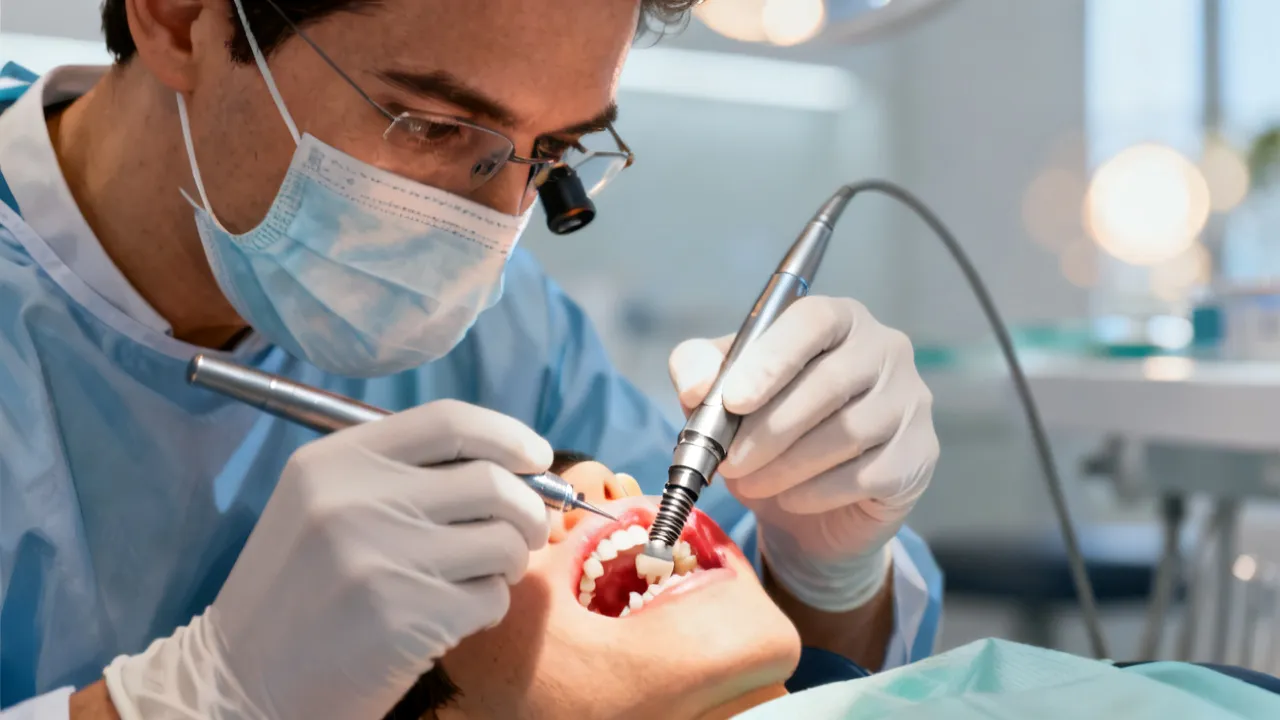
During an apicoectomy, the dentist or endodontist administers local anesthesia and makes a small incision in the gum near the affected root. A limited amount of bone may be removed to expose the root tip and the surrounding inflamed tissue. The clinician then removes the root tip, cleans the infected area, and seals the end of the root with a biocompatible filling material. The gum is repositioned and usually closed with sutures.
The procedure is commonly performed in an outpatient dental setting. Treatment time varies according to the tooth and the number of roots involved. Front teeth often provide more direct access than molars, whose roots may be close to the sinus, mandibular nerve, or other anatomical structures. A molar operation may therefore require more advanced imaging and specialist planning.
Modern root-end surgery may be performed with magnification and microsurgical instruments. These tools can help the clinician identify small anatomical details, inspect the resected root surface, and place a more precise root-end seal. Microsurgical methods are not automatically necessary for every case, but the dentist may recommend them when the root anatomy or previous treatment makes visual accuracy especially important.
After treatment, patients may experience mild swelling, tenderness, bruising, or sensitivity. Written postoperative instructions normally include guidance about oral hygiene, diet, pain control, and the timing of suture removal. Symptoms that worsen rather than improve, persistent fever, significant swelling, uncontrolled bleeding, or difficulty swallowing should prompt urgent contact with the dental practice.
Why an Apicoectomy May Be Recommended
A previous root canal does not always eliminate infection around the root. Bacteria may remain in an accessory canal, a narrow anatomical branch, or an area that instruments cannot reach. In some cases, a leaking restoration allows microorganisms to enter again. Root-end surgery gives the clinician access to the area through the outer surface of the bone rather than through the crown of the tooth.
Common reasons for considering the procedure include:
- Persistent periapical inflammation after root canal treatment.
- A lesion that has not resolved during an appropriate period of review.
- A blocked canal or a separated instrument that makes retreatment difficult.
- Complex root anatomy, including pronounced curvature or accessory canals.
- A suspected root-end leakage that can be treated surgically.
- Biopsy of unusual tissue when the clinician considers laboratory analysis appropriate.
- A desire to preserve a strategically important natural tooth.
- Persistent symptoms associated with a tooth that has already received technically adequate nonsurgical treatment.
An apicoectomy is not appropriate for every tooth. Severe vertical root fracture, inadequate periodontal support, extensive decay below the gum, poor restorability, or an unfavorable crown-to-root relationship may make extraction more predictable. A qualified dentist or endodontist should explain both tooth-preserving and replacement options.
The reason for treatment failure matters. Persistent disease may be caused by an untreated canal, leakage through the crown, a fracture, a cyst-like lesion, periodontal disease, or a non-dental source of pain. Surgery cannot correct every cause of symptoms. A careful diagnosis before treatment helps prevent unnecessary procedures and unexpected costs.
How 치근단 절제술 비용 Is Usually Built
Patients often receive a single headline price, but the total expense is usually made up of several components. A clear estimate should state which items are included and which are separate.
| Cost component | What it may include |
|---|---|
| Assessment | Clinical examination, review of previous root canal records, photographs, and treatment planning. |
| Imaging | Periapical radiographs and, when justified, cone-beam computed tomography. |
| Surgical procedure | Local anesthesia, access to the root tip, removal of infected tissue, root-end resection, and sealing. |
| Materials and closure | Root-end filling material, sutures, sterile supplies, and protective dressing when used. |
| Aftercare | Postoperative review, suture removal, radiographic monitoring, and management of complications. |
| Restorative treatment | A permanent filling, crown, or replacement of a defective restoration when clinically required. |
| Additional treatment | Medication, periodontal treatment, management of an existing restoration, or referral for biopsy when indicated. |
For example, a low initial quote may cover the surgical appointment only, while imaging and the final crown are billed separately. Another clinic may provide a bundled estimate that appears higher but includes several visits and follow-up imaging. Comparing the scope of treatment is more meaningful than comparing two unitemized figures.
Some clinics also distinguish between a consultation fee and a surgical fee. The consultation may include only a brief examination, or it may include a detailed review of previous radiographs and a three-dimensional scan. Patients should ask whether the consultation fee is credited toward treatment if surgery is scheduled later.
Clinical Factors That Influence the Price
Tooth location and root anatomy
Front teeth are often more accessible, while premolars and molars can require a more complex approach. The number of roots, root curvature, proximity to anatomical structures, and thickness of the surrounding bone can influence the length and difficulty of surgery. A molar with several roots may require more extensive access than a single-rooted front tooth.
Diagnostic imaging
Standard dental radiographs may be sufficient in straightforward cases. Cone-beam computed tomography can provide three-dimensional information when the diagnosis is uncertain or the anatomy is complicated. The scan should be recommended for a clinical reason rather than added automatically.
Three-dimensional imaging may help identify the position of the lesion, the number of roots, the relationship to the sinus or nerve, and possible root fractures. However, imaging cannot guarantee that a tooth is restorable or that surgery will succeed. It is one part of the diagnostic process.
Specialist expertise
Endodontists receive advanced training in the diagnosis and treatment of diseases affecting the dental pulp and tissues around the root. A general dentist may also perform selected surgical procedures. Fees can differ according to experience, equipment, practice overhead, and the complexity of the case.
Specialist fees may be higher, but a specialist consultation can be valuable when previous treatment has failed, the anatomy is difficult, or the diagnosis is uncertain. Patients should consider the entire treatment pathway, including the possibility of avoiding repeated procedures, rather than judging expertise by the initial fee alone.
Restoration after surgery
Successful root-end surgery does not automatically mean that the visible portion of the tooth is structurally sound. A tooth with a large existing filling may need a new restoration or crown to reduce the risk of fracture. The restorative recommendation should be explained separately from the apicoectomy itself.
A crown is not required for every tooth. The decision depends on the amount of remaining tooth structure, the tooth’s position, the forces placed on it, the type of existing restoration, and the patient’s bite. A front tooth with substantial healthy structure may be restored differently from a heavily filled molar.
Insurance and reimbursement
Coverage differs by country, insurer, policy, and clinical indication. Some plans cover endodontic surgery but apply deductibles, waiting periods, annual limits, or network restrictions. Patients should ask the insurer whether diagnostic imaging, specialist fees, anesthesia, restoration, and follow-up are reimbursed.
Preauthorization may be available in some systems. This does not always guarantee payment, but it can help the patient understand the insurer’s estimated contribution. The dental office may submit a claim as a courtesy, although the patient remains responsible for confirming the policy terms.
Practice location and operating costs
Fees are often higher in major metropolitan areas because of rent, staffing, equipment, and laboratory expenses. Regional clinics may have different fee structures, but distance can create additional travel and follow-up costs. A patient should consider accessibility, emergency availability, and the ability to attend review visits.
Anesthesia and sedation
Most apicoectomies are performed with local anesthesia. Some patients may ask about oral sedation, inhaled sedation, or intravenous sedation because of anxiety. These options may require additional fees and may involve special preparation, monitoring, transportation, and restrictions after treatment. Sedation should be recommended according to medical history and patient needs, not simply added for convenience.
How to Compare Apicoectomy Quotes Safely
- Confirm the diagnosis. Ask whether the problem is persistent infection, a fracture, a cyst-like lesion, periodontal disease, or another condition.
- Request a written treatment plan. The document should identify the tooth, planned procedure, imaging, anesthesia, materials, and follow-up.
- Ask whether retreatment is an alternative. In some cases, nonsurgical root canal retreatment may be considered before surgery.
- Check the tooth’s restorability. Surgery is less useful if the tooth cannot support a durable filling or crown.
- Clarify additional charges. Ask specifically about consultation, three-dimensional imaging, medications, suture removal, emergency visits, and the final restoration.
- Review qualifications. Verify the practitioner’s dental registration and relevant surgical or endodontic training through the appropriate professional regulator.
- Consider continuity of care. A lower initial price may be less attractive if postoperative review is difficult to arrange.
- Do not select treatment solely on price. The least expensive option may not be the most suitable if it omits essential diagnosis or restoration.
- Ask about the expected outcome. The dentist should explain the likely prognosis, possible alternatives, and circumstances that could lead to extraction.
- Confirm the cancellation and refund policy. This is particularly important when a consultation, laboratory service, or surgical appointment has been prepaid.
Apicoectomy Versus Root Canal Retreatment
Patients are sometimes offered a choice between repeat nonsurgical root canal treatment and apicoectomy. Retreatment involves reopening the tooth, removing existing filling material, locating missed canals, cleaning the canal system, and sealing it again. Apicoectomy approaches the problem from the root end and may be preferable when the crown is difficult to remove or when a post, crown, separated instrument, or blockage makes internal access risky.
Retreatment may be considered when the original root canal appears technically inadequate and can be corrected through the crown. Surgery may be considered when the root canal is technically satisfactory but disease persists at the root end, or when conventional access would damage the restoration or tooth structure. The decision is individualized and may depend on the quality of the existing restoration, the presence of a post, and the suspected cause of failure.
Costs should be compared carefully. Retreatment may include removal and replacement of a crown, while apicoectomy may include surgical fees and later restoration. Neither option should be chosen solely because one first appointment is cheaper.
Apicoectomy Versus Extraction and Dental Implant
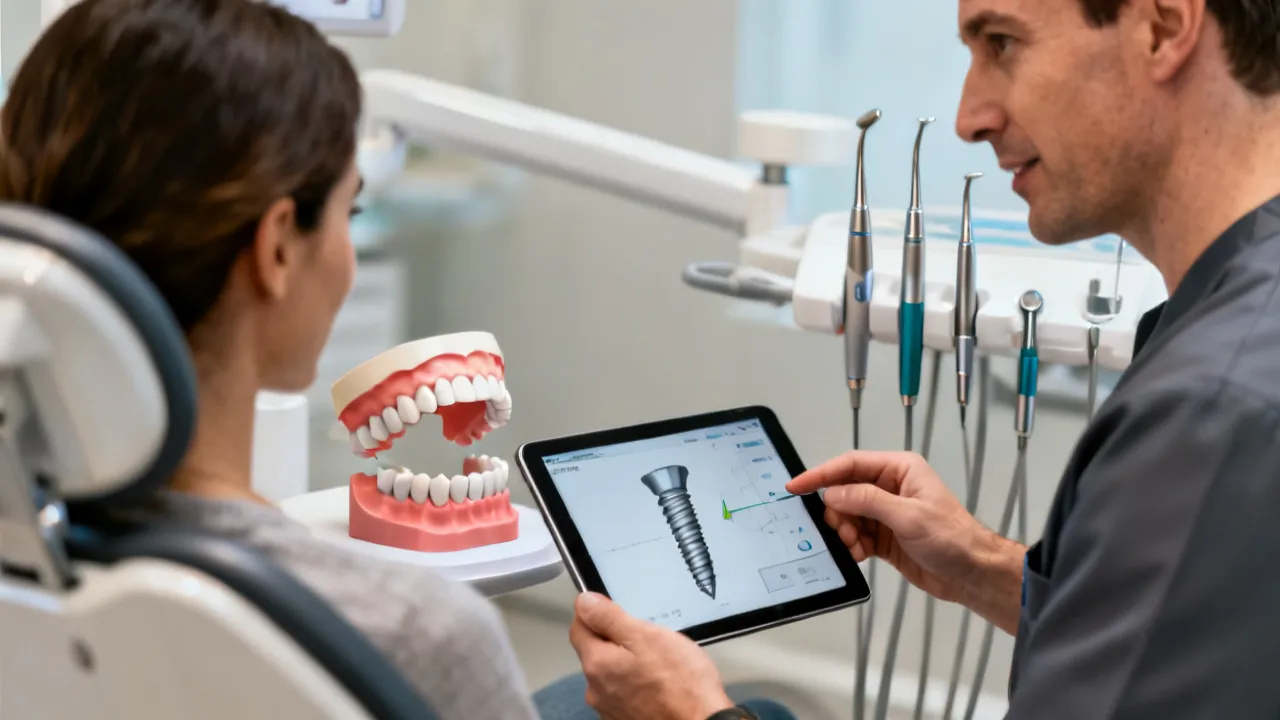
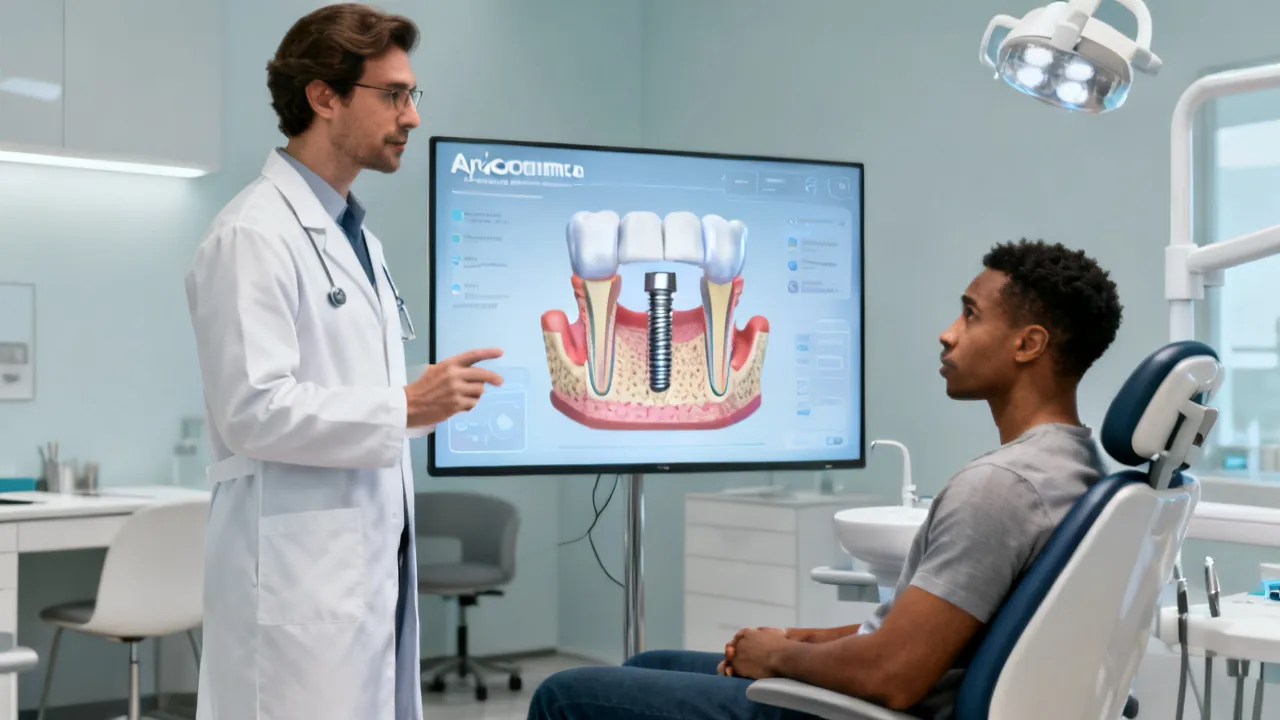
The central decision is often whether to preserve the natural tooth or remove it and replace it. An apicoectomy is usually more conservative because it retains the original tooth, periodontal ligament, and surrounding functional structures. An implant, by contrast, requires extraction or an already missing tooth, surgical placement of an implant fixture, healing, and a prosthetic crown.
| Consideration | Apicoectomy | Dental implant pathway |
|---|---|---|
| Primary purpose | Treats disease at the root end of an existing tooth. | Replaces a missing or non-restorable tooth. |
| Natural tooth | Preserved when clinically suitable. | Removed or already absent. |
| Main stages | Root-end access, removal of inflamed tissue, sealing, and review. | Extraction if needed, bone assessment, implant placement, healing, and crown delivery. |
| Cost structure | Surgery, imaging, follow-up, and possible restoration. | Extraction, grafting when needed, implant fixture, abutment, crown, imaging, and follow-up. |
| Decision basis | Whether the tooth is restorable and the disease is surgically manageable. | Whether the tooth is non-restorable and the patient is suitable for replacement treatment. |
An expert assessment should consider periodontal support, remaining tooth structure, occlusion, parafunctional habits, general health, smoking status, hygiene, and the patient’s long-term priorities. A patient should be cautious about any recommendation that presents an implant as an automatic substitute without explaining whether the natural tooth can reasonably be preserved.
Extraction may initially appear simpler, but it can create additional treatment needs. Depending on the location and condition of the bone, the patient may need socket preservation, bone grafting, a temporary replacement, implant surgery, and a final crown. The total pathway can take months and involve several providers. These factors do not make implants inappropriate; they simply show why the comparison should be comprehensive.
Reference Prices for Individual Dental Implants
The following figures concern an individual dental implant treatment reference, not apicoectomy. They are included because patients researching 치근단 절제술 비용 may also encounter implant advertisements online. The figures should not be added to an apicoectomy quote and do not necessarily represent a complete implant package. Depending on the provider, an advertised amount may exclude extraction, bone grafting, temporary teeth, abutment, crown, imaging, sedation, or maintenance.
| Country | Currency | Reference price range for one dental implant |
|---|---|---|
| United States | USD | $3,000–$6,000 |
| United Kingdom | GBP | £2,000–£2,500 |
| Australia | AUD | AU$3,500–AU$6,500 |
| Canada | CAD | CA$3,000–CA$5,500 |
| Spain | EUR | €1,500–€2,500 |
| Chile | CLP | CLP$800,000–CLP$1,500,000 |
| Mexico | MXN | $15,000–$25,000 |
| Colombia | COP | $2,000,000–$4,000,000 |
| Peru | PEN | S/ 3,000–S/ 6,000 |
| Argentina | ARS | $80,000–$150,000 |
| Brazil | BRL | R$3,000–R$8,000 |
| Portugal | EUR | €1,000–€2,000 |
| Germany | EUR | €2,000–€3,500 |
| France | EUR | €1,500–€2,500 |
| Italy | EUR | €1,500–€3,000 |
| Japan | JPY | ¥300,000–¥700,000 |
These figures are broad references rather than guaranteed market prices. Exchange rates, inflation, implant brands, laboratory standards, clinic location, and the patient’s anatomy can change the final amount. An implant quote should identify whether it includes the fixture, abutment, crown, provisional tooth, imaging, grafting, and aftercare.
Websites Providing Dental Cost and Implant Information
The following websites represent different types of dental information providers, including dental clinics, dental plan organizations, and dental tourism services. They can help readers understand treatment categories, financing concepts, or the components of implant care. They should not replace an examination by a licensed clinician.
| Website or organization | Primary information and useful features |
|---|---|
| Dental Views | Discusses lower-cost implant options, treatment types, procedure stages, common questions, and cost considerations. |
| Atlantic Dental Group | Provides information about general dentistry, orthodontics, implants, emergency care, appointments, and clinical services. |
| DentaVacation | Explains dental tourism, international treatment planning, destination comparisons, travel arrangements, and pricing considerations. |
| American Dental Health Plans | Offers information about dental insurance plans, coverage choices, applications, and methods of reducing out-of-pocket expenses. |
| Rockville Dental Arts | Spanish-language dental information covering implants, cleaning, whitening, orthodontics, and emergency services. |
| Union City Mini Dental Implants | Describes mini dental implant services and situations in which smaller implant systems may be considered. |
| Cigna | Provides a Spanish-language educational guide to dental implants, treatment stages, and general insurance-related information. |
| Rubi Odonto | Brazilian clinic information covering orthodontics, whitening, implants, and other dental services. |
| Odontologia Velasco | Describes implant, prosthetic, and aesthetic dentistry services and the use of contemporary dental technologies. |
| DentalVidas | Discusses dental plans for individuals, families, and organizations, with a broad provider network and emergency service information. |
Source: The descriptions above are based on the organizations’ supplied online service information.
How to Obtain Dental Implants at Lower Cost in English-, Spanish-, and Portuguese-Speaking Markets
Patients seeking lower-cost implants should focus on reducing avoidable expenses without compromising diagnosis, infection control, material traceability, or follow-up. The following approach applies across many English-speaking, Spanish-speaking, and Portuguese-speaking markets, although local rules and insurance systems differ.
1. Confirm that an implant is necessary
Before paying for an implant consultation, ask whether the tooth can be restored or treated with endodontic surgery. If the tooth is suitable for apicoectomy, preserving it may involve fewer treatment stages than extraction, grafting, implant placement, and crown fabrication. The decision must be based on prognosis rather than the advertised price of either option.
2. Obtain a written diagnosis and itemized plan
Request a plan that separates extraction, imaging, implant placement, abutment, crown, temporary restoration, grafting, anesthesia, and follow-up. An implant price that excludes the crown is not directly comparable with a package that includes the final prosthesis. The same principle applies when comparing apicoectomy quotes.
3. Compare at least two qualified providers
Use clinics that identify the responsible dentist, professional registration, facility location, implant system, and emergency contact process. Compare the proposed treatment, materials, warranties or revision policies, and follow-up arrangements. Online reviews can provide context, but they are not a substitute for clinical credentials or independent diagnosis.
4. Ask whether a dental school or teaching clinic is appropriate
University dental hospitals and teaching clinics may offer reduced fees in exchange for longer appointments or treatment performed under supervision. Eligibility, waiting times, case selection, and availability vary. Patients should ask who performs the surgery, who supervises it, and how complications are handled.
5. Investigate insurance and dental plans
In the United States, patients may compare dental insurance, employer benefits, discount plans, or clinic payment arrangements. In the United Kingdom, public and private routes differ, and implant eligibility under public care may be restricted. Australia and Canada also have varied public, private, and employer-supported arrangements. Spanish- and Portuguese-speaking markets likewise differ by region and provider.
Before enrolling, check waiting periods, annual maximums, exclusions for missing teeth, preauthorization rules, specialist referrals, and coverage of bone grafting. A plan with a low monthly premium may not reduce the total cost if the relevant procedure is excluded.
6. Ask about staged treatment
Some patients can safely complete treatment in stages, such as stabilizing gum health first and scheduling the implant crown later. A temporary replacement may be used when clinically suitable. Staging should be planned by the dentist; delaying a necessary restoration without supervision can lead to tooth movement, bone changes, or additional treatment.
7. Avoid unnecessary add-ons
Ask why each scan, graft, sedation method, branded component, or supplementary procedure is recommended. Some items are essential for a particular anatomy, while others may be optional. The correct question is not whether an add-on is expensive, but whether it has a clear clinical purpose for the individual case.
8. Consider local continuity before dental tourism
Traveling abroad can reduce the listed treatment fee in some markets, but the total budget should include flights, accommodation, time away from work, translation, insurance, transport, and potential revision treatment. Follow-up can become difficult if the treating clinic is far away. Patients should also confirm implant component availability near their home in case a replacement part is required.
9. Verify infection-control and regulatory standards
A lower fee should never justify uncertain sterilization, unlicensed practice, unclear implant provenance, or inadequate emergency arrangements. Ask whether the clinic follows the relevant national infection-prevention rules and whether implant records, lot numbers, and treatment documentation will be provided.
10. Maintain the result
Regular professional maintenance, daily plaque control, smoking cessation, management of diabetes where relevant, and protection against excessive biting forces can help protect an implant and surrounding tissues. Maintenance costs should be included in any long-term comparison.
Preparing for an Apicoectomy Consultation
Patients can make the consultation more useful by bringing previous dental records, recent radiographs, a list of medications, and information about allergies or medical conditions. If a crown, bridge, or post is present, records from the restorative dentist may help the endodontist understand the tooth’s history.
It is also helpful to write down when symptoms began, whether pain is triggered by biting or temperature, whether swelling has appeared, and whether a previous antibiotic prescription changed the symptoms. Antibiotics may temporarily reduce swelling in some situations, but they do not remove the underlying source of an endodontic infection. The dentist must determine whether surgery, retreatment, drainage, or another approach is required.
Patients should ask for an explanation in language they understand. If the clinic uses technical terms such as periapical lesion, perforation, retreatment, root-end filling, or vertical fracture, asking for a diagram or written explanation can make the decision clearer. Informed consent should include the expected benefits, alternatives, risks, and possibility that the tooth may still require extraction.
Recovery and Follow-Up Costs
The immediate postoperative period usually involves protecting the surgical area and controlling discomfort. The dentist may advise a soft diet for a short time, avoiding vigorous rinsing during the first period, applying a cold pack externally, and keeping the head elevated when resting. Instructions vary, so the patient should follow the treating clinician’s specific advice.
Sutures may be removed during a follow-up appointment if non-dissolving material was used. A later clinical and radiographic review may be needed to assess bone healing. Because radiographic healing can take longer than gum healing, the final assessment may occur months after surgery rather than immediately.
These visits can be included in the original quote or billed separately. Before treatment, ask how many routine follow-ups are expected, whether postoperative radiographs are included, and what happens if symptoms continue. A clinic that explains its follow-up policy clearly can help the patient budget more accurately.
Risks, Limitations, and Recovery
As with any surgical procedure, an apicoectomy can involve bleeding, swelling, infection, bruising, temporary numbness, discomfort, or incomplete healing. The risk profile depends on the tooth and the surrounding anatomy. Surgical access near the sinus or a nerve requires particularly careful assessment.
Implant treatment also has risks, including infection around the implant, poor integration, mechanical complications, peri-implant inflammation, and fracture or loosening of prosthetic components. Good oral hygiene and professional maintenance are important, but no clinician can guarantee a particular outcome.
Patients should disclose medical conditions, medications, allergies, pregnancy, previous reactions to anesthesia, smoking, and any history of radiation treatment or immune suppression. These factors do not automatically prevent treatment, but they may affect planning, healing, or medication selection.
Questions to Ask Before an Apicoectomy
- What evidence shows that infection or inflammation remains?
- Could root canal retreatment provide a reasonable alternative?
- Is a vertical root fracture suspected?
- Can the tooth support a durable filling or crown after treatment?
- Will a microscope or three-dimensional imaging be useful in this case?
- Who will perform the surgery, and what training do they have?
- What exactly is included in the 치근단 절제술 비용?
- Are consultation, radiographs, cone-beam imaging, anesthesia, sutures, and follow-up included?
- Will a biopsy be sent to a laboratory if the tissue appears unusual?
- What symptoms should trigger an urgent call after surgery?
- When will healing be evaluated radiographically?
- What is the likely cost of the final restoration?
- What is the plan if the root-end surgery does not resolve the problem?
Questions to Ask Before Choosing an Implant
- Is the tooth definitely non-restorable?
- Does the price include extraction if needed?
- Is bone grafting required, and why?
- Which implant manufacturer and model will be used?
- Does the quote include the abutment and final crown?
- Will a temporary tooth be provided?
- How many visits are expected?
- Who provides emergency care during healing?
- What maintenance schedule is recommended?
- What happens if the implant or crown requires repair?
- Will the patient receive the implant brand, model, and component records?
- Are laboratory fees and taxes included in the advertised price?
Industry Expert Perspective
From an endodontic and restorative planning perspective, the most reliable cost comparison begins with prognosis. A tooth that has adequate bone support, sound remaining structure, and a treatable root-end problem may be a strong candidate for apicoectomy. Conversely, a tooth with a confirmed vertical fracture or insufficient structure may require removal regardless of the patient’s preference.
Experts also evaluate the total treatment pathway rather than the first appointment. A surgical procedure that appears inexpensive may be followed by a substantial restoration. An implant advertisement may exclude the extraction, graft, abutment, crown, or maintenance. The clinically appropriate option can only be identified after examination and imaging.
Another important consideration is continuity. Dental treatment is not a one-day purchase. It involves diagnosis, informed consent, surgery or restoration, healing, monitoring, and management of unexpected findings. A provider who explains these stages clearly is often easier to evaluate than one who emphasizes a single promotional figure.
Patients should also be aware that a price difference does not necessarily indicate a difference in quality, and a high price does not guarantee success. The best comparison includes the clinician’s qualifications, the diagnostic reasoning, the materials and techniques used, the restoration plan, the emergency policy, and the expected follow-up.
Frequently Asked Questions
Is 치근단 절제술 the same as a root canal?
No. A root canal treats infected or inflamed tissue inside the tooth and its canals. An apicoectomy treats persistent disease around the root tip through a small surgical opening in the gum and bone. An apicoectomy may be considered after root canal treatment when inflammation remains or conventional retreatment is impractical.
How much does an apicoectomy cost?
The amount varies according to location, tooth complexity, specialist involvement, imaging, anesthesia, restoration, and insurance. Because the supplied implant price ranges do not apply to apicoectomy, patients should request a local itemized quote rather than using implant figures as a substitute.
Is an apicoectomy less expensive than an implant?
It may involve fewer treatment stages because it preserves the natural tooth, but the answer depends on the case. If the tooth also needs a crown or has a poor prognosis, the total may differ. An implant may require extraction, grafting, surgery, a healing period, and a crown. A dentist should compare the complete pathways.
Can every failed root canal be treated with an apicoectomy?
No. A fracture, advanced periodontal disease, severe structural damage, or an inaccessible surgical site may make the procedure unsuitable. The clinician should identify the reason for the previous treatment failure before recommending surgery.
Does dental insurance cover apicoectomy?
Some policies cover endodontic surgery, while others limit coverage or apply waiting periods and annual maximums. The patient should obtain preauthorization when available and verify coverage for imaging, specialist fees, restoration, and follow-up.
Does a dental implant price include the crown?
Not always. Some providers advertise the implant fixture alone, while others include the abutment and crown. Patients should request a written breakdown of every stage and ask whether extraction, grafting, temporary teeth, imaging, and maintenance are included.
Are dental tourism prices automatically better?
No. A lower clinic fee may be offset by travel expenses, accommodation, time away from work, translation, and follow-up treatment. Patients should assess regulation, qualifications, implant documentation, emergency arrangements, and the availability of local care after returning home.
How can I reduce dental treatment expenses without compromising safety?
Confirm the diagnosis, compare itemized plans, investigate qualified teaching clinics, review insurance and dental plan conditions, ask about appropriate staged treatment, and avoid unnecessary services. Do not compromise on sterilization, licensed care, diagnostic imaging when clinically indicated, or postoperative review.
How long does healing take after an apicoectomy?
Initial gum healing commonly occurs over the early postoperative period, while bone healing and radiographic resolution may take considerably longer. The dentist determines the review schedule according to the tooth, lesion, symptoms, and radiographic findings.
When should I seek urgent help after surgery?
Contact the dental practice promptly for increasing swelling, fever, worsening pain, persistent bleeding, pus, an allergic reaction, difficulty swallowing, difficulty breathing, or new and persistent numbness. Emergency symptoms involving breathing or swallowing require immediate medical attention.
Practical Checklist for Reviewing a Quote
| Question | Why it matters |
|---|---|
| Is the diagnosis written down? | It confirms what problem the proposed treatment is intended to solve. |
| Is the tooth restorable? | Surgery is only useful when the remaining tooth can support a durable restoration. |
| Are imaging fees listed? | Radiographs or three-dimensional scans may be billed separately. |
| Are follow-up visits included? | Postoperative review is part of responsible surgical care. |
| Is the final restoration included? | The tooth may need a filling or crown after endodontic treatment. |
| Are credentials verifiable? | Professional registration and relevant training support informed provider selection. |
| What happens if complications occur? | Patients need to know who will provide additional care and how it will be billed. |
| Is the estimate valid for a stated period? | Fees, laboratory prices, and insurance contributions may change over time. |
Conclusion
Understanding 치근단 절제술 비용 requires more than locating the lowest advertised number. Apicoectomy is a targeted procedure designed to manage disease around the root tip while preserving a natural tooth when the prognosis is reasonable. The total cost should be assessed alongside diagnosis, imaging, surgical complexity, specialist expertise, restoration, insurance, and follow-up.
Dental implant prices are relevant only when a tooth is missing or cannot be predictably restored. They should be compared as complete treatment pathways, not as isolated promotional figures. Whether a patient is considering an apicoectomy, retreatment, extraction, or implant, the safest financial decision begins with a qualified examination and a transparent written plan.
A patient who understands what is included in the estimate is better prepared to compare treatment options, ask meaningful questions, and avoid unexpected expenses. The goal should be a durable and clinically appropriate result, with cost considered as one important part of the decision rather than the only deciding factor.
Disclaimer
1. The information above is compiled from online resources, and the data is stated as of October 2023.
2. Dental implant prices are for reference only and may vary according to region, clinic, dentist, treatment complexity, materials, insurance, and exchange rates. The listed implant ranges do not represent apicoectomy fees and should not be used as a personal treatment estimate. Clinical decisions should be made with a licensed dental professional.
References and Links
Source: Dental Views
Source: Atlantic Dental Group
Source: DentaVacation
Source: American Dental Health Plans
Source: Rockville Dental Arts Spanish-language website
Source: Union City Mini Dental Implants
Source: Cigna Spanish-language dental implant guide
Source: Rubi Odonto
Source: Odontologia Velasco
Source: DentalVidas