Understanding Dental Insurance Cash Benefits
This guide explains how 치아보험 금전적 보상 generally works, including fixed dental benefits, reimbursement-based payments, exclusions, waiting periods, claim documents, and policy comparison methods. Dental insurance is a private risk-management product that may supplement public health coverage, but the amount and timing of payment depend on contract terms, diagnosis, treatment codes, coverage limits, and the insurer’s review. Readers should examine the policy wording, disclosure requirements, renewal conditions, and coordination with other insurance before making a decision.
Executive Overview
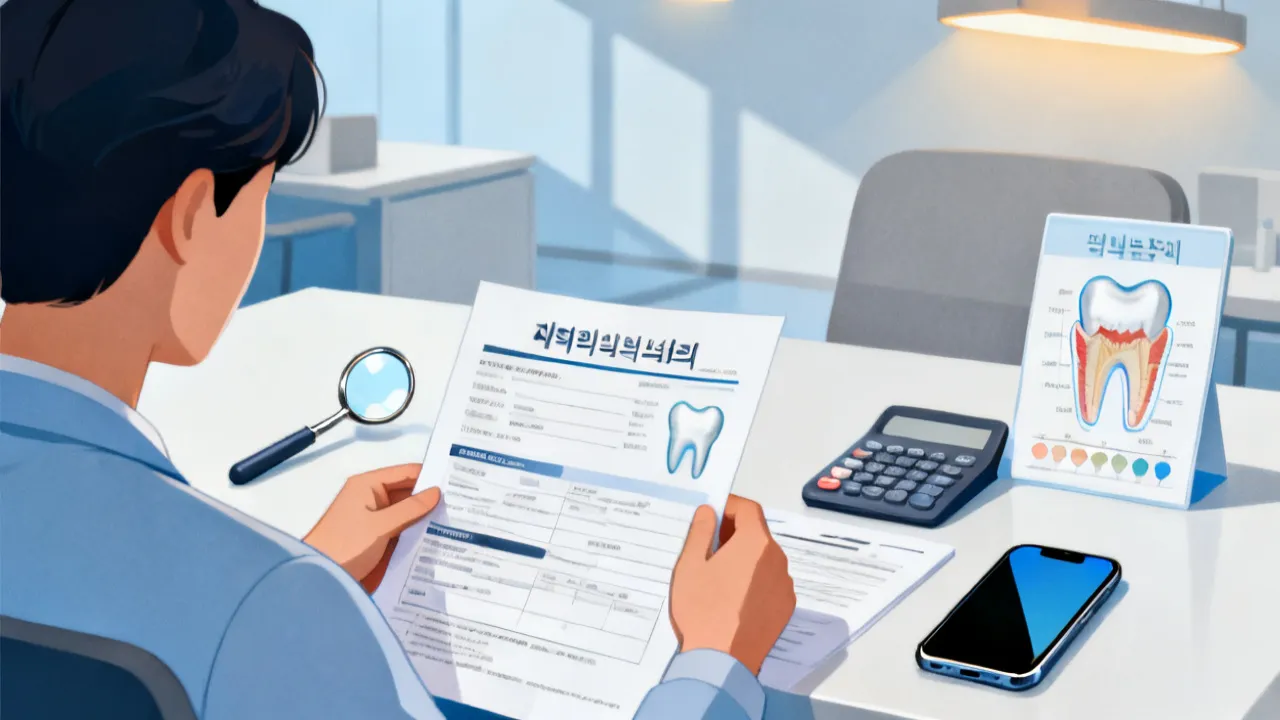
치아보험 금전적 보상 refers to the monetary payment a policyholder may receive after a covered dental diagnosis, accident, or procedure. In practical terms, the payment may be a predetermined benefit for an insured event, reimbursement of eligible expenses, or a combination of both. The exact amount is not determined by an advertisement alone. It is established by the insurance contract, the insured person’s condition, the treatment performed, the applicable waiting or reduction period, the policy limits, and the documents submitted during the claim process.
The most important distinction is between a fixed-benefit structure and an expense-reimbursement structure. Under a fixed-benefit structure, the insurer pays a stated amount when the contractual requirements are satisfied. The payment may remain the same even when the actual dental bill is higher or lower, subject to policy conditions. Under a reimbursement structure, the insurer calculates an eligible portion of an actual expense after applying deductibles, co-payments, exclusions, limits, and other coordination rules. Some dental products use elements of both approaches.
Consumers should therefore evaluate dental insurance as a contract rather than as a promise to cover every dental bill. A policy may provide meaningful financial support for large restorative procedures, yet offer limited protection for routine examinations, cosmetic services, maintenance visits, or treatment connected to a condition that existed before enrollment. Conversely, a policy with a modest premium may contain narrow benefits, a long waiting period, a reduced-benefit period, or a lower payment during an initial period.
From an industry-analysis perspective, the central question is not simply “How much does the policy pay?” It is “Under what verified circumstances does the policy pay, how is the amount calculated, and what evidence is required?” This approach helps consumers compare products more accurately and reduces misunderstandings at the time of treatment.
The financial value of a dental policy should also be considered over time. A policyholder may pay premiums for several years without submitting a claim, or may experience a costly procedure soon after enrollment but discover that the relevant benefit is subject to a waiting period. The outcome depends on the policy’s design and the timing of the dental event. For this reason, dental insurance should be analyzed as a form of risk management rather than as a guaranteed profit or savings program.
What 치아보험 금전적 보상 Means in Practice
The Korean expression 치아보험 금전적 보상 can be translated as monetary compensation from dental insurance, although “benefit payment” is often more precise in insurance terminology. The word “compensation” may suggest that an insurer restores every financial loss. In reality, the insurer usually pays according to defined benefit categories and contractual limits. The distinction is important because dental policies often classify procedures in detail.
A contract may separate coverage into categories such as:
- Dental diagnosis benefits, where payment follows a covered diagnosis.
- Restorative treatment benefits for procedures such as fillings or inlays, depending on the policy.
- Crown benefits for covered crown treatment.
- Root canal treatment benefits.
- Prosthetic benefits for bridges, dentures, or implants, subject to specific definitions.
- Oral surgery benefits, when the procedure meets the policy wording.
- Accident-related dental benefits, which may have different conditions from illness-related treatment.
- Hospitalization or surgery benefits, where a dental procedure satisfies a defined surgical classification.
- Preventive or examination benefits, if the product expressly includes them.
These categories are not universal. One insurer may classify a procedure as a covered restorative service, while another may exclude the same procedure or place it under a different benefit group. Even within one product, the policy may distinguish between permanent teeth and primary teeth, initial treatment and replacement treatment, or a newly diagnosed condition and a pre-existing condition.
Payment can also depend on the cause of treatment. A dental injury caused by an accident may be handled under an accident-related clause, while decay, periodontal disease, or routine deterioration may be assessed under illness-related provisions. The contract may require a particular diagnosis, treatment method, or clinical record. A dental clinic’s ordinary description of a procedure does not automatically determine insurance eligibility.
Another practical issue is that one treatment plan can contain several separate services. For example, a patient may receive an extraction, bone graft, implant placement, abutment, and crown over several months. The policy may treat these as separate benefits, a single prosthetic event, or a mixture of covered and excluded services. The policyholder should not assume that every item on the treatment plan will generate a separate payment.
Two Main Payment Models
1. Fixed or Scheduled Benefit Payments
A fixed benefit is specified in the policy schedule or benefit table. If the claim satisfies the definition of the insured event, the insurer pays the stated amount, subject to any applicable reduction, waiting period, annual limit, payment frequency rule, or other contractual condition. The actual amount paid to the dental clinic is not necessarily the basis for the calculation.
For example, a policy may state that a qualifying crown treatment produces a particular benefit amount. The insurer may then review whether the tooth, diagnosis, treatment date, material, and procedure meet the contract definition. If they do, the scheduled amount may be payable. If the treatment is excluded, performed during a waiting period, or classified differently from the insured event, payment may be reduced or declined under the policy.
Scheduled benefits are relatively easy to understand once the definitions are clear, but the schedule alone is not sufficient. Consumers should also inspect the definitions section, exclusions, payment limitations, renewal provisions, and conditions relating to treatment of the same tooth.
A fixed benefit can be higher or lower than the actual patient expense. If a policy pays a specified amount for an implant and the eligible patient expense is lower than that amount, the policy may still pay the contractual benefit if the arrangement is genuinely fixed-benefit coverage. If the policy is reimbursement-based, however, payment may be restricted to the recognized expense. The distinction should be confirmed before comparing products or estimating financial outcomes.
2. Reimbursement-Based Payments
Reimbursement-based coverage generally considers an eligible treatment expense. The insurer may assess the actual amount paid, the portion recognized under the policy, deductibles, co-payments, coverage percentages, and annual or lifetime limits. The final payment may therefore differ from the amount shown on a clinic receipt.
Reimbursement products require careful attention to documentation. The insurer may request a treatment certificate, dental chart, radiographic image, itemized receipt, medical expense statement, or written explanation of the diagnosis. The required documents can vary according to the claim type and the insurer’s review process.
An important issue is overlap with other insurance. If two policies cover the same reimbursable expense, the total recovery may be restricted by the terms of the contracts and applicable insurance principles. A policyholder should not assume that holding several policies automatically produces multiple full reimbursements. Fixed benefits can operate differently, but the governing contract must still be checked.
Reimbursement policies may also use an “eligible expense” concept rather than simply the total amount paid. A clinic may invoice a treatment package containing consultation, imaging, materials, laboratory charges, and follow-up care. The insurer may recognize only specific portions under the policy. An itemized receipt is therefore more useful than a general receipt that lists only a combined total.
Why the Advertised Benefit May Not Equal the Payment
Dental insurance advertising commonly emphasizes a prominent benefit figure. That figure can be useful for initial comparison, but it is only one part of the financial structure. The payable amount may be affected by several conditions:
- Waiting period: Certain dental conditions or procedures may not be covered during an initial period after policy inception.
- Reduced-benefit period: The policy may pay only a percentage of the stated benefit during an early period.
- Annual treatment limit: A benefit may be limited by the number of teeth, procedures, claims, or total payment in a policy year.
- Lifetime or aggregate limit: Some benefits may have a maximum payable amount over the life of the contract.
- Tooth-specific rules: The contract may impose conditions when the same tooth receives repeated or replacement treatment.
- Exclusions: Cosmetic procedures, maintenance services, pre-existing conditions, or particular materials may be excluded.
- Definition of treatment: A clinic’s procedure name may not match the policy’s defined benefit category.
- Policy status: Missed premiums, cancellation, lapse, or non-renewal can affect eligibility.
- Claim timing: A claim submitted after a contractual notification period may require additional review or may be affected by limitation provisions.
- Coordination rules: Other insurance, public benefits, or previous payments may influence a reimbursement calculation.
The presence of a benefit in a product brochure does not establish that every patient receives it. A sound assessment combines the benefit schedule with the complete policy wording and the individual’s dental history.
Consumers should be especially cautious with examples that show a large total payment without identifying the assumptions behind the example. The illustration may assume that the policy has been maintained for a certain period, that the treatment is performed after the waiting period, that the tooth was healthy at enrollment, and that no annual limit has been used. If any assumption changes, the result can change substantially.
Eligibility and Underwriting Considerations
Before issuing a policy, an insurer may ask questions about recent dental treatment, diagnoses, missing teeth, periodontal disease, crowns, bridges, implants, dentures, root canal treatment, or planned procedures. These questions are part of underwriting. The applicant has a responsibility to answer accurately and completely within the scope of the form.
Failure to disclose a material fact can create problems during claim review. A consumer may believe that a condition is minor or already resolved, while the insurer may regard it as relevant to risk assessment. The safest approach is to read each question literally, review available dental records where necessary, and request clarification through an official customer-service channel if the wording is ambiguous.
Some products may accept applicants with existing dental issues but exclude related treatment, apply a waiting period, adjust the premium, or limit certain benefits. Acceptance into the policy does not necessarily mean that every existing condition is covered. The underwriting result and any special conditions should be retained with the policy documents.
Age, occupation, smoking status, treatment history, and the condition of existing teeth may influence the product’s eligibility or premium structure. These factors differ by insurer and product. General statements about universal acceptance or guaranteed payment should be treated cautiously unless supported by the actual contract.
Underwriting can also affect the practical meaning of a policy’s benefit schedule. Two applicants may purchase products with the same advertised name but receive different exclusions or terms because their application information differs. The consumer should review the issued policy, not rely only on the generic product page used before application.
Pre-Existing Conditions and Previously Treated Teeth
Pre-existing conditions are among the most significant issues in 치아보험 금전적 보상. A policy may define a pre-existing condition by diagnosis, symptoms, treatment, recommendation for treatment, or the presence of a restoration. The relevant look-back period and definition vary by contract.
For example, a tooth that already has a crown may be treated differently from an untouched tooth. A tooth with a documented cavity before enrollment may not qualify for a later filling claim, even if the filling takes place after the policy begins. A recommended treatment that has not yet been performed may also have significance under the policy’s underwriting or exclusion wording.
Consumers should not postpone medically appropriate dental care solely to pursue insurance eligibility. Delaying treatment can allow decay or periodontal disease to progress and may affect both health and future claim assessment. Insurance planning should follow sound clinical advice, not replace it.
Existing missing teeth require particular attention. Some policies may exclude prosthetic treatment for teeth that were missing before the policy began, while others may impose a special waiting period or define eligibility differently for accidental tooth loss. The application form may ask about missing teeth directly, and an incomplete answer can create a dispute later.
A history of prior treatment does not necessarily mean that every future treatment involving the same tooth is excluded. The result depends on the wording. A policy may cover a new and unrelated accident, a different diagnosis, or a procedure that falls within a separate benefit category. The correct approach is to identify the specific fact that triggers the exclusion rather than make a broad assumption about the entire tooth.
Waiting Periods, Reduction Periods, and Effective Dates
The effective date is the date on which coverage begins under the contract, but not every benefit necessarily becomes payable on that date. A product may use different waiting periods for different treatment categories. Preventive or accident-related benefits may follow one rule, while illness-related restorative or prosthetic benefits follow another.
A reduction period is also distinct from a waiting period. During a waiting period, a benefit may not be payable for a specified event. During a reduction period, a partial benefit may be payable. The policy should state how these periods operate and whether the relevant date is the diagnosis date, treatment date, claim date, or another defined date.
This distinction matters when treatment is planned across multiple appointments. A consultation before the effective date, a diagnosis on one date, preparation on another date, and final placement later may create questions about which date controls. Consumers should ask the insurer for a written explanation before beginning an expensive course of treatment if the timing is close to a coverage boundary.
Payment timing can also matter when a policy year changes during treatment. A procedure begun in one year and completed in the next may be subject to separate annual limits or a single-event rule. Similarly, a policy may define the payable event by the completion date rather than the date of preparation. These details should be clarified before scheduling a series of major procedures.
Understanding Common Dental Benefit Categories
Fillings and Restorative Treatment
Fillings may be classified according to the material used, the number of surfaces treated, or the policy’s own procedure definitions. Some policies distinguish between basic and advanced restorative methods. The contract may also exclude replacement of an existing filling, treatment of a tooth diagnosed before enrollment, or treatment regarded as cosmetic.
A dental receipt alone may not establish eligibility. The insurer may need the diagnosis, tooth number, restoration material, and treatment date. Where a policy contains material-specific limits, the patient should confirm the classification before treatment rather than relying on informal terminology.
In some cases, a dentist may recommend an inlay, onlay, filling, or crown depending on the amount of remaining tooth structure. These procedures can have different insurance classifications even when they address a similar underlying problem. The patient should make the clinical decision with the dentist, then ask the insurer how the selected procedure is defined under the policy.
Crowns
Crown benefits often have detailed conditions. The policy may limit the number of covered crowns in a year, distinguish first-time treatment from replacement, or exclude crowns used for reasons that do not fit the covered diagnosis. A crown placed after root canal treatment may be assessed under more than one possible benefit category, but the final interpretation depends on the wording.
Because crown procedures can involve several stages, the treatment plan and final invoice should be retained. A claim may require evidence of the underlying diagnosis, tooth number, preparation, and final placement.
Replacement crowns can create additional issues. A crown may fail because of fracture, recurrent decay, wear, or an accident. The policy may contain a minimum interval before a replacement benefit becomes available, or it may exclude the replacement of a restoration that existed before enrollment. The age and history of the crown may therefore be relevant to the claim.
Root Canal Treatment
Root canal treatment is usually associated with a diagnosed dental condition, but coverage depends on the policy definition. The contract may specify whether repeat treatment, retreatment, or treatment of a previously treated tooth is covered. The insurer may also ask for diagnostic images or clinical notes to confirm the procedure.
Root canal treatment may occur together with a crown, but the two services are not necessarily treated as one claim. One policy may offer separate benefits, while another may limit payment to one category or require that each procedure meet independent conditions. The claim documents should identify each service clearly.
Implants, Bridges, and Dentures
Prosthetic benefits can be financially significant, but they also tend to contain more conditions. A policy may impose separate limits for implants, bridges, and dentures; restrict the number of payable teeth; distinguish between illness and accident; or exclude replacement of an existing prosthesis. Missing teeth before enrollment may receive special treatment.
Implant-related coverage may involve several stages, including extraction, bone treatment, implant placement, abutment work, and crown placement. The policy may cover only one stage or define the entire service as a single benefit. Consumers should avoid assuming that every component appears as a separate payable event.
Bridges and dentures may have their own eligibility definitions. For example, the policy may define the number of artificial teeth, the supporting teeth, the type of device, and the minimum period before replacement. Temporary devices or laboratory adjustments may be excluded even when the final prosthesis is covered.
Periodontal and Oral Surgery Benefits
Periodontal treatment and oral surgery may be covered only when a defined diagnosis and procedure are present. Scaling, maintenance visits, or routine care may be treated differently from surgery for a diagnosed disease. Wisdom-tooth extraction can also be subject to specific clauses, particularly when the contract distinguishes ordinary extraction from surgery.
Periodontal disease may develop gradually, which can make the relevant diagnosis date difficult to determine. The insurer may review records from before enrollment to establish whether symptoms or treatment existed earlier. This is one reason why complete and accurate clinical documentation matters.
Orthodontics and Cosmetic Procedures
Orthodontic treatment is often governed by separate conditions, age restrictions, or limited benefits. Cosmetic whitening, veneers performed primarily for appearance, elective reshaping, and similar services may be excluded or treated differently from medically necessary restorative treatment. The consumer should review the exclusion section rather than infer coverage from the broad description of dental care.
Even when a procedure improves both appearance and function, the insurer may assess the primary purpose and the policy definition. A veneer used to restore a damaged tooth may not be treated identically to a veneer selected solely for cosmetic improvement. The clinical record and contract wording are relevant.
How Insurers Assess a Claim
A claim review normally involves several questions:
- Was the policy active on the relevant date?
- Was the claimant an insured person under the contract?
- Does the diagnosis match the covered event?
- Does the procedure match the contractual definition?
- Did the condition or treatment occur during a waiting or reduction period?
- Was the tooth or condition present before enrollment?
- Has a benefit limit already been reached?
- Are the submitted documents sufficient and consistent?
- Was the claim filed within the applicable period?
- Does another policy or payment arrangement affect the calculation?
Insurers may review dental records, treatment notes, radiographs, invoices, medical certificates, and claim forms. The purpose is to compare the clinical facts with the policy conditions. A request for additional documents does not necessarily mean that the claim will be rejected; it may simply indicate that the initial material does not resolve a coverage question.
From an expert perspective, the strongest claim file is coherent. The tooth number should correspond across the treatment certificate, chart, radiograph, and receipt. The diagnosis should be identifiable, and the dates should make chronological sense. Inconsistent records can cause delays even when the treatment itself is legitimate.
The insurer may also compare the claim with previous claims involving the same tooth. This does not mean that a later claim is automatically invalid. It means that the insurer may need to determine whether the procedure is a replacement, continuation, repeat treatment, or separate covered event. Clear records and an accurate treatment chronology can help resolve this issue.
Documents Commonly Used in a Dental Claim
Document requirements vary, so the insurer’s current instructions should be followed. Depending on the claim, the following may be requested:
| Document | Purpose |
|---|---|
| Insurance claim form | Identifies the policy, claimant, treatment, and requested benefit. |
| Dental treatment certificate | Describes the diagnosis, procedure, tooth number, and treatment date. |
| Itemized receipt | Shows the services provided and the amount charged. |
| Dental chart or clinical record | Provides treatment history and clinical context. |
| Radiographic image or report | May support the diagnosis or confirm the condition of a tooth. |
| Proof of payment | May verify that the stated expense was actually paid. |
| Identity or account information | Supports claimant verification and payment processing. |
| Prior treatment history | May explain whether a tooth was previously treated or restored. |
A policyholder should retain copies of everything submitted, including electronic uploads and correspondence. If the insurer requests clarification, the response should address the specific question and preserve the original records.
Documents should be obtained in a timely manner because clinics may use different systems for issuing certificates, receipts, and radiographic records. A patient who waits until several months after treatment may face difficulty locating the exact provider, treatment date, or itemized charge. Creating a digital folder for each treatment episode can make the claim process more orderly.
Comparing Dental Insurance Products
Premium price should not be the only comparison criterion. A product with a lower monthly premium may provide smaller scheduled benefits, narrower definitions, longer waiting periods, or more restrictive annual limits. A product with broader benefits may cost more, but the additional premium is worthwhile only if its terms align with the policyholder’s needs and anticipated risk.
| Comparison Area | Questions to Ask |
|---|---|
| Benefit type | Is payment fixed, reimbursable, or a combination? |
| Covered procedures | Which fillings, crowns, root canal treatments, prosthetics, or surgeries qualify? |
| Waiting period | When does each major benefit become payable? |
| Reduction period | Is the benefit reduced during an early period? |
| Pre-existing conditions | How are previously diagnosed or treated teeth handled? |
| Limits | Are there annual, tooth-specific, procedure-specific, or lifetime limits? |
| Renewal | Can the premium or terms change at renewal? |
| Exclusions | Are cosmetic, preventive, replacement, or maintenance services excluded? |
| Claims | Which documents are needed, and how can a claim be submitted? |
| Cancellation | What happens to pending claims and previously paid benefits if the policy ends? |
Comparisons should be made on an equivalent basis. For example, compare the total annual premium with the actual benefit limits, not merely the largest headline benefit. Also consider the time value of premiums, the likelihood of meeting the conditions, and whether the policy covers the types of treatment that are clinically relevant to the individual.
It is useful to create a comparison sheet with separate columns for premium, first-year benefits, later-year benefits, waiting periods, reduction percentages, limits, exclusions, and renewal terms. This prevents a high benefit in one category from hiding weak protection in another. It also makes it easier to distinguish benefits that are available immediately from benefits that become meaningful only after a substantial period.
Consumers should compare the policy’s treatment definitions, not just familiar procedure names. Terms such as “major dental,” “advanced restoration,” or “comprehensive prosthetic care” may sound broad but can have narrow legal definitions. The actual definition should be copied into the comparison notes where necessary.
Premiums, Expected Value, and Financial Planning
Insurance is a risk-transfer arrangement. The policyholder pays premiums in exchange for contractual protection against specified events. A claim may never occur, or it may occur after premiums have been paid for a substantial period. The purpose of insurance is not necessarily to produce a positive financial return on every policy. It is to manage uncertainty and protect household cash flow when a covered event occurs.
A disciplined comparison can begin with four figures:
- Total expected premium over the planned holding period.
- Benefits that are realistically relevant to the policyholder.
- Waiting and reduction periods that affect near-term protection.
- Limits and exclusions that may reduce the practical payment.
This calculation should not be presented as a guaranteed return analysis. Dental treatment needs are uncertain, and the policy may be renewed, changed, or discontinued according to contract rules. The consumer should also account for ordinary dental expenses, which may remain payable regardless of insurance.
For households managing a limited budget, it may be useful to compare dental insurance with a planned healthcare reserve, while recognizing that these are different financial tools. Insurance provides contractual risk protection; a reserve provides liquidity. The appropriate choice depends on financial capacity, health history, risk tolerance, and the specific terms available.
A financial assessment should include the possibility that premiums continue after a benefit limit has been reached. For example, if an annual or lifetime limit restricts future claims, the policyholder may still owe premiums to maintain other benefits. The timing of major procedures and the continuation of premium obligations should be considered together.
It is also important not to treat a projected benefit as certain household income. A benefit is conditional and may be delayed while documents are reviewed. A policyholder should maintain enough cash or credit capacity to pay the clinic when treatment is performed, even if a later insurance payment is expected.
Interaction with Public Health Coverage
In Korea, dental care may involve both National Health Insurance coverage and private insurance arrangements. Public coverage and private dental insurance are separate systems with different eligibility rules, payment methods, and definitions. A procedure recognized under public health coverage is not automatically covered under a private dental policy, and a private benefit does not establish eligibility under the public system.
Patients should ask the dental clinic to explain the expected patient charge and the clinical procedure, while asking the insurer whether that procedure fits the private policy wording. These are separate inquiries. The clinic can explain treatment and billing, but the insurer determines contractual eligibility under its policy.
Official information from the National Health Insurance Service and the Health Insurance Review and Assessment Service can help consumers understand public coverage rules. For private insurance interpretation, the relevant policy documents, insurer notices, and guidance from the Financial Supervisory Service are more directly applicable. Rules can change, so current official materials should be consulted.
When both public and private systems are involved, the patient should retain the final billing statement showing which portion was covered publicly and which portion was paid personally. This distinction may be relevant to a private reimbursement claim. A private insurer may ask for proof of the actual out-of-pocket expense rather than the clinic’s total charge.
Claims: A Step-by-Step Guide
- Review the policy before treatment. Identify the relevant benefit category, waiting period, exclusions, and document requirements.
- Ask the clinic for a treatment explanation. Confirm the diagnosis, tooth number, procedure name, materials, and expected dates.
- Contact the insurer when eligibility is uncertain. Ask a precise question and request a written response or a record of the inquiry.
- Keep itemized documents. Retain receipts, treatment certificates, images, charts, and payment records.
- Submit the claim through an approved channel. Follow the insurer’s current electronic, postal, or branch-based process.
- Respond to document requests promptly. Provide only accurate information and keep copies of the submission.
- Review the claim decision. Check the approved benefit, deductions, reason for any reduction, and applicable policy clause.
- Request clarification or reconsideration if necessary. Ask the insurer to identify the precise contractual basis for a denial or reduced payment.
- Use formal dispute channels when appropriate. If direct communication does not resolve the issue, consult the relevant consumer-protection or financial-dispute process.
Do not alter clinical records or ask a provider to describe treatment inaccurately. A claim should reflect what actually occurred. Misrepresentation can create legal, contractual, and ethical consequences.
Before submitting electronically, check whether uploaded images are readable and whether all pages of a multi-page document are included. A missing page, unclear scan, or mismatch between the claimant’s name and the policy information can create avoidable delays. If documents are sent by mail, using a trackable delivery method may help establish when the insurer received them.
When asking for reconsideration, organize the request around facts rather than frustration. Identify the claim number, treatment date, tooth number, procedure, amount requested, amount paid, and the policy clause cited by the insurer. Then explain which factual point appears to be incomplete or misunderstood and attach supporting documents.
Conditions and Requirements for Payment
Although each policy differs, a typical payment assessment may require all of the following conditions:
- The policy was valid and premiums were properly maintained on the relevant date.
- The claimant was covered under the policy.
- The event occurred within the policy period.
- The diagnosis and treatment satisfied the insured-event definition.
- The condition was not excluded as pre-existing or otherwise excluded.
- The treatment was not subject to an unmet waiting period.
- The claim remained within the applicable benefit limit.
- The submitted records were sufficient to verify the event.
- The claim was submitted within any contractual notification or limitation period.
- The policyholder complied with material disclosure and claim procedures.
These conditions should be read together. Satisfying one condition does not override another. For instance, a treatment may be a listed procedure but still be excluded because the same tooth had been treated before enrollment or because the annual limit had already been reached.
The policy may also impose a requirement that the treatment be performed by an eligible provider or in a recognized medical setting. If the policy uses specific provider qualifications, treatment performed elsewhere may be assessed differently. The policyholder should confirm this issue when receiving treatment outside ordinary dental-clinic arrangements.
Renewal, Cancellation, and Policy Changes
Consumers should distinguish between non-renewable, renewable, and periodically renewable structures. A renewable policy may continue under defined conditions, but premiums, benefit schedules, or terms can be affected by the contract and applicable regulation. The possibility of renewal does not necessarily mean that the original premium remains unchanged.
Before cancelling a policy, consider whether a replacement policy would impose a new waiting period, underwriting review, exclusion, or higher premium. A new application may also require disclosure of dental treatment received after the original policy was issued. Cancellation decisions should therefore be based on the full effect on protection, not just the current premium.
When an insurer proposes a change, the policyholder should examine the notice, effective date, revised premium, and altered benefit conditions. Official written communication is more reliable than informal comparisons or promotional summaries.
A lapse caused by unpaid premiums may have consequences different from voluntary cancellation. Some contracts provide a period during which payment can be restored, while others may require a new application or may restrict benefits during reinstatement. Policyholders who experience payment difficulty should contact the insurer promptly rather than assume that coverage continues indefinitely.
Pending claims deserve separate attention. A treatment performed while the policy was active may remain subject to review after cancellation, but the exact result depends on the contract and claim timing. Consumers should ask the insurer how cancellation affects an unsubmitted or pending claim before ending the policy.
Common Misunderstandings
“A large benefit figure means the insurer pays that amount for every dental visit.”
Usually, the figure applies only to a defined event. Routine examinations, ordinary cleaning, cosmetic treatment, and excluded procedures may not qualify. The benefit schedule must be read with the definitions and exclusions.
“Any treatment after enrollment is a new claim.”
Not necessarily. The insurer may assess when the condition began, whether it was diagnosed previously, and whether the tooth had prior treatment. The treatment date alone may not settle eligibility.
“The clinic’s invoice determines the insurance payment.”
The invoice is evidence of the expense and procedure, but the policy determines the benefit. The insurer may use the invoice together with the diagnosis, chart, images, and contractual definitions.
“Several policies always produce several full payments.”
That depends on whether the coverage is fixed-benefit or reimbursement-based and on the coordination provisions. Duplicate reimbursement of the same expense may be restricted.
“A verbal statement from a sales representative overrides the policy.”
Consumers should rely on the written contract and official insurer communications. If a material representation influenced the purchase, retain evidence and seek formal clarification.
“The most expensive treatment is always the most valuable coverage.”
Not necessarily. A high-limit implant benefit may be less useful to someone whose principal risk is restorative treatment, while a broad restorative benefit may be more relevant to another person. Coverage should be matched to realistic needs rather than to the largest number in the brochure.
“A pre-authorization guarantees payment.”
A preliminary confirmation may be useful, but it may not replace a full claim review. The final payment can still depend on the completed procedure, final documents, policy status, and facts that were not available at the time of the preliminary inquiry.
Expert Perspective on Dental Insurance Value
From an industry expert’s perspective, dental insurance is most useful when the policy’s coverage design matches the policyholder’s actual risk profile. Someone mainly concerned about a possible major prosthetic expense may prioritize implant, bridge, or denture definitions and limits. Another person may value restorative treatment benefits or accident-related dental protection. A policy designed for one purpose may be inefficient for another.
The practical value of 치아보험 금전적 보상 also depends on timing. A policy purchased immediately before planned treatment may not provide the expected support because of underwriting, pre-existing-condition provisions, or waiting periods. Insurance is generally structured for uncertain future events, not for converting an already known treatment plan into a payable claim.
Experts also examine administrative clarity. A product with simple definitions and transparent claim requirements can be easier to use than one with a larger nominal benefit but numerous technical restrictions. The claims process, customer-service quality, document standards, and clarity of renewal notices are legitimate comparison factors.
Finally, dental insurance should be considered alongside preventive care. Regular examinations, appropriate oral hygiene, early diagnosis, and clinically recommended treatment may reduce the severity of future problems, although no preventive strategy can eliminate all dental risk. Insurance and dental care serve different purposes and should not be treated as substitutes.
Another expert consideration is behavioral risk. A policy can change how a consumer thinks about treatment costs, but it should not encourage unnecessary procedures. The appropriate clinical treatment should be based on dental health, professional assessment, informed consent, and long-term outcomes. Insurance eligibility should be a financial consideration, not the reason to select an unsuitable procedure.
Questions to Ask Before Enrollment
- What exact dental events trigger payment?
- Is the benefit fixed, reimbursable, or mixed?
- What are the waiting and reduction periods for each major category?
- How does the policy treat existing fillings, crowns, bridges, implants, dentures, or missing teeth?
- Are replacement procedures covered?
- Are there limits by tooth, procedure, year, or the lifetime of the policy?
- Does the product distinguish accident-related treatment from illness-related treatment?
- What documents are required for a claim?
- Can premiums or benefits change at renewal?
- What is the cancellation process and what happens to pending claims?
- How does the policy coordinate with other insurance?
- Where can the complete policy wording and official product summary be reviewed?
- Are there special rules for treatment that begins before the policy becomes effective?
- Does the policy require advance notification or pre-authorization?
- How are temporary restorations, laboratory charges, and follow-up visits treated?
Applicants should ask these questions before completing the purchase, not only after receiving a claim decision. If an answer is important to the decision, it should be requested in a form that can be retained, such as an official email, product document, or recorded service response where legally permitted.
Questions to Ask Before Treatment
- What is the clinical diagnosis?
- Which tooth or teeth are involved?
- What exact procedure and material are proposed?
- Is the treatment staged over multiple dates?
- Which part of the charge is associated with each procedure?
- Will the dental clinic issue an itemized receipt and treatment certificate?
- Does the insurer require pre-authorization or advance confirmation?
- Could the treatment be classified as replacement, maintenance, or cosmetic care?
- Has the same tooth received earlier treatment?
- Will public health coverage reduce the amount paid personally?
- What follow-up treatment may be needed, and is it separately billed?
These questions help separate clinical decisions from insurance decisions. The dentist determines the medically appropriate treatment, while the insurer evaluates contractual payment. Neither role should be confused with the other.
For a major procedure, the consumer may request a written treatment plan showing the proposed sequence, estimated charges, tooth numbers, and alternatives. This document is useful for household budgeting and can help the insurer determine which information is needed for a coverage inquiry. The plan is not a guarantee of insurance payment, but it creates a clearer factual basis for discussion.
Frequently Asked Questions
What is 치아보험 금전적 보상?
It is the payment provided under a dental insurance contract after a covered diagnosis, treatment, or accident-related event. The amount may be fixed or calculated from eligible expenses. Coverage depends on the policy wording, limits, exclusions, waiting periods, and claim evidence.
Does dental insurance pay the entire dental bill?
Not automatically. Payment may be a scheduled benefit, a percentage of eligible expenses, or a limited amount. Deductibles, exclusions, waiting periods, reduction periods, and annual or tooth-specific limits can lower the amount paid.
Are existing dental problems covered?
They may be excluded, restricted, or subject to special conditions. The answer depends on how the policy defines pre-existing conditions and previously treated teeth. Accurate disclosure during application is essential.
Can a policyholder claim immediately after purchase?
Some benefits may be subject to a waiting period or reduced payment during an initial period. Accident-related coverage and illness-related coverage may follow different rules. The effective date and benefit-specific conditions should be checked.
Are implants always covered?
No. Implant benefits may have limits, waiting periods, exclusions for missing teeth before enrollment, and separate rules for extraction, implant placement, abutment, or crown components. The complete policy wording is required for a reliable answer.
Does a dental clinic decide whether insurance will pay?
The clinic can explain the diagnosis, treatment, and billing documents, but the insurer determines payment under the contract. A clinic’s description should be compared with the insurer’s defined benefit categories.
What if two policies cover the same dental expense?
The result depends on the type of benefit and coordination clauses. Reimbursement-based coverage may be limited to the eligible expense, while fixed benefits may follow different rules. Each policy should be reviewed before submitting overlapping claims.
What should be done if a claim is reduced or denied?
Request the decision in writing and ask the insurer to identify the relevant policy clause, factual basis, and calculation. Review the treatment records and submit clarification if appropriate. If disagreement remains, use the insurer’s complaint process and relevant financial-consumer dispute channels.
Is a lower premium always better?
No. A lower premium may accompany smaller benefits, narrower definitions, longer waiting periods, or more exclusions. Compare total premiums, realistic benefits, limits, renewal terms, and administrative requirements together.
Can treatment be delayed to qualify for insurance?
Delaying clinically appropriate care can worsen oral health and may not produce coverage. Insurance eligibility should not replace a dentist’s advice. If timing affects a potential claim, ask the insurer for a clear explanation while following appropriate medical guidance.
Does an expensive receipt guarantee a large benefit?
No. A large expense may exceed a fixed benefit, fall outside an annual limit, or include services that are not covered. The benefit calculation depends on the policy structure rather than the size of the receipt alone.
Can a policyholder choose any dental clinic?
Many policies permit treatment at ordinary eligible dental providers, but the contract may contain provider or documentation requirements. The policyholder should check whether treatment outside the usual provider network or jurisdiction is treated differently.
Reliable Sources and Verification
Consumers seeking authoritative information should consult the policy documents issued by the insurer first, because those documents govern the individual contract. For broader consumer guidance and insurance practices in Korea, materials from the Financial Supervisory Service and related official financial-consumer information channels may be useful. Information about public dental coverage can be reviewed through the National Health Insurance Service and the Health Insurance Review and Assessment Service.
Official sources should be checked for the current version of rules, product disclosures, complaint procedures, and public-benefit criteria. Regulatory guidance and product terms can change. A general article cannot replace an individual policy review, an insurer’s written response, or professional dental advice.
When information from an advertisement, comparison website, sales presentation, and policy document appears inconsistent, the consumer should request an explanation from the insurer and preserve the relevant materials. Screenshots, brochures, emails, and policy schedules can help establish what information was presented, although the final interpretation still depends on the governing contract and applicable law.
Final Assessment
치아보험 금전적 보상 is best understood as a contractually limited financial benefit rather than a universal refund of dental expenses. The decisive factors are the benefit model, covered event, treatment definition, pre-existing-condition rules, waiting and reduction periods, limits, exclusions, renewal structure, and quality of claim documentation.
A careful consumer should compare policies using the complete wording, not only a headline benefit or monthly premium. Before treatment, confirm the diagnosis and procedure with the dental provider and clarify uncertain coverage with the insurer. During the claim process, submit consistent records and request a written explanation for any reduction or denial. This method supports more realistic financial planning and a clearer understanding of what dental insurance can—and cannot—provide.
The most reliable decision process has three stages. First, examine personal dental history and likely financial exposure without assuming that a future procedure will occur. Second, compare the policy’s definitions, exclusions, limits, and timing conditions with the risks that matter most. Third, maintain organized records and communicate with the insurer before expensive treatment whenever eligibility is uncertain.
Dental insurance can provide useful financial support, particularly when a covered major procedure creates a sudden burden. Its value, however, comes from the precise protection promised by the contract. Understanding that promise in advance is the foundation of informed enrollment, realistic expectations, and an orderly claim for 치아보험 금전적 보상.