The Necessity of Scaling Before Dental Implants
This guide explains the necessity of scaling, why professional plaque and tartar removal can support implant planning, and how patients may compare implant costs across English-, Spanish-, and Portuguese-speaking markets. It also outlines clinical evaluation, insurance considerations, treatment questions, and practical ways to manage expenses. Implant prices are indicative only because materials, diagnostic procedures, surgical complexity, and local fees differ substantially.
Why the Necessity of Scaling Matters Before Dental Implants
The necessity of scaling is often underestimated when a patient is preparing for dental implants. Scaling, also called professional dental cleaning or periodontal debridement when deeper deposits are involved, removes plaque and hardened calculus that cannot usually be eliminated through brushing and flossing alone. It does not replace brushing, interdental cleaning, periodontal treatment, or regular examinations. Rather, it is one part of a broader strategy for controlling oral inflammation before and after implant treatment.
Dental implants are intended to function in a biologically healthy oral environment. The implant itself is not affected by tooth decay in the same way as a natural tooth, but the gums and bone surrounding it can become inflamed. Peri-implant mucositis refers to inflammation of the soft tissue around an implant, while peri-implantitis involves inflammation accompanied by progressive supporting bone loss. Persistent plaque accumulation is an important modifiable risk factor for both conditions.
From an industry expert’s perspective, scaling should not be viewed as a routine add-on designed merely to increase a treatment bill. It should be recommended according to clinical findings. A dental professional may assess bleeding on probing, pocket depths, calculus deposits, gum recession, mobility, bone levels, smoking status, diabetes management, home-care habits, and the condition of neighboring teeth. The appropriate cleaning schedule depends on this assessment rather than on a universal calendar.
For some patients, a standard cleaning is sufficient. Others may require scaling and root planing, localized periodontal treatment, or referral to a periodontist. If active gum disease is present, implant placement may be delayed until inflammation is controlled and the patient demonstrates a sustainable oral-hygiene routine. This delay is not necessarily a setback. Treating the underlying disease first can protect the teeth that remain and create more favorable conditions for the implant procedure.
What Dental Scaling Involves
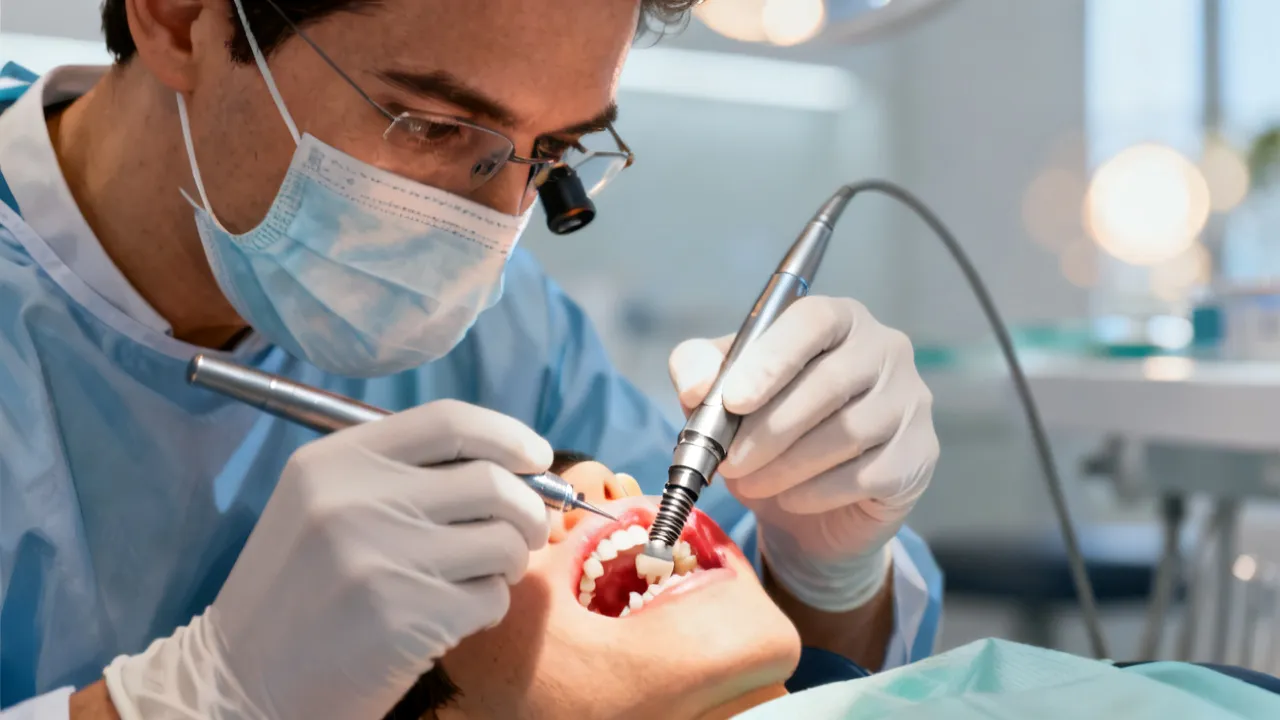
Dental scaling is the mechanical removal of plaque biofilm and calculus from tooth surfaces. A clinician may use ultrasonic instruments, hand instruments, or both. Ultrasonic devices use vibration and water irrigation to disrupt deposits, while hand instruments allow detailed finishing in areas that are difficult to access. The provider may also polish selected surfaces, although polishing is not the same as scaling and does not remove deposits located deep below the gumline.
When deposits extend below the gumline and periodontal pockets are deeper, the clinician may recommend scaling and root planing. This treatment is more extensive than a routine cleaning. Local anesthetic may be used, and treatment may be divided into several appointments. The aim is to reduce bacterial deposits and create a cleaner root surface so that inflamed gum tissue can heal more effectively. Following treatment, the clinician generally reassesses the gums rather than assuming that one appointment has permanently resolved the disease.
- Routine scaling: Appropriate when plaque and calculus are limited and periodontal measurements are generally healthy.
- Deep periodontal cleaning: Considered when there are deeper pockets, bleeding, inflammation, or deposits below the gumline.
- Maintenance care: Scheduled after periodontal treatment or implant placement to monitor tissue health and remove new deposits.
- Home-care instruction: Includes brushing technique, interdental cleaning, and guidance on tools such as floss, interdental brushes, or water irrigators.
- Periodontal reassessment: Used to determine whether inflammation and pocket depths have improved sufficiently for the next phase of treatment.
Temporary sensitivity or mild gum tenderness can occur after scaling, especially when deposits have covered exposed root surfaces. A dentist or hygienist may recommend a desensitizing toothpaste, gentle brushing, and avoidance of very hot or cold foods for a short period. Patients should report persistent pain, swelling, or bleeding rather than assuming that these symptoms are normal. In some cases, continuing bleeding indicates that additional periodontal treatment or improved daily plaque control is needed.
How Scaling Supports Implant Planning
The necessity of scaling becomes clearer when implant treatment is considered as a sequence rather than a single procedure. A typical implant pathway may include consultation, diagnostic imaging, disease control, extraction if needed, bone or soft-tissue procedures, implant placement, healing, restoration, and maintenance. Each stage depends on the health of the surrounding tissues.
1. It reduces the burden of bacterial deposits
Dental plaque contains a complex community of microorganisms. If plaque remains undisturbed, it can mineralize into calculus, which creates a rough surface that encourages further accumulation. Scaling removes these hardened deposits and helps the clinician establish a cleaner baseline before surgery or restorative care. This does not sterilize the mouth, and it cannot remove every microorganism, but it reduces a significant local source of irritation.
2. It helps reveal the true periodontal condition
Inflamed, swollen gums can make examination more difficult. After deposits are removed and tissues begin to settle, the dentist can reassess pocket depths, bleeding, recession, and tooth stability. This information may influence whether a tooth should be retained, extracted, or used as part of a broader treatment plan. It may also identify areas where an implant would be difficult to clean because of limited space or unfavorable gum contours.
3. It may reduce avoidable risks around an implant
Scaling cannot eliminate every risk associated with implant treatment, and it is not a guarantee of long-term success. However, controlling active periodontal inflammation is a logical preventive measure. The patient’s ability to maintain plaque control is also an important indicator of how well the implant may be maintained later. A person who cannot clean existing teeth effectively may need additional coaching before receiving a restoration with equally demanding hygiene requirements.
4. It protects the remaining natural teeth
Many implant patients still have natural teeth. Untreated periodontal disease can affect those teeth and may also complicate cleaning around an implant-supported restoration. Preserving the remaining dentition is often a central objective, not a secondary concern. An implant can replace one missing tooth, but it does not protect neighboring teeth from cavities, gum disease, fracture, or excessive biting forces.
5. It establishes a maintenance routine
Patients who begin professional maintenance before implant placement may find it easier to continue regular care afterward. The dental team can demonstrate how to clean around healing components, implant crowns, bridges, or removable implant-supported appliances. The patient can also learn which areas routinely collect plaque and how to position a toothbrush or interdental brush without traumatizing the gums.
6. It helps identify treatment priorities
Scaling appointments frequently reveal problems that are not obvious to a patient. A clinician may observe a cracked tooth, a leaking filling, an abscess, an ill-fitting crown, or a pocket next to the proposed implant site. Identifying these concerns before surgery allows the treatment plan to be adjusted. Treating urgent infection or stabilizing neighboring teeth may be more important than proceeding immediately with implant placement.
Scaling Is Not a Substitute for a Complete Implant Assessment
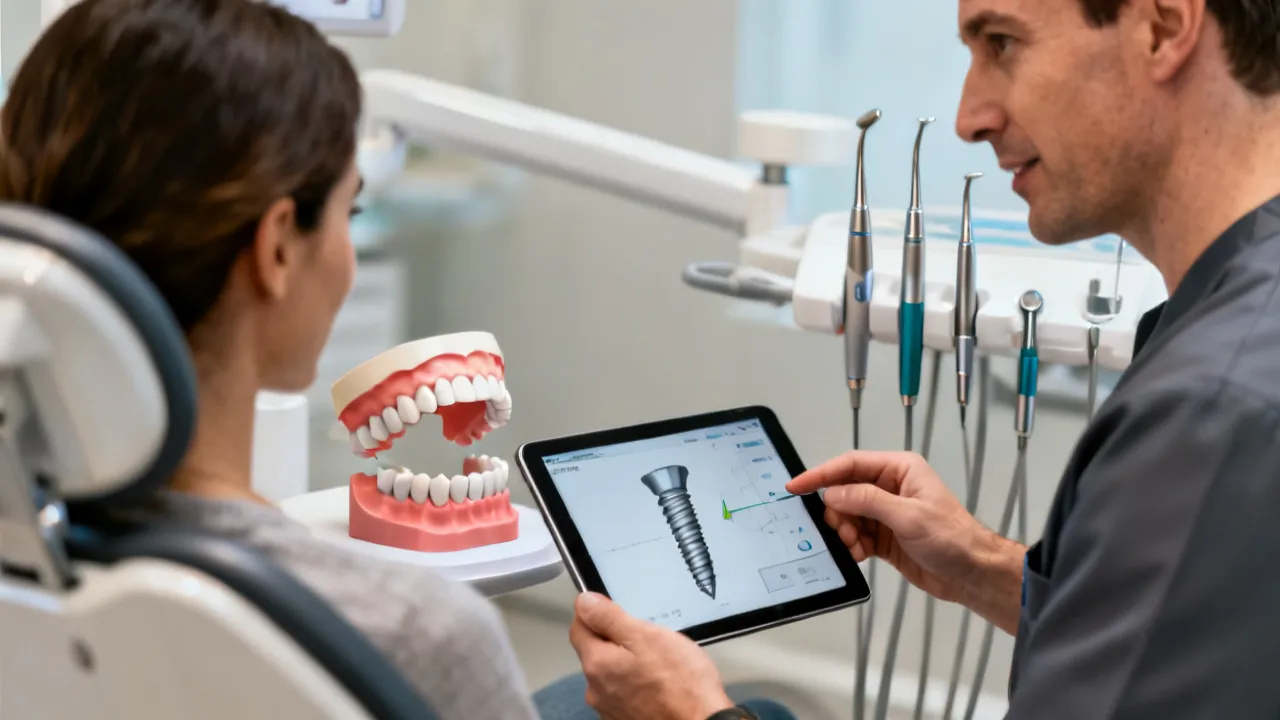
Although scaling is important, it cannot compensate for inadequate diagnosis. A complete implant assessment may include a medical history, periodontal charting, dental radiographs, and three-dimensional imaging when clinically justified. The dentist may also review bone volume, sinus anatomy, nerve location, bite forces, spacing, tooth position, restorative design, and esthetic expectations.
Medical factors deserve particular attention. Smoking, poorly controlled diabetes, immune-system disorders, previous radiation treatment, certain medications, and a history of delayed healing may affect treatment planning. These factors do not automatically prevent implants, but they may require medical coordination, smoking cessation, altered timing, or closer maintenance. Patients should provide a complete medication list, including nonprescription drugs and supplements.
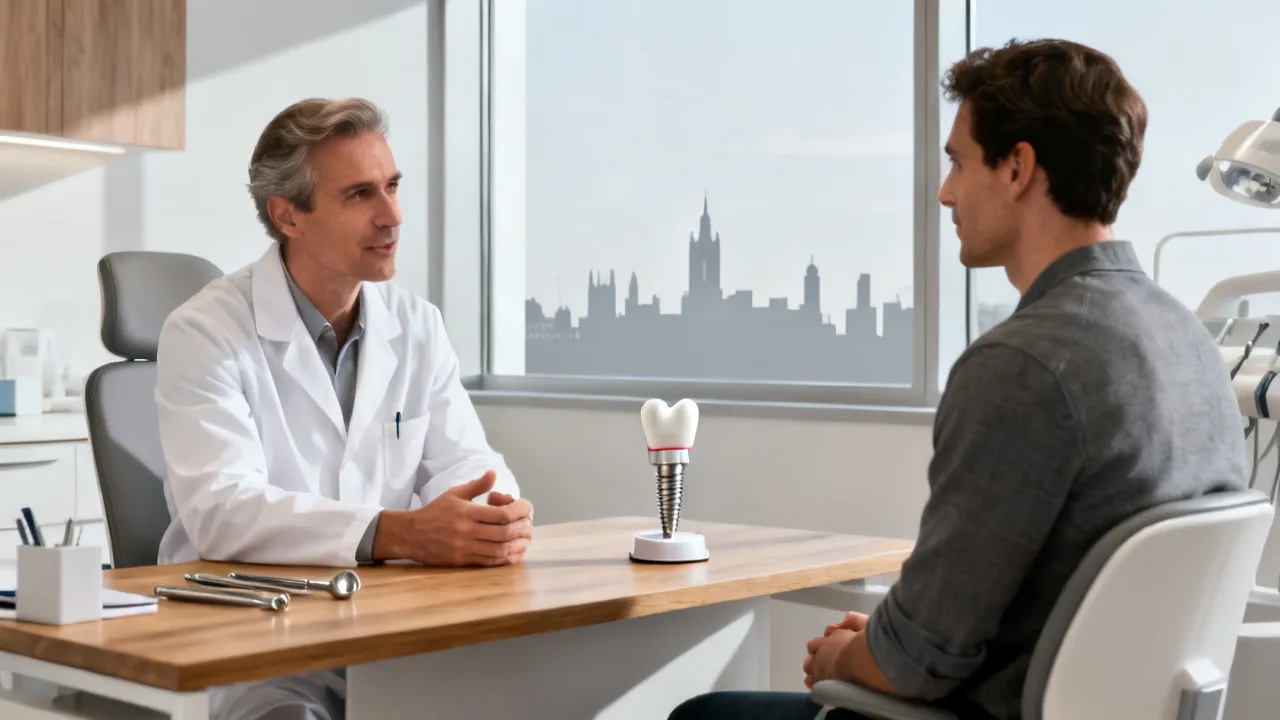
Patients should ask whether the quoted implant fee includes the implant fixture, abutment, crown, temporary restoration, imaging, extraction, bone grafting, sedation, medication, follow-up visits, and maintenance. A low initial quote may not represent the final treatment cost if several essential components are billed separately. The quotation should also identify whether the final crown is porcelain, zirconia, metal-supported, acrylic, or another material, since material choices can affect appearance, durability, and cost.
Scaling is also not a treatment for every dental problem. Cavities require restorative treatment, infected teeth may require root canal therapy or extraction, and advanced gum disease may require periodontal care. A dentist should explain which condition is being treated and why a particular intervention is recommended. Patients should be cautious if a clinic recommends implants without discussing the condition of the gums, the neighboring teeth, the bone, and the patient’s ability to maintain the proposed restoration.
When Scaling May Need to Occur
There is no single correct interval for every patient. A dentist may recommend cleaning before implant consultation, after extraction, during the healing phase, or at regular intervals once the final restoration is placed. The timing depends on whether the patient has active inflammation, how much calculus is present, whether surgery is imminent, and whether cleaning can be performed without disturbing a healing site.
| Clinical situation | Possible timing and purpose |
|---|---|
| Healthy gums with limited deposits | Routine cleaning before treatment planning or according to the patient’s established preventive schedule. |
| Bleeding gums or visible calculus | Scaling before surgery may help reduce inflammation and provide a more accurate periodontal assessment. |
| Periodontal pockets or bone loss | More extensive periodontal treatment may be required before implant placement is considered. |
| Healing after implant placement | Professional care is adjusted to protect healing tissues while controlling plaque around accessible areas. |
| Long-term implant maintenance | Regular examinations and professional cleaning help detect inflammation, cement excess, loose components, or hygiene difficulties. |
Timing must be individualized. Immediately after surgery, patients should follow the operating clinician’s instructions rather than scheduling routine cleaning independently. Surgical sites need protection, and cleaning methods may be modified during early healing. The dental team may advise the patient to avoid brushing directly over a site for a short period while still cleaning the rest of the mouth carefully.
After the implant has integrated and the final restoration is in place, professional maintenance remains important. An implant does not decay, but the crown can accumulate plaque, the surrounding tissue can become inflamed, and mechanical components can loosen or wear. A maintenance appointment may include a visual examination, probing where appropriate, professional cleaning, bite evaluation, and radiographs when there is a clinical reason to obtain them.
How to Obtain Dental Implants at Lower Cost in English-Speaking Countries
Lower-cost care should mean carefully managed value, not the omission of necessary diagnosis or infection control. Patients in English-speaking markets can take the following steps.
- Request an itemized treatment plan. Ask for separate prices for consultation, imaging, extraction, scaling, bone grafting, implant placement, abutment, crown, temporary teeth, medication, sedation, and follow-up care.
- Compare complete treatment packages. A lower implant fixture price may become more expensive once the crown, laboratory work, scans, and aftercare are added. Compare the total treatment pathway rather than the price of one component.
- Obtain more than one clinical opinion. A second opinion from another qualified dentist or periodontist can clarify whether grafting, sedation, or additional procedures are truly indicated.
- Ask about accredited training and experience. Patients should verify professional registration, surgical experience, infection-control practices, and the implant system used. The cheapest quote is not necessarily the safest choice.
- Review insurance limitations. Dental plans may exclude implants, impose waiting periods, limit annual benefits, or cover only a portion of the restoration. Ask whether diagnostic imaging and periodontal treatment are covered.
- Consider dental schools and supervised teaching clinics. Some accredited institutions offer reduced fees because treatment is provided by students under close professional supervision. Eligibility, waiting times, and treatment complexity vary.
- Use staged treatment when clinically appropriate. A dentist may be able to separate disease control, extraction, implant placement, and final restoration into planned phases. Staging must not compromise health or healing.
- Maintain the natural teeth whenever reasonable. Preventive care, including scaling when indicated, can reduce the number of teeth requiring replacement. A natural tooth that can be predictably restored may be less costly than extraction followed by implant treatment.
- Ask about payment plans in writing. Understand interest, administration charges, cancellation terms, and what happens if the treatment plan changes.
- Plan for maintenance costs. Implant care continues after crown placement. Include examinations, professional cleaning, possible repairs, and replacement of prosthetic components in the long-term budget.
- Ask whether a temporary option is appropriate. In selected cases, a removable partial denture or conventional bridge may provide a short-term solution while the patient saves for implant treatment. The alternatives should be evaluated clinically rather than selected only by price.
In the United States, patients may compare private practices, university clinics, dental benefit plans, and financing arrangements. In the United Kingdom, they may investigate private treatment, university dental hospitals, and the scope of NHS dental services, noting that implant eligibility through public services is limited and clinically determined. In Canada and Australia, provincial or territorial arrangements, private insurance, and university clinics may affect access and pricing. Policies vary, so patients should confirm details directly with the provider or insurer.
Geography within a country can also affect fees. Clinics in major metropolitan areas may have higher operating costs, while a rural clinic may have lower prices but fewer specialists or laboratory options. However, traveling several hours for every appointment may become impractical during a treatment involving surgery, healing checks, impressions, and restoration delivery. Practical access should be considered alongside the advertised fee.
How to Obtain Dental Implants at Lower Cost in Spanish-Speaking Countries
Spanish-speaking markets include countries with substantially different currencies, healthcare systems, professional regulations, and regional fees. Patients should not assume that a price advertised in one country applies to another. Even within Spain, Mexico, Chile, Colombia, Peru, or Argentina, prices may differ between capital cities, regional centers, and smaller communities.
- Search for licensed clinics with transparent treatment descriptions. Confirm the dentist’s credentials and whether implant surgery is performed by a general dentist, oral surgeon, periodontist, or coordinated team.
- Request a written plan in Spanish or a language the patient fully understands. The plan should identify the implant brand, restorative material, number of appointments, estimated healing period, and what happens if complications occur.
- Confirm whether scaling and periodontal treatment are included. If a clinic recommends implants without examining gum health, ask why. Disease control should be part of the clinical discussion.
- Check the laboratory and component arrangements. The final crown may be produced by an in-house or external laboratory. Patients should know how replacements or repairs will be managed.
- Compare local and cross-border treatment carefully. Travel may reduce the listed surgical fee but add flights, accommodation, translation, food, repeat visits, and time away from work.
- Ask about emergency support after returning home. A patient traveling for treatment should know which clinic will manage swelling, infection, loose components, or a failed temporary restoration.
- Review currency and payment conditions. Clarify whether the quote is fixed, how exchange-rate changes are handled, and whether taxes or laboratory charges are included.
- Use recognized professional directories where available. Verify that the clinician is authorized to practice in the relevant jurisdiction and that the clinic follows applicable health regulations.
- Budget for maintenance. Scaling, examinations, and radiographs may be needed throughout the implant’s service life. These costs should be considered before treatment begins.
- Confirm communication arrangements. Patients should understand surgical instructions, medication warnings, consent forms, and follow-up recommendations without relying on informal translation.
For Spanish-speaking patients, language access can be a significant part of safe care. A patient should be able to understand consent documents, medication instructions, surgical restrictions, and maintenance recommendations. Websites such as Rockville Dental Arts and Cigna’s Spanish educational materials may help patients review general implant concepts, but online information cannot replace an in-person examination.
How to Obtain Dental Implants at Lower Cost in Portuguese-Speaking Countries
Brazil and Portugal are prominent Portuguese-speaking markets, but their fees and care pathways are not identical. In Brazil, patients may compare private dental clinics, dental plans, university services, and installment arrangements. In Portugal, private dental clinics, dental insurance products, and public or university-linked services may offer different levels of access and reimbursement.
- Confirm the complete scope of the quote. Ask whether the price includes the surgical implant, abutment, crown, imaging, provisional teeth, medications, and post-operative appointments.
- Verify professional registration. Patients should confirm the dentist’s authorization to practice in Brazil or Portugal and ask about relevant implant training.
- Assess periodontal health first. Scaling, treatment of gingivitis, or periodontal therapy may be needed before surgery. Skipping these steps can create avoidable risks.
- Compare implant systems and warranties. A clinic should explain the manufacturer, availability of replacement components, and the terms of any guarantee. A warranty does not remove biological or mechanical risks.
- Investigate dental plans carefully. Coverage may focus on examinations, cleaning, or basic procedures and may exclude implant surgery or limit reimbursement.
- Consider university clinics. Teaching facilities may provide lower fees under supervision, though appointments can take longer and not every case is accepted.
- Evaluate installment plans. Review interest rates, contract terms, and whether payments continue if healing takes longer than expected.
- Plan follow-up close to home. Implant treatment requires multiple appointments. A geographically convenient clinic may offer better practical value than a distant provider with a lower initial quote.
- Ask about the cost of periodontal maintenance. The initial surgical quote may not include future scaling, examinations, or specialized cleaning around the restoration.
Rubi Odonto, Odontologia Velasco, and DentalVidas illustrate different types of Portuguese-language dental information: private clinical services, implant and aesthetic dentistry, and dental-plan access. Their descriptions should be treated as starting points for comparison rather than endorsements. Patients should independently verify clinical credentials, pricing, treatment terms, and current availability.
Indicative Cost Ranges for One Dental Implant
The following figures refer to an individual dental implant treatment range as supplied in the reference information. They should not be interpreted as a universal total cost. Depending on the source and clinic, “implant price” may refer to the implant component alone or a standard treatment estimate. A complete case may also require scaling, extraction, bone grafting, imaging, an abutment, a crown, temporary teeth, sedation, and maintenance.
| Country | Currency | Indicative price range for one implant |
|---|---|---|
| United States | USD | $3,000–$6,000 |
| United Kingdom | GBP | £2,000–£2,500 |
| Australia | AUD | AU$3,500–AU$6,500 |
| Canada | CAD | CA$3,000–CA$5,500 |
| Spain | EUR | €1,500–€2,500 |
| Chile | CLP | CLP$800,000–CLP$1,500,000 |
| Mexico | MXN | $15,000–$25,000 MXN |
| Colombia | COP | $2,000,000–$4,000,000 COP |
| Peru | PEN | S/ 3,000–S/ 6,000 |
| Argentina | ARS | $80,000–$150,000 ARS |
| Brazil | BRL | R$3,000–R$8,000 |
| Portugal | EUR | €1,000–€2,000 |
| Germany | EUR | €2,000–€3,500 |
| France | EUR | €1,500–€2,500 |
| Italy | EUR | €1,500–€3,000 |
| Japan | JPY | ¥300,000–¥700,000 |
Currency symbols can be ambiguous, particularly where the dollar sign is used. Patients should confirm the currency code and obtain a written quotation before making a financial decision. Exchange rates also change over time, so converting the figures into another currency may produce a different result from one day to the next. Older price information should also be treated cautiously because laboratory charges, materials, wages, regulatory requirements, and inflation can change.
The most meaningful comparison is usually the cost of the complete treatment sequence. For example, one clinic may quote only the implant fixture, whereas another may quote the fixture, abutment, crown, scan, and follow-up. A quote that initially appears higher may therefore be less expensive overall. Patients should ask for the total expected amount and a list of circumstances that could produce additional charges.
Website Comparison for Low-Cost Implant Information
Online resources can help patients understand procedures, questions to ask, and possible payment pathways. They should not be used to diagnose gum disease or select an implant provider without professional verification. The following comparison rephrases the role of the supplied websites and distinguishes informational, clinical, insurance, dental-plan, and dental-tourism content.
| Website or organization | Primary features and practical use |
|---|---|
| Dental Views | Provides information about lower-cost dental implants, treatment types, implant benefits, process considerations, and possible cost factors. Useful for preparing questions before a consultation. |
| Atlantic Dental Group | Clinic-based information covering general dentistry and services that may include cleaning, orthodontics, implants, and urgent dental care. Patients should confirm current locations and treatment scope directly. |
| DentaVacation | Dental-tourism information describing overseas treatment options, country comparisons, travel planning, and potential cost considerations. Travel-related expenses and follow-up arrangements require careful review. |
| ADHP | Dental-plan information intended to help consumers examine coverage options and possible ways to manage dental expenses. Implant exclusions, waiting periods, and benefit limits should be checked. |
| Rockville Dental Arts | Spanish-language clinic information covering services such as implants, cleaning, whitening, orthodontics, and emergency dentistry. The Spanish version may assist patients seeking communication in Spanish. |
| Union City Mini Dental Implants | Spanish-language information focused on mini dental implants and related treatment considerations. Suitability depends on anatomy, bite, restoration design, and professional assessment. |
| Cigna | Spanish educational material explaining general implant concepts, treatment stages, and questions patients may consider. It is informational and does not replace an individualized clinical evaluation. |
| Rubi Odonto | Portuguese-language private clinic information from Santo André, São Paulo, describing services such as orthodontics, whitening, and implants, together with an emphasis on clinical care. |
| Odontologia Velasco | Portuguese-language clinic information from São Paulo that discusses implants, prostheses, aesthetic dentistry, and the use of contemporary dental technology. |
| DentalVidas | Portuguese-language dental-plan information for individuals, families, and businesses, including access through a dental network and emergency-support descriptions. |
Source: www.dentalviews.com/low-cost-dental-implants; www.atlanticdentalgrp.com; www.dentavacation.com; rockvilledentalarts.com/es; unioncityminidentalimplants.com/es; www.cigna.com/es-us/knowledge-center/guide-to-dental-implants; www.rubiodonto.com.br; odontologiavelasco.com.br; dentalvidas.com.br.
Questions to Ask a Dental Implant Provider
- What is the diagnosis, and why is an implant preferable to other options?
- Do I have gingivitis, periodontitis, bone loss, or untreated decay?
- Do I need scaling, root planing, extraction, or periodontal treatment before surgery?
- Which procedures are included in the written quotation?
- Which implant manufacturer and restorative materials will be used?
- Who will perform the surgery and who will provide the final crown?
- How long should healing take in my case?
- What are the risks related to smoking, diabetes, medications, or grinding?
- How will complications be managed, and where will follow-up take place?
- What cleaning tools should I use around the implant?
- How often will I need professional maintenance and periodontal review?
- What happens if the implant component or crown becomes loose or damaged?
- Will I receive copies of my scans, radiographs, treatment records, and implant details?
- What is the policy if I move, change dentists, or require care from another provider?
Frequently Asked Questions
Is scaling necessary for every dental implant patient?
Not every patient needs the same type or intensity of cleaning. A patient with healthy gums and minimal deposits may need routine scaling, while a patient with periodontal pockets may need more extensive therapy. The necessity of scaling should be determined through examination and periodontal measurements.
Can scaling prevent implant failure?
Scaling cannot guarantee implant success. It can help control plaque and calculus, support periodontal health, and create a cleaner environment for treatment. Implant outcomes also depend on bone quality, surgical planning, restoration design, systemic health, smoking, oral hygiene, and long-term maintenance.
Does scaling hurt?
Many routine cleanings are well tolerated. Sensitivity may occur when deposits are removed from exposed roots or when deeper periodontal treatment is required. Local anesthetic and staged appointments may improve comfort where clinically appropriate. Patients should tell the clinician if they have dental anxiety or a history of sensitivity so that comfort measures can be discussed beforehand.
How soon after scaling can an implant be placed?
There is no universal interval. The dentist may wait until inflammation has reduced and the gum condition can be reassessed. If periodontal treatment is needed, the healing and monitoring period may be longer than for a routine cleaning. The surgical date should be based on tissue health, not merely on the number of days since the last appointment.
Are mini dental implants suitable for everyone?
No. Mini implants have a smaller diameter and may be used in selected situations, often involving particular prosthetic designs. Suitability depends on bone anatomy, biting forces, available space, restoration requirements, and the clinician’s assessment. They should not be selected solely because they are advertised at a lower price or may sometimes involve less surgery.
Is dental tourism always less expensive?
No. Travel costs, accommodation, additional appointments, exchange-rate changes, translation, complications, and treatment by a local provider after returning home can alter the total expense. A lower advertised fee does not automatically represent lower overall cost. Patients should also consider whether they can realistically remain in the destination long enough for the required examination and post-operative review.
Does dental insurance usually cover implants?
Coverage varies. Some plans exclude implants, cover only parts of the restoration, apply waiting periods, or impose annual limits. Patients should request a written benefit determination and ask whether scaling, imaging, extraction, and periodontal treatment are covered. A dental plan may offer discounts without actually paying a percentage of the implant procedure.
How often should implants be professionally cleaned?
The interval depends on the patient’s gum health, implant design, cleaning ability, smoking status, medical history, and previous periodontal disease. The treating dental team should establish an individualized maintenance schedule. Patients with a history of periodontitis may need more frequent reviews than patients with consistently healthy gums.
Can I use ordinary dental floss around an implant?
Some patients can use floss, while others need interdental brushes, implant-specific floss, water irrigation, or a combination of methods. The correct technique depends on the shape of the crown and the available space. Demonstration by a dental professional is preferable to guessing. Forcing floss into a tight contact or snapping it against the gums may cause discomfort without effectively cleaning the area.
What symptoms require prompt attention after implant treatment?
Increasing swelling, fever, uncontrolled bleeding, severe pain, pus, numbness that does not improve, a loose implant component, or difficulty swallowing should be reported promptly. Emergency symptoms require urgent clinical advice. A small amount of swelling or tenderness may be expected after surgery, but worsening symptoms should not be ignored.
Can an implant be placed immediately after extraction?
Immediate placement is possible in selected cases, but it is not appropriate for every patient. The dentist must consider infection, socket-wall integrity, bone volume, soft-tissue appearance, bite forces, and the ability to achieve primary stability. If these conditions are unfavorable, delayed placement may be safer and more predictable.
Will I always need a bone graft?
No. Bone grafting is recommended when the available bone is insufficient for the planned implant position or when preservation of the extraction site is desirable. Some patients have adequate bone and do not need grafting. Imaging and surgical examination determine whether grafting is necessary, and the added time and cost should be explained before treatment begins.
Practical Maintenance After Implant Placement
After the final crown is fitted, maintenance becomes a long-term responsibility. Patients should brush twice daily with a soft-bristled brush and fluoride toothpaste unless their clinician advises otherwise. Interdental cleaning is particularly important because the junction between the restoration and gum tissue can collect plaque. The patient should also clean natural teeth carefully, since periodontal infection in the remaining dentition can undermine the overall oral environment.
Patients should not use excessive force or abrasive products around an implant restoration. A dental hygienist can recommend suitable instruments and demonstrate how to reach the underside of a bridge or the contours around an implant crown. Professional scaling may be performed with instruments and techniques selected to reduce unnecessary scratching of implant or restorative surfaces. The appropriate instrument depends on the implant material, crown design, and type of deposit.
Smoking cessation is strongly advisable because tobacco exposure can impair healing and complicate periodontal and peri-implant maintenance. Patients with diabetes should discuss glucose management with their healthcare team. A history of periodontal disease should also be disclosed, since it may justify closer monitoring. Bruxism, or grinding, should also be discussed because excessive force can contribute to screw loosening, crown fracture, and overloading of the implant system.
Routine examinations can detect problems before they become advanced. The clinician may look for bleeding, pocket changes, recession, plaque retention, crown mobility, screw loosening, bite changes, and radiographic bone changes when imaging is clinically indicated. Early attention is generally more straightforward than treatment of advanced inflammation or mechanical damage. Patients should avoid waiting until an implant feels loose, because looseness can indicate a prosthetic problem or a more serious biological complication.
How to Judge a Low-Cost Implant Advertisement
Patients should read promotional claims critically. A responsible advertisement should identify what is included, the type of restoration, the limits of the estimate, and the need for examination. Be cautious when a website presents one unusually low figure without describing imaging, surgical planning, implant components, laboratory work, follow-up, or maintenance. The phrase “starting from” may refer only to the surgical fixture and not to the complete tooth replacement.
Strong indicators of transparency include:
- A named clinic and verifiable professional credentials.
- A clear explanation that treatment depends on individual diagnosis.
- An itemized estimate rather than one unexplained headline price.
- Information about periodontal assessment and infection control.
- Accessible consent information and realistic treatment timelines.
- A defined process for complications and post-operative review.
- Clear privacy, cancellation, and payment policies.
- Information about the implant system and availability of replacement parts.
Patients should also distinguish educational content from clinical claims. A website may explain the general benefits of implants without evaluating a specific person’s suitability. Online reviews can provide context about communication and organization, but they cannot independently establish clinical quality. Photographs of successful cases may be useful for understanding possible results, but they do not predict what will happen in a patient with different bone, gum, bite, or medical conditions.
Making the Financial Comparison More Accurate
When comparing two implant providers, patients can create a simple checklist of every expected stage. The checklist may include examination, periodontal charting, scaling, radiographs, three-dimensional scans, extraction, temporary replacement, bone preservation, bone grafting, implant surgery, healing visits, abutment placement, impressions or digital scanning, laboratory fabrication, final crown delivery, emergency appointments, and long-term maintenance.
Patients should then ask which items are included in each quote and which are estimates only. A complete comparison should also account for time away from work, transportation, childcare, accommodation, currency conversion, and the possible cost of a second surgery. This approach reduces the likelihood that a low initial quote will become unexpectedly expensive later.
Affordability can sometimes be improved by treating urgent problems first and scheduling elective phases later. For example, a patient may receive periodontal therapy and a temporary removable tooth while saving for implant restoration. However, delaying treatment may allow bone loss or movement of neighboring teeth, so the consequences of postponement should be explained. A staged plan is appropriate only when it is clinically safe and clearly documented.
Conclusion
The necessity of scaling is best understood as part of disease control, diagnosis, and long-term implant maintenance. Professional removal of plaque and calculus can help reduce inflammation, clarify periodontal findings, protect remaining teeth, and prepare patients for a more predictable treatment pathway. It is not a guarantee of implant success and should not be presented as a substitute for imaging, surgical planning, or individualized care.
Patients seeking lower-cost implants should compare complete treatment costs rather than isolated promotional prices. They should verify credentials, request itemized quotations, understand insurance or dental-plan limits, evaluate travel risks, and plan for maintenance. Whether treatment is considered in an English-, Spanish-, or Portuguese-speaking market, the safest financial decision is one that balances affordability with diagnosis, qualified care, transparent communication, and reliable follow-up.
Reference Links
- Dental Views – Low-Cost Dental Implants
- Atlantic Dental Group
- DentaVacation
- Rockville Dental Arts – Spanish Website
- Union City Mini Dental Implants – Spanish Website
- Cigna – Spanish Guide to Dental Implants
- Rubi Odonto
- Odontologia Velasco
- DentalVidas
Disclaimer
1. The information above comes from online resources, and the data is as of October 2023.
2. Dental implant prices are for reference only and may vary by region, clinic, doctor, implant system, restorative material, diagnostic requirements, periodontal condition, bone-grafting needs, and other treatment factors.
3. This information is educational and does not provide a diagnosis, treatment recommendation, or guarantee of implant success. Patients should consult a licensed dentist, periodontist, oral surgeon, or other appropriately qualified dental professional before making decisions about scaling, periodontal therapy, extraction, dental implants, or dental tourism.