Understanding 전체임플란트 가격 and Treatment Value
This guide explains how to assess 전체임플란트 가격, a Korean term commonly used for the cost of full-arch or full-mouth implant rehabilitation. It distinguishes the price of one implant from a complete restoration, examines clinical and logistical factors that influence fees, compares selected dental-information websites, and presents reference price ranges for individual implants across several language markets. Prices should be interpreted alongside diagnosis, materials, aftercare, and provider qualifications.
What 전체임플란트 가격 Usually Means
전체임플란트 가격 is a Korean search term that can be translated broadly as “full dental implant price” or “cost of full-mouth implants.” In practice, the phrase may describe several different treatment concepts. A patient may be asking about replacing every missing tooth, rebuilding one complete arch, treating both arches, stabilizing a removable denture, or receiving fixed implant-supported teeth. It may also refer to a plan that uses several implants to support a full-arch bridge rather than placing one implant for every natural tooth that has been lost.
This distinction is the most important starting point. A quotation for one individual dental implant is not equivalent to the cost of full-arch rehabilitation. An individual implant generally includes an implant fixture and, depending on the clinic, an abutment and crown. Full-arch treatment may include several implants, temporary teeth, a definitive prosthesis, diagnostic imaging, extractions, bone augmentation, sedation, maintenance, and laboratory work. The treatment may also involve multiple appointments over several months.
From an industry perspective, the safest way to evaluate 전체임플란트 가격 is to compare complete treatment plans rather than headline figures. A lower initial quotation may exclude surgery, a temporary bridge, the final prosthesis, imaging, grafting, or post-treatment adjustments. Conversely, a higher quotation may include advanced diagnostics, a more comprehensive prosthetic design, a longer warranty policy, or structured maintenance appointments.
Key conclusion: There is no clinically meaningful single price for full-mouth implants without a diagnosis. The final amount depends on the number of implants, the condition of the jawbone, the type of prosthesis, materials, laboratory processes, location, clinician experience, and the scope of aftercare.
Individual Implants Versus Full-Arch Treatment
An individual implant replaces one missing tooth. The dentist places a titanium or ceramic implant in the jawbone, allows or manages integration with the bone, and then attaches an abutment and crown. This approach is often selected when adjacent teeth are healthy and the patient has an isolated gap. The final restoration is designed to function independently while preserving the neighboring teeth.
Full-arch rehabilitation is different. A fixed bridge may be supported by several strategically positioned implants, allowing an entire upper or lower arch to be restored without placing one implant for every missing tooth. Another option is an implant-retained overdenture, which can be removed by the patient for cleaning while receiving additional retention from implants. The exact design depends on bone volume, bite forces, esthetic requirements, oral hygiene ability, and the patient’s general health.
| Treatment concept | Typical components that may affect the quotation |
|---|---|
| Individual implant | Consultation, imaging, implant fixture, surgery, abutment, crown, temporary restoration, and follow-up |
| Single-arch fixed restoration | Several implants, extractions where necessary, temporary bridge, final full-arch prosthesis, laboratory work, and maintenance |
| Two-arch rehabilitation | Assessment of both arches, implant surgery, provisional and definitive teeth, bite registration, laboratory stages, and long-term reviews |
| Implant-retained overdenture | One or more implants, attachments, a removable denture, relines, adjustments, and periodic replacement of worn retention components |
These categories are not interchangeable. A website or advertisement that promotes a low individual-implant price may not provide useful information about 전체임플란트 가격. Patients should ask whether the displayed amount is a surgical fee, a prosthetic fee, or a bundled estimate. They should also ask whether the quotation applies to one tooth, one arch, or both arches.
Why Full-Mouth Implant Prices Vary
1. Number and position of implants
The number of implants is determined by the treatment design, not simply by the number of missing teeth. A fixed bridge can sometimes replace multiple teeth with fewer implants, but the distribution must support chewing forces and allow the patient to clean effectively. The upper jaw may require a different plan from the lower jaw because bone density, sinus anatomy, and loading patterns differ.
Implant placement is also a restorative decision. The implants must be positioned so that the final bridge has appropriate support, emergence profiles, hygiene access, and resistance to excessive bending forces. A plan that uses fewer implants is not automatically inferior, and a plan that uses more implants is not automatically superior. The quality of the design depends on the patient’s anatomy and the intended prosthesis.
2. Bone quality and augmentation
Long-standing tooth loss can lead to resorption of the jawbone. Periodontal disease, trauma, infection, and certain anatomical limitations may also reduce the available bone. Some patients require bone grafting, guided bone regeneration, or sinus-related procedures before or during implant placement. These services may be billed separately and can extend the treatment timeline.
Bone augmentation can involve different materials and techniques. The clinician may use particulate graft material, a membrane, a block graft, or a sinus elevation procedure, depending on the location and the amount of missing bone. Patients should ask whether the proposed fee includes the graft material, membrane, surgical visit, follow-up examinations, and any later implant placement.
3. Extractions and infection control
Some full-arch cases begin with teeth that are severely damaged or affected by advanced periodontal disease. Extractions, infection management, and stabilization of the gums may be necessary before the definitive reconstruction. A careful clinician should explain whether these procedures are included in the proposed 전체임플란트 가격.
Removing teeth and placing implants at the same appointment may be possible in selected cases, but it is not appropriate for everyone. Active infection, inadequate bone stability, uncontrolled medical conditions, or severe bite problems may make a staged approach safer. Patients should be wary of promises that every case can be completed immediately, regardless of the diagnostic findings.
4. Temporary and final prostheses
A temporary bridge enables many patients to function during healing. It can also help the clinician evaluate speech, chewing, facial support, tooth length, and the relationship between the upper and lower jaws. Temporary teeth may be fixed, removable, reinforced, or fabricated from different materials. Their repair and adjustment policy should be explained in advance.
The final prosthesis may be made with acrylic, composite, titanium-supported materials, zirconia, or other laboratory-designed systems. Materials have different handling characteristics, repair options, appearance, and durability considerations. Patients should not select a material based on price alone; the choice must match the bite, cleaning ability, esthetic expectations, and clinical design.
The final bridge may include a metal framework, individual replacement teeth, pink-colored material to replace lost gum volume, or a monolithic ceramic design. Each option affects appearance, weight, repairability, and laboratory cost. The patient should see examples or illustrations and understand how the restoration will be cleaned beneath and around the bridge.
5. Diagnostic technology
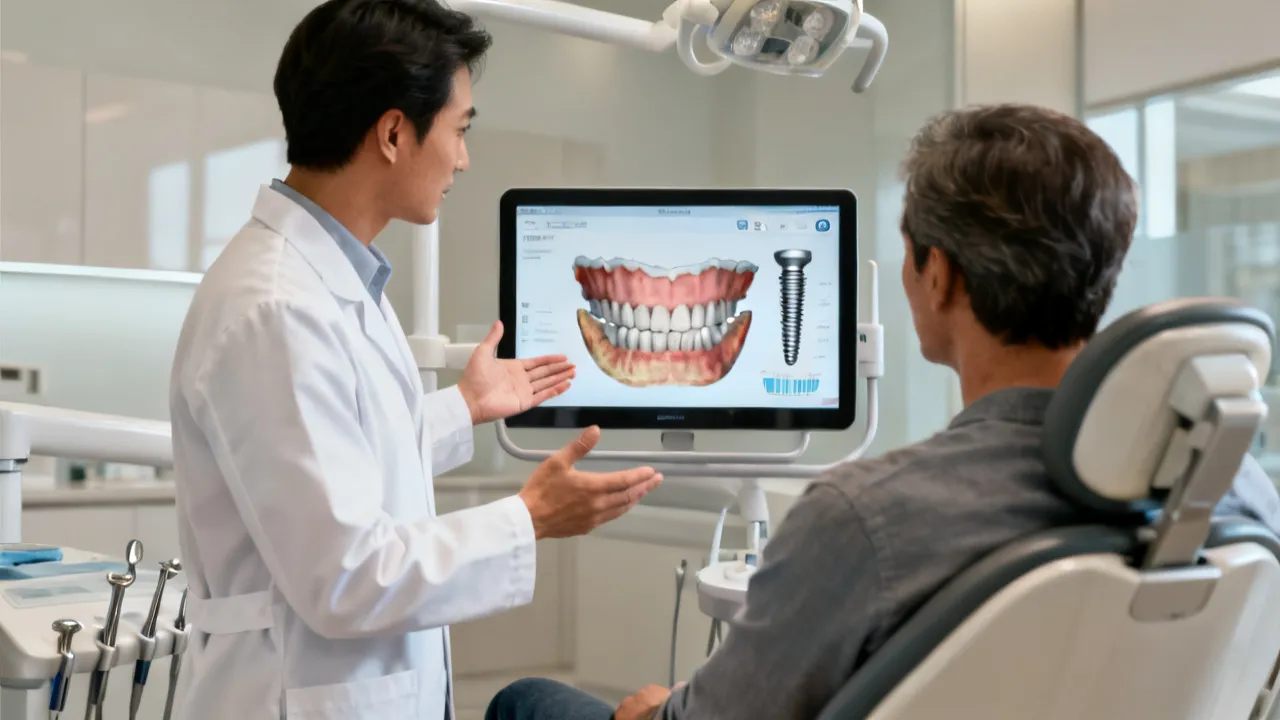
Three-dimensional cone-beam computed tomography, intraoral scanning, digital planning, photographic records, and diagnostic models can improve communication and surgical planning. These tools add cost in some clinics, but they may help identify anatomical limitations and support a more precise prosthetic design. Technology does not replace clinical judgment, and its value depends on how it is used.
Patients should ask whether imaging is interpreted by the treating clinician and whether the scans are used to plan the final prosthesis. A digital scan may help with fit and communication, but it does not eliminate the need to assess the gums, bite, facial appearance, and medical history. A written explanation of the findings is more valuable than technology presented only as a marketing feature.
6. Clinician and laboratory expertise
Implant treatment involves surgery, prosthodontics, periodontics, dental laboratory procedures, and maintenance. A case may be handled by one dentist or coordinated among several clinicians. Fees can reflect training, case complexity, laboratory quality, facility standards, and the time required for planning and adjustments.
Laboratory expertise is especially important in full-arch treatment because the bridge must be accurate, comfortable, functional, and maintainable. The laboratory may need to create a diagnostic setup, temporary prosthesis, verification jig, framework, try-in arrangement, and final restoration. Each stage requires communication between the dentist and laboratory technician.
7. Location and local operating costs
Prices often differ between metropolitan centers, smaller cities, and regions with different labor, facility, laboratory, and regulatory costs. Comparing a clinic in one market with a clinic in another requires attention to what is included. Currency conversion alone does not provide a reliable comparison of treatment value.
Location also affects follow-up. A patient who chooses a clinic several hours away may need to spend money and time traveling for adjustments, maintenance, or repairs. A local clinic with a somewhat higher quotation may offer better practical value if it provides accessible reviews and has the necessary records and components.
8. Aftercare and repairs
Implants require professional review and daily home care. The quotation should state the duration and scope of follow-up, the policy for adjusting a temporary bridge, and the terms for repairing or replacing a prosthetic component. A warranty is not necessarily a promise that every future complication will be covered. It may exclude accidents, poor hygiene, smoking-related complications, or ordinary wear.
Patients should ask whether the clinic provides a maintenance schedule and whether hygiene appointments are included. They should also ask how often screws, attachments, clips, denture teeth, or acrylic components may need adjustment or replacement. These costs are not necessarily signs of poor treatment; prosthetic components can experience ordinary wear, especially when a patient clenches or grinds the teeth.
Reference Price Ranges for Individual Dental Implants
The following figures are reference ranges for an individual dental implant, not for full-arch or full-mouth rehabilitation. They may represent different combinations of implant surgery, abutment, and crown depending on local practice. The figures should therefore be used for broad orientation rather than as quotations.
| Country | Currency and reference range for one individual implant |
|---|---|
| United States (US) | US$3,000–US$6,000 |
| United Kingdom (GB) | £2,000–£2,500 GBP |
| Australia (AU) | AU$3,500–AU$6,500 AUD |
| Canada (CA) | CA$3,000–CA$5,500 CAD |
| Spain (ES) | €1,500–€2,500 EUR |
| Chile (CL) | CLP$800,000–CLP$1,500,000 CLP |
| Mexico (MX) | $15,000–$25,000 MXN |
| Colombia (CO) | 2,000,000–4,000,000 COP |
| Peru (PE) | S/ 3,000–S/ 6,000 PEN |
| Argentina (AR) | AR$80,000–AR$150,000 ARS |
| Brazil (BR) | R$3,000–R$8,000 BRL |
| Portugal (PT) | €1,000–€2,000 EUR |
| Germany (DE) | €2,000–€3,500 EUR |
| France (FR) | €1,500–€2,500 EUR |
| Italy (IT) | €1,500–€3,000 EUR |
| Japan (JP) | ¥300,000–¥700,000 JPY |
These reference ranges are presented for comparison only. They do not establish a standard fee, and they should not be multiplied mechanically to estimate 전체임플란트 가격. Full-arch treatment may use fewer implants than the number of absent teeth, while additional surgery and prosthetic stages can substantially change the total.
How to Obtain Implant Treatment at Lower Cost in English-Speaking Markets
Lower cost should mean better value and clearer planning, not the removal of medically necessary steps. The following process can help patients compare options responsibly in the United States, the United Kingdom, Australia, Canada, and other English-speaking settings.
Step 1: Obtain a complete diagnosis
Begin with a clinical examination, periodontal assessment, relevant radiographs, and three-dimensional imaging when clinically indicated. Ask the dentist to document the condition of the gums, remaining teeth, bone, bite, and any signs of infection. Without this information, a low initial estimate has limited meaning.
Step 2: Clarify the treatment objective
Determine whether the goal is to replace one tooth, restore one arch, stabilize a removable overdenture, or create fixed teeth in both arches. A removable implant-retained denture may have a different price and maintenance profile from a fixed bridge. The preferred option should be based on function, anatomy, hygiene, and expectations.
Step 3: Request an itemized quotation
Ask for separate lines covering consultation, imaging, extractions, bone grafting, implant fixtures, abutments, temporary teeth, final prostheses, sedation, laboratory work, medication, and follow-up. A written estimate makes it easier to compare clinics and identify exclusions.
The quotation should also explain what happens if the diagnosis changes after surgery. For example, the patient may need additional healing time, a modified temporary restoration, or a different final material. A clear change-order policy can prevent disagreement about unexpected charges.
Step 4: Compare implant systems and components
Patients should know the manufacturer and model of the implant where possible. Established systems generally provide documentation and replacement components through professional channels. A very low price based on unfamiliar or difficult-to-source components may create problems later if a screw, abutment, or prosthetic part needs replacement.
Step 5: Consider accredited clinics and teaching institutions
Some university dental hospitals, public dental programs, or teaching clinics may provide lower fees under supervision. Eligibility, waiting times, case selection, and treatment availability vary. Patients should confirm who will perform each stage and who supervises the procedure.
Step 6: Review payment and insurance provisions
Dental insurance may have waiting periods, annual limits, exclusions for pre-existing conditions, or different reimbursement rules for surgery and prosthetics. Financing can distribute payments, but it does not reduce the clinical cost and may involve interest or administrative charges. Read the agreement before treatment begins.
Step 7: Plan maintenance into the budget
Professional hygiene, examinations, repairs, and occasional prosthetic adjustments form part of the long-term cost. Patients who travel a long distance for treatment should identify a local dentist willing to provide maintenance. This is particularly important if the original clinic is in another state, province, or country.
Step 8: Avoid unnecessary urgency
Some cases require prompt treatment because of pain, infection, or a failing tooth. However, a major full-arch decision should generally include time to review the diagnosis, understand alternatives, and obtain a second professional opinion. Pressure to pay immediately is not a substitute for clinical evidence.
Reducing Cost in Spanish-Speaking Countries
Patients considering Spain, Mexico, Chile, Colombia, Peru, or Argentina may encounter a wide range of implant prices. Local treatment can sometimes reduce travel-related expenses, but the total cost should include consultations, transport, accommodation when needed, follow-up, and management of complications.
A practical approach is to select a clinic with clear Spanish-language documentation, verify the professional’s credentials through the appropriate national or regional authority, and request a written plan. Patients should ask whether the quote includes the laboratory-made crown, not only the implant fixture. They should also ask how the clinic handles delayed integration, prosthetic fracture, peri-implant inflammation, or a change in treatment design.
In regions with substantial differences between major cities and smaller communities, local laboratory access and specialist availability may influence both price and convenience. A lower amount is not necessarily advantageous if the patient must return repeatedly to another city for adjustments. Cultural familiarity and communication can also affect informed consent, particularly when discussing expectations about appearance, speech, and chewing.
Reducing Cost in Portuguese-Speaking Countries
Brazil and Portugal have different healthcare systems, fee structures, and professional regulations. Patients should distinguish between a promotional consultation and a complete rehabilitation quote. In Brazil, the Portuguese terms “implante dentário,” “prótese sobre implante,” and “reabilitação de arco completo” may describe separate elements of the treatment. In Portugal, the same distinction should be made between the implant, abutment, crown, and prosthetic laboratory stages.
Clinics such as Rubi Odonto, Odontologia Velasco, and DentalVidas illustrate different kinds of online dental resources: clinic-based services, technology-oriented dental care, and dental-plan information. Their online descriptions should be treated as starting points for questions rather than as independent clinical recommendations. Patients need an individualized examination before deciding whether a particular service is suitable.
Dental Tourism and the Real Cost of Treatment
Dental tourism websites may advertise treatment in countries where operating expenses and dental fees are lower than in a patient’s home market. This can be useful for researching international options, but implant rehabilitation often requires multiple stages. The patient may need an initial examination, surgery, healing visits, temporary-prosthesis adjustments, and delivery of the definitive restoration.
Travel can introduce additional risks:
- Follow-up may be difficult if the patient returns home soon after surgery.
- Complications may require treatment by a clinician who did not place the implant.
- Travel insurance may exclude planned dental treatment or related complications.
- Exchange-rate changes can alter the final amount.
- Accommodation, meals, transport, and time away from work can offset the apparent saving.
- Communication about consent, materials, records, and aftercare may be more difficult.
- Different regulations may make complaints, refunds, or professional claims more difficult to pursue.
Before traveling, request copies of the treatment plan, implant details, radiographs, consent documents, invoices, and aftercare instructions. Ask what happens if an implant fails, if the temporary bridge breaks, or if the final prosthesis does not fit as expected. A responsible provider should answer these questions in writing.
Patients should also avoid scheduling a flight immediately after extensive surgery without discussing the timing with the treating team. Swelling, bleeding, medication effects, and the need for an urgent review may make rapid travel inconvenient or unsafe. A realistic itinerary should include time for assessment and adjustment rather than treating the procedure as a one-day purchase.
Comparing Online Resources About Lower-Cost Implants
The following websites represent different types of dental-information resources. They are not equivalent, and their presence in this comparison does not constitute an endorsement. Patients should verify current services, professional credentials, costs, and local regulations independently.
| Website or organization | Primary information feature |
|---|---|
| Dental Views | Information focused on lower-cost dental implants, treatment types, benefits, cost considerations, and common questions |
| Atlantic Dental Group | Clinic-based information covering general dentistry, implants, orthodontics, hygiene, and emergency dental services |
| DentaVacation | Dental-tourism information, international treatment comparisons, travel planning, and destination-based care |
| American Dental Health Plans | Dental-plan information intended to help consumers review coverage and manage eligible dental expenses |
| Rockville Dental Arts | Spanish-language clinic information covering implants, whitening, hygiene, orthodontics, and emergency care |
| Union City Mini Dental Implants | Spanish-language information focused on mini dental implants and selected tooth-replacement needs |
| Cigna Spanish guide | Spanish-language educational material explaining implant concepts and insurance-related considerations |
| Rubi Odonto | Portuguese-language clinic information for orthodontics, whitening, implants, and other dental services in Brazil |
| Odontologia Velasco | Portuguese-language information about implants, prostheses, esthetic dentistry, and technology-supported care |
| DentalVidas | Portuguese-language dental-plan information for individuals, families, and companies, including network and emergency services |
Source of the website comparison:
source: www.dentalviews.com/low-cost-dental-implants/
source: www.atlanticdentalgrp.com
source: www.dentavacation.com
source: rockvilledentalarts.com/es
source: unioncityminidentalimplants.com/es
source: www.cigna.com/es-us/knowledge-center/guide-to-dental-implants
source: www.rubiodonto.com.br
source: odontologiavelasco.com.br
source: dentalvidas.com.br
How to Read a Dental Implant Quote
A useful quotation should identify the clinical problem, proposed solution, number of implants, type of prosthesis, materials, estimated sequence, and expected review schedule. It should also distinguish items that are included from those that may be added after imaging or surgery.
| Quotation question | Why it matters |
|---|---|
| Does the price include the crown or bridge? | An implant fixture alone does not restore chewing function or appearance |
| Are extractions and grafting included? | Additional surgery can change both the treatment time and total cost |
| What temporary teeth will be provided? | Temporary restorations may be essential during healing and can have separate fees |
| Which implant and prosthetic systems are used? | Documentation and component availability can affect future maintenance |
| What follow-up is included? | Adjustments and reviews are important for comfort, function, and early problem detection |
| Does the quotation cover both arches? | A “full-mouth” phrase may refer to one arch, two arches, or a staged plan |
| What is excluded if the plan changes? | Unexpected medical or surgical findings can create additional fees |
Patients should also ask whether the quotation assumes immediate loading. Immediate or early loading may be clinically appropriate in selected circumstances, but it is not suitable for every patient. Bone stability, infection status, implant position, bite forces, and the provisional design all matter.
It is helpful to ask for a treatment sequence written in plain language. For example, the plan may state that the first visit involves imaging and extractions, the second involves implant placement and temporary teeth, the third involves a healing review, and later visits involve try-in and delivery of the definitive bridge. A schedule does not guarantee that every appointment will occur exactly as planned, but it helps patients understand the process.
Clinical Requirements Before Treatment
Implant treatment is not determined by age alone. The dentist will consider general health, medications, smoking, diabetes management, periodontal status, bone anatomy, oral hygiene, and the patient’s ability to attend reviews. Some medical conditions do not automatically prevent implants, but they may require coordination with a physician or a modified treatment plan.
Active gum disease should be addressed because inflammation around natural teeth and implants can compromise long-term stability. Patients should receive instruction on brushing, interdental cleaning, and professional maintenance. A full-arch restoration may be fixed, but it is not maintenance-free.
Medication history is also relevant. Patients should disclose anticoagulants, antiresorptive medicines, immunosuppressive treatment, and other prescriptions. The dentist should never advise a patient to stop medication without appropriate medical coordination.
Clenching and grinding should also be discussed. Strong biting forces may influence the number of implants, the material selected for the bridge, the shape of the teeth, and whether a night guard is recommended. A treatment plan that ignores parafunctional habits may carry a higher risk of chipping, screw loosening, or prosthetic fracture.
Stages of Full-Arch Implant Rehabilitation
Assessment and planning
The initial stage includes health history, examination, imaging, photographs, digital scans or impressions, and a discussion of alternatives. The clinician evaluates facial appearance, lip support, speech, vertical dimension, and the relationship between the upper and lower arches.
The patient should have an opportunity to explain priorities. One person may value a fixed restoration above all else, while another may prefer a removable option that is easier to clean and less expensive. Some patients prioritize natural-looking teeth, and others are primarily concerned with chewing comfort. These preferences should be incorporated into the design before surgery.
Disease control and preparation
When necessary, the team treats infection, stabilizes periodontal disease, extracts non-restorable teeth, and plans grafting. Some patients may need a period of healing before implant surgery. Others may be suitable for a carefully designed same-day provisional approach.
Implant placement
The surgeon places the implants according to the restorative plan. Primary stability, bone conditions, surgical access, and the intended prosthesis influence the decision about when the implants should be loaded. The patient receives instructions about swelling, medication, diet, oral hygiene, and symptoms that require urgent contact.
Temporary restoration
A provisional bridge or denture may be used while the tissues heal. It allows the team to assess speech, chewing, appearance, and bite. Adjustments at this stage can influence the design of the final prosthesis. Patients should understand whether the temporary restoration is intended for normal chewing or whether dietary restrictions are necessary.
Healing and integration
Healing time varies according to the patient, implant stability, bone quality, grafting, and loading protocol. The patient must follow instructions about diet, hygiene, activity, and appointments. Missing review appointments can make it more difficult to detect inflammation, instability, or pressure from the provisional restoration.
Definitive prosthesis
After the clinical team confirms healing and stability, impressions or digital scans are used to fabricate the final restoration. Several appointments may be needed to verify the fit, bite, tooth position, color, and contours. A try-in stage may allow changes before the final bridge is completed.
Maintenance
Long-term reviews assess the gums, implant tissues, prosthetic screws, bite, hygiene, and wear. The recommended recall interval depends on risk factors and the type of restoration. Prompt attention to bleeding, persistent discomfort, looseness, changes in speech, or a fractured component can prevent a small problem from becoming more complex.
Warning Signs in Low-Price Advertising
A low advertised amount deserves careful examination when it lacks a clear description of the treatment. Warning signs include a price that applies only to a limited number of patients, an estimate that excludes the prosthesis, pressure to make an immediate deposit, unclear implant brands, no written aftercare policy, or claims that imply every patient can receive the same procedure.
Patients should also be cautious about before-and-after images without clinical context. Photographs may demonstrate appearance but cannot show implant stability, bone health, hygiene access, or long-term maintenance. A credible assessment relies on examination and diagnostic records rather than promotional imagery alone.
Another concern is the use of terms such as “permanent teeth” without clarification. Implant-supported prostheses can be durable, but no dental restoration is immune to wear, fracture, staining, gum changes, or the need for adjustment. The phrase should be understood as a description of intended use, not an assurance that the prosthesis will never need maintenance or replacement.
Questions to Ask at a Consultation
- What diagnosis explains the tooth loss or failing teeth?
- Is a fixed bridge, removable overdenture, or individual implant approach appropriate?
- How many implants are recommended, and why?
- Will extractions, grafting, or periodontal treatment be required?
- What does the quoted 전체임플란트 가격 include and exclude?
- Which materials and implant systems will be used?
- Who will place the implants and who will design the prosthesis?
- What is the expected sequence and approximate duration?
- What happens if healing is delayed or an implant does not integrate?
- How often are professional maintenance appointments recommended?
- Can the patient receive copies of imaging, implant records, and laboratory details?
- What are the payment, cancellation, adjustment, repair, and warranty terms?
- Is the quotation valid for a stated period, or can laboratory and material costs change?
- Who will provide emergency care outside normal business hours?
Insurance, Plans, and Payment Arrangements
Dental coverage varies widely. Some plans classify implants as major restorative treatment, while others limit benefits, exclude implant surgery, or provide an allowance toward an alternative restoration. Patients should request a written pre-treatment estimate from the insurer and confirm whether the clinic is in-network or participating in a preferred arrangement.
Dental plans may reduce eligible expenses, but they do not necessarily cover every part of a full-arch reconstruction. A patient should check annual maximums, waiting periods, replacement restrictions, exclusions, and whether bone grafting or diagnostic imaging is covered.
When considering installment arrangements, compare the total repayment amount rather than the monthly figure alone. Ask whether treatment must be completed within a particular period and what happens if the plan changes after surgery. Financial clarity is part of informed consent for a major dental procedure.
Patients should request receipts and retain treatment records. These documents may be needed for insurance claims, tax-related questions, future maintenance, or consultation with another dentist. If a clinic uses separate entities for surgery, prosthetics, and financing, the patient should understand which organization is responsible for each charge.
Mini Implants and Other Alternatives
Mini dental implants have a narrower diameter and may be used in selected situations, including certain denture-stabilization cases. They are not automatically an equivalent substitute for conventional implants or suitable for every full-arch reconstruction. Bone anatomy, occlusal forces, prosthesis design, and long-term maintenance must be evaluated.
Other alternatives may include a conventional removable partial denture, complete denture, resin-bonded bridge, conventional fixed bridge, or delayed implant placement. Each option has different benefits, limitations, treatment times, and maintenance requirements. A responsible discussion of 전체임플란트 가격 should include these alternatives rather than treating implants as the only possible solution.
For some patients, preserving a few strategically useful natural teeth may reduce the number of implants or allow an overdenture design. For others, retaining teeth with a poor prognosis may create future infection or maintenance problems. The decision should be based on periodontal and restorative evidence, not only on the desire to reduce the initial fee.
Expert Perspective on Value
From a restorative dentistry standpoint, value is created by matching the treatment design to the patient’s anatomy and ability to maintain it. The least expensive initial plan can become costly if it requires repeated repairs, travel for adjustments, or replacement of components that are difficult to source. A more comprehensive plan may have a higher starting fee but provide clearer laboratory documentation and a more predictable maintenance pathway.
Patients should evaluate four dimensions together:
- Clinical suitability: Is the proposed treatment supported by the examination and imaging?
- Financial transparency: Are every major stage and possible additional fee explained?
- Continuity of care: Can the patient obtain reviews and repairs conveniently?
- Long-term maintainability: Can the patient clean the restoration and obtain replacement components?
This framework is more useful than comparing two headline prices without knowing what each includes. It also helps patients recognize that the best plan is not necessarily the most expensive plan. A well-designed conventional overdenture may be more suitable than a fixed bridge for a person who has limited bone, difficulty cleaning, or financial constraints.
Frequently Asked Questions
Is 전체임플란트 가격 the same as the price of one implant?
No. The term usually relates to extensive rehabilitation, while an individual implant replaces one missing tooth. Full-arch treatment may involve several implants and a complete bridge or denture, along with temporary teeth, imaging, surgery, and aftercare.
Can full-mouth implants be priced before an examination?
A clinic may provide a broad preliminary range, but a clinically reliable quotation requires an examination and appropriate imaging. Bone conditions, infection, remaining teeth, and prosthetic requirements can substantially alter the plan.
Does a lower individual implant price mean the complete treatment will be lower?
Not necessarily. The advertised figure may exclude the abutment, crown, grafting, temporary restoration, laboratory fee, or follow-up. Compare itemized treatment plans rather than isolated prices.
How many implants are needed for a complete arch?
The number varies according to anatomy, the selected restoration, implant position, bone quality, bite, and the clinician’s treatment philosophy. The correct number can only be determined after diagnosis and planning.
Are dental-tourism packages financially advantageous?
They may appear less expensive in some markets, but travel, accommodation, missed work, currency changes, and follow-up treatment must be included in the calculation. The patient should also understand how complications will be managed after returning home.
What should be included in a full-arch quotation?
The quotation should describe diagnosis, imaging, extractions, grafting if applicable, implants, abutments, temporary and final prostheses, laboratory services, sedation, medications, follow-up, adjustments, and the policy for repairs or complications.
Are implants suitable for older adults?
Age alone does not determine suitability. General health, medication, bone conditions, periodontal status, oral hygiene, and the ability to attend follow-up appointments are more relevant clinical considerations.
Can smoking affect implant treatment?
Smoking can adversely affect healing and the health of tissues around implants. The dentist should discuss the patient’s smoking history and provide individualized risk information before surgery.
Are mini implants appropriate for all patients?
No. Mini implants may be appropriate in selected cases, but their use depends on anatomy, the prosthesis, loading forces, and the treatment objective. They should not be selected solely because their initial fee appears lower.
How long does a full-arch implant process take?
The timeline ranges from a relatively short provisional phase to a longer sequence involving disease control, graft healing, implant integration, and definitive laboratory work. The dentist should provide an estimated schedule while explaining what could cause delays.
What is peri-implant disease?
Peri-implant disease describes inflammatory conditions affecting tissues around an implant. Early signs may include bleeding, swelling, discomfort, or changes in the surrounding tissue. Regular professional maintenance and effective daily cleaning are important preventive measures.
Should a patient obtain a second opinion?
For complex full-arch treatment, a second opinion can help the patient understand alternatives, risks, materials, and cost inclusions. The second clinician should review diagnostic records rather than simply compare promotional prices.
Can a patient delay treatment while comparing prices?
That depends on the condition. A painful tooth, spreading infection, swelling, or uncontrolled bleeding requires prompt dental attention. When there is no urgent problem, patients may reasonably take time to compare plans, but delaying for too long can allow bone loss or gum disease to progress. The clinician can explain the risks of waiting.
Practical Checklist Before Accepting a Quote
- Confirm that the proposed restoration is fixed or removable.
- Ask how many implants are included.
- Check whether the figure covers both surgery and prosthetics.
- Request the implant manufacturer and component details.
- Identify possible charges for extractions, grafting, sedation, and imaging.
- Ask what temporary teeth will be provided.
- Review the final prosthesis material and laboratory process.
- Obtain written aftercare and warranty terms.
- Plan for routine hygiene and maintenance.
- Confirm how records will be transferred if treatment is received away from home.
- Ask whether the quotation covers one arch or both arches.
- Check the refund, cancellation, and treatment-change policies.
- Ask who will handle urgent problems after the prosthesis is delivered.
- Compare the total cost, not only the deposit or advertised starting price.
Final Assessment
전체임플란트 가격 should be understood as a treatment-planning issue rather than a simple product price. A meaningful comparison considers diagnosis, the number and placement of implants, surgical preparation, temporary and definitive prostheses, materials, professional expertise, laboratory support, and maintenance.
Patients can pursue lower-cost care by obtaining several itemized opinions, considering supervised teaching settings where appropriate, reviewing insurance or dental-plan provisions, and avoiding unnecessary travel or rushed decisions. The safest financial decision is one that remains clinically suitable, transparent, and maintainable over time.
A complete plan should help the patient understand not only what will be paid today, but also what care may be needed in the future. When a clinic explains the diagnosis, alternatives, expected sequence, material choices, risks, limitations, and maintenance requirements clearly, the patient is in a better position to judge whether the proposed 전체임플란트 가격 represents reasonable value.
References and Links
The following links were used as background references for the website descriptions and general treatment-information comparison:
- Dental Views: Low Cost Dental Implants
- Atlantic Dental Group
- DentaVacation
- Rockville Dental Arts, Spanish-language website
- Union City Mini Dental Implants, Spanish-language website
- Cigna: Guide to Dental Implants in Spanish
- Rubi Odonto
- Odontologia Velasco
- DentalVidas
Disclaimer
1. The information above comes from online resources, and the data is as of October 2023.
2. Dental implant prices are for reference only and may vary by region, clinic, and doctor. The reference ranges do not replace an examination, diagnosis, written treatment plan, or professional financial estimate.
3. Dental implant treatment involves potential surgical, biological, prosthetic, and maintenance-related risks. Patients should discuss individual suitability, alternatives, expected outcomes, and possible complications with a licensed dental professional before making a treatment or financial decision.