Understanding Full-Mouth Implant Prices
This guide explains 전체임플란트 가격, the Korean term commonly used for full-mouth dental implant pricing, and the factors that determine a realistic treatment budget. It compares individual implant price ranges across selected English-, Spanish-, Portuguese-, German-, French-, Italian-, and Japanese-speaking markets, reviews ways to control costs, and outlines questions to ask clinics. All figures are reference estimates, not quotations, and should be confirmed through an examination and written treatment plan.
What 전체임플란트 가격 Means in Practice
전체임플란트 가격 is a Korean expression that can be translated as “full-mouth implant price.” It usually describes the estimated cost of restoring most or all missing teeth with implant-supported crowns, bridges, or an implant-supported denture. The phrase does not identify one standard procedure. A full-mouth plan may involve four, six, eight, or more implants in one arch, while another plan may use individual implants for many missing teeth. Consequently, a single advertised figure can be misleading unless the treatment scope is clearly defined.
From an industry expert’s perspective, the most important distinction is between the price of one implant and the total cost of full-mouth rehabilitation. An individual implant estimate may include only the implant fixture, or it may include the abutment and crown. A full-mouth estimate may additionally include extractions, bone grafting, temporary teeth, diagnostic imaging, sedation, laboratory fees, follow-up appointments, and maintenance. These components can change the final budget substantially.
Patients should therefore treat an online price as an initial planning reference rather than a promise. The appropriate treatment depends on bone volume, gum health, bite forces, medical history, esthetic expectations, and the condition of any remaining teeth. A qualified dentist or oral and maxillofacial specialist must examine the patient before confirming whether implants are suitable.
The word “full-mouth” can also be used differently by different clinics. Some providers use it to mean replacement of all teeth in both arches. Others use “full arch” to describe restoration of one upper or lower arch, even when natural teeth remain elsewhere in the mouth. Before comparing prices, a patient should identify whether the proposed treatment involves one arch, both arches, a fixed bridge, a removable overdenture, or individual implant crowns. This definition is often more important than the advertised number itself.
Key Findings for Comparing Implant Prices
- Ask whether the quotation covers the fixture, abutment, crown, temporary restoration, imaging, and laboratory work.
- Confirm whether the price applies to one tooth, one arch, or both arches.
- Request separate estimates for extractions, bone grafting, sinus-related procedures, sedation, and aftercare.
- Compare clinician qualifications, implant systems, infection-control procedures, warranty conditions, and follow-up access—not only the headline fee.
- Be cautious when a clinic cannot provide a written treatment plan or explains costs only verbally.
- For overseas treatment, include travel, accommodation, time away from work, possible revision treatment, and the cost of managing complications at home.
- Ask whether the quoted restoration is fixed or removable and how it will be cleaned.
- Find out whether the clinic will provide implant identification records for future dentists.
- Clarify how price changes will be handled if the diagnosis changes after surgery or if additional procedures become necessary.
What a Full-Mouth Implant Plan May Include
A complete plan is usually divided into diagnostic, surgical, restorative, and maintenance phases. Understanding these phases makes it easier to compare 전체임플란트 가격 between clinics and countries.
1. Examination and diagnosis
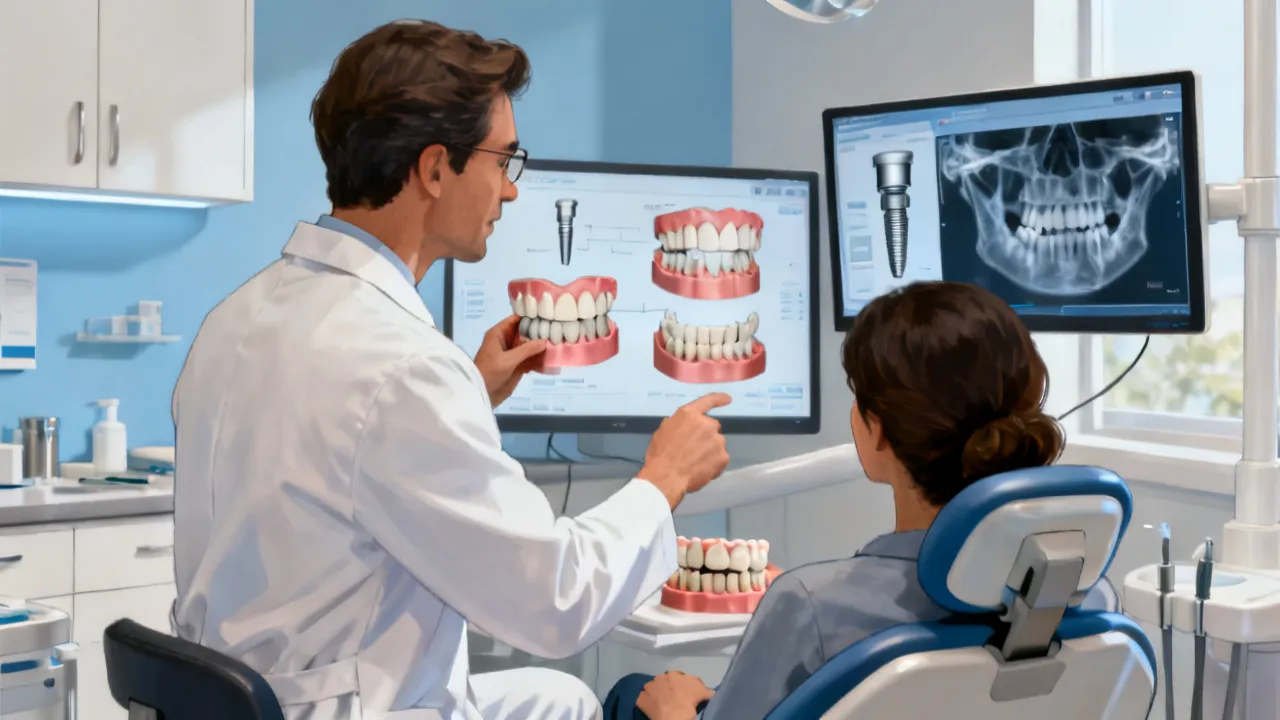
The first stage generally includes a medical and dental history, a clinical examination, periodontal assessment, photographs, and radiographs. Some cases require three-dimensional cone-beam computed tomography to assess the position of nerves, sinuses, and available bone. Digital scans may be used to plan the bite and design temporary or final teeth.
These diagnostic services may be bundled into the proposed treatment price, charged separately, or credited toward treatment. Patients should ask which approach applies. A low initial consultation fee does not necessarily mean a lower overall cost, just as a higher diagnostic fee may reflect more comprehensive planning.
Diagnosis should also consider the patient’s facial appearance, speech, jaw relationship, lip support, and existing bite. In a full-mouth case, replacing teeth is not merely a matter of filling spaces. The height and position of the teeth affect chewing, pronunciation, facial support, and the forces transferred to implants. A plan that looks inexpensive because it omits bite analysis may later require substantial adjustment.
2. Disease control and preparation
Active gum disease, untreated decay, infection, or unstable medical conditions may need attention before implant surgery. Smoking, poorly controlled diabetes, certain medications, and a history of radiation therapy can affect healing. The dentist may recommend periodontal treatment, extraction of damaged teeth, improvement of oral hygiene, or consultation with a physician.
Skipping this stage can create a false economy. Implant placement in an unhealthy mouth may increase the likelihood of inflammation, poor healing, or later implant loss. A responsible provider should explain how health conditions affect risk rather than simply focusing on the procedure price.
The condition of remaining teeth should be assessed individually. Extracting every remaining tooth and replacing them with implants is not automatically preferable to preserving healthy or restorable teeth. A conservative plan may involve keeping strategically useful natural teeth and using implants only where they provide a clear functional advantage. The financial difference can be significant, but the clinical decision should be based on prognosis rather than price alone.
3. Surgical placement
The implant fixture is placed into the jawbone. Depending on the treatment plan, several implants may be placed during one appointment, or treatment may be divided into stages. Immediate-loading protocols can provide provisional teeth soon after surgery in carefully selected cases, but they are not appropriate for every patient. Bone quality, primary stability, bite pressure, and the ability to follow a soft-food diet all matter.
Surgical fees may include local anesthetic, sterile instruments, the implant fixtures, sutures, medications, and postoperative instructions. Sedation or general anesthesia, when requested or clinically indicated, may be charged separately. Patients should ask whether a medical anesthetist or a dentist administers sedation and whether monitoring and recovery services are included.
4. Healing and provisional teeth
Some patients receive temporary teeth while the implants integrate with the bone. The provisional restoration may be fixed or removable, and it may require adjustment during healing. The quotation should state whether repairs, relining, replacement, or additional visits are included.
Temporary teeth are not simply cosmetic accessories. They can influence speech, appearance, chewing behavior, and the shape of the soft tissues around the future restoration. In some treatment plans, the provisional restoration is used to test the intended tooth position and bite before the final prosthesis is manufactured. Patients should ask whether this planning function is part of the proposed fee.
5. Final restoration
After healing and assessment of implant stability, the final crowns, bridges, or implant-supported dentures are fabricated. Materials can include acrylic, composite, zirconia, metal-ceramic, or other laboratory-selected options. The material affects appearance, durability, repairability, and cost. A patient should receive a written description of the final restoration, including the number of teeth, material, shade, warranty, and expected maintenance.
A fixed full-arch bridge is attached to implants and is generally removed only by a dental professional. A removable overdenture can be taken out by the patient for cleaning and may use clips, bars, or other attachment systems. Neither design is universally superior. A fixed restoration may provide greater stability and a more natural feeling during chewing, while an overdenture may be more affordable and easier for some patients to clean. The patient’s dexterity, oral hygiene, anatomy, expectations, and budget all matter.
6. Long-term maintenance
Implants are not immune to biological complications. Plaque accumulation can contribute to peri-implant mucositis or peri-implantitis, while excessive bite forces can damage screws, crowns, or prostheses. Regular professional maintenance, daily cleaning, and prompt attention to looseness or discomfort are essential. Maintenance fees may not be included in the initial estimate.
Patients should also ask how often the prosthesis may need professional removal and inspection. Removable prostheses can require replacement of attachments, relining, or repair of acrylic teeth. Fixed bridges can develop chipped porcelain, worn occlusal surfaces, or fractured components. A realistic budget should include these possibilities rather than assuming that the initial treatment fee is the only future expense.
Individual Dental Implant Price Ranges by Market
The following figures are reference ranges for an individual dental implant, not a complete full-mouth restoration. “Individual implant” can be defined differently by clinics, so patients must verify whether each range includes the implant fixture alone or the complete fixture, abutment, and crown. Currency values are presented as supplied reference estimates and are not adjusted for exchange-rate changes, inflation, taxes, or local treatment conditions.
| Country and code | Currency and reference range for one implant |
|---|---|
| United States (US) | USD: $3,000–$6,000 |
| United Kingdom (GB) | GBP: £2,000–£2,500 |
| Australia (AU) | AUD: AU$3,500–AU$6,500 |
| Canada (CA) | CAD: CA$3,000–CA$5,500 |
Source: dentalviews.com/low-cost-dental-implants; atlanticdentalgrp.com; rockvilledentalarts.com/es
| Country and code | Currency and reference range for one implant |
|---|---|
| Spain (ES) | EUR: €1,500–€2,500 |
| Chile (CL) | CLP: CLP$800,000–CLP$1,500,000 |
| Mexico (MX) | MXN: $15,000–$25,000 |
| Colombia (CO) | COP: $2,000,000–$4,000,000 |
| Peru (PE) | PEN: S/ 3,000–S/ 6,000 |
| Argentina (AR) | ARS: $80,000–$150,000 |
Source: rockvilledentalarts.com/es; unioncityminidentalimplants.com/es; cigna.com/es-us/knowledge-center/guide-to-dental-implants; dentavacation.com
| Country and code | Currency and reference range for one implant |
|---|---|
| Brazil (BR) | BRL: R$3,000–R$8,000 |
| Portugal (PT) | EUR: €1,000–€2,000 |
| Germany (DE) | EUR: €2,000–€3,500 |
| France (FR) | EUR: €1,500–€2,500 |
| Italy (IT) | EUR: €1,500–€3,000 |
| Japan (JP) | JPY: ¥300,000–¥700,000 |
Source: rubiodonto.com.br; odontologiavelasco.com.br; dentalvidas.com.br
These tables should be read as broad market references rather than standardized fee schedules. A clinic in the same country may quote a different amount because of regional labor costs, the implant manufacturer, the complexity of the case, laboratory arrangements, and the type of restoration. Exchange rates can also change quickly, especially in markets where prices are adjusted frequently. Patients should request the date on which a quotation expires and ask whether the price is guaranteed for the entire treatment period.
Why Full-Mouth Prices Are Not Simply the Individual Price Multiplied
Multiplying an individual implant estimate by the number of missing teeth is an unreliable method for calculating 전체임플란트 가격. Full-mouth rehabilitation often uses strategically positioned implants to support a bridge or overdenture. The number of implants may therefore be lower than the number of replacement teeth. On the other hand, advanced bone procedures, complex bite reconstruction, or the need for separate upper- and lower-arch restorations can make the total higher than a simple calculation suggests.
The design also influences the laboratory workload. A removable implant-supported overdenture may have a different fee structure from a fixed full-arch bridge. Fixed restorations can offer a sensation closer to natural teeth, but they may require more complex cleaning and may carry higher laboratory and maintenance costs. An overdenture may be easier to remove for hygiene and may have a different repair pathway.
Another factor is whether the patient needs a single arch or both arches. A quotation for the upper jaw should not be compared directly with a quotation for upper and lower full-mouth treatment. Likewise, a plan using existing healthy teeth differs from a plan requiring extraction of all remaining teeth.
Full-mouth treatment can also contain shared costs. One three-dimensional scan, one comprehensive bite analysis, or one laboratory design session may serve several implants. This means that the average cost per implant may decrease as the number of implants increases, but the total treatment amount will still be substantial. Conversely, a complicated case with only a few implants may have a high average cost because diagnosis, grafting, sedation, and specialist coordination require significant resources.
Illustrative Full-Mouth Treatment Scenarios
Consider a patient who has lost most teeth in the lower jaw but retains healthy teeth in the upper jaw. The patient may need a lower overdenture supported by two to four implants, rather than implants for every missing tooth. The estimate could include extractions, imaging, surgery, an immediate temporary denture, the final overdenture, and future attachment replacement. Comparing this case with a two-arch fixed restoration would not be meaningful.
A second patient may have severely damaged teeth in both arches, advanced bone loss, and a strong history of grinding. The treatment may require staged extractions, periodontal care, bone grafting, multiple implants, reinforced provisional teeth, occlusal protection, and a durable final restoration. The number of appointments and the laboratory involvement may make the total considerably higher than a promotional “per implant” price.
A third patient may have several missing teeth but enough healthy natural teeth to support a combination of bridges and individual implants. Preserving those teeth may reduce the number of implants and avoid unnecessary surgery. However, the remaining teeth must be evaluated for long-term prognosis. A plan that appears less expensive initially may require revision if the remaining teeth later fail.
These examples demonstrate why a patient should request a treatment diagnosis and not only a price list. Treatment design is a clinical decision. A fee becomes useful for comparison only after the scope of care is identical between providers.
Major Factors That Influence 전체임플란트 가격
Number and position of implants
More implants generally require more surgical components, restorative parts, and clinical time. However, the final price also depends on the implant distribution and the restoration supported by those implants. A dentist should explain the rationale for the proposed number rather than presenting it as a sales feature.
Bone grafting and sinus procedures
Long-standing tooth loss can lead to bone resorption. If the available bone is insufficient, grafting or other augmentation may be considered. In the upper back jaw, sinus-related procedures may be discussed. These procedures add cost, healing time, and clinical complexity. Some patients may qualify for alternative implant positions, but that decision requires imaging and professional judgment.
Condition of the gums
Periodontal disease is a significant treatment-planning issue because inflammation and bone loss can affect both natural teeth and implants. Periodontal therapy before surgery may be necessary. The cost of disease control should be shown separately so that patients understand the complete budget.
Restoration material and design
Acrylic provisional teeth, composite restorations, zirconia bridges, and metal-ceramic options have different properties. Material selection should reflect the patient’s bite, esthetic objectives, repair needs, and ability to clean the prosthesis. The least expensive material is not automatically the most economical over time, and the most expensive material is not automatically clinically necessary.
Technology and laboratory services
Digital impressions, guided surgery, computer-aided design, and in-house laboratories may affect the fee. Technology can improve communication and planning, but its value depends on appropriate use. Patients should ask what problem a specific technology solves and whether it changes the treatment outcome or simply changes the workflow.
Clinician training and facility standards
Implant dentistry may involve a general dentist, prosthodontist, periodontist, oral surgeon, or a coordinated team. Training, experience with complex cases, emergency arrangements, sterilization systems, and access to laboratory support are relevant factors. A lower price should not be evaluated separately from professional qualifications and continuity of care.
Geographic and administrative costs
Prices vary between metropolitan and regional areas, between private and institutional clinics, and according to local laboratory and staffing costs. Taxes, consultation charges, payment-plan administration, and insurance rules may also influence the amount payable by the patient.
Complexity of the bite
Patients who clench or grind may place unusually high forces on implant restorations. A crossbite, severe wear, uneven jaw relationship, or loss of vertical dimension can require additional planning. The dentist may recommend a diagnostic wax-up, a trial provisional restoration, orthodontic treatment, or a protective night guard. These services can add to the price but may improve the predictability of the final result.
Soft-tissue appearance
In the front of the mouth, the appearance of the gum line can be as important as the teeth themselves. A patient with significant gum recession or bone loss may need soft-tissue grafting, pink restorative material, or a prosthesis designed to replace lost gum volume. Esthetic customization may require additional laboratory appointments and should be discussed before treatment begins.
How the Treatment Timeline Affects Cost
Implant rehabilitation may be completed through immediate, delayed, or staged protocols. Immediate treatment can reduce the number of separate visits for some patients, but it may require intensive planning and a provisional restoration. Delayed treatment may allow extraction sites or grafts to heal before implant placement, which can improve planning in certain circumstances but increases the overall calendar time.
The healing period can affect travel and work arrangements. A patient may need time away from work after extractions or surgery and may need to attend several reviews for bite adjustment. If treatment is performed abroad, the patient should not assume that one short trip is sufficient. The final prosthesis may be delivered only after healing and repeated clinical verification.
Patients should request a written sequence that identifies the expected dates or intervals for examination, preparation, surgery, provisional restoration, healing reviews, impressions, try-in, final delivery, and maintenance. The sequence should also explain what happens if an implant does not integrate or if the provisional restoration is damaged during healing.
How to Obtain Dental Implants at Lower Cost in English-Speaking Markets
Patients in the United States, the United Kingdom, Australia, and Canada can reduce avoidable expenses without compromising clinical standards by following a structured process.
- Obtain a complete diagnosis first. A written diagnosis prevents patients from comparing incomplete promotional packages. Ask for imaging, periodontal findings, and a clear description of the proposed restoration.
- Compare complete treatment plans. Request itemized estimates from at least two qualified providers. Compare like with like: one arch versus two, removable versus fixed, provisional versus final teeth, and inclusion or exclusion of grafting.
- Check dental insurance and plan benefits. Some policies may contribute to consultations, extractions, crowns, or prosthetic services while excluding or limiting implant components. Confirm waiting periods, annual maximums, exclusions, and participating providers.
- Ask about staged treatment. When clinically appropriate, treatment may be divided into phases. Staging can help with budgeting, although it may increase the number of appointments and should not be used if it compromises healing or function.
- Consider a removable implant-supported option. For selected patients, an overdenture may cost less than a fixed full-arch restoration. It still requires careful planning, maintenance, and periodic replacement of worn components.
- Address gum disease and general health early. Preventive treatment may reduce the likelihood of expensive complications. Smoking cessation and improved oral hygiene can also support healing.
- Ask about payment arrangements in writing. Financing terms, interest, deposits, cancellation policies, and refund conditions should be understood before treatment begins.
- Evaluate local teaching or public dental services where eligible. Dental schools and public programs may offer selected services under supervision, but availability, eligibility, waiting times, and treatment scope vary.
- Confirm aftercare access. A nearby provider who can manage an urgent repair may be financially safer than a distant clinic with a lower initial price.
Another way to reduce unnecessary expense is to avoid repeating diagnostic work. Patients who seek second opinions should ask for copies of existing scans, radiographs, photographs, and treatment plans. A new clinician may still need updated imaging, but prior records can improve communication and prevent avoidable duplication. Patients should never allow an outside provider to use records without confirming that they are complete and current.
How to Obtain Dental Implants at Lower Cost in Spanish-Speaking Markets
Spain, Chile, Mexico, Colombia, Peru, and Argentina have different healthcare systems, currencies, professional regulations, and clinic structures. A lower quoted amount may reflect local operating costs, but it may also exclude important services. Patients should use the following approach:
- Verify professional registration. Confirm that the dentist or specialist is licensed in the relevant jurisdiction. National or regional dental authorities are the appropriate place to check registration when such a service is available.
- Request Spanish-language documentation if needed. The diagnosis, consent form, implant brand, restoration material, warranty, and aftercare instructions should be understandable to the patient.
- Separate surgical and prosthetic costs. Ask whether the quoted amount covers the implant fixture, abutment, crown, temporary teeth, laboratory work, and follow-up appointments.
- Compare established local clinics with dental-tourism packages. A package that includes transport or accommodation may not include all clinical services. Travel arrangements should never replace clinical due diligence.
- Investigate the management of complications. Ask who will treat infection, implant mobility, fracture, or prosthesis failure and whether those services are included in the warranty.
- Plan sufficient time for follow-up. Full-mouth treatment may require several visits. Returning home immediately after surgery can make routine review and adjustment difficult.
- Review currency and payment risks. Ask whether the price is fixed in local currency, subject to exchange-rate changes, or increased by taxes and card-processing charges.
Clinics serving Spanish-speaking communities may provide useful patient education in Spanish. For example, Rockville Dental Arts presents dental information and services through a Spanish-language website, while Union City Mini Dental Implants focuses on mini implant information. Cigna also provides a Spanish-language educational guide on dental implants. These resources can help patients formulate questions, but educational pages do not replace an examination or an individualized quote.
How to Obtain Dental Implants at Lower Cost in Portuguese-Speaking Markets
Brazil and Portugal are important Portuguese-speaking markets with different fee structures and regulatory environments. Patients should assess both treatment quality and continuity of care.
- Confirm the treatment team and credentials. Determine who performs surgery, who designs the prosthesis, and who provides maintenance.
- Ask about the implant manufacturer. The patient should receive the brand, model, dimensions, and documentation needed for future care.
- Clarify whether the laboratory is local. Local laboratory support may make repairs and adjustments more convenient, while imported components can introduce additional cost or delay.
- Compare restoration types. Ask for separate prices for an overdenture, a fixed bridge, and provisional teeth when each option is clinically suitable.
- Use written consent and itemized billing. A Portuguese-language consent document should describe risks, alternatives, expected appointments, and payment obligations.
- Budget for maintenance. Implant-supported prostheses require hygiene appointments, replacement of worn attachments, and possible relining or repair.
Rubi Odonto in Santo André, São Paulo, describes services including orthodontics, whitening, and dental implants. Odontologia Velasco in São Paulo presents implant, prosthetic, and esthetic services and highlights the use of current dental technology. DentalVidas describes dental plan products for individuals, families, and companies, including access to a dental network and emergency support. These sites illustrate different types of dental information and service models; they should not be interpreted as identical treatment quotations or endorsements.
Dental Tourism: Potential Savings and Important Conditions
Traveling abroad for implant treatment can appear less expensive because professional fees, laboratory costs, and facility expenses differ between countries. However, the correct comparison is the total episode of care, not the advertised surgery price. The total may include examinations, flights, accommodation, local transportation, food, companion expenses, time away from work, insurance, translation, and treatment of complications.
Implant treatment is rarely a one-visit process. Even when immediate provisional teeth are possible, the final restoration may require later impressions, bite checks, laboratory fabrication, and adjustments. If the patient returns home before completion, a second trip may be necessary. A local dentist may be unwilling to modify or repair an unfamiliar implant system, and replacement components may take time to obtain.
Before selecting an overseas provider, patients should request:
- the clinic’s legal name and physical address;
- the treating dentist’s credentials and relevant implant experience;
- the proposed implant brand and restorative materials;
- recent diagnostic requirements and a written treatment sequence;
- a complete quotation with exclusions;
- emergency and revision arrangements;
- warranty terms, including who pays for travel and laboratory costs;
- the schedule for surgery, healing, impressions, and final delivery; and
- instructions for care after returning home.
DentaVacation is an example of a dental-tourism information platform that discusses treatment abroad, cost comparison, and travel arrangements. Such a platform may help patients explore options, but patients should independently verify the clinic, clinician, legal protections, and clinical plan.
Patients should be especially cautious about arranging extensive treatment through messaging applications without a physical examination. Photographs can help with an initial discussion, but they cannot reliably show bone density, gum inflammation, nerve location, bite forces, or the prognosis of remaining teeth. A remote estimate may change after imaging, and patients should ask how deposits are handled if the proposed treatment is modified or cannot proceed.
Conditions and Requirements Before Treatment
Implants are not suitable solely because a patient has missing teeth. The following requirements are commonly considered, although the exact criteria vary:
- Adequate bone or a realistic augmentation plan: The implant needs sufficient bone support and a safe relationship to anatomical structures.
- Controlled oral disease: Active decay and periodontal inflammation should be treated or managed.
- Medical assessment: Diabetes, osteoporosis medication, blood-thinning medication, immune conditions, and previous cancer treatment may require additional review.
- Healing capacity: Smoking and nicotine use can negatively affect healing. The dental team should discuss cessation or reduction before surgery.
- Commitment to hygiene: Patients must be able to clean around implants and attend follow-up appointments.
- Realistic expectations: Implant restorations can restore chewing function and appearance, but they do not behave exactly like natural teeth and may require maintenance or replacement.
- Informed consent: Risks, alternatives, expected duration, limitations, and costs should be understood before signing.
Patients should provide a complete medication and medical history. Certain medicines or health conditions do not automatically rule out implant treatment, but they may change the timing, surgical approach, or need for medical coordination. Stopping a prescribed medication without advice can be dangerous. The dentist and physician should determine whether any medication changes are appropriate.
Questions to Ask Before Accepting a Quote
- What exactly does the quoted amount include?
- Is the figure for one tooth, one arch, or both arches?
- How many implants are proposed, and why?
- Will any teeth be extracted?
- Is bone grafting or a sinus procedure likely?
- Are temporary teeth included?
- What material will be used for the final restoration?
- Who performs the surgery and who provides the prosthetic treatment?
- What implant system and components will be used?
- What happens if an implant fails to integrate?
- What does the warranty cover, and for how long?
- Are routine reviews, adjustments, repairs, and hygiene visits included?
- What is the expected treatment timeline?
- How will urgent problems be handled outside clinic hours?
- Can I receive copies of my scans, clinical notes, and implant identification records?
- What costs could arise if the treatment plan changes during surgery?
- Who owns the digital files, models, and laboratory records?
- What foods and activities should be avoided during healing?
- Will a night guard or other protective device be recommended?
- How much should I budget annually for maintenance?
How to Read an Implant Advertisement Carefully
Price advertising often uses a narrow definition of “implant.” One clinic may advertise the fixture alone, while another may advertise a complete tooth. The difference can be hidden in small print. Terms such as “from,” “starting at,” or “per unit” do not necessarily describe the amount a patient will pay after examination.
Marketing images can also create unrealistic expectations. A digitally designed smile is not a guarantee of the final result. The patient’s facial structure, lip movement, gum level, bone anatomy, speech, and bite all influence the outcome. A trustworthy consultation should discuss limitations as well as benefits.
Patients should also distinguish between a warranty and a clinical guarantee. A warranty may cover a defective component under specific conditions, while a clinical guarantee may exclude smoking, poor hygiene, trauma, missed appointments, or treatment by another provider. The terms should be read carefully.
Another warning sign is pressure to pay a large nonrefundable deposit before receiving a diagnosis and written treatment plan. Patients should have adequate time to consider alternatives, obtain a second opinion, and understand the cancellation policy. A reputable clinic should be willing to explain why treatment is recommended and what less extensive options may be available.
Insurance, Dental Plans, and Financing
Dental insurance and dental plans differ widely. Some reimburse a portion of implant-related crowns or prostheses but exclude the surgical fixture. Others apply annual limits, waiting periods, missing-tooth clauses, or preauthorization requirements. Patients should obtain a written benefits determination rather than relying solely on a general customer-service explanation.
Dental plans may provide access to participating clinics or negotiated fees, but they are not necessarily equivalent to comprehensive insurance. Patients should ask whether the plan covers implants, extractions, imaging, grafting, sedation, temporary teeth, and repairs.
Financing can spread payments over time, but it may increase the total amount through interest or administrative charges. Before signing, compare the cash price, financed price, repayment period, interest rate, late-payment conditions, and cancellation rights. Financing should support an appropriate treatment decision, not pressure a patient into unnecessary procedures.
When a quotation is presented as a monthly payment, patients should calculate the total repayment amount. A plan that appears affordable each month may cost substantially more over several years. It is also useful to ask whether financing continues if treatment is delayed, if a restoration must be remade, or if the patient chooses not to proceed with a later phase.
Risks of Choosing Only the Lowest Price
Cost is a legitimate concern, but the lowest initial price can create higher long-term expenses when the treatment plan is incomplete or follow-up is unavailable. Possible problems include unsuitable implant positioning, prosthetic fracture, screw loosening, infection, inadequate hygiene access, unclear responsibility for complications, and difficulty obtaining replacement components.
This does not mean that a more expensive clinic is always better. A careful comparison should focus on transparent planning, appropriate diagnosis, clinician competence, infection control, implant traceability, laboratory quality, informed consent, and reliable aftercare. These factors provide a more meaningful basis for decision-making than price alone.
Patients should be cautious about claims that a particular implant method is completely painless, permanent without maintenance, or suitable for everyone. All surgical treatment has risks, and full-mouth rehabilitation requires cooperation from the patient. A provider who acknowledges uncertainty and explains how complications will be managed may be more trustworthy than one who promises a perfect result.
Practical Budgeting Worksheet
Patients can prepare a realistic budget by listing each possible component before comparing providers:
| Budget category | What to confirm |
|---|---|
| Diagnosis | Consultation, radiographs, three-dimensional imaging, photographs, and digital scans |
| Preparation | Extractions, periodontal treatment, temporary restorations, and medical consultations |
| Surgery | Implant fixtures, anesthesia or sedation, surgical fees, and medications |
| Additional procedures | Bone grafting, membrane use, sinus procedures, or soft-tissue treatment |
| Provisional restoration | Temporary teeth, adjustments, repairs, and relining |
| Final restoration | Abutments, crowns, bridges, overdentures, laboratory fees, and delivery |
| Aftercare | Reviews, hygiene visits, replacement attachments, repairs, and future maintenance |
| Travel or financing | Transport, accommodation, exchange costs, interest, and time away from work |
This worksheet helps reveal whether two apparently similar quotations actually cover different services. It also creates a record that can be reviewed with another dentist for an independent opinion.
A useful comparison document should include the treatment objective, the teeth or arches involved, the number and position of implants, the planned restoration, estimated dates, fees for each phase, possible additional charges, payment schedule, warranty terms, and maintenance recommendations. Patients should ask the clinic to identify which elements are fixed prices and which are estimates subject to clinical findings.
Alternatives to Full-Mouth Implants
Some patients may not need or may not be suitable for a full-mouth implant reconstruction. Alternatives can include a conventional removable denture, a partial denture, a tooth-supported bridge, or a smaller number of implants supporting an overdenture. The appropriate option depends on remaining teeth, bone condition, function, esthetic goals, medical status, and budget.
A conventional denture usually has a different initial and maintenance cost profile from implant treatment. It may be less invasive but can move during chewing and may require periodic adjustment. An implant-supported overdenture can improve retention for selected patients while using fewer implants than a fixed bridge. However, it still requires surgery and maintenance of attachments.
The best option is not necessarily the most technologically complex. A dentist should explain the benefits, limitations, expected lifespan, repair pathway, and total maintenance burden of each alternative.
In some cases, preserving a natural tooth with a filling, crown, root canal treatment, or periodontal therapy may be an alternative to extraction and implant placement. This decision depends on the tooth’s prognosis and the patient’s ability to maintain it. The cost of preserving a tooth should be compared with the complete cost and risks of replacing it, not only with the cost of the implant fixture.
Maintenance After Implant Treatment
After treatment, patients should follow the clinic’s cleaning instructions and attend examinations at the recommended intervals. Cleaning tools may include interdental brushes, floss designed for implants, water irrigation devices, and a soft toothbrush. The correct technique depends on the restoration design.
Patients should contact a dental professional if they notice persistent bleeding, swelling, pus, pain, bad taste, movement, a change in the bite, or a fractured restoration. Delaying assessment may allow a manageable issue to become more complex. Protective measures such as a night guard may be considered for patients who grind or clench their teeth.
Maintenance should be included in long-term financial planning. Crowns, bridges, overdenture attachments, and acrylic teeth can wear even when the implants remain stable. A realistic discussion of replacement and repair is part of responsible consent.
Daily cleaning may be more demanding with a full-arch bridge because food can collect beneath the prosthesis. Patients should receive practical instruction and, where appropriate, demonstrate the cleaning technique before the final restoration is considered complete. The design should allow sufficient access for hygiene. If a patient cannot clean the restoration effectively, inflammation and expensive complications may develop even when the initial surgery was successful.
Keeping Records for Future Care
Patients should retain copies of the treatment plan, consent documents, invoices, implant brand and model, lot or identification information, radiographs, scans, laboratory prescriptions, and warranty terms. These records are valuable if the patient moves, changes dentists, travels, or needs emergency care. Without implant identification information, a future clinician may need additional investigation before ordering compatible components.
The patient should also know whether the clinic provides emergency contact information and how to request records. If treatment is completed in another country, translated records may be useful. A record of the final tooth shade, occlusal design, and prosthetic materials can help a future laboratory reproduce or repair the restoration.
Frequently Asked Questions
Is 전체임플란트 가격 the same as the price of replacing every tooth?
No. The term usually refers to a full-mouth or full-arch implant treatment concept, but the number of implants and replacement teeth can differ. Some plans use implants to support a bridge or overdenture rather than placing one implant for every missing tooth.
How much does a full-mouth implant treatment cost?
There is no universally reliable single price. The total depends on the number of arches, implant count, restoration design, bone procedures, extractions, materials, clinician fees, laboratory work, and follow-up. The individual implant ranges in this guide should not be multiplied mechanically to create a full-mouth quotation.
Can I reduce the cost by choosing fewer implants?
Possibly, but only when the proposed design is clinically appropriate. Fewer implants may support an overdenture or a carefully planned fixed bridge, but implant distribution, bone quality, bite forces, and hygiene access must be assessed first. The decision should be made by the treating team after examination and imaging.
Are dental-tourism prices always lower?
No. The clinical fee may be lower in another market, but travel, accommodation, repeat visits, missed work, currency changes, and complication management can alter the total cost. Patients also need to consider how follow-up will be provided after returning home.
Does dental insurance cover implants?
Coverage varies by policy. Some plans contribute to associated crowns or prostheses but exclude the implant fixture or impose annual limits. Patients should review the policy and request written preauthorization where available.
Are mini dental implants suitable for full-mouth treatment?
Mini implants may be appropriate for selected indications, often involving stabilization of a removable prosthesis, but they are not a universal substitute for conventional implants. Diameter, loading conditions, bone anatomy, restoration design, and long-term maintenance must be evaluated by a qualified clinician.
How long does full-mouth implant treatment take?
The timeline varies from a relatively short immediate provisional process to a longer staged plan involving extractions, graft healing, implant integration, and final laboratory work. The dentist should provide an estimated schedule and identify events that could extend it.
What should I do if an implant becomes loose?
Do not continue chewing on it or attempt to tighten it yourself. Contact the treating clinic promptly. Looseness may involve a prosthetic screw, the restoration, or the implant itself, and each situation requires different management.
How can I compare clinics objectively?
Use the same written questions for each clinic. Compare diagnosis, treatment rationale, clinician credentials, implant system, restoration material, included services, exclusions, aftercare, warranty terms, and total projected cost. Independent review of the plan can be useful for complex treatment.
Can the final price change after treatment starts?
It can if the initial estimate was based on incomplete information or if unexpected clinical findings arise. Patients should ask the clinic to explain the circumstances that may create additional charges and whether the clinic will obtain consent before performing non-emergency work. A written estimate should distinguish predictable optional procedures from genuinely unforeseen events.
Is a fixed restoration always better than a removable overdenture?
No. A fixed restoration may offer stability and a different chewing experience, but it can be more expensive and may be harder to clean. An overdenture can be removable, easier to access for hygiene, and less costly in selected cases. The appropriate design depends on anatomy, function, dexterity, esthetics, and patient preference.
What if I am nervous about implant surgery?
Discuss anxiety with the dental team before accepting a quote. Local anesthesia, oral sedation, intravenous sedation, or other approaches may be available depending on the clinic and the patient’s health. Sedation can add cost and requires appropriate monitoring, transportation, and postoperative supervision.
Conclusion
Understanding 전체임플란트 가격 requires more than finding the lowest advertised number. Full-mouth implant treatment is a coordinated medical, surgical, and restorative process, and its cost reflects the patient’s anatomy, disease status, treatment design, materials, clinical team, laboratory services, and aftercare. Individual implant price ranges can help with broad international comparison, but they are not substitutes for diagnosis or a written quotation.
The safest cost-conscious strategy is to obtain a complete examination, compare itemized plans, investigate alternatives, verify professional credentials, understand warranty limitations, and budget for maintenance. Whether treatment is provided nearby or abroad, transparent communication and dependable follow-up should remain central to the decision.
A careful patient should compare the complete treatment journey: diagnosis, preparation, surgery, healing, temporary teeth, final restoration, maintenance, and the management of complications. When those elements are clearly documented, 전체임플란트 가격 becomes a useful planning figure rather than a confusing promotional term.
References and Website Links
- Dental Views – Low Cost Dental Implants
- Atlantic Dental Group
- DentaVacation
- Rockville Dental Arts – Spanish Website
- Union City Mini Dental Implants – Spanish Website
- Cigna – Spanish Guide to Dental Implants
- Rubi Odonto
- Odontologia Velasco
- DentalVidas
Disclaimer
1. The above information comes from online resources, and the data is as of October 2023.
2. Dental implant prices are for reference only and may vary by region, clinic and doctor.
3. This information is educational and does not constitute a diagnosis, treatment recommendation, financial guarantee, or substitute for an in-person consultation with a qualified dental professional.