Essential Insurance Claim Documents in Korea
This guide explains how to prepare 보험금 청구 서류, submit them efficiently, and reduce avoidable delays in Korea. Insurance claim documents generally establish the claimant’s identity, the insured event, medical treatment or property damage, and the amount requested. Required materials vary by policy type, claim amount, incident details, and insurer, so policy wording and the insurer’s current checklist should be reviewed before submission. The article also discusses digital filing, evidence preservation, privacy, rejection reasons, appeal options, and practical questions policyholders commonly ask.
What Matters Most When Preparing 보험금 청구 서류
When an insurance claim arises, the quality and relevance of the supporting documents often determine how efficiently the insurer can assess the case. The central task is not to submit the largest possible bundle of papers. It is to provide a clear, consistent record showing who is claiming, what happened, when it happened, what loss or treatment occurred, and how the requested benefit is calculated.
In Korea, 보험금 청구 서류 usually refers to the claim form and supporting evidence required to request payment under an insurance contract. The exact list differs according to the product and event. A medical expense claim, for example, may require treatment records and payment receipts, while a death benefit claim may involve family relationship documents, a death certificate, and beneficiary information. A property claim may depend on photographs, repair estimates, purchase records, and an incident report.
From an industry perspective, the most effective approach is to begin with the insurer’s current claim guidance, then arrange documents according to the structure of the policy. Policyholders should confirm the following points before filing:
- The type of benefit being claimed and the relevant policy number.
- The date and circumstances of the insured event.
- The identity of the insured person, policyholder, and beneficiary.
- The insurer’s current claim form and submission channel.
- Whether original documents, copies, scans, or electronic records are accepted.
- Whether additional evidence is required because of the claim amount or event type.
- Whether the insurer has requested consent for medical record access or other verification.
Requirements can change according to the insurer, product, and claim circumstances. A document list found in an older online post may therefore be incomplete. The safest practice is to obtain a current checklist directly from the insurer or from an official insurance association before collecting documents.
It is also useful to distinguish between three different questions that are often confused. The first is whether a policy may cover the event. The second is what evidence proves that the event occurred and caused the claimed loss. The third is how much the contract requires the insurer to pay. A document may answer one question without answering the others. For example, a hospital receipt may prove that money was paid, but it may not establish the diagnosis or whether the treatment falls within the insured benefit.
The Basic Structure of an Insurance Claim File
Most claim files can be understood through four evidence groups. Organizing documents this way makes omissions easier to identify and helps the claims examiner understand the case without unnecessary repetition.
| Evidence group | Purpose | Common examples |
|---|---|---|
| Identity and authority | Confirms who is submitting the claim and whether that person has authority to receive the benefit. | Claim form, identification information, beneficiary details, power of attorney where applicable |
| Event verification | Establishes that the insured event occurred and identifies its date and circumstances. | Medical certificate, accident report, death certificate, police report, incident statement |
| Loss or treatment verification | Shows the treatment provided, damage sustained, or service received. | Medical records, itemized bills, repair estimates, photographs, purchase evidence |
| Payment and calculation | Demonstrates the amount paid or claimed and supports the benefit calculation. | Receipts, payment confirmations, invoices, bank information, income evidence where relevant |
This structure is more useful than treating every document as an isolated requirement. For example, a hospital receipt may show that money was paid, but it may not explain the diagnosis or treatment. A diagnosis certificate may describe the medical condition, but it may not show the actual expense. Together, the documents provide a more complete record.
A practical file can also be divided into three layers. The first layer contains the core documents that should be submitted immediately. The second contains documents that support a particular issue, such as the cause of an accident or the ownership of damaged property. The third contains background material that may be needed only if the insurer asks follow-up questions. This layered approach prevents the initial submission from becoming confusing while ensuring that useful evidence is preserved.
Each document should have a clear purpose. Before submitting it, a claimant can ask, “What fact does this document prove?” If the answer is unclear, the document may be irrelevant, or it may need a short explanation. This simple test is especially helpful when a claim involves many medical visits, several repair estimates, or correspondence from multiple parties.
Common Documents for Medical and Hospitalization Claims
Medical claims are among the most frequently submitted insurance claims in Korea. They may involve hospitalization, outpatient treatment, surgery, prescription medication, diagnosis-based benefits, critical illness benefits, or accident-related treatment. The required evidence depends on the policy wording and the benefit being requested.
Claim form and personal identification information
The insurer normally requires a completed claim form. It may ask for the policy number, claimant information, insured person’s details, event date, medical institution, bank account, and a description of the requested benefit. Errors in account numbers, dates, or contact information can create additional correspondence even when the medical evidence is complete.
Identification information is used to confirm the claimant and prevent unauthorized payment. The exact form of identification may vary by submission method. When a representative files the claim, the insurer may request evidence of the representative’s authority, such as a power of attorney or relationship documentation. Sensitive identification numbers should be handled through an approved secure channel rather than sent through an unsecured method.
Before signing the claim form, review any consent language carefully. A medical information consent may authorize the insurer to obtain or verify records relevant to the claim. The scope, duration, and purpose of consent can vary by form. If the wording is unclear, ask the insurer or a qualified adviser what information is being requested and why.
Medical certificates and diagnosis records
A medical certificate or diagnosis-related document may be needed when the policy pays according to a specific diagnosis, disability level, surgery, hospitalization period, or serious illness classification. The document should generally identify the patient, medical institution, diagnosis, date, and issuing medical professional. The relevant diagnostic terminology must be consistent with the policy’s definition, but the insurer—not the claimant—determines whether the contract conditions are satisfied.
Policyholders should avoid requesting a document solely because it sounds comprehensive. The appropriate document depends on the benefit. In some cases, a medical certificate is necessary; in others, an itemized medical statement, treatment confirmation, or medical record may be more relevant. Asking the insurer which document corresponds to the claimed benefit can help prevent unnecessary expense and delay.
Some diagnosis-based claims require more than a general statement that a condition exists. The insurer may need test results, pathology reports, imaging findings, operative records, or specialist opinions. This does not mean every claim requires every possible record. It means the claimant should identify the contractual definition and obtain the evidence that directly addresses it.
Receipts and itemized medical statements
Receipts establish that a payment was made. An itemized statement provides greater detail about the services, medicines, examinations, or materials included in the bill. These records are particularly important for claims involving actual medical expenses because the insurer may need to distinguish covered treatment from excluded or non-covered items under the policy.
A payment receipt alone may not explain the nature of a charge. Conversely, a medical statement without proof of payment may not establish the amount actually paid by the claimant. When the insurer’s checklist requests both, submitting both is generally more reliable than relying on one document.
When treatment is received at several institutions, organize the records by institution and date. A simple table showing the visit date, facility, treatment type, amount paid, and document name can make the total easier to verify. It can also reveal duplicate receipts or missing records before submission.
Hospitalization and surgery evidence
For hospitalization benefits, the insurer may ask for a document confirming admission and discharge dates. For surgery benefits, it may request an operation confirmation or surgical record. The wording of these documents matters because policies may define hospitalization and surgery in specific ways. A procedure performed in an outpatient setting may be treated differently from an inpatient operation under the contract.
From a claims-review perspective, the date and classification of treatment should be consistent across the claim form, medical documents, and payment records. If dates differ because of a billing adjustment or corrected certificate, the claimant should explain the discrepancy rather than submitting conflicting records without context.
Hospitalization records may show an admission date, an actual treatment period, and a discharge date that are not identical for administrative reasons. A claimant should not attempt to interpret these differences alone. If the insurer asks about the length or nature of the admission, obtain clarification from the medical institution and preserve the explanation in writing where possible.
Prescription and pharmacy documents
Where prescription-related benefits are covered, the insurer may request a prescription, pharmacy receipt, or medication payment record. The policy may distinguish between prescribed medicines, supplements, non-prescription products, and other purchases. A clear record showing the prescription date, medicine, amount, and patient name can assist with review.
Medicine purchased on different dates should generally be listed separately. If a pharmacy provides a combined receipt, retain any prescription documents that explain the individual medicines or treatment periods. The claimant should also check whether the policy covers pharmacy expenses separately from hospital or outpatient expenses.
Documents for Accident, Injury, and Disability Claims
Accident claims often require more than a medical bill because the insurer must assess the cause of the injury and whether it falls within the policy’s definition of an accident. The evidence may include an accident statement, emergency treatment record, police documentation, workplace incident record, or other event-related material.
The appropriate document depends on how the accident occurred. A traffic accident may involve a traffic accident confirmation, police record, vehicle insurance information, or settlement documentation. A workplace incident may require an employer’s incident report or documentation from the relevant occupational safety process. A private accident may be described through a claimant statement, witness information, photographs, or medical records that identify the injury mechanism.
For disability-related benefits, the insurer may require a disability diagnosis or assessment prepared according to the policy’s standards. A general medical opinion may not be sufficient if the contract specifies a particular evaluation method, waiting period, body function, or permanence requirement. Policyholders should review the exact definition before requesting a certificate, as different products can use different criteria for impairment and disability.
When an injury develops over time, the timeline becomes especially important. The claimant should record the date of the incident, first medical visit, diagnosis, treatment progression, procedure dates, and current condition. A concise chronology can help connect the event with the medical evidence while avoiding speculation about matters not documented by a professional.
Accident descriptions should be factual and specific. Include the location, approximate time, activity, immediate symptoms, witnesses, and steps taken afterward when known. Avoid exaggeration, assumptions about fault, or language copied from another person’s statement if it does not accurately describe the claimant’s experience. Inconsistencies between a first notification and a later statement can prompt additional questions.
Traffic accident evidence
A traffic accident file may contain a police confirmation, emergency service record, vehicle damage photographs, medical treatment records, insurance correspondence, and settlement information. The relevance of each item depends on whether the claim is for the insured person’s injury, a fixed accident benefit, medical expenses, disability, or liability to another person.
Keep a record of the accident date, vehicle information, location, other involved parties, and the dates on which each insurer was notified. If a settlement or compensation has already been paid by another party, disclose it when requested. Concealing relevant information can complicate coordination between policies and may delay assessment.
Workplace and public-place accidents
For a workplace accident, an employer’s incident report, attendance record, occupational injury documentation, or witness statement may help establish the circumstances. For an accident in a store, apartment building, sidewalk, or other public location, photographs of the condition, notice to the manager, security footage information, and witness details may be useful.
Security footage can be overwritten quickly. If the incident may depend on video evidence, notify the responsible facility promptly and ask whether preservation is possible. The claimant should not attempt to obtain or distribute footage unlawfully. A request for preservation can be made through the facility, insurer, police, or another appropriate channel.
Documents for Death Benefits
Death benefit claims are sensitive and may involve several parties, including the insured person, policyholder, beneficiary, estate, and insurer. The insurer commonly needs evidence confirming the death and documents establishing the person entitled to receive payment. Depending on the case, this may involve a death certificate, certificate of family relations, family register-related documentation, beneficiary identification, and bank account information.
The exact requirements can differ where there are multiple beneficiaries, a beneficiary has died, the beneficiary is a minor, or the policy directs payment to an estate. In such circumstances, additional authority documents may be required. The insurer may also request records concerning the cause or circumstances of death if the policy contains relevant exclusions, waiting periods, or investigation conditions.
Claimants should protect the privacy of the deceased and surviving family members. Only documents relevant to the claim should be supplied, and copies should be sent through a secure insurer-approved channel. If several family members are involved, it is useful to identify one communication contact while preserving each beneficiary’s legal rights.
Where a beneficiary is a minor or lacks legal capacity to act independently, the insurer may require documents concerning a legal representative. The relationship between the representative and beneficiary should be established clearly. If there is disagreement among family members, the insurer may suspend payment until entitlement is clarified. In that situation, submitting repeated copies of the same records is unlikely to resolve the underlying issue; legal or institutional guidance may be more appropriate.
Cause-of-death documents should be handled carefully. A death certificate may contain a broad cause, while other medical records may contain more detailed information. The claimant should provide the documents requested by the insurer and should not alter or summarize medical information in a way that changes its meaning.
Documents for Property, Fire, Theft, and Liability Claims
Property claims require evidence of both the incident and the financial loss. Typical materials may include photographs, videos, purchase records, repair estimates, invoices, receipts, inventory lists, police reports, fire department records, and statements from building managers or witnesses.
Photographs should be taken before damaged items are discarded or repaired whenever safety permits. Wide-angle images can show the overall scene, while close-up images can document specific damage. The date, location, and relationship between the photographs and the claimed items should be recorded. Digital images should be preserved in their original form when possible, because edited or compressed files may provide less useful information.
Do not place yourself in danger to preserve evidence. After a fire, flood, collapse, electrical incident, or other hazardous event, follow instructions from emergency services and building managers. Emergency measures that prevent further damage may be necessary, but keep receipts and photographs of those measures. Contact the insurer before major restoration work if doing so is reasonably possible.
For theft claims, the insurer may request a police report and information about the missing property. Purchase records, serial numbers, photographs taken before the incident, warranty records, and payment history can help establish ownership and value. A claimant should not estimate an item’s value without supporting evidence if records are available.
For fire or water damage, the cause and scope of damage may require technical assessment. Repair estimates should distinguish between emergency measures, restoration work, replacement, and improvements. An estimate is not necessarily proof that the work was completed or that the amount is covered. The insurer may ask for final invoices or additional inspection material.
Liability claims can involve the claimant’s responsibility for injury or property damage suffered by another person. Relevant evidence may include notices, medical documents of the injured party, photographs, witness statements, correspondence, and legal documents. Policyholders should notify the insurer promptly and should be cautious about admitting liability or promising payment before understanding the facts and the policy’s procedures.
Proving ownership and value
Purchase receipts are useful but not always the only evidence of ownership. Credit card records, bank transfers, online order histories, warranty registrations, photographs showing the item in the claimant’s possession, and serial-number records may also help. The strength of each item depends on how directly it connects the claimant, the property, and the date of purchase.
For older items, replacement cost and actual cash value may be treated differently under the policy. A claimant should not assume that the current retail price is automatically the amount payable. Depreciation, limits, deductibles, sublimits, and the cost of comparable replacement may all affect the calculation.
Business and commercial property claims
Commercial claims may require inventory records, accounting documents, tax invoices, payroll records, lease documents, photographs, and evidence of interruption or lost income. The insurer may ask for records covering a period before and after the incident to evaluate the claimed loss. These files can be substantially more complex than personal property claims.
Businesses should preserve ordinary records through a backup process before a loss occurs. Cloud backups, off-site storage, inventory systems, and regularly updated photographs can make it easier to prove ownership and value. A business continuity plan should identify who will notify the insurer, who will secure the premises, and who will collect financial evidence.
Comparison of Claim Document Categories
The following comparison is a practical orientation tool, not a substitute for the insurer’s product-specific checklist. A single event may fit more than one category, such as an accident that results in hospitalization and property damage.
| Claim category | Primary evidence | Additional evidence that may be requested | Main review issue |
|---|---|---|---|
| Outpatient medical treatment | Claim form, medical payment receipt, itemized treatment statement | Diagnosis confirmation, prescription record, treatment details | Whether the treatment and expense fall within the policy coverage |
| Hospitalization | Claim form, hospitalization confirmation, medical expense records | Admission and discharge records, medical chart, operation confirmation | Whether the admission meets the contract definition |
| Diagnosis benefit | Claim form, diagnosis certificate | Pathology report, examination result, specialist opinion | Whether the diagnosis matches the policy definition and effective dates |
| Accident injury | Accident description, medical records, payment records | Police report, witness information, emergency records | Cause, timing, and relationship between accident and injury |
| Death benefit | Claim form, death certificate, beneficiary evidence | Family relationship records, cause-of-death materials, authority documents | Entitlement, beneficiary identity, and policy conditions |
| Property damage | Incident description, photographs, repair estimate | Purchase evidence, invoices, inspection report, police or fire record | Cause, scope, ownership, and amount of damage |
| Liability | Notice of claim, incident evidence, loss documentation | Legal correspondence, medical records, settlement materials | Responsibility, covered liability, and reasonable loss amount |
Step-by-Step Guide to Preparing 보험금 청구 서류
Step 1: Identify the benefit and policy
Begin by identifying the exact benefit that may apply. A single insurance contract can contain several benefits, and multiple policies may cover the same event. Gather policy numbers, insurer names, product names, and the insured person’s details. If the claimant is uncertain which benefit applies, describing the event to the insurer and asking for the relevant checklist is more reliable than selecting a document category based on a general internet search.
Check whether the event may trigger more than one benefit under the same policy. For example, an accident may involve an accident diagnosis benefit, hospitalization benefit, surgery benefit, and actual medical expense benefit. Each benefit may have a different definition and document requirement. Listing the potential benefits at the beginning helps prevent an application from being limited unnecessarily to only one category.
Step 2: Record the event timeline
Write a short factual timeline. Include the incident date, first notification, first treatment, diagnosis date, hospitalization dates, discharge date, repair date, or other significant points. Use records rather than memory where possible. A timeline is especially helpful when the event involves several medical institutions or a long period of treatment.
Keep the timeline separate from personal opinions. It can state that symptoms appeared on a particular date, that a hospital visit took place, or that an insurer was notified. It should not state a medical or legal conclusion unless that conclusion is supported by an appropriate professional record. The timeline can be updated as new documents arrive, but earlier versions should not be deleted if they were already submitted.
Step 3: Separate mandatory and conditional documents
Divide the checklist into documents required in nearly every case and documents that apply only under certain conditions. This prevents two common problems: omitting a central form and collecting irrelevant personal information. Conditional documents may depend on the type of injury, claim amount, beneficiary relationship, accident cause, or whether a representative is filing.
Mark documents that are pending and identify who is responsible for obtaining them. A medical institution may issue one record, a police station another, and a repair contractor a third. Setting out these responsibilities makes the process more manageable, particularly when the claimant is hospitalized or family members are assisting.
Step 4: Request documents from the correct institution
Medical certificates and itemized statements should be obtained from the relevant medical institution. Accident records may come from the police, employer, transportation operator, or another responsible organization. Property evidence may come from the repair contractor, retailer, building manager, or local authority. Ask each institution whether the document includes the information required by the insurer.
Ask about issuance fees, processing time, identification requirements, and whether a representative can request the record. Some records may be available electronically, while others may require an in-person request. Planning these details early can avoid a situation in which the insurer’s deadline approaches before the underlying document is available.
Step 5: Check consistency
Compare names, dates, policy numbers, diagnoses, event descriptions, and amounts across all documents. Minor differences can result from administrative conventions, but unexplained contradictions may lead to further questions. If a document contains an error, request correction through the issuing organization rather than altering it personally.
Pay special attention to the insured person’s name when records use different transliterations, spacing, or identification formats. Also check whether the date on a receipt is a payment date, treatment date, admission date, or issue date. These dates may legitimately differ, but the distinction should be clear.
Step 6: Protect sensitive information
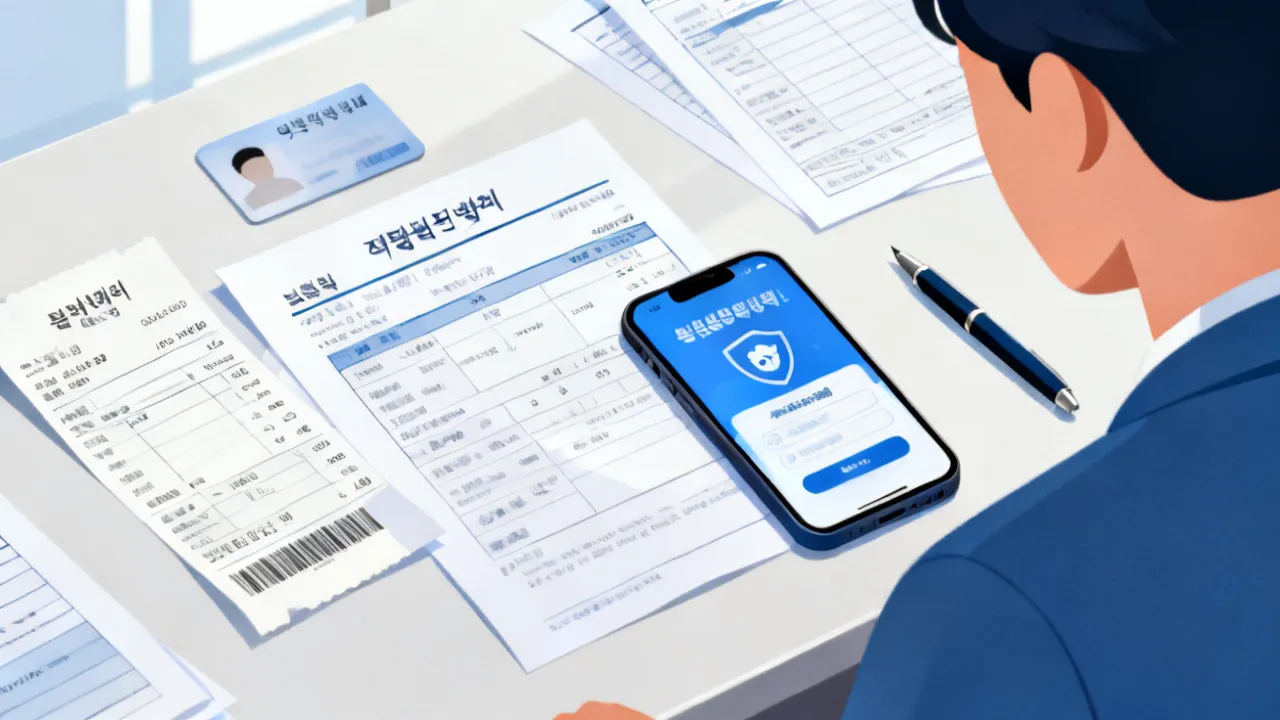
Insurance claim files often contain medical information, identification details, account information, and family records. Use the insurer’s secure mobile application, website, branch, mail process, or another authorized channel. Avoid sending full documents to unknown intermediaries or uploading them to public platforms. Keep a record of what was submitted and when.
If an insurance agent or broker helps with the submission, confirm that the person is authorized to handle the information and ask how the records will be stored. Assistance with filing does not necessarily mean that the intermediary has authority to decide the claim or receive confidential information indefinitely.
Step 7: Submit and retain confirmation
After submission, retain the confirmation number, date, channel, and list of files. If documents are sent by mail, consider a delivery method that provides tracking. If submitted electronically, save the upload confirmation or screen showing successful receipt. These records are useful if the insurer later states that a document was not received.
Do not rely only on a telephone conversation. Telephone contact can be useful for clarifying procedures, but important explanations should be confirmed through a message, email, application notice, or written record when possible. Record the representative’s name, the date of contact, and the substance of the instructions.
Step 8: Respond to supplementary requests carefully
An insurer may ask for additional material during review. Read the request closely and provide documents that answer the stated question. If the request is unclear, ask what issue the document is intended to clarify. A short written explanation can be useful when a requested record does not exist or when two records contain an understandable difference.
Submit supplementary documents as one organized response where practical. Begin with a brief list of the additional documents and explain which question each one addresses. This helps prevent a series of fragmented submissions in which the reviewer receives records without knowing how they relate to the outstanding issue.
Digital Submission and Electronic Records
Many insurers provide digital claim channels through mobile applications, websites, electronic forms, or other online services. Digital submission can simplify scanning, status tracking, and communication, but it does not remove the need to provide accurate evidence. A blurred photograph, incomplete page, password-protected file, or missing reverse side can prevent the reviewer from using the document.
Before uploading, confirm that every page is legible and in the correct order. Use a stable file name that identifies the document without exposing unnecessary personal information, such as “hospitalization-confirmation” rather than a full identification number. If a document contains several pages, verify that no page is missing from the scan.
Some electronic systems may allow information to be retrieved from participating medical or public services with the claimant’s authorization. Availability depends on the insurer, institution, service, and claim type. Electronic retrieval should not be assumed to cover every document. The claimant remains responsible for checking whether the submission is complete.
Digital records should be stored securely. Avoid retaining sensitive files in a shared device folder or sending them through a group chat. If a family member assists with the claim, agree on how documents will be transferred and deleted after the process ends, subject to any need to preserve records for an appeal or legal matter.
Scanning and image quality
A document should be scanned against a plain background with all four edges visible. Avoid glare, shadows, folded corners, and excessive compression. If the document contains a seal, signature, barcode, or back-page instruction, make sure it remains visible. A photograph may be acceptable, but a flat scan is often easier to read and archive.
Before sending a file, open it on another device if possible. A document that looks clear on a phone may be unreadable when enlarged or printed. Check that the file is not corrupted and that any password has been removed if the insurer’s system cannot open protected files. Never remove security features from an official file if doing so would change its authenticity; ask the insurer for an acceptable format instead.
Electronic signatures and consent
Some claims can be filed using electronic signatures or mobile consent. The claimant should verify that the person providing consent is the insured person, beneficiary, or authorized representative. If a claim involves several beneficiaries, one person’s electronic submission may not replace the separate consent or authority required from others.
Save the electronic consent confirmation and any terms displayed at the time of authorization. If the system provides a reference number, keep it with the other claim records. Electronic procedures are convenient, but the same standards of identity, authority, and accuracy still apply.
Conditions and Requirements That May Affect a Claim
Insurance payment is governed by the contract, applicable law, and the facts established during review. Preparing the correct paperwork does not guarantee payment. The following conditions commonly influence the assessment:
- Policy effective date: The event must generally occur during the period in which the relevant coverage was active, subject to the contract.
- Waiting or limitation provisions: Some benefits contain special periods or conditions that affect eligibility.
- Definitions: Terms such as surgery, hospitalization, disability, accident, or serious illness may have contractual meanings.
- Exclusions: Certain causes, activities, pre-existing conditions, or circumstances may be excluded or treated differently.
- Notice and cooperation: The policy may require timely notification and cooperation with reasonable verification procedures.
- Beneficiary authority: The person receiving payment must be the beneficiary or an authorized representative under the relevant documents.
- Duplicate coverage: Multiple policies may apply different payment principles, particularly for actual expenses and fixed benefits.
- Evidence quality: Documents must be sufficiently clear, authentic, and relevant to the claim.
Policyholders should read the benefit description, exclusions, definitions, and claims section rather than relying only on the product name. A product marketed around a broad concept may still define payment conditions narrowly in its contract.
The policy effective date can be more complicated than the date on which a claimant first noticed symptoms. For an accident, the event date may be relatively clear. For an illness, the relevant date may depend on diagnosis, onset, examination, or another contractual standard. Do not select a date merely because it produces a more favorable result. Use the date supported by the records and ask the insurer how the contract treats uncertainty.
Claims involving pre-existing conditions or recurring treatment may require a distinction between a new insured event and continuation of an earlier condition. Medical records can help establish that distinction, but claimants should avoid instructing a medical professional what conclusion to write. The role of the claimant is to provide accurate history and request records that reflect the treatment actually provided.
Why Claims Are Delayed or Returned
Delays do not always indicate that a claim will be denied. An insurer may need more information because the first submission does not answer a specific question. Common administrative causes include an unsigned claim form, missing pages, inconsistent dates, an incorrect account number, unclear scans, absent beneficiary documentation, or a medical document that does not identify the treatment period.
Another source of delay is a mismatch between the claimed benefit and the evidence provided. For example, a receipt may show payment but not the diagnosis required for a diagnosis-based benefit. A repair estimate may show proposed work but not establish that the damage resulted from a covered incident. A claimant can reduce this risk by connecting each document to the question it answers.
Claims can also require investigation when the event is complex, the cause is disputed, the loss is substantial, or several parties are involved. In such cases, the insurer may request statements, records, inspection, or consent for verification. The claimant should provide factual information, avoid changing descriptions casually, and ask for clarification when a request appears broader than necessary.
Administrative delay versus substantive review
An administrative delay usually concerns missing or unusable paperwork. A substantive review concerns whether the policy covers the event, whether an exclusion applies, or whether the loss amount is supported. The claimant should ask which type of issue is pending. If the problem is administrative, supplying the missing page may resolve it. If the problem is substantive, more receipts alone may not address the insurer’s concern.
When an insurer requests additional information, check whether the request identifies a deadline. If a document cannot be obtained by that date, notify the insurer before the deadline and explain the expected issuance date. Silence can make a claim appear abandoned even when the delay is caused by a hospital, public authority, or another third party.
Duplicate or inconsistent submissions
Sending the same document repeatedly through different channels can create duplicate records and confusion. If a second submission is necessary, label it as a resubmission and refer to the original confirmation number. If a corrected document replaces an earlier document, identify the earlier version and explain the reason for correction.
Never create a new version of an official statement by editing dates, amounts, or wording. If a calculation is prepared by the claimant, label it as a calculation sheet rather than presenting it as an official invoice. Transparency is more useful than attempting to make the file look uniform.
How to Respond to a Denial or Partial Payment
If a claim is denied or paid only in part, request a clear explanation identifying the relevant policy provision and the evidence considered. The explanation should distinguish between an incomplete submission, an exclusion, failure to meet a definition, insufficient proof, and a calculation issue. These are different problems and require different responses.
Review the policy schedule, terms and conditions, claim form, medical records, and correspondence together. If the decision appears to rely on a factual error, provide a concise correction supported by objective evidence. If a document was unavailable at the time of the first submission, explain why and submit it through the insurer’s designated process.
Where disagreement remains, policyholders may use the insurer’s internal complaint or reconsideration process and may seek guidance from relevant Korean financial consumer protection authorities or insurance-related dispute resolution channels. The Financial Supervisory Service and recognized insurance associations publish consumer information, but the appropriate route depends on the matter and the current procedures. A claimant should confirm the latest process through an official channel.
Legal limitation periods and procedural deadlines can matter. The period for exercising an insurance claim may be affected by applicable Korean law and the policy. Because statutory rules and factual circumstances can differ, claimants should not postpone action while attempting to assemble a perfect file. Notify the insurer promptly, submit the documents available, and ask what may follow.
Preparing a reconsideration request
A reconsideration request should be organized around the reason given for the decision. Begin by identifying the claim number, decision date, benefit requested, and issue in dispute. Then state the relevant facts, identify the supporting document, and explain why the document addresses the insurer’s stated concern. Avoid submitting a lengthy emotional narrative that does not connect to the policy condition under review.
If the disagreement concerns the amount, prepare a calculation table. List the date, item, amount billed, amount paid, deductible, limit, and amount requested. If the disagreement concerns diagnosis or disability, identify the exact certificate or medical finding that supports the position. If the disagreement concerns an accident, provide a chronology and distinguish direct evidence from witness recollection.
A claimant may obtain professional advice when the issue is complex or the financial value is substantial. Legal, medical, and insurance professionals perform different functions, so the appropriate adviser depends on the question. The claimant should also understand the fees, scope of work, confidentiality arrangements, and whether the adviser will communicate directly with the insurer.
Privacy and Document Security
보험금 청구 서류 can contain particularly sensitive personal information. Medical records may reveal diagnoses and treatment history, while death benefit documents may include family relationships and financial details. Good document handling is therefore part of responsible claims management.
Use the minimum information necessary for the stated purpose. Before submitting a copy, ask whether certain fields may be masked under the insurer’s instructions. Do not redact information that the insurer needs to verify identity, entitlement, treatment, or payment. If uncertain, ask the insurer rather than editing a document independently.
Keep original certificates and official documents in a secure location unless the insurer specifically requires an original. Maintain a submission log containing the document name, issue date, submission date, recipient, and confirmation number. This log can be useful if documents must be resubmitted or if a later dispute concerns what was provided.
Use separate passwords and device protections when storing electronic claim files. Do not leave printed medical records in a vehicle, public printer, or shared office. If documents are sent by email, verify the address carefully and consider whether the insurer has a safer upload channel. After the matter is resolved, dispose of unnecessary copies securely rather than placing them intact in ordinary recycling.
When a translator, family member, caregiver, or agent helps prepare the file, disclose only the records necessary for that assistance. The claimant can ask the helper to return or delete copies after submission. If a dispute is possible, preserve one complete and secure archive while disposing of casual duplicates.
Practical Advice from an Insurance Claims Specialist
From an expert review standpoint, the strongest claim file usually has three qualities: traceability, consistency, and proportionality. Traceability means that each requested amount can be connected to a receipt, invoice, or calculation. Consistency means that the event description does not conflict with medical, police, repair, or payment records. Proportionality means that the claimant provides relevant evidence without obscuring the central issue in a large collection of unrelated documents.
A short cover note can improve readability. It may state the policy number, event date, benefits claimed, documents attached, and any known discrepancy. The note should be factual and neutral. It should not make medical conclusions or legal admissions that are not supported by the record.
Experts also recommend separating fact from interpretation. “The claimant fell on the stairs on 12 March and visited the emergency department that day” is a factual description if supported by records. “The fall was entirely caused by a particular condition” may be an interpretation requiring additional evidence. Clear separation helps the insurer identify what is established and what needs review.
Finally, do not assume that a document is unnecessary because a previous claim used a shorter checklist. Requirements can differ by policy and event. Treat every claim as a separate file and confirm the current instructions.
Use a document index
A document index is particularly valuable for large claims. It can include a number, document title, issuing institution, issue date, relevant fact, and file name. For example, “4. Hospitalization confirmation, ABC Hospital, issued 18 April, proves admission from 10 to 15 April.” The index does not replace the document, but it makes the file easier to navigate.
Number the files consistently and avoid changing file names after submission unless the insurer instructs you to do so. If a document has an attachment, keep the attachment next to the document it supports. For paper files, use dividers rather than binding materials that make scanning difficult.
Keep a communication record
A communication record can include the date of each call, the department contacted, the representative’s name or identification, the question asked, and the answer received. Record whether the answer was general guidance or a decision on the claim. General customer service information may not be a formal coverage determination.
This record is useful even when the claim proceeds smoothly. It helps family members understand the status, prevents repeated questions, and provides a reliable chronology if the file is transferred to another claims examiner.
Sources and Verification Standards
This article is intended as general educational information, not individualized legal, medical, or financial advice. For current requirements, policyholders should consult the relevant insurer’s official claims guidance and the wording of the applicable policy.
Useful institutional sources for general verification include the Financial Supervisory Service, the Life Insurance Association of Korea, the General Insurance Association of Korea, the National Health Insurance Service, and the relevant medical or public authority that issued an underlying record. These organizations may provide consumer guidance, claim procedures, insurance terminology, or information about document issuance. Procedures and online services can change, so the latest official notice should be checked at the time of filing.
When checking information online, distinguish between official guidance, commercial advertising, personal experience, and legal commentary. A blog post may accurately describe one insurer’s practice but not another insurer’s product. A form downloaded from an unofficial website may be outdated. Use online information to prepare questions, then confirm the final requirements through the insurer or relevant institution.
Policy documents should also be read in their complete form. A product summary or sales brochure may explain the general benefit, but the full policy wording normally contains the definitions, exclusions, limits, waiting periods, and claim procedures that determine assessment. If the policyholder cannot locate the applicable terms, request a copy from the insurer and retain it with the claim file.
Frequently Asked Questions
What are 보험금 청구 서류?
보험금 청구 서류 are the forms and supporting records used to request payment under an insurance contract. They commonly include a claim form, identity or beneficiary information, evidence of the insured event, treatment or damage records, and proof of the amount claimed. The exact list depends on the policy and circumstances.
Can I submit a claim without every document?
In many cases, a claim can be notified or submitted with the documents currently available, followed by additional evidence. However, the insurer may not complete its assessment until essential records arrive. Contact the insurer promptly, explain which documents are pending, and ask whether the initial submission can be registered.
Is a receipt enough for a medical claim?
Not always. A receipt usually shows payment, while an itemized statement or medical record may show the service, diagnosis, or treatment. Whether one document is sufficient depends on the benefit and insurer’s checklist. Submitting only a receipt can lead to a request for supplementary evidence.
Do I need a medical certificate for every hospital visit?
No universal rule applies to every visit or policy. Some outpatient expense claims may use a receipt and treatment statement, while diagnosis, surgery, hospitalization, or disability benefits may require a specific certificate. Confirm the document type before requesting it from the medical institution.
What should I do if my name or date is incorrect?
Do not alter an official document yourself. Contact the issuing institution and request a corrected record if an actual error exists. If the difference results from an administrative format, explain it to the insurer and provide supporting documentation where available.
Can a family member submit my claim?
A family member may be able to assist or act as a representative, but the insurer may request evidence of authority, relationship, consent, or a power of attorney. Requirements can vary according to the claimant’s age, capacity, policy structure, and submission method.
How should I handle an accident involving another person?
Record the facts, preserve photographs and relevant communications, notify the insurer, and follow its liability claim procedure. Avoid making unsupported admissions or promising a settlement before the circumstances and policy have been reviewed. If legal documents are involved, obtain appropriate professional advice.
What if I have several insurance policies?
List the relevant policies and review each contract separately. Fixed benefits and actual expense benefits can operate differently. Do not assume that one insurer’s document list or payment method applies to another insurer. Submit accurate information about other coverage when the policy or claim form asks for it.
Can digital photographs replace original property evidence?
Photographs can be important evidence, but whether they replace an original receipt, invoice, or ownership record depends on the claim. Preserve the original digital files when possible and provide additional purchase or repair evidence if available. Ask the insurer what format it accepts.
What should I do if the insurer requests more information?
Read the request carefully, identify the question it addresses, and provide a focused response with supporting records. If the request is unclear or a document does not exist, contact the assigned claims representative and document the explanation. Keep copies of everything sent.
How long should I retain claim records?
Retain the claim form, submitted documents, correspondence, payment record, decision notice, and submission confirmations for as long as reasonably necessary under the policy, applicable law, and any potential dispute process. Because retention needs vary, confirm the relevant period with the insurer or a qualified adviser.
Does submitting complete paperwork guarantee payment?
No. Complete paperwork allows the insurer to assess the claim, but payment still depends on coverage, policy definitions, exclusions, effective dates, and the facts established by the evidence. A complete file improves clarity; it does not replace the contractual requirements.
Should I submit original documents?
Only submit originals when the insurer specifically requests them or when the submission procedure clearly requires them. In most situations, a copy, scan, or electronic record may be accepted, but the rule differs by document and insurer. Keep the original securely until the claim is completed and any review period has passed.
What if I cannot afford a document issuance fee?
Ask the insurer whether an alternative document is acceptable or whether the fee may be reimbursed under the claim procedure. A less expensive treatment confirmation or itemized statement may be sufficient for one benefit even if a medical certificate is required for another. Do not pay for multiple certificates without confirming their purpose.
Can I withdraw or correct a claim after submitting it?
Contact the insurer immediately if the claim form contains an error or if you discover that a benefit was omitted. Explain whether the correction concerns a factual mistake, an additional document, or a new benefit. Do not submit contradictory forms without identifying which version is correct.
Final Checklist Before Submission
- Have you identified the correct policy and benefit?
- Is the claim form complete, signed, and dated where required?
- Do the names, dates, and policy numbers match across the documents?
- Have you included evidence of the event, treatment, damage, and claimed amount?
- Are scans and photographs readable, complete, and in the correct order?
- Have you included beneficiary or representative documents when applicable?
- Are you using an insurer-approved and secure submission channel?
- Have you saved a list of submitted files and the receipt or confirmation number?
- Have you checked the policy’s definitions, exclusions, and notice requirements?
- Have you asked the insurer about any uncertain or conditional document?
- Have you kept a timeline of the event and a record of communications?
- Have you identified any discrepancy and prepared a factual explanation?
- Have you retained the original documents and secure copies of everything submitted?
Preparing 보험금 청구 서류 is best approached as an evidence-management task rather than a paperwork contest. Start with the contract and current insurer guidance, build a factual timeline, match each document to a specific requirement, and preserve a secure record of submission. This method gives the claims examiner a coherent file and gives the policyholder a clearer basis for responding to questions, supplementary requests, or a disputed decision.