A Practical Guide to 보험금 청구 서류
This guide explains how to prepare 보험금 청구 서류 accurately, efficiently, and in accordance with an insurer’s review requirements. Insurance claims generally require a completed claim form, identity verification, evidence of treatment or loss, payment records, and documents proving the claimant’s entitlement. The exact requirements depend on the policy, claim type, amount, and insurer, so applicants should confirm the latest checklist before submission. Careful document matching can reduce follow-up requests and help protect sensitive personal information.
What 보험금 청구 서류 Are Designed to Prove
Insurance claims are assessed through evidence. The insurer must establish who is making the claim, whether the insured event occurred, whether the policy covered that event, and how much compensation may be payable under the contract. For this reason, 보험금 청구 서류 are not merely administrative paperwork. They form the evidentiary foundation of a claim.
In practical terms, a complete submission usually contains four categories of information:
- Identity and authority: documents showing the claimant’s identity and, where relevant, the relationship to the policyholder or beneficiary.
- Occurrence of the insured event: medical records, accident reports, repair estimates, death certificates, or other evidence appropriate to the claim.
- Financial impact: receipts, itemized bills, payment confirmations, income records, or repair invoices.
- Policy and payment information: claim forms, policy details, bank account information, and consent forms required for verification.
The central professional recommendation is straightforward: do not rely on a generic checklist alone. A medical expense claim, hospitalization claim, accident claim, property claim, and death benefit claim may each require a different set of supporting records. The policy wording and the insurer’s current submission instructions should be treated as the primary reference.
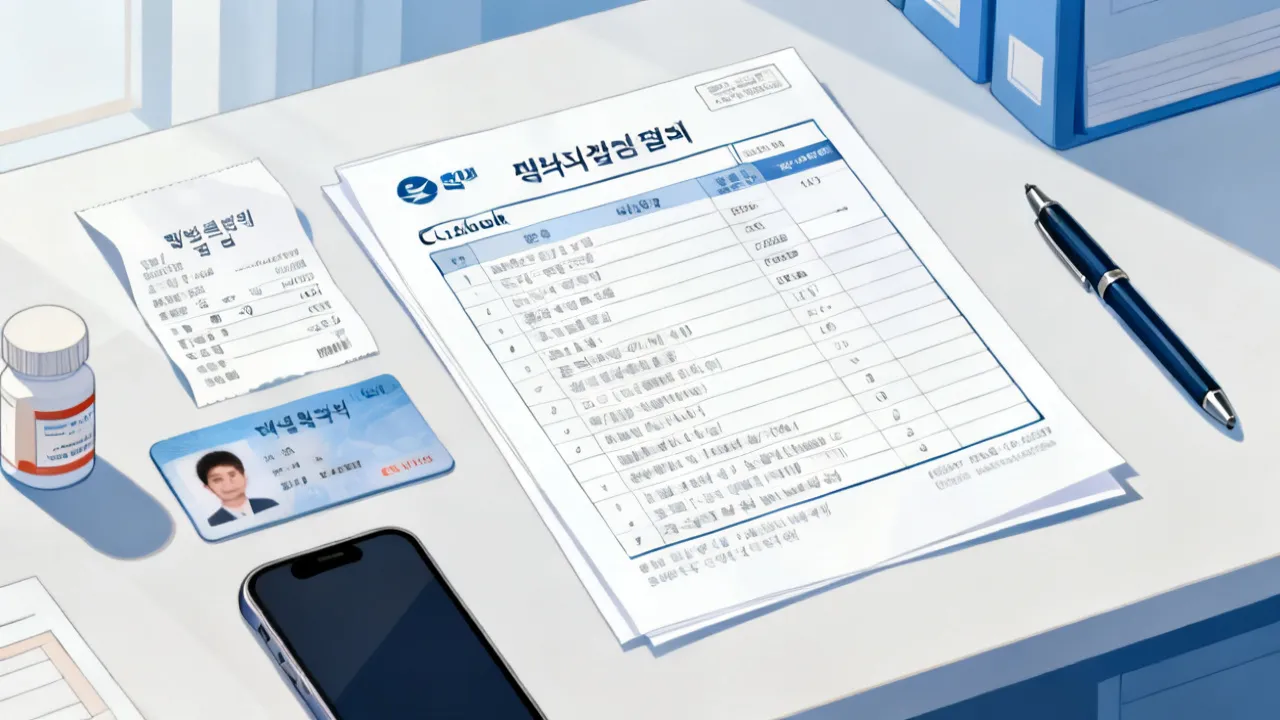
It is also useful to understand that each document answers a different question. A resident registration card or other identity document answers who is applying. A medical record answers what treatment occurred and when. A receipt answers how much was paid. A policy schedule identifies the contract and benefit. No single document necessarily proves every part of the claim. The strength of the submission comes from the documents working together without unexplained gaps or contradictions.
Core Documents Usually Requested
Although requirements differ by insurer and product, many claims begin with a common foundation. Applicants should review the following documents before sending a claim.
| Document category | Typical examples | Purpose in the review |
|---|---|---|
| Claim application | Insurer’s claim form, incident description, signature or electronic confirmation | Identifies the claim, policy, event, and requested benefit |
| Identity verification | Resident registration card, driver’s license, passport, or approved digital identification | Confirms the claimant’s identity and authority to apply |
| Treatment evidence | Medical certificate, diagnosis statement, treatment record, admission or discharge record | Shows the nature, timing, and extent of medical treatment |
| Payment evidence | Medical receipt, itemized treatment statement, pharmacy receipt, repair invoice | Supports the amount claimed and distinguishes covered expenses |
| Banking information | Account details belonging to the beneficiary or authorized recipient | Allows approved benefits to be transferred |
| Additional authority documents | Power of attorney, family relationship certificate, corporate registration document | Establishes representation or beneficiary status where necessary |
Some documents may be requested only in specific circumstances. For example, an insurer may ask for a detailed medical opinion when a diagnosis affects benefit eligibility, while a minor outpatient expense may be reviewed using a simpler receipt-based process. The applicant should therefore distinguish between documents that are commonly requested and documents that are mandatory for the particular claim.
A useful distinction is between identifying documents, event documents, and amount documents. Identifying documents connect the claim to the correct person. Event documents prove that the insured incident took place. Amount documents support the requested payment. When reviewing a checklist, applicants should ask which of these three functions each requested record serves.
The Inverted-Pyramid Method for Preparing a Claim
An effective claim preparation process starts with the most important questions and moves toward supporting detail. Industry professionals generally recommend the following order.
- Confirm the policy and benefit type. Identify the relevant policy number, insured person, benefit category, and date of the event.
- Confirm the insurer’s current checklist. Use the insurer’s official customer service channel, claims portal, mobile application, or branch guidance.
- Collect primary evidence first. Obtain records that directly prove the event, such as a diagnosis, accident report, death certificate, or damage assessment.
- Match the financial documents to the event. Check that receipts and itemized statements correspond to the dates, provider, patient, property, and services described.
- Check identity and authority. Make sure the claimant, insured person, policyholder, and beneficiary relationships are correctly represented.
- Submit through an appropriate channel. Follow file-size, format, signature, and original-document requirements.
- Keep a complete record. Retain copies of the application, submitted documents, submission date, and communications with the insurer.
This order prevents a common mistake: gathering numerous receipts before confirming whether the event itself is covered or whether a particular medical document is required. Documentation should support the policy analysis, not replace it.
The method is called an inverted pyramid because the preparation begins with the broadest and most decisive issues. First determine the relevant contract and benefit. Then establish the event. Only after that should the applicant assemble detailed financial records. This approach is particularly useful when several policies may respond to the same incident. It avoids sending an incomplete or misdirected package to the wrong insurer.
Medical Insurance Claims
Medical claims are among the most frequent situations in which applicants search for 보험금 청구 서류. The documents normally need to connect the patient, treatment, diagnosis, date of service, and amount paid. A receipt by itself may show that money was paid, but it may not explain the medical reason for the service. Conversely, a diagnosis document may establish the condition but not the actual expense.
Depending on the policy and claim size, a medical claim may involve:
- A completed insurance claim form.
- Identification of the claimant or insured person.
- Medical receipts showing the date and provider.
- An itemized treatment statement separating covered and non-covered charges where applicable.
- A diagnosis certificate, medical opinion, or treatment confirmation.
- Admission and discharge records for hospitalization claims.
- Pharmacy receipts and prescriptions for medication-related claims.
- Consent for the insurer to verify relevant medical information.
- Bank account information for benefit payment.
Applicants should read the itemized treatment statement carefully. It may contain multiple categories, including consultation, examination, procedure, medication, room charges, and non-covered services. The policy may treat these categories differently. An insurer’s assessment is based on the contract, exclusions, deductibles, limits, and conditions rather than on the total amount appearing on a hospital receipt.
Medical privacy is also important. Send only the documents reasonably requested for the claim and use the insurer’s designated secure submission channel. Avoid posting medical records in public forums or sending them to an unverified contact. If a document includes information unrelated to the claim, ask the insurer whether a redacted version is acceptable before altering it.
Medical records can also contain terminology that is unfamiliar to applicants. A treatment record, diagnosis certificate, medical opinion, and medical expense statement are not necessarily interchangeable. A diagnosis certificate may identify a condition but provide little information about the treatment period. A treatment confirmation may describe visits but not provide the formal diagnosis needed for a disease benefit. Before requesting a document, ask the insurer which factual issue it must establish. This can prevent the applicant from paying for an unnecessary certificate while still lacking the record the insurer actually needs.
Hospitalization and Surgery Claims
Hospitalization and surgery benefits often depend on specific contractual definitions. The fact that a patient visited a hospital does not automatically establish eligibility for every hospitalization-related benefit. The policy may define hospitalization by admission procedure, duration, medically necessary treatment, or another condition.
Commonly relevant records include:
| Claim situation | Potentially relevant evidence | Review focus |
|---|---|---|
| Hospital admission | Admission certificate, discharge summary, treatment record, hospital bill | Dates of admission, diagnosis, and treatment details |
| Surgery | Surgical confirmation, operative record, diagnosis certificate, itemized bill | Whether the procedure meets the policy’s surgical definition |
| Long-term treatment | Progress notes, treatment history, physician statement | Continuity, necessity, and covered treatment period |
| Medication claim | Prescription, pharmacy receipt, medication statement | Prescription date, patient identity, and covered medication expense |
Because terminology can differ between clinical practice and insurance contracts, applicants should not assume that a procedure’s everyday name determines coverage. If the policy uses a defined term, the insurer may assess the medical record against that definition. A treating physician can explain the medical facts, but the final coverage decision remains governed by the policy and applicable claims procedures.
For hospitalization claims, confirm that the admission and discharge dates are clearly shown. If a hospital record uses separate dates for registration, admission, surgery, and discharge, the insurer may need to distinguish among them. For surgery claims, retain records that identify the actual procedure rather than relying only on a general bill. If more than one procedure occurred during the same admission, an itemized record may be necessary to determine which procedure corresponds to the requested benefit.
Accident and Injury Claims
Accident claims require evidence of the incident as well as evidence of the resulting injury. A medical record may establish treatment, but it may not fully describe how, when, or where the accident occurred. For that reason, applicants should prepare a concise and factual incident account.
Depending on the circumstances, supporting documents may include:
- An accident description stating the date, time, location, and sequence of events.
- Police reports or official incident records, when applicable.
- Emergency room records or initial treatment records.
- Medical certificates describing the injury and treatment.
- Photographs of the accident scene or damage, where relevant.
- Transportation, workplace, or school incident records if the event occurred in those settings.
- Statements from involved parties or witnesses where the insurer requests them.
- Repair estimates or liability-related documents for property damage.
The incident description should avoid speculation. State observable facts, identify uncertainty where it exists, and keep the account consistent with the medical record and official report. Contradictions do not automatically invalidate a claim, but unexplained differences can lead to additional questions and delay the review.
Applicants should preserve evidence soon after an accident because conditions can change. Photographs of a damaged vehicle, a hazardous surface, or an affected room may be less informative after cleanup or repair. However, safety and emergency treatment come first. Do not delay urgent medical care or necessary measures merely to create evidence. Take photographs only when it can be done safely, and notify the insurer promptly if immediate repairs are unavoidable.
Property, Vehicle, and Liability Claims
Property and vehicle claims use a different evidence structure from medical claims. The insurer generally needs to establish ownership or insurable interest, the cause of damage, the extent of damage, and the cost of restoration or replacement.
Relevant 보험금 청구 서류 may include ownership records, photographs, repair estimates, purchase receipts, inspection reports, police records, and statements from contractors or repair facilities. For vehicle claims, documents may also include a driving record, accident report, vehicle registration, repair assessment, and information about other involved vehicles or insurers.
Applicants should photograph damage before repairs begin whenever it is safe and practical to do so. Images should show both the overall condition and close-up details. The date, location, and context should be preserved. Do not dispose of damaged property or authorize substantial repairs before checking whether the insurer requires an inspection, except where immediate action is necessary to protect safety or prevent further damage.
For liability claims, the key issue may be legal responsibility rather than simple physical damage. A demand letter or invoice from another party does not by itself establish coverage or liability. Provide relevant correspondence and avoid making a definitive admission of responsibility before consulting the insurer or an appropriate professional.
Property claims may also involve depreciation, replacement cost, salvage value, and limits for particular categories of property. A purchase receipt can prove acquisition cost, but it may not establish current replacement value. A repair estimate can show expected cost, but the insurer may require an inspection or final invoice. Applicants should therefore keep estimates, photographs, inspection reports, and final payment records together rather than submitting only the last invoice.
Death Benefits and Beneficiary Claims
Death benefit claims involve identity, the insured event, and the claimant’s legal or contractual entitlement. The document set may be more extensive because the insurer must verify the deceased person, the cause and date of death, and the beneficiary or successor.
Potentially required records can include:
- Death certificate or equivalent official record.
- Medical records or physician documentation regarding the cause of death, where required.
- Claim form and identity documents.
- Family relationship or beneficiary verification documents.
- Documents addressing multiple beneficiaries or legal representation.
- Power of attorney where one person applies on behalf of another.
- Bank account details for the authorized recipient.
Requirements can vary significantly when the policyholder, insured person, and beneficiary are different individuals. The insurer may request additional authority documents to protect all interested parties. Applicants should not assume that a family relationship alone resolves every question of payment entitlement; the policy designation and applicable law may also be relevant.
When there are several beneficiaries, each person may need to provide separate identity or payment information. If one beneficiary applies for another, a power of attorney or other authority document may be needed. Where a beneficiary is a minor or a person whose legal capacity is represented by another individual, additional documents may be required. These matters can take longer than a routine individual claim, so applicants should ask for a complete list at the beginning of the process.
Income Replacement, Disability, and Critical Illness Claims
Some policies pay benefits based on disability, loss of earning capacity, inability to work, or diagnosis of a specified serious illness. These claims often require more than a simple treatment receipt because the policy may examine functional limitations, waiting periods, duration, or a defined diagnosis.
Potential records include a diagnosis certificate, physician’s functional assessment, treatment history, employment confirmation, leave records, income records, and documents showing the date on which work became impossible or restricted. The exact evidence depends on whether the policy pays a lump sum for a diagnosis, a daily benefit for hospitalization, or recurring payments during disability.
Applicants should distinguish the date of diagnosis from the date symptoms began, the date treatment began, and the date work stopped. These dates may be identical in some cases but not in others. A clear timeline can help the insurer evaluate waiting periods and benefit commencement conditions. If the applicant is self-employed, alternative income or business records may be needed to demonstrate the financial effect of an inability to work.
Travel and Overseas Claims
Travel insurance claims may involve records issued in another language or country. Depending on the benefit, the applicant may need medical bills, treatment records, proof of travel dates, airline documents, police reports, baggage reports, hotel records, or evidence of cancellation and additional expenses.
For lost or delayed baggage, retain airline reports and receipts for essential replacement items. For overseas medical treatment, request an itemized bill and a treatment summary that identifies the patient, dates, diagnosis, services, and currency. The insurer may require translation or additional verification. Exchange-rate calculations may be handled under the policy’s stated method rather than the applicant’s preferred rate.
Because travel claims are often time-sensitive, notify the insurer or assistance provider as soon as possible. Some policies require prior authorization for certain treatment, evacuation, or extended accommodation expenses. An applicant should not assume that a reasonable expense is automatically reimbursable without checking the policy conditions.
How to Check Whether Documents Are Complete
A document can be present yet still be unusable. Before submission, review each record using five checks.
- Legibility: Text, dates, stamps, signatures, and amounts should be readable in the uploaded or copied version.
- Consistency: Names, identification details, dates, and policy information should match across the documents.
- Relevance: Each document should relate directly to the insured event or the claimant’s authority.
- Completeness: Multi-page records should include every page, including pages that appear administrative.
- Validity: Confirm whether the insurer requires a recent issuance date, an original document, an electronic certificate, or a particular form.
A useful approach is to create a claim index. List each document, its date, the issuing organization, and the point it proves. This is especially helpful when several medical visits, receipts, or beneficiaries are involved. The index is not a substitute for the insurer’s form, but it helps the reviewer understand the file and helps the applicant identify missing evidence.
File names can also improve organization. A simple structure such as “01_claim-form,” “02_identity,” “03_diagnosis,” “04_treatment-record,” and “05_receipts” makes it easier to verify that every category is present. When uploading multiple files, follow the insurer’s file-size and naming rules. If documents are combined into one PDF, preserve the original page order and avoid compressing the file so heavily that stamps or small amounts become unreadable.
Digital Submission and Paper Submission
Many insurers provide mobile applications, websites, email-based processes, customer service centers, or branch submission options. The appropriate channel depends on the insurer, claim amount, document type, and whether original records are required.
Digital submission offers practical advantages: documents can be organized promptly, submission confirmations may be easier to retain, and the applicant can often monitor the claim status. However, image quality and security must be managed carefully. Photograph documents in good lighting, avoid glare, capture all corners, and confirm that pages are uploaded in the correct order.
Paper submission remains relevant when original documents, physical signatures, or legally significant records are requested. Use copies for personal records and retain proof of delivery when mailing documents. If a branch accepts documents in person, request a receipt or submission confirmation that identifies the date and receiving channel.
Do not send sensitive identity or medical information to an unverified phone number, email address, or social media account. Confirm the destination through the insurer’s official customer service information or authenticated portal. This is a data-protection measure as much as a claims-management measure.
Before submitting a digital file, open the final version on a separate device if possible. Check that pages are not upside down, cropped, blurred, or hidden by password protection. Some systems reject files with unsupported formats or excessive resolution. If a submission portal provides a confirmation number, screenshot or download the confirmation and record the date and time.
Claim Form Writing: Accuracy Over Volume
The claim form should be clear, chronological, and factual. A long explanation is not necessarily a better explanation. Include the essential facts: what happened, when it happened, where it happened, which person or property was affected, what treatment or repair followed, and which benefit is being claimed.
When the form asks for a diagnosis or cause, copy the relevant wording from the supporting record rather than paraphrasing it inaccurately. If a field does not apply, follow the insurer’s instructions for marking it. Do not leave important fields blank without explanation if the form requires a response.
Applicants should disclose material information honestly. Omitting an important fact can create complications if the insurer later identifies it through records or verification. At the same time, speculative conclusions, emotional language, and unrelated personal details can make the file less clear. A professional claims file is organized around verifiable facts.
When describing an accident, use a timeline. For example, identify the time of the incident, the immediate symptoms or damage, the first report made, the first treatment or inspection, and subsequent treatment or repair. If the applicant cannot remember an exact time, an approximate time should be identified as approximate rather than presented as an exact fact. This is more reliable than guessing.
Conditions and Requirements That May Affect Review
Insurance contracts commonly include conditions relating to notice, exclusions, waiting periods, deductibles, benefit limits, duplicate payment, pre-existing conditions, cooperation with verification, and the definition of the insured event. The precise effect of each condition depends on the wording of the policy and the facts of the case.
| Condition or requirement | What the applicant should check | Practical response |
|---|---|---|
| Policy eligibility | Whether the policy was active on the date of the event | Confirm policy number, insured person, and coverage period |
| Notice or filing requirement | Whether the contract or insurer specifies a reporting period | Notify the insurer promptly and retain the notification record |
| Covered event definition | Whether the diagnosis, accident, damage, or loss fits the policy wording | Read the relevant benefit section and exclusions |
| Deductible or benefit limit | Whether part of the expense is borne by the policyholder | Compare the claim amount with policy limits and applicable deductions |
| Original document requirement | Whether a copy, scan, electronic certificate, or original is accepted | Confirm the required format before submission |
| Authority to claim | Whether the applicant is the policyholder, insured person, beneficiary, or representative | Prepare relationship or authorization documents where necessary |
| Additional investigation | Whether the insurer needs further medical, accident, or financial evidence | Respond accurately and keep records of all requests |
These conditions should not be interpreted as a prediction of approval or rejection. They are a preparation framework. The insurer must assess the individual claim under the applicable policy, evidence, and regulatory requirements.
Applicants should pay particular attention to exclusions and definitions. An exclusion may relate to an activity, cause, diagnosis, location, or type of expense. A benefit limit may apply per event, per year, per person, or per policy period. A deductible may apply before or after another calculation. These details cannot be determined from a receipt alone and should be checked against the policy schedule and terms.
Common Reasons for Follow-Up Requests
Additional document requests often arise from ordinary gaps rather than misconduct. Common examples include a receipt that does not identify the patient, a missing page in a medical record, a diagnosis that does not clarify the treatment date, a bank account that does not belong to the beneficiary, or an incident description that differs from an official report.
Another frequent issue is a mismatch between the requested benefit and the submitted evidence. For example, a claim for a surgery benefit may include a general hospital receipt but not the surgical record needed to identify the procedure. Similarly, a prescription receipt may show payment but not establish the medical condition or policy category involved.
When the insurer asks for further documents, review the request line by line. Ask which policy benefit the request relates to, whether an alternative document is accepted, and whether the requested record must be issued by a specific institution. Keep the tone factual and cooperative while preserving copies of all submissions.
A follow-up request should also be checked for deadlines. If the applicant needs time to obtain a record from a hospital, police station, government office, or overseas institution, notify the insurer before the deadline and explain the expected timing. Keeping the insurer informed is generally better than allowing a deadline to pass without response.
Privacy, Security, and Document Retention
보험금 청구 서류 can contain resident registration information, medical histories, bank details, addresses, and family relationships. Treat the file as sensitive personal information.
- Use the insurer’s authenticated website, application, branch, or verified customer service process.
- Do not share passwords, authentication codes, or financial credentials with another person.
- Check the recipient before sending email attachments or mobile messages.
- Store digital copies in a protected folder and limit access to people involved in the claim.
- Keep submission confirmations and correspondence in chronological order.
- Dispose of unnecessary paper copies securely rather than placing them intact in ordinary waste.
The appropriate retention period may depend on the policy, tax treatment, dispute risk, and personal recordkeeping needs. Applicants should follow the insurer’s instructions and applicable Korean privacy and document-management requirements. If a claim is disputed, retain the records until the matter is resolved.
When using a shared computer or public printer, confirm that copies and downloaded files are deleted afterward. If a family member or representative helps with the claim, provide only the authority necessary for that assistance. A claimant should be cautious of services that request unrestricted access to online banking, full account passwords, or unrelated medical history.
When Professional Assistance May Be Appropriate
Many routine claims can be prepared by the policyholder. Professional assistance may become useful when the claim involves multiple policies, serious injury, complex causation, disputed liability, several beneficiaries, business interruption, substantial property damage, or a disagreement about policy interpretation.
Before engaging an outside representative, clarify the person’s qualifications, scope of work, fees, confidentiality practices, and authority to communicate with the insurer. Never transfer control of identity documents or banking credentials unnecessarily. The policyholder remains responsible for reviewing statements submitted in their name.
For a disputed decision, begin by requesting a written explanation that identifies the relevant policy provision and evidence. Review the insurer’s internal complaint or reconsideration process. In Korea, consumers may also consult official financial consumer-protection channels, including guidance from the Financial Supervisory Service, depending on the nature of the dispute. This article is general information, not legal advice or a determination of entitlement.
Professional assistance does not guarantee approval. A representative can help organize evidence, explain procedures, or identify questions about policy wording, but cannot replace the underlying proof required by the contract. Applicants should be especially careful with advertisements promising guaranteed payment or asking for a large fee before reviewing the policy and facts.
Industry Expert Perspective
From a claims-management perspective, the strongest submission is not the one with the largest volume of paperwork. It is the one in which every document has a clear role and the timeline is easy to follow. A reviewer should be able to answer four questions without repeatedly searching the file: who is claiming, what happened, what financial or medical consequence followed, and which policy benefit is being requested.
Three practices are particularly valuable. First, request the insurer’s claim-specific checklist before collecting documents. Second, create a chronological file that places the incident or treatment record before related receipts. Third, preserve the original wording of official documents and avoid editing factual records. These practices improve clarity while reducing the risk of accidental inconsistency.
Experts also caution against treating an initial document request as a final coverage decision. Claims frequently require verification because policies contain technical definitions and exclusions. A request for additional information may simply mean that the insurer cannot complete its assessment using the first submission. Applicants should respond within the stated period and ask for clarification where a request is ambiguous.
Another professional recommendation is to separate facts from conclusions. The applicant can state that a medical visit occurred, that a physician recorded a particular diagnosis, or that a repair estimate was issued. Whether those facts satisfy a policy definition is a coverage question for the insurer, and sometimes for a dispute-resolution body or court. Clear factual writing allows the decision-maker to assess the claim without having to correct exaggerated or uncertain statements.
Step-by-Step Checklist for Applicants
- Locate the policy documents. Identify the insurer, policy number, insured person, policyholder, beneficiary, and relevant benefit.
- Describe the event in one paragraph. Include the date, location, cause, affected person or property, and immediate outcome.
- Collect direct evidence. Obtain medical, official, repair, or death-related records that establish the event.
- Collect financial evidence. Gather receipts, itemized statements, invoices, payment records, and other documents showing the claimed amount.
- Confirm authority. Add identity, relationship, power-of-attorney, or beneficiary documents when the applicant is not the sole policyholder.
- Check document quality. Review names, dates, amounts, page order, signatures, stamps, and legibility.
- Check the submission route. Confirm whether digital files, paper copies, originals, or electronic certificates are accepted.
- Submit and record. Save the confirmation number, date, channel, and list of submitted documents.
- Respond to questions. Provide additional information accurately and retain copies of every response.
- Review the result. Compare the insurer’s explanation with the policy wording and ask for clarification if the outcome is unclear.
For complicated claims, add a separate timeline and document index to this checklist. The timeline should list the event, first notification, treatment or inspection, document issuance, submission, follow-up requests, and responses. The index should identify the file name or page number for each important record. These tools are particularly useful when a claim continues over several months or involves more than one institution.
Sources and Reference Framework
Applicants should verify claim procedures against current information issued by the relevant insurer and official Korean consumer-protection institutions. Useful reference bodies may include the Financial Supervisory Service, the Financial Consumer Information Portal, the Korea Consumer Agency, and the Korea Insurance Development Institute. These organizations provide general consumer, insurance, or financial information, but the applicable policy contract and the insurer’s current claim instructions remain decisive for an individual case.
Because claim forms, digital channels, document validity periods, and supplementary evidence requirements can change, readers should confirm the latest instructions before submitting personal or medical information. Official guidance should be accessed through authenticated institutional channels rather than unverified posts or messages.
Reference information is most useful when used to confirm procedure, terminology, and consumer rights. It should not be used to assume that another person’s claim will receive the same result. Different products, policy versions, event dates, exclusions, and evidence can lead to different assessments. The applicant should retain the policy schedule and relevant terms that applied on the date of the event.
FAQs About 보험금 청구 서류
What is the most important document in an insurance claim?
There is no single document that is most important for every claim. The claim form identifies the request, while primary evidence proves the event and financial records support the amount. In a medical claim, a diagnosis or treatment record and an itemized bill may be central. In a property claim, photographs, ownership evidence, and a repair assessment may be more relevant.
Can a receipt alone support a medical claim?
A receipt may support the amount paid, but it may not establish the diagnosis, treatment purpose, or benefit category. The insurer may request an itemized treatment statement, diagnosis document, prescription, or other medical record. Confirm the exact requirement for the policy and claim type.
Is a medical certificate always required?
No. The requirement depends on the benefit, claim amount, insurer, and policy conditions. Some routine claims may be reviewed using a claim form and payment records, while diagnosis-based or hospitalization benefits may require more detailed medical evidence.
What should I do if the hospital document contains an error?
Ask the issuing medical institution to correct or reissue the document. Do not alter the original yourself. Submit the corrected version and retain the prior version if the insurer needs to understand the change.
Can someone else submit the claim for me?
Often, but the representative may need a power of attorney, identity documents, and proof of relationship or authority. Requirements vary according to the claimant’s age, capacity, relationship, and the insurer’s procedures.
Can digital photographs of documents be used?
Many insurers accept digital images through approved channels, but the file must be legible and complete. Some claims or records may require originals, certified copies, electronic certificates, or a particular file format. Confirm this before submission.
What if I cannot obtain one of the requested documents?
Contact the insurer promptly and explain the reason. Ask whether an alternative record is acceptable, whether the document can be obtained directly from an institution with consent, or whether the claim can proceed in stages. Do not substitute an unofficial document without confirmation.
Should I send every document I have?
Not necessarily. Submit documents relevant to the claim and those specifically requested by the insurer. Excessive unrelated information can create privacy risks and make the file harder to review. Keep a complete personal archive, but limit the submitted package to appropriate evidence.
What should I do if the insurer requests additional records?
Read the request carefully, identify the deadline, and ask which policy benefit or factual issue the document addresses. Respond through a verified channel and retain proof of submission. If the request appears unclear or unusually broad, seek written clarification.
How can I reduce delays?
Use the correct claim form, ensure that names and dates match, include all pages of supporting records, provide itemized financial evidence, and retain submission confirmation. Promptly answering reasonable follow-up requests can also help the review proceed efficiently.
What if the claim is rejected?
Request a written explanation that identifies the policy provision, relevant facts, and evidence considered. Compare the explanation with the policy wording and ask the insurer about its internal review or complaint process. If needed, consult an appropriate consumer-protection or professional advisory channel.
Are insurance claim procedures identical among Korean insurers?
No. Insurers may use different forms, digital systems, document standards, and claim-specific thresholds. Even within one insurer, requirements may differ by product and benefit. The insurer’s current official instructions should therefore be checked for every claim.
How long should I keep copies of submitted documents?
Keep the claim form, submitted records, confirmation, follow-up correspondence, and payment or decision notice for as long as reasonably necessary to address questions or disputes. A longer retention period may be appropriate for large claims, recurring benefits, tax-related records, or claims involving multiple policies. Protect the records because they may contain sensitive personal information.
Can I claim under more than one insurance policy?
That depends on the type of benefit and the terms of each policy. Some fixed-benefit policies may respond independently, while expense-reimbursement benefits may be subject to coordination or duplicate-payment rules. Disclose other relevant insurance when asked and retain the documents showing how each insurer calculated its payment.
What if the insurer and hospital use different descriptions of the same treatment?
Ask the medical institution for a record that explains the procedure or diagnosis in formal clinical terms. Then compare that description with the policy’s defined wording. Do not change the medical terminology yourself. If necessary, ask the insurer to identify the exact definition or evidence it needs for its assessment.
Final Review Before Submission
Before submitting 보험금 청구 서류, confirm that the claim form is complete, the relevant policy has been identified, the event is described consistently, and the primary evidence supports the requested benefit. Check that receipts and itemized statements show the correct person, date, provider, and amount. Add authority documents if another person is applying on behalf of the insured, policyholder, or beneficiary.
Finally, protect the file. Submit it only through a verified channel, save the confirmation, and maintain an organized copy of all records. Insurance claims are assessed on contract terms and evidence, not on the length of an application. A concise, accurate, well-ordered submission gives the insurer a clearer basis for review and gives the applicant a reliable record of what was provided.
The best preparation is completed before the claim is sent. Confirm the checklist, preserve original records, organize the timeline, and ask questions about uncertain requirements. If the insurer later requests additional evidence, respond promptly and keep a written record. These steps do not guarantee a particular result, but they reduce avoidable delays and help ensure that the claim is evaluated on the facts and policy terms that actually apply.