Understanding 비급여 실비 Claims in Korea
This guide explains how 비급여 실비, or reimbursement claims for non-covered medical expenses under Korean indemnity health insurance, generally work. Non-covered care is treatment that is outside the benefits of National Health Insurance, while private indemnity policies may reimburse some eligible out-of-pocket costs after deductibles, limits, exclusions, and policy conditions are applied. Coverage depends on the contract, treatment records, medical necessity, claim documents, and the insurer’s review. Readers should confirm current terms with their insurer and consult official Korean healthcare and financial authorities before making a medical or insurance decision.
What 비급여 실비 Means
비급여 실비 refers to the relationship between non-covered medical expenses and reimbursement under private indemnity health insurance in South Korea. The phrase is commonly used when a policyholder asks whether an expense that is not paid by National Health Insurance can still be claimed through an indemnity insurance policy. The answer is not automatically yes or no. It depends on the policy version, the medical service, the reason for treatment, the policyholder’s deductible, applicable limits, exclusions, and the documents submitted.
The most important point is that “non-covered” and “not reimbursable” are different concepts. A medical service can be classified as non-covered under the National Health Insurance system but remain potentially eligible for private insurance reimbursement. Conversely, a non-covered service may be excluded by the private policy, limited by a special clause, or reduced after the deductible and benefit ceiling are applied.
Private indemnity insurance is designed to compensate eligible medical expenses actually paid by the insured, subject to the contract. It is not a general payment program for every item appearing on a hospital bill. The insurer may examine the diagnosis, treatment purpose, timing, itemized charges, medical records, prior claims, and policy terms. A claim can therefore produce a partial reimbursement, a request for additional records, or a denial.
From an industry perspective, the most reliable approach is to separate the issue into four questions:
- Was the treatment medically necessary and connected to the diagnosed condition?
- Was the charge classified as covered or non-covered by the national health insurance system?
- Does the individual indemnity policy include that type of expense?
- After deductibles, limits, exclusions, and prior payments are applied, what amount remains payable?
These questions should be answered using the actual policy documents and medical records rather than advertisements, informal online comments, or assumptions based on another person’s experience. The same procedure can produce different results for two people because their contracts may have been issued at different times or may contain different riders and cost-sharing provisions.
Why the Distinction Matters
South Korea’s healthcare payment structure includes services covered by National Health Insurance and services designated as non-covered. Covered services are generally subject to the national insurance framework, including patient cost-sharing rules. Non-covered services are handled differently, and hospitals or clinics must provide information about the relevant charge according to applicable regulations and administrative requirements.
Private indemnity insurance operates separately. It may reimburse some patient-paid costs arising from covered treatment and, depending on the policy, selected non-covered treatment. The scope differs across generations and products. Policies issued at different times can use different benefit structures, deductibles, annual limits, outpatient limits, special management provisions, and restrictions on certain categories of care.
This is why the Korean expression 비급여 실비 should not be interpreted as a promise that all non-covered charges are payable. It is better understood as a claims topic: whether a particular non-covered expense can be submitted and reimbursed under a particular indemnity contract.
For example, a patient might receive a non-covered injection, imaging-related service, physical treatment, or medical device. The charge may appear clearly on an itemized bill, but the insurer may still ask whether it was prescribed for an eligible diagnosis, whether it falls within a restricted category, whether a rider applies, or whether the policy excludes the treatment. The same medical item can receive different outcomes under different contracts.
The distinction also matters for household budgeting. A patient who hears that a treatment is “claimable” may expect the entire amount to be returned. In reality, the payable amount may be reduced by a deductible, a percentage of patient participation, an annual limit, or a separate limit for a particular non-covered category. Before agreeing to a series of treatments, it is useful to estimate the total personal cost under both scenarios: reimbursement and no reimbursement.
Immediate Steps Before Receiving Treatment
The best time to investigate 비급여 실비 eligibility is before treatment whenever the situation is not urgent. A short verification process can reduce disputes and clarify the likely financial exposure.
- Ask the medical institution for an itemized estimate. Request the name of the procedure, product, medication, device, or examination; the expected amount; and whether each item is covered or non-covered.
- Ask why the treatment is being recommended. The medical explanation should identify the diagnosis, symptoms, treatment purpose, and expected role of the service. Medical staff can explain clinical matters, but they cannot guarantee insurance reimbursement.
- Review the policy schedule and special clauses. Look for outpatient and inpatient benefits, non-covered treatment sections, deductibles, benefit limits, exclusions, waiting periods, and claim conditions.
- Contact the insurer through an official channel. Ask which documents are needed and whether prior confirmation is available. A telephone response may be useful, but written confirmation or an official claim response is easier to preserve for later reference.
- Keep the records together. Save the estimate, consent documents, itemized receipt, medical certificate if required, examination results, prescription, and payment evidence.
When asking the insurer for guidance, provide specific information. Instead of saying only that you are considering “a non-covered treatment,” identify the institution, treatment name, diagnosis, expected cost, number of sessions, and whether the care will be outpatient or inpatient. The insurer may still reserve the right to make a final determination after reviewing the completed treatment record, but a detailed preliminary inquiry is more useful than a general question.
Emergency treatment should not be delayed solely to investigate insurance. In urgent circumstances, obtain necessary care first and organize the claim afterward. Insurance eligibility is a financial question; immediate medical safety remains the priority.
How a Typical Claim Is Assessed
An insurer normally reviews a claim in stages. The exact process differs by company and policy, but the following sequence provides a practical framework.
Stage One: Confirming the Contract
The insurer first identifies the policy, coverage period, insured person, and relevant policy version. This step matters because an individual may hold more than one policy or may have changed products over time. The claim is assessed under the terms that applied on the date of treatment, not necessarily under the latest product currently sold.
The insurer may also check whether premiums were paid, whether the policy was suspended or terminated, and whether a policy amendment or renewal had already taken effect. If a claim relates to several treatment dates, the applicable terms may need to be checked separately for each date.
Stage Two: Classifying the Expense
The claim documents are checked to distinguish covered treatment, non-covered treatment, medication costs, consultation charges, examination fees, accommodation-related costs, and other items. A hospital invoice may contain several categories, each with separate rules. A single visit can therefore produce both reimbursable and non-reimbursable amounts.
Classification can sometimes be difficult when a bill uses an abbreviated code or a product name rather than a plain-language description. If the insurer asks for clarification, the medical institution may need to explain what was provided. The policyholder should compare the bill with the treatment record to make sure that the listed service and quantity are accurate.
Stage Three: Checking Medical Relevance
The insurer may examine whether the treatment was connected to an illness or injury covered by the contract. It may request a diagnosis code, physician’s opinion, medical chart, test results, treatment history, or prescription. The purpose is not merely to confirm that a charge exists; it is to evaluate whether the expense falls within the insured event and the policy’s definitions.
This review does not necessarily mean that the insurer doubts the patient’s symptoms. It reflects the structure of indemnity insurance, which generally requires a relationship between the expense and an eligible medical condition. A treatment undertaken solely for convenience, appearance, general wellness, or prevention may be assessed differently from treatment prescribed for a documented illness or injury.
Stage Four: Applying Deductibles
Many indemnity policies require the insured to bear a deductible or co-payment. The deductible may be a fixed amount, a percentage, or a calculation based on the greater of two amounts, depending on the contract. A small claim may therefore result in little or no payment even when the underlying service is within the general scope of coverage.
Policyholders should not calculate reimbursement by simply subtracting a guessed percentage from the hospital bill. Some contracts apply different methods to covered and non-covered expenses, while others distinguish between outpatient and inpatient care. The calculation statement from the insurer is the most reliable way to identify the actual deduction.
Stage Five: Applying Limits and Exclusions
Insurers then check daily, visit-based, annual, category-based, or lifetime limits where applicable. They also apply exclusions and special provisions. Some policies treat particular non-covered services differently from ordinary outpatient expenses. A rider may expand coverage, while another clause may narrow it.
A limit may apply to the total benefit, to a specific treatment category, or to a defined period. When several claims have already been paid, prior payments can affect the remaining balance. This is one reason why a previously successful claim does not guarantee that a later claim will be paid at the same level.
Stage Six: Requesting Additional Information
If the records are incomplete or the treatment falls into a category requiring closer review, the insurer may ask for supplementary documents. This request is not automatically a denial. The policyholder should check what is being requested, why it is relevant, and whether the medical institution can issue the document in an accurate form.
The policyholder should respond within the stated period or contact the insurer if additional time is needed. Ignoring a request can delay the claim or result in a decision based on the information already available. At the same time, documents should not be altered, exaggerated, or written to produce a preferred insurance result.
Stage Seven: Issuing the Result
The outcome may be full reimbursement of the eligible amount, partial reimbursement, a decision that no benefit is payable, or a request for further review. The payment should be compared with the insurer’s calculation statement and the contract wording. If the result is unclear, request a written explanation of the benefit calculation.
Key Factors That Influence 비급여 실비 Reimbursement
| Factor | Why It Matters | What to Check |
|---|---|---|
| Policy generation | Older and newer contracts can have different benefit structures and cost-sharing rules. | Issue date, renewal history, product name, and policy schedule. |
| Medical purpose | The insurer may assess whether the service relates to an insured illness or injury. | Diagnosis, physician’s explanation, treatment record, and prescription. |
| Non-covered classification | Non-covered items may be subject to separate limits, exclusions, or riders. | Itemized billing statement and the institution’s classification of each charge. |
| Deductible | The policyholder may bear a fixed or percentage-based portion of the expense. | Outpatient or inpatient deductible and the calculation method. |
| Benefit limit | A valid claim can still be restricted when a contractual limit is reached. | Visit, daily, annual, or category-specific ceilings. |
| Exclusions | Some treatments, conditions, purposes, or circumstances may not qualify. | General exclusions, special clauses, and policy definitions. |
| Documentation | Incomplete records can delay assessment or make eligibility difficult to establish. | Receipt, itemized statement, medical record, prescription, and payment proof. |
Common Categories of Non-Covered Expenses
Non-covered treatment is not a single uniform category. The classification can reflect a service’s status under National Health Insurance, the way it is administered, or the medical institution’s billing structure. Common examples discussed in insurance claims include selected injections, certain examinations, specific physical treatment, medical supplies, assistive devices, upgraded rooms, and services related to appearance or convenience.
However, the category name alone does not determine the claim result. An injection may be prescribed for different conditions and may be recorded under different billing descriptions. A physical treatment may be considered differently depending on the diagnosis, frequency, medical record, and policy terms. A medical device may involve separate charges for the device, fitting, procedure, and follow-up care.
Readers should also distinguish medical necessity from personal preference. A service can be clinically appropriate without being covered by a particular insurance contract. Conversely, a service that a patient prefers may not satisfy the policy’s requirement that the expense be related to an eligible illness or injury.
Cosmetic, wellness-oriented, preventive, experimental, administrative, or convenience-related expenses often require especially careful review. The exact treatment purpose and policy wording should be examined rather than relying on a broad label. A claim should describe the actual medical circumstances accurately; changing the description to obtain a different result can create legal and contractual problems.
Repeated use of a non-covered service may also attract additional review under some products or administrative systems. This does not mean that frequent treatment is automatically improper. It means that the insurer may examine whether the frequency, duration, and treatment pattern are supported by the diagnosis and medical record. Patients should follow the treating physician’s instructions and maintain records that show the clinical course.
Documents Commonly Used for a Claim
Document requirements vary according to the amount claimed, treatment type, insurer, and policy. A basic outpatient claim may require fewer documents than a high-value inpatient claim or a claim involving a non-covered procedure. The following list is a guide, not a universal checklist.
- Insurance claim form, when required by the insurer.
- Itemized medical receipt showing each charge.
- Payment confirmation or card transaction record when requested.
- Medical certificate, diagnosis statement, or physician’s note for certain claims.
- Treatment or consultation record explaining the medical service.
- Prescription and pharmacy receipt for medication-related expenses.
- Examination report or imaging result when relevant to the claim.
- Hospital discharge summary for inpatient treatment.
- Consent or procedure record when the insurer needs to identify the service performed.
- Additional medical records requested during review.
It is useful to request documents using the insurer’s exact terminology. For instance, “medical certificate” and “outpatient treatment confirmation” may not be interchangeable. The institution may charge an administrative fee for issuing some documents, and that fee may be treated separately from the medical expense under the policy.
Before submitting sensitive records, verify the insurer’s official submission method. Digital claims, mobile applications, branch submission, postal delivery, and other channels may have different file-size or document-format requirements. Retain copies of everything submitted, including the date and method of submission.
For a claim involving several visits, prepare a simple schedule showing the date, institution, diagnosis, treatment, amount paid, and document available for each visit. This can make it easier to identify missing records and can help the insurer understand the sequence of care. If a claim includes both pharmacy and hospital expenses, separate the records by provider and treatment date.
How to Read an Itemized Medical Bill
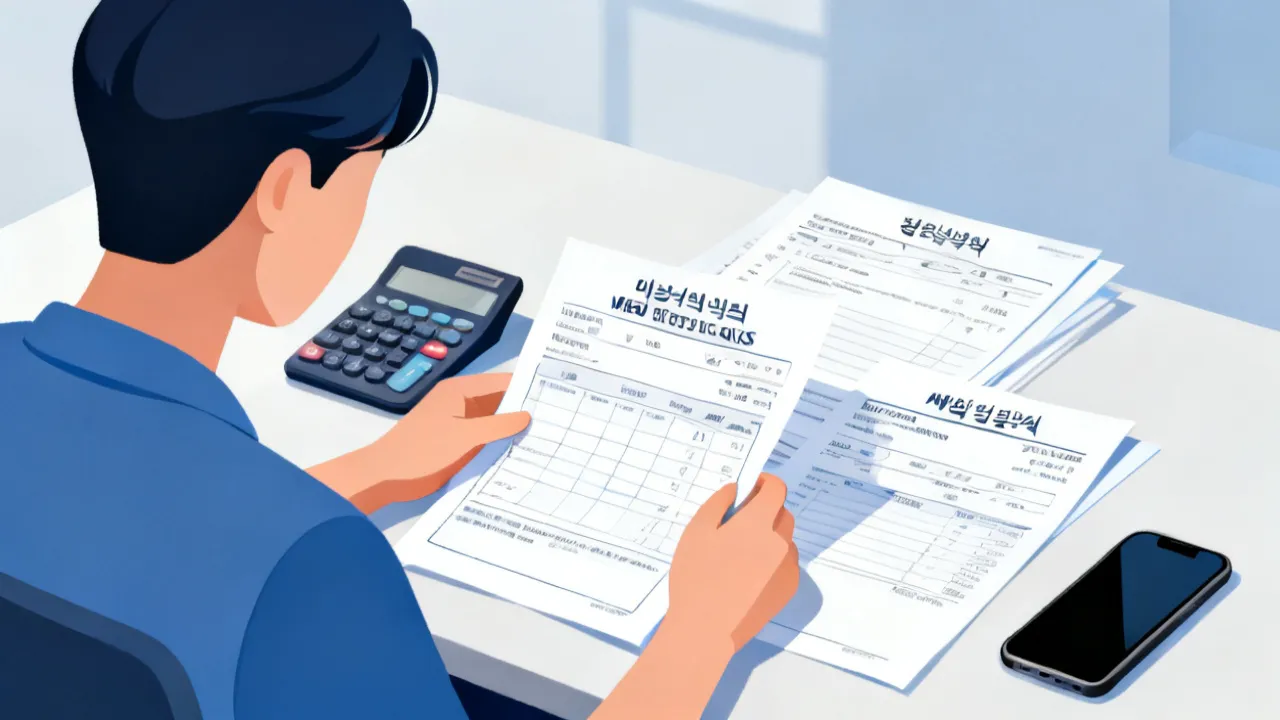
An itemized bill is central to understanding 비급여 실비. The total amount alone does not show which charges may be considered. Review the statement line by line and identify the following:
- Date of service: Confirm that the treatment date falls within the policy’s coverage period.
- Service description: Check whether the description is specific enough to match the medical record.
- Covered or non-covered status: Note the classification for each line item.
- Quantity and frequency: Confirm the number of treatments, doses, sessions, or supplies.
- Patient-paid amount: Separate the amount actually paid from amounts adjusted or refunded.
- Refunds and corrections: Tell the insurer if the hospital later corrected the bill or returned part of the payment.
When a bill contains unfamiliar terminology, ask the medical institution to explain the item in plain language. The institution can clarify what was provided and why it was billed. The insurer, not the hospital, determines whether the amount is payable under the private contract. Keeping those roles separate helps avoid misunderstandings.
Patients should also check whether the bill includes services that were canceled, replaced, or supplied in a different quantity. A correction issued by the hospital should be submitted with the original documents so that the insurer can assess the final amount actually paid. Claiming an amount that was later refunded can create an avoidable discrepancy.
Policy Generations and Contract Differences
One of the most important reasons for different claim outcomes is variation among indemnity insurance products issued at different times. Korean consumers often refer to policy generations in everyday discussions, but the practical issue is the actual policy wording and schedule. Product names can be similar while benefit conditions differ.
Differences may involve the treatment categories included, the proportion of patient cost-sharing, annual non-covered limits, special management provisions, renewal terms, and the process for assessing frequent use of selected services. A policyholder should not assume that a friend, family member, or colleague has the same conditions.
Renewal can also change the premium or contractual terms according to the product structure and applicable regulation. A renewal notice should be read carefully. It may identify revised premiums, changes in benefits, or information about the continuation of coverage. Any decision to change or cancel a policy should consider medical history, underwriting requirements, replacement coverage, waiting periods, and the possibility that a new contract may not offer identical protection.
From an advisory standpoint, comparing the policy schedule with the general product brochure is essential. The schedule identifies the individual contract, while the brochure may provide only a broad explanation. Special clauses, endorsements, and later amendments can affect the result.
A policyholder who is considering changing products should request a side-by-side comparison of the current and proposed contracts. Relevant comparison points include deductibles, outpatient limits, non-covered treatment limits, renewal provisions, exclusions, claim procedures, and premium structure. A lower current premium does not necessarily mean better protection, and an older policy should not be abandoned solely because a newer product appears simpler.
Common Mistakes in 비급여 실비 Claims
Assuming Every Non-Covered Charge Is Payable
This is the most common misconception. National Health Insurance classification does not override private policy exclusions. A non-covered item must still satisfy the indemnity contract.
Submitting Only the Total Receipt
A total receipt may not identify the treatment, diagnosis, or individual charges. When the insurer cannot determine what was provided, assessment may be delayed. An itemized statement is often more useful.
Ignoring the Deductible
People sometimes compare the total bill with the amount received and conclude that the insurer made an error. The difference may reflect the deductible, non-eligible items, a benefit ceiling, or a calculation based on multiple visits.
Using a General Medical Phrase
A vague description such as “health treatment” does not establish the reason for care. The claim should be supported by accurate medical records that identify the diagnosis and service.
Waiting Too Long
Policies and applicable rules may contain claim submission periods or document retention issues. The policyholder should check the relevant deadline and submit records while they are available and clear.
Relying on an Informal Promise
A statement from a sales representative, clinic employee, or online community may not reflect the final claims assessment. Official policy documents and the insurer’s written decision are more reliable sources.
Submitting Duplicate or Inconsistent Information
Different dates, treatment descriptions, or amounts across forms can trigger questions. Review the documents before submission and correct genuine errors promptly.
Assuming a Doctor’s Recommendation Decides the Claim
A physician’s recommendation is important evidence of medical judgment, but it does not replace the policy’s coverage requirements. The insurer may still examine the type of service, the contract definition, and the applicable exclusions.
Confusing a Billing Error with an Insurance Denial
If the hospital charged for a service that was not provided or made a classification error, the first step may be to contact the hospital. If the bill is accurate but the policy excludes the expense, the issue must be addressed through the insurer’s claims process. Separating these problems can save time.
A Practical Step-by-Step Claim Guide
Step 1: Identify the Policy
Locate the policy certificate, benefit schedule, special clauses, and renewal documents. If several indemnity policies exist, determine whether coordination or duplicate-claim rules apply. Do not assume that holding multiple policies means the same expense will be reimbursed repeatedly without contractual restrictions.
Step 2: Identify the Medical Expense
Write down the treatment date, institution, diagnosis, type of service, total amount, and non-covered amount. If the treatment occurred over several visits, organize the records chronologically.
Step 3: Ask Focused Questions
When contacting the insurer, ask whether the expense is potentially within the relevant benefit, what deductible applies, whether a limit or rider is involved, and which documents are required. Avoid asking only, “Can I claim this?” A more detailed question produces a more useful answer.
Step 4: Obtain Accurate Documents
Request records from the hospital or clinic. If a medical opinion is needed, ask the treating physician to state the clinical facts accurately. The document should not be written to satisfy an assumed insurance outcome.
Step 5: Submit Through an Official Channel
Use the insurer’s designated application, website, branch, or other verified channel. Check that the files are legible and that every page has been uploaded when required.
Step 6: Record the Submission
Keep the application number, date, uploaded files, and messages received. If an employee requests additional documents, note the request and the deadline.
Step 7: Review the Calculation
When payment is made, compare the result with the claim statement. Identify the submitted amount, accepted amount, deductible, excluded amount, and final payment. Ask for clarification if the calculation is not understandable.
Step 8: Respond to a Denial or Partial Payment
Read the stated reason carefully. If the issue is missing information, provide relevant documents. If the issue concerns interpretation, request the precise policy clause and an explanation of how it was applied. A policyholder may also use the insurer’s complaint process or seek guidance from the appropriate financial consumer-protection authority.
Step 9: Preserve a Complete Claim File
Keep the original bill, copies of submitted records, insurer messages, call notes, calculation statements, and payment confirmation in one place. If the claim is reconsidered later, a complete chronological file is more useful than scattered screenshots or memories of telephone conversations.
Conditions and Requirements to Review
| Review Area | Questions for the Policyholder |
|---|---|
| Insured event | Is the expense connected to an illness or injury recognized under the contract? |
| Medical necessity | Do the treatment record and physician’s explanation support the service? |
| Contract status | Was the policy active on the treatment date, and was any waiting period relevant? |
| Eligible amount | Which individual items are potentially payable after removing excluded charges? |
| Cost sharing | What deductible or co-payment applies to this policy and treatment category? |
| Limits | Has a daily, visit, annual, or category-specific benefit limit been reached? |
| Evidence | Are the receipt, itemized statement, diagnosis, treatment record, and payment proof consistent? |
| Submission timing | Is the claim being filed within the applicable period stated in the contract or relevant rules? |
Sources and Where to Verify Information
Because insurance products and administrative practices can change, readers should confirm information with authoritative sources. The Financial Supervisory Service provides consumer guidance concerning insurance, complaints, and financial protection. The National Health Insurance Service explains the national health insurance system, patient cost-sharing, and related public-health administration. The Health Insurance Review and Assessment Service publishes information about healthcare review, medical benefit standards, and non-covered medical services. The Korean Insurance Association provides industry and consumer information concerning insurance products and practices.
These sources serve different purposes. National institutions explain the public healthcare framework, while the insurer explains the private contract. A public classification of a treatment does not replace the policy wording. For an individual claim, the final assessment should be checked with the insurer that issued the contract, using the policy version applicable on the treatment date.
When consulting online material, check the publication date and whether the content applies to the specific policy generation. A general article may describe a regulatory direction without answering whether a particular injection, examination, procedure, or device is reimbursable under one individual contract.
Consumers should be cautious with promotional content that uses phrases such as “guaranteed payment,” “all non-covered expenses covered,” or “automatic reimbursement.” Such wording may omit deductibles, exclusions, limits, or eligibility conditions. A trustworthy explanation should identify the contract, explain uncertainty, and direct the reader to official documents.
How Experts Evaluate a Disputed Claim
An industry expert does not begin with the amount of the bill. The first task is to establish the factual record. What happened, when did it happen, why was the treatment provided, and what did the patient actually pay? Only after those facts are organized can the policy be applied responsibly.
The second task is contractual interpretation. The reviewer compares the factual record with the definitions of illness, injury, medical institution, outpatient care, inpatient care, non-covered treatment, deductible, and exclusion. Definitions can be more important than the everyday meaning of a treatment name.
The third task is calculation. The eligible amount may differ from the total patient payment. A calculation can involve several components: covered patient cost-sharing, eligible non-covered expenses, deductibles, category limits, prior payments, and excluded items. The calculation should be shown in a way that a consumer can follow.
The fourth task is proportional communication. If a document is missing, the claimant should be told what is missing and why it matters. If a claim is excluded, the relevant clause should be identified. If the issue is uncertain, the explanation should distinguish between a preliminary view and a final decision.
This method is useful because it avoids two opposite errors. One error is promising reimbursement without reviewing the policy. The other is rejecting a claim merely because the expense is non-covered under National Health Insurance. A careful assessment recognizes that both public classification and private contract terms matter.
In a dispute, the wording of a denial should be examined closely. A denial may be based on a complete exclusion, insufficient proof of medical relevance, an exhausted limit, a missing document, or a calculation issue. These are not interchangeable reasons. Each requires a different response. Supplying another receipt may not resolve a policy exclusion, while a policy interpretation dispute may require a written explanation rather than another medical certificate.
Managing Medical and Financial Decisions
Insurance should not be the sole basis for deciding whether to receive clinically recommended care. A patient should discuss benefits, risks, alternatives, and expected outcomes with a qualified medical professional. The insurer can explain contract conditions, but it cannot replace medical advice.
At the same time, financial planning is reasonable. Ask for the expected patient payment, whether the amount may change according to the number of sessions, and whether a lower-cost covered alternative exists. The medical institution should explain treatment options according to its professional responsibilities; the patient can then compare the medical information with personal circumstances and insurance terms.
Do not consent to a service on the assumption that a claim will definitely be paid. If reimbursement is important to the decision, obtain an explanation from the insurer before treatment where possible. Keep in mind that an insurer may reserve the right to review the actual medical record after the claim is submitted.
For long-term treatment, calculate the expected total cost rather than focusing on one visit. A deductible that seems minor on a single claim may become significant over many visits. Conversely, delaying a medically necessary treatment to avoid a non-covered expense may create greater health and financial risks later. The appropriate decision should be based on medical advice, personal resources, and a realistic understanding of the policy.
Privacy and Record Security
Medical records contain sensitive personal information. Submit them only through a verified insurer channel and confirm the recipient before sending documents by email or message. Avoid posting invoices, diagnosis information, resident registration details, policy numbers, or claim screenshots in public online communities.
Use strong account credentials for insurance applications and review whether a document contains unnecessary personal information. If a third party assists with a claim, understand what authority has been granted and what records will be shared. A convenience service does not remove the policyholder’s responsibility to check the accuracy of the claim.
When photographing documents for a mobile claim, make sure all corners and pages are visible and that text is readable. Keep the original documents until the claim is fully resolved. If a document contains information about another family member, confirm that disclosure is authorized and necessary.
When to Seek Additional Help
Additional assistance may be appropriate when the claim involves a substantial amount, repeated requests for records, a complex diagnosis, multiple policies, suspected billing errors, or disagreement over the policy interpretation. Begin with the insurer’s customer service or complaint channel and ask for a written explanation.
If the issue remains unresolved, consumers can consult official financial consumer-protection resources or appropriate dispute-resolution channels. Medical billing questions may also require discussion with the hospital’s billing office or patient-support department. These are separate issues: an incorrect hospital bill and a correct bill that is excluded by insurance must be handled differently.
Professional legal or insurance advice may be considered for a significant dispute. Any adviser should be evaluated carefully, especially if they promise a guaranteed result, encourage inaccurate descriptions, or request extensive personal information without explaining the purpose.
Before escalating a dispute, prepare a concise timeline. Include the date of consultation, treatment dates, amount paid, documents submitted, insurer requests, payment date, and stated reason for reduction or denial. A clear timeline makes it easier for the insurer, regulator, or adviser to understand the issue without repeatedly reconstructing the same facts.
Frequently Asked Questions
Is every non-covered medical expense eligible for 비급여 실비 reimbursement?
No. Non-covered status under National Health Insurance only describes the public insurance classification. Private indemnity reimbursement depends on the policy, diagnosis, treatment purpose, deductible, limits, exclusions, and evidence. Some non-covered expenses may be considered, while others may be excluded or restricted.
Can I know the exact payment amount before treatment?
You may obtain a preliminary explanation by providing the policy details and treatment information, but an exact amount may require the final bill and medical records. The insurer may need to verify the actual service, diagnosis, number of treatments, and applicable limits after submission.
Does a hospital guarantee that a non-covered item will be reimbursed?
No. The hospital can explain the service, medical purpose, and charge. The private insurer determines reimbursement under the insurance contract. A hospital employee’s expectation should not be treated as a final claims decision.
What is the most important document?
There is no single document for every claim. An itemized receipt is usually important because it identifies the charges, but the insurer may also need a diagnosis statement, treatment record, prescription, examination result, or physician’s explanation. Ask the insurer for a claim-specific checklist.
Why did the insurer pay less than the amount I paid?
Possible reasons include the deductible, non-eligible items, category limits, prior payments, exclusions, or differences between the billed amount and the amount recognized under the policy. Request a calculation statement that separates each component.
Can I submit a claim for several visits together?
Often, several related visits can be submitted together, but the insurer may apply visit-based or date-based limits. Organize records in chronological order and confirm whether the submission should be separated by institution, treatment period, or benefit category.
What should I do if the insurer asks for additional medical records?
Ask which records are required, the reason they are relevant, the submission deadline, and the accepted format. Provide accurate documents through an official channel. If the request is unclear or appears broader than necessary, ask for clarification rather than ignoring it.
Can the same expense be claimed under more than one indemnity policy?
Do not assume that duplicate reimbursement is available. Multiple policies may involve coordination, proportional payment, or other contractual rules. Disclose relevant policies as required and ask each insurer how the claim should be submitted.
Does a doctor’s recommendation guarantee coverage?
No. A medical recommendation supports the clinical rationale, but insurance coverage remains a contractual question. The treatment must satisfy both the medical and policy requirements.
Should I cancel an existing policy because its conditions are difficult to understand?
Cancellation or replacement can create new underwriting, exclusions, waiting periods, premiums, and coverage gaps. Review the existing contract, renewal terms, and alternatives carefully before making a decision. A qualified financial professional or the insurer can explain product details, but the final decision should reflect the policyholder’s circumstances.
Where can I verify public information about non-covered treatment?
Check information from the National Health Insurance Service and the Health Insurance Review and Assessment Service for the public healthcare framework. For private reimbursement, consult the issuing insurer and the Financial Supervisory Service’s consumer guidance. The applicable policy document remains essential.
What if the hospital refuses to issue a document?
Ask the hospital’s records or billing department which documents are available and whether an alternative document can establish the same fact. Some documents may require a formal request or an issuance fee. Tell the insurer what the hospital can provide and ask whether that document is sufficient before submitting an incomplete claim.
Can an online claim estimate be treated as final?
Usually, an online estimate is only an initial guide. The final claim may depend on the actual diagnosis, itemized charges, treatment record, policy limit, and prior claim history. Keep the estimate for reference, but rely on the formal claim decision and calculation statement.
Final Checklist
- Confirm the policy version and coverage period.
- Identify the diagnosis and medical purpose of the treatment.
- Separate covered and non-covered charges on the itemized bill.
- Check deductibles, limits, exclusions, riders, and prior payments.
- Obtain the insurer’s current document requirements.
- Submit accurate records through an official channel.
- Keep copies and record the claim number.
- Review the payment calculation rather than looking only at the final amount.
- Request a written explanation when payment is reduced or denied.
- Use official public and financial authorities for general guidance.
- Protect medical information and policy details during submission.
- Keep a timeline when a claim involves repeated treatment or disagreement.
비급여 실비 is best approached as a contract-and-records question, not as a simple rule that all non-covered treatment is reimbursed. A clear itemized bill, accurate medical documentation, and careful review of the individual policy provide the strongest foundation for a fair assessment. Since policy conditions and administrative guidance may change, confirm the current position with the issuing insurer and relevant Korean authorities before relying on a reimbursement expectation.
The most practical habit is to ask precise questions before treatment, preserve documents from the beginning, and compare the final claim result with the policy wording. This approach cannot guarantee payment, but it can reduce preventable misunderstandings and make it easier to identify whether a problem concerns eligibility, documentation, calculation, or contract interpretation. Ultimately, the amount payable is determined by the applicable private insurance contract and the facts established by the medical and payment records.