Understanding 비급여 실비 Claims in Korea
This guide explains how 비급여 실비, or reimbursement for non-covered medical expenses under Korean indemnity health insurance, generally works. It distinguishes National Health Insurance benefits from non-covered services, examines policy-generation differences, claim documentation, exclusions, deductibles, limits, and review procedures, and outlines practical steps for checking eligibility. Actual reimbursement depends on the policy wording, treatment purpose, medical records, provider documents, and insurer assessment, so policyholders should verify current terms with their insurer and consult official Korean healthcare and financial authorities when necessary.
What 비급여 실비 Means
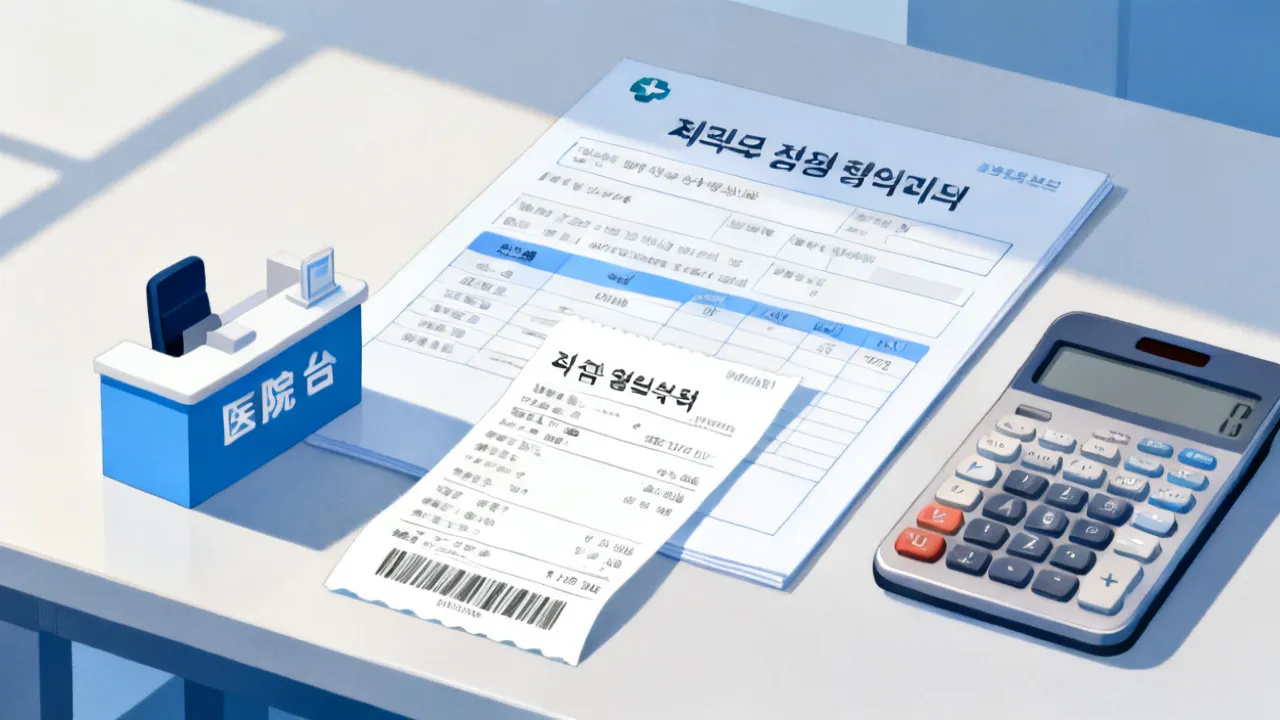
비급여 실비 refers to a claim made under Korean indemnity health insurance for medical expenses classified as 비급여, meaning services not covered by Korea’s National Health Insurance, and 실비, meaning reimbursement based on an insured person’s actual eligible expense rather than a predetermined benefit amount. The expression is widely used in everyday discussions, although insurance contracts may use more formal terms such as “actual medical expense insurance,” “indemnity medical insurance,” or “실손의료보험.”
The central point is straightforward: a non-covered charge is not automatically reimbursable. An insurer normally examines whether the treatment was medically necessary, whether the policy covers that type of service, whether an exclusion applies, how much the policyholder actually paid, and whether the claim falls within the relevant deductible, co-payment, annual limit, or special benefit category.
This distinction matters because the Korean healthcare system contains several layers of payment. National Health Insurance may cover part of an approved treatment. The patient may then pay a statutory co-payment. In addition, the hospital may charge amounts designated as non-covered. Depending on the patient’s insurance contract, some of the latter amount may be considered for indemnity reimbursement, while other amounts may be excluded or subject to separate conditions.
In practical terms, 비급여 실비 is not a promise that every item on a hospital bill will be returned. It is a contract-based process for assessing eligible medical spending. The outcome can differ between two people receiving similar treatment because their policies may have been issued in different periods, have different riders, apply different deductibles, or contain different exclusions.
The phrase can also create confusion because patients often use it to describe several different situations. One person may mean a non-covered injection, another may mean an imaging examination, and another may be referring to a treatment that was partly covered by National Health Insurance but had a large patient charge. These situations may be treated differently by the insurer. Before discussing reimbursement, it is therefore useful to identify the precise service, billing classification, treatment date, and policy version.
Why Non-Covered Medical Costs Require Careful Review
Patients often see the word 비급여 on a receipt and assume that it identifies an insurance benefit. In fact, the term describes the relationship between a medical service and National Health Insurance coverage. It does not by itself determine private insurance coverage.
A service may be non-covered by National Health Insurance for several reasons. It may be outside the scope of the public benefit schedule, may be available only under specific clinical conditions, or may be categorized as a service for which the patient bears the full charge. Some treatments also involve mixed billing, in which one part is covered and another part is non-covered. The hospital’s billing statement should therefore be reviewed item by item.
From an industry perspective, the most common misunderstanding is treating the hospital classification and the insurance classification as identical. They are related but not interchangeable. The insurer may apply a separate policy definition, identify an exclusion, request additional medical evidence, or place the charge under a special non-covered benefit category.
For that reason, a sound claim review begins with four questions:
- What exact service was provided?
- Why was the service medically necessary?
- How does the policy define covered and excluded expenses?
- What amount remains after the applicable deductible, co-payment, limit, and other contractual adjustments?
Patients should also distinguish between the medical provider’s billing terminology and the insurer’s claim terminology. A clinic may describe a service using a broad commercial name, while the insurer may need to know the underlying medical procedure, the diagnosis associated with it, and whether the charge includes materials or administrative components. A clear itemized statement can help bridge this difference.
National Health Insurance and Private Indemnity Insurance
Korea’s National Health Insurance system and private indemnity health insurance serve different functions. National Health Insurance is a public social insurance system administered through statutory rules. Private indemnity insurance is governed by the individual policy contract and the applicable regulatory framework.
When a patient visits a medical institution, the bill may include:
- A portion paid by National Health Insurance.
- A statutory patient co-payment.
- Non-covered services paid by the patient.
- Items that are not medical treatment expenses, such as certain administrative or convenience charges.
Private indemnity insurance generally addresses eligible medical expenses that the insured person has actually paid, subject to contract terms. It does not replace National Health Insurance, and it does not necessarily reimburse every patient payment. The policy may calculate reimbursement separately for covered services and non-covered services, with different deductibles or limits.
This structure means that a patient should not estimate the claim merely by adding all amounts listed under 비급여. A non-covered charge could be outside the policy, restricted to a particular rider, limited by a benefit ceiling, or rejected if the insurer determines that the treatment was not medically necessary under the contract.
The public and private systems also use different decision-making standards. National Health Insurance determines whether a service qualifies for public payment under its own rules. Private insurance determines whether a remaining patient expense falls within the promises and limitations of the policy. A treatment can therefore be non-covered by the public system but considered under private insurance, or it can be non-covered publicly and excluded privately as well.
Policy Generation and Contract Differences
One of the most important factors in a 비급여 실비 claim is the period in which the policy was issued and the terms that later applied to it. Korean indemnity insurance has undergone several rounds of product standardization and revision. Consumers often refer informally to older and newer “generations” of 실손 insurance, but the exact legal and contractual details should be confirmed through the policy documents rather than through a general label alone.
Older contracts may have different cost-sharing structures from newer products. Later products may separate covered and non-covered benefits more clearly, apply revised deductibles, introduce specific management rules for selected non-covered services, or use updated premium adjustment mechanisms. A policyholder who changed insurers, converted a policy, renewed under revised terms, or added a rider may have a materially different claims position from someone with a similar-looking insurance name.
An expert review should therefore examine:
- The original policy date and any renewal date.
- The current certificate of insurance.
- Endorsements, riders, and conversion records.
- Coverage schedules for outpatient, inpatient, prescription, and non-covered expenses.
- Deductible and co-payment provisions.
- Exclusions and limitations relevant to the treatment.
- Any special rules for selected non-covered services.
Policyholders should be cautious when relying on informal descriptions such as “old policy,” “new policy,” or “full reimbursement.” These expressions may be useful for discussion but are not substitutes for the actual contract. A policy’s effective date and detailed wording control the claim assessment.
Renewal is another point that deserves attention. A policy may continue with the same insurer while its premium, deductible, limits, or standardized terms change according to the contract and regulatory structure. The name of the product may remain familiar even though the applicable schedule has been updated. When an insurer sends a renewal notice or offers a conversion, the policyholder should compare the old and new benefit provisions before making a decision.
How Reimbursement Is Commonly Calculated
The amount considered for reimbursement is usually based on the eligible expense actually paid by the policyholder, after applying contractual rules. A simplified illustration is:
Potential reimbursement = eligible medical expense − applicable deductible − excluded amount, subject to policy limits and other conditions.
This is only a conceptual formula. Actual calculations may involve separate deductibles for different categories, a percentage-based patient share, minimum claim amounts, outpatient limits, inpatient limits, prescription provisions, or annual and lifetime ceilings. The insurer may also calculate covered and non-covered expenses using separate sections of the policy.
For example, suppose a hospital invoice contains a covered service, a non-covered diagnostic item, a personal convenience charge, and a deductible. The insurer may assess each category independently. The covered service may qualify under one benefit section. The diagnostic item may require medical necessity review. The convenience charge may be excluded. The deductible may then be applied according to the policy’s calculation method.
Patients should also distinguish between the billed amount and the amount actually paid. A claim generally requires evidence of payment, and a hospital’s total invoice may include adjustments, refunds, deposits, or amounts paid by another party. If the patient later receives a refund, the insurer may revise the reimbursement or request repayment of an overpaid amount.
Percentage-based reimbursement can make simple estimates particularly unreliable. A policy may reimburse only a stated percentage of an eligible expense after the deductible, or it may apply a higher patient share to certain non-covered categories. A limit may apply per visit, per day, per treatment course, per year, or per policy period. The claim notice should show how each adjustment was made.
For an illustration, assume a patient pays 500,000 won for a non-covered treatment. If the service is eligible, the policy has a 100,000-won deductible, and the remaining amount is subject to an 80 percent reimbursement rate, the estimated payment would not be 400,000 won. Under that hypothetical structure, the calculation could be 500,000 won minus 100,000 won, followed by reimbursement of 80 percent of the remaining 400,000 won, resulting in 320,000 won. The actual policy may use a different method, so the example is only intended to show why the headline bill and final payment can differ.
What Types of 비급여 Expenses May Be Considered
Whether a non-covered expense is considered depends on the specific policy and the circumstances of treatment. Broad categories may include diagnostic examinations, imaging-related charges, injections, materials, procedures, rehabilitation services, or selected treatments that are not included in National Health Insurance benefits. These categories are not automatically covered, and the same service may be treated differently depending on the diagnosis, clinical purpose, provider documentation, and policy wording.
A service is more likely to receive careful review when it is:
- Repeated frequently over a short period.
- Provided without a clearly documented diagnosis or treatment purpose.
- Classified under a special non-covered category.
- Associated with cosmetic, preventive, lifestyle, or convenience purposes.
- Provided in a manner that differs from standard medical practice or the policy’s requirements.
- Supported only by a broad receipt without itemized details.
Medical necessity is not determined solely by the patient’s subjective experience. Symptoms and personal treatment goals are relevant, but the insurer may also examine the diagnosis, clinical findings, treatment plan, physician’s notes, duration, frequency, and relationship between the service and the condition being treated.
Some non-covered services are connected to procedures that have both therapeutic and elective uses. For example, a material or injection may be used to treat an established illness in one setting but used for appearance, wellness, or general maintenance in another. The billing name alone may not establish which purpose applied. The clinical record should accurately describe the reason for treatment.
The same principle applies to diagnostic testing. A test performed because of symptoms, abnormal findings, or a physician’s concern may be viewed differently from a test performed solely as a routine check without an eligible medical indication. Patients should ask the provider to explain the purpose of the test and preserve any referral or examination documentation.
Common Exclusions and Restrictions
Most indemnity health insurance contracts contain exclusions. The exact wording differs, but common areas of concern include treatment that is cosmetic rather than medically necessary, services for certain pre-existing or excluded conditions, health screening without a covered diagnosis, ordinary health management, preventive services, non-medical accommodation charges, and expenses that another party is legally responsible for paying.
Some treatments may be medically provided but still excluded because the contract does not include them. Others may be covered in principle but rejected in a particular case because the documentation does not establish medical necessity. These are separate issues. A policyholder can improve clarity by asking the medical institution to describe the diagnosis and treatment purpose accurately, without requesting language designed merely to influence an insurance decision.
Insurers may also review whether treatment was received during a waiting period, whether a condition was disclosed during underwriting, or whether the claim relates to an accident for which automobile insurance, workers’ compensation, or another liability arrangement should respond first. In such cases, coordination between insurers may affect the final amount.
Non-medical charges require special caution. Private rooms, meals, transportation, certificates, copying fees, caregiver expenses, and other convenience or administrative costs may appear on the same invoice as medical services. Their presence on a hospital bill does not make them medical expenses under an indemnity policy. The itemized bill should identify these amounts separately.
There may also be restrictions related to treatment location or provider type. A policy can distinguish between hospitals, clinics, pharmacies, nursing facilities, and other institutions. It may require that a service be provided by a legally recognized medical institution or may apply different limits depending on where treatment occurred. Confirming the provider’s status before an expensive service can prevent unexpected problems.
Documents Commonly Needed for a Claim
Documentation requirements vary according to the claim amount, treatment type, insurer, and claim channel. A small outpatient claim may require fewer documents than a substantial inpatient or repeated non-covered treatment claim. The following materials are commonly relevant:
| Document | Purpose | Points to Check |
|---|---|---|
| Medical expense receipt | Confirms the amount paid and basic billing information. | Verify the patient name, treatment date, provider, and total amount. |
| Itemized billing statement | Shows covered, non-covered, and other charges separately. | Check whether each significant non-covered item is clearly described. |
| Medical certificate or diagnosis document | May establish diagnosis, treatment period, and clinical context. | Ask the insurer whether a particular format or diagnosis information is required. |
| Physician’s opinion or treatment record | May support medical necessity for disputed or high-value services. | The document should accurately reflect the medical record. |
| Prescription and pharmacy receipt | Supports claims for eligible prescription-related expenses. | Confirm that the prescription is connected to the insured condition and policy benefit. |
| Payment evidence | Confirms that the policyholder actually paid the expense. | Retain evidence of card payment, transfer, or another accepted method. |
Not every claim requires every document. Requesting documents that are not necessary can increase administrative work for the patient and the medical institution. The most efficient approach is to ask the insurer for a current document list before submitting a complex claim, while retaining the original records.
When a document contains sensitive information unrelated to the claim, ask whether a limited record or redacted version is acceptable. Medical records contain extensive personal information, and sending unnecessary material can create privacy risks. At the same time, a patient should not remove information in a way that changes the meaning of the record. If redaction is appropriate, follow the insurer’s instructions.
For family members, minors, or claims submitted by a representative, additional identity or authorization documents may be needed. The insurer may request proof of relationship, a power of attorney, a legal representative document, or identification. These requirements are designed to prevent unauthorized access to medical and financial information.
Step-by-Step Guide to Filing a 비급여 실비 Claim
Step 1: Review the policy before treatment when possible
If a planned service is expensive, repeated, or clearly non-covered under National Health Insurance, review the policy before treatment. Look for the relevant benefit section, deductible, exclusions, special conditions, and claim limits. The insurer may provide a written explanation of general coverage, but a preliminary inquiry is not always a guarantee of payment. The final assessment may depend on medical records and the exact bill.
Step 2: Ask the provider for an itemized estimate
Before treatment, ask the hospital or clinic to explain the expected cost and identify which items are non-covered. The patient should request a medical explanation in ordinary language: what the service is, why it is recommended, how often it may be performed, and whether alternatives exist. This is a healthcare decision, not merely an insurance decision.
Step 3: Obtain complete billing records
After treatment, collect the receipt and itemized statement. For inpatient care, request records covering the full admission period. For repeated outpatient treatment, organize documents by date. If the provider later issues a correction or refund, keep both the original and revised documents.
Step 4: Confirm whether additional medical evidence is needed
For ordinary claims, the receipt and itemized statement may be sufficient. For a substantial non-covered expense, the insurer may request a diagnosis document, treatment record, physician’s opinion, or examination findings. The patient should ask what specific question the additional document is intended to answer. A targeted request is usually more useful than submitting a large collection of unrelated records.
Step 5: Submit through an accepted channel
Insurers may accept claims through a mobile application, website, branch, postal service, or other designated channel. The available methods and document size limits can change, so use the current instructions provided by the insurer. Keep a submission confirmation, claim number, and copy of the documents.
Step 6: Read the assessment notice carefully
The insurer should identify the approved amount, deduction, and any rejected or deferred portion. If a non-covered item is not accepted, review the stated reason. The issue may be a missing document, an exclusion, insufficient evidence of medical necessity, a limit, or a calculation difference.
Step 7: Request clarification or reconsideration when appropriate
If the explanation is unclear, ask the insurer to identify the policy provision and calculation basis. Provide relevant records rather than general statements. If disagreement remains, the policyholder may use the insurer’s internal complaint process and then consider guidance or dispute procedures available through Korea’s financial consumer protection framework.
Step 8: Keep the claim record after payment
Save the assessment notice, payment confirmation, submitted documents, and communications. A future claim for the same condition may involve related records, and the insurer may later identify a refund, duplicate payment, or calculation correction. Keeping a chronological file also makes it easier to compare repeated treatment and monitor remaining limits.
Conditions That Commonly Affect Eligibility
Several conditions can affect whether 비급여 실비 is payable:
- Policy validity: The policy must have been active on the date of treatment, subject to any relevant waiting or suspension provisions.
- Covered purpose: The treatment must fall within the benefit description and be connected to an eligible medical condition.
- Medical necessity: The records should support why the service was clinically indicated.
- Actual payment: The policyholder generally needs to show that the expense was paid.
- Deductible: The claim may be reduced by a fixed amount or percentage under the contract.
- Limits: Outpatient, inpatient, prescription, annual, or special-service limits may apply.
- Exclusions: The policy may exclude cosmetic, preventive, convenience, or other specified expenses.
- Coordination of benefits: Another insurer or responsible party may need to pay first.
- Submission period: The contract or applicable law may impose a time limit for filing.
These conditions should be considered together. Meeting one condition does not guarantee that all other conditions are met. For example, an expense may be medically necessary but exceed a special limit, or it may be within a benefit category but lack the required diagnosis record.
The treatment date is especially important. A policyholder may have received a service shortly before changing plans, during a renewal interval, or after a policy suspension. The insurer generally evaluates the terms applicable to the date of service, not merely the terms the policyholder remembers from the date of purchase. For a course of treatment spanning several months, each visit may need to be assessed according to the relevant policy period.
Comparison of Major Expense Categories
| Expense Category | Typical Relationship to Public Coverage | Private Insurance Review | Useful Evidence |
|---|---|---|---|
| National Health Insurance-covered treatment | Part of the cost is handled under public insurance rules. | The patient’s share may be considered under the applicable indemnity benefit, subject to the policy. | Receipt, itemized bill, and diagnosis information where requested. |
| Non-covered medical treatment | The patient generally pays the charge directly. | Coverage depends on the contract, medical necessity, exclusions, deductibles, and limits. | Itemized bill, treatment record, diagnosis, and physician explanation when needed. |
| Cosmetic or appearance-focused service | Often outside ordinary public benefits unless a specific medical basis applies. | Frequently restricted or excluded, depending on the policy and documented purpose. | Diagnosis and clinical rationale, if a medical indication exists. |
| Preventive screening | May be provided under public programs or paid separately. | Coverage depends on whether the policy recognizes the expense and whether symptoms or diagnosis are present. | Screening details, referral, and medical records where relevant. |
| Administrative or convenience charge | May not represent medical treatment. | Often outside indemnity medical expense coverage. | Detailed billing description and policy wording. |
| Prescription expense | May involve public insurance processing and patient co-payment. | Assessed under the prescription or outpatient terms of the policy. | Prescription, pharmacy receipt, and diagnosis information when required. |
How to Read an Itemized Hospital Bill
An itemized bill should be treated as a map of the claim. Start by confirming the treatment date and patient identity. Next, separate charges into public insurance-covered amounts, statutory patient payments, non-covered medical items, and non-medical charges. Then look for repeated services, bundled charges, materials, injections, examinations, and adjustments.
Some billing descriptions may be technical or abbreviated. Patients should ask the provider to explain unfamiliar terms and whether a charge is a medical service, material, medication, facility charge, or administrative item. This is especially important when a single treatment appears across multiple lines.
Do not alter the medical records or ask a provider to misclassify a charge. Accurate documentation protects both the patient and the medical institution. If an error is identified, request a corrected document through the provider’s normal billing process and retain evidence of the correction.
Check whether the bill shows amounts that were paid by a family member, employer, charitable program, accident insurer, or another institution. The fact that a charge appears on the patient’s account does not necessarily mean that the patient bore the final economic loss. Indemnity insurance is generally concerned with eligible expenses actually incurred by the insured person.
For a lengthy inpatient bill, consider creating a separate personal worksheet listing the date, service description, amount, public coverage status, and documents available. This can reveal duplicate dates, unclear descriptions, or charges that need clarification before submission. It can also help the patient compare the bill with the discharge summary and treatment records.
Medical Necessity and Clinical Documentation
Medical necessity is often the decisive issue in disputed 비급여 실비 claims. The insurer may ask whether the treatment was reasonably related to a diagnosed condition and whether the frequency, duration, and method were clinically appropriate. This does not mean that the insurer replaces the treating physician. It means that the policy’s reimbursement conditions require an assessment based on the available medical evidence.
Strong documentation generally explains the patient’s symptoms, diagnosis, objective findings, treatment purpose, response to earlier care, and planned course. A brief statement that a treatment was “necessary” may not answer the insurer’s specific question. Conversely, a long record containing unrelated information may make review more difficult.
Patients should communicate accurately with both the physician and insurer. They should describe symptoms honestly, disclose relevant prior treatment when asked, and avoid presenting a non-medical service as a medical treatment. Accuracy is more important than using a particular phrase.
Clinical records should also distinguish between a physician’s recommendation and the patient’s personal preference. A patient may choose a particular material, room, provider, or treatment option for comfort or convenience. That choice can be valid from a healthcare perspective but may not satisfy the policy’s definition of an eligible medical expense. The record and bill should make the distinction understandable.
Where treatment is experimental, newly introduced, or supported by limited evidence, the insurer may request more information about its purpose and accepted medical use. That does not automatically mean the claim will be rejected, but it can lead to additional review. Patients considering expensive treatment should ask both the provider and insurer what evidence is likely to be relevant.
Selected Non-Covered Services and Utilization Review
Some indemnity insurance products include separate arrangements for selected non-covered services. These arrangements may involve different deductibles, benefit limits, utilization review, or premium-related consequences under the applicable product structure. The relevant rules can change as products are revised and standardized.
Because of this, a policyholder should not assume that a service previously reimbursed will always receive the same treatment. A renewal may introduce updated terms, or a policy conversion may alter the relationship between ordinary benefits and selected non-covered benefits. Review the current certificate and benefit schedule for each significant claim.
Repeated treatment can attract additional review, but repetition alone does not prove that a claim is improper. Chronic conditions, rehabilitation needs, and continuing medical care may require multiple sessions. The appropriate question is whether the records support the treatment under the policy terms, not whether the service occurred more than once.
Utilization review may consider the number of visits, the interval between treatments, the amount charged, the diagnosis, and the patient’s progress. A request for additional records should not be interpreted automatically as an accusation. It is often a mechanism for distinguishing an ongoing medically supported treatment course from an expense that falls outside the benefit design.
Practical Methods for Reducing Claim Delays
- Use the same spelling of the patient’s name across documents.
- Check that treatment dates are consistent on the receipt and itemized statement.
- Submit an itemized bill when a non-covered charge is substantial or technically complex.
- Explain the medical purpose of an unfamiliar service through accurate provider documentation.
- Separate claims by treatment period if the insurer requests that format.
- Keep digital copies of submitted documents and confirmation numbers.
- Respond to additional-document requests within the stated period.
- Ask the insurer to identify missing information rather than sending unrelated records.
- Report refunds, duplicate payments, or reimbursement from another party.
Many delays arise from incomplete information rather than a final coverage decision. A carefully organized claim allows the reviewer to identify the expense, treatment purpose, and payment amount without unnecessary follow-up.
Use readable scans or photographs. A document may technically be uploaded but still be unusable if the date, amount, or patient name is blurred. When submitting multiple pages, place them in chronological order and use clear filenames. If an application provides a field for additional comments, use it to identify the major non-covered item and explain which supporting document corresponds to it.
Patients should also keep communication professional and specific. Instead of asking only whether “everything is covered,” ask whether a named benefit category applies, what deductible is expected, and what records would be needed for final review. Precise questions are more likely to produce useful answers.
When a Claim Is Reduced or Rejected
A reduced payment does not always mean that the entire treatment was excluded. The insurer may have approved part of the bill and deducted the policy’s patient share or deductible. The assessment notice should be reviewed line by line.
Common reasons for a reduction or rejection include:
- The service is expressly excluded.
- The policy does not contain the relevant non-covered benefit.
- The claim exceeds a category-specific limit.
- The required diagnosis or treatment record was not provided.
- The insurer considers the purpose preventive, cosmetic, or non-medical.
- The expense was reimbursed or should be handled by another responsible party.
- The treatment date falls outside the active policy period.
- The claim was submitted after the applicable deadline.
- The amount paid cannot be verified.
The policyholder should request a written explanation when the notice is too general. Ask which clause was applied, which document was missing, and how the amount was calculated. A clear record is useful if the matter proceeds to internal reconsideration or an external consumer dispute process.
A reconsideration request should address the stated reason for the decision. If the insurer says that the diagnosis is unclear, provide the relevant diagnosis document or ask the provider whether a more specific accurate record exists. If the issue is a limit, request the policy calculation. If the issue is an exclusion, compare the exclusion wording with the exact service described on the bill. Repeating that the expense was expensive or difficult does not usually resolve a contractual issue.
Do not discard the original rejection notice after receiving a partial payment. The notice may identify an appeal period or explain which items were accepted and which were not. If a correction is issued, retain both versions so the history of the claim remains clear.
Source and Regulatory Reference Points
Reliable information about 비급여 실비 should come from the actual insurance contract and recognized Korean public or regulatory institutions. Useful reference points include the Financial Supervisory Service for consumer guidance and insurance dispute information, the Financial Services Commission for policy and regulatory announcements, the National Health Insurance Service for public insurance and patient-payment information, the Health Insurance Review and Assessment Service for medical fee and non-covered service information, and the Korea Consumer Agency for general consumer protection guidance.
These institutions may publish different types of information. A public health authority can explain whether a service is included in National Health Insurance benefits, while an insurance regulator can explain consumer rights and contract issues. Neither general public guidance nor a provider’s estimate automatically replaces the wording of an individual policy.
When reviewing a source, check its publication date, whether it applies to the relevant policy generation, and whether it addresses the treatment category in question. Product terms, claim procedures, and administrative guidance may change. For a disputed or high-value matter, retain the policy documents and seek professional advice from an appropriately qualified insurance or legal specialist.
Online communities and commercial comparison sites can be useful for learning the vocabulary of a claim, but they should not be treated as authoritative for an individual case. A story about another person’s reimbursement may involve a different policy date, diagnosis, provider, or claim history. Use such information to formulate questions, then verify the answer through the contract and an official source.
Consumer Protection and Responsible Claiming
Policyholders have the right to ask how a claim was assessed and to receive an understandable explanation of deductions and exclusions. They should also expect the insurer to handle personal medical information according to applicable privacy and insurance rules.
At the same time, claimants have a responsibility to submit accurate information. A claim should reflect the actual treatment, actual payment, and genuine medical purpose. Fabricated records, altered receipts, duplicate submissions, or misrepresentation can lead to claim cancellation, repayment demands, contract consequences, or other legal concerns.
Medical institutions also have a role. They should provide itemized billing and accurate clinical documentation. Patients may request clarification, but they should not pressure medical staff to use a diagnosis that does not reflect the medical record.
Consumers should be wary of anyone who promises guaranteed reimbursement in exchange for changing a diagnosis, dividing invoices artificially, concealing other insurance payments, or submitting the same expense repeatedly. Such conduct can create serious problems for the patient even if the immediate claim appears successful. A legitimate claim is one supported by the actual treatment and the actual policy.
Questions to Ask Before Expensive Non-Covered Treatment
- What is the exact name and purpose of the service?
- Which part of the expected charge is non-covered?
- Is the service medically necessary for a diagnosed condition?
- How often is the treatment expected to occur?
- What records will show the clinical rationale?
- Does the current policy include this category of expense?
- What deductible, co-payment, or limit may apply?
- Are there exclusions or special review rules?
- Could another insurer or public program be responsible?
- What documents should be collected at the time of treatment?
These questions do not guarantee reimbursement, but they help the patient make an informed healthcare and financial decision. A preliminary conversation with the insurer can identify the relevant policy section, while the medical provider can explain the clinical basis and expected treatment plan.
It is also reasonable to ask about alternatives. If the proposed treatment has both covered and non-covered options, the provider should explain the medical differences, expected benefits, risks, and costs. The patient should choose treatment based on health needs and informed consent, not solely on the possibility of insurance reimbursement. Insurance coverage is one financial factor among several.
FAQs About 비급여 실비
Is every 비급여 charge covered by 실비 insurance?
No. 비급여 identifies a charge outside National Health Insurance coverage. Private indemnity insurance applies its own terms. The service may be reimbursable, partially reimbursable, restricted, or excluded depending on the policy and circumstances.
Does a receipt alone prove eligibility?
A receipt proves that a payment was recorded, but it may not establish the medical purpose, diagnosis, or policy eligibility of a complex non-covered service. The insurer may request an itemized bill or medical documentation.
Can a medically necessary treatment still be excluded?
Yes. Medical necessity is important but not the only condition. A policy may exclude a particular treatment category, impose a limit, or require a separate rider. The contract must be reviewed as a whole.
Why do two people receive different reimbursement for similar treatment?
Their policies may differ in issue date, renewal terms, deductibles, riders, exclusions, limits, or claims history. Their diagnoses, treatment frequency, documentation, and actual payments may also differ.
Does a non-covered service need a special diagnosis?
There is no universal diagnosis rule for every service. However, the insurer may need evidence that the treatment relates to an eligible medical condition. The diagnosis should be accurate and supported by the medical record.
Can outpatient and inpatient expenses be treated differently?
Yes. Policies often contain separate benefit sections and limits for outpatient treatment, hospitalization, and prescriptions. Deductibles and claim calculations may also differ.
What happens if the hospital later refunds part of the payment?
Notify the insurer and retain the revised bill. Because indemnity insurance is based on an eligible actual expense, a refund may change the amount that should be reimbursed.
Can a patient submit the same expense to multiple insurers?
Multiple policies may coordinate benefits, but the same expense should not be represented as a separate unreimbursed loss to obtain duplicate compensation. Disclose other coverage and follow each insurer’s coordination rules.
Is an insurer’s telephone explanation binding?
A telephone explanation may be useful for preliminary guidance, but final assessment can depend on submitted records and policy interpretation. Keep written confirmations when available and compare them with the policy wording.
What should a policyholder do if the reason for rejection is unclear?
Request a written explanation identifying the applicable policy clause, rejected item, missing evidence, and calculation method. If the response remains unsatisfactory, use the insurer’s complaint process and consult the relevant financial consumer protection channel.
Are repeated non-covered treatments automatically suspicious?
No. Repeated treatment may be clinically appropriate for some conditions. However, the insurer may request more detailed evidence regarding diagnosis, treatment frequency, progress, and medical necessity.
Can a provider guarantee insurance reimbursement?
A provider can explain the treatment and billing, but the insurer decides contractual reimbursement. A provider’s statement about expected payment should not be treated as a final coverage decision.
Does a large claim always require a medical certificate?
Not necessarily. Requirements depend on the insurer, treatment, amount, and policy. A larger or unusual claim is more likely to require supporting medical documentation, so confirm the current requirements before submission.
Can a claim be filed long after treatment?
A claim may be subject to a filing period under the applicable contract or law. Do not delay unnecessarily. Confirm the deadline with the insurer and submit the claim while the relevant receipts and records are readily available.
What if a bill combines several treatments under one broad description?
Ask the provider for an itemized statement that identifies the individual services and amounts. A broad description may make it difficult for the insurer to determine which part is eligible, excluded, or subject to a special limit.
Expert Checklist for Reviewing a Claim
From an industry-review perspective, a well-prepared 비급여 실비 claim should answer five questions clearly: what happened, when it happened, why it was medically provided, how much the patient paid, and why the policy should respond. If one of these elements is unclear, the insurer may request further material.
| Review Area | Recommended Action |
|---|---|
| Policy status | Confirm the policy was active on the treatment date and identify the current terms. |
| Service classification | Separate covered, non-covered, excluded, and non-medical charges. |
| Clinical purpose | Obtain accurate diagnosis and treatment-purpose information from the provider. |
| Payment evidence | Match the paid amount to the receipt, itemized bill, and any refund record. |
| Contract calculation | Check deductibles, co-payments, special limits, and category-specific provisions. |
| Communication record | Keep the claim number, submission confirmation, assessment notice, and written explanations. |
For a repeated treatment course, add a treatment timeline to the checklist. Record the initial symptoms, diagnosis date, treatment dates, frequency, amount paid at each visit, and any change in treatment plan. This timeline can help demonstrate continuity and can identify whether a policy change occurred during the course.
For a disputed claim, create a separate comparison table listing the insurer’s reason, the supporting policy clause, the document already submitted, and the document that may address the issue. This keeps the reconsideration focused. It also helps distinguish a disagreement about facts from a disagreement about policy interpretation.
Final Perspective
비급여 실비 is best understood as a contract-based reimbursement question, not as an automatic refund system for non-covered healthcare charges. The public classification of a service, the private policy wording, the medical necessity evidence, and the actual amount paid must all be considered together.
The most reliable approach is methodical. Review the current policy, ask the provider for an accurate itemized explanation, preserve payment and medical records, submit the claim through an accepted channel, and examine any deduction against the relevant policy clause. If the issue is complex or financially significant, obtain written clarification and use recognized consumer-protection procedures rather than relying on informal assurances.
Rules and product structures may change, and individual contracts differ. Readers should confirm the latest information with their insurer and consult official Korean healthcare and financial authorities for matters involving eligibility, disputes, or regulatory interpretation.
Ultimately, good claim preparation is not about finding a special phrase or assuming that a non-covered label guarantees reimbursement. It is about accurately connecting the medical service, the patient’s actual payment, the available evidence, and the contractual benefit. When those four elements are clearly documented, the insurer can make a more reliable assessment and the policyholder is better positioned to understand, question, or challenge the result.