Understanding 감액 기간 in Benefit Decisions
This guide explains the meaning of 감액 기간, or a reduction period, and how it can affect pensions, insurance payments, employment benefits, public assistance, and other administrative claims. The term does not identify one universal duration: its meaning depends on the governing law, benefit category, triggering event, calculation method, and official decision notice. Readers will learn how to identify the relevant dates, distinguish a temporary reduction from a permanent adjustment, review evidence, verify calculations, and respond when a decision appears inconsistent with the applicable rules.
What 감액 기간 Means
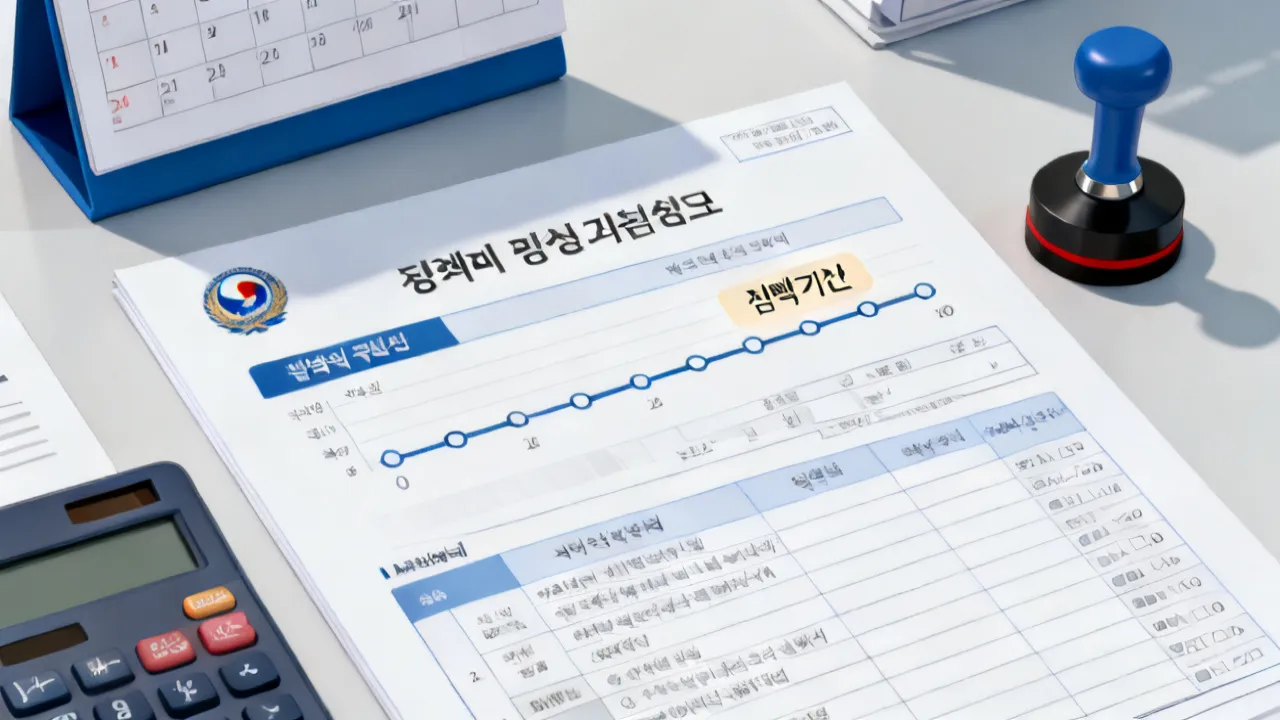
감액 기간 is a Korean administrative term that generally refers to the period during which an amount is reduced, partially withheld, or calculated below its standard level. In English, it may be translated as “reduction period,” “benefit reduction period,” “period of reduced payment,” or, depending on the legal context, “deduction period.” The most accurate translation depends on the document in which the term appears.
The phrase is not a single, universally defined legal period. Its practical meaning changes according to the relevant program. It may appear in pension decisions, employment-related benefits, health insurance administration, public assistance, compensation claims, tax adjustments, or private insurance contracts. A reduction can be caused by income, overlapping benefits, early eligibility, excess payment recovery, sanctions, waiting rules, household circumstances, or a change in statutory conditions.
For that reason, a reader should avoid interpreting 감액 기간 by looking only at the word itself. The decisive information is usually found nearby in the notice: the legal basis, effective date, end date, reduction rate, calculation formula, reason for the adjustment, and instructions for review or objection.
From an industry perspective, the most important distinction is between the period used to calculate a reduction and the period during which the reduced amount is actually paid. These periods may overlap, but they are not always identical. For example, an agency might examine income earned during one assessment period and apply the resulting adjustment to payments issued during a later period. Confusing those two timeframes can lead to an incorrect appeal or an inaccurate household budget.
Another important distinction is between a reduction in the amount and a reduction in the duration of entitlement. A person may remain eligible for a benefit but receive less during the 감액 기간. In another case, the person may receive the full amount for a shorter period because eligibility begins later or ends earlier. The wording of the notice should reveal which of these situations applies.
Why the Term Requires Careful Interpretation
Administrative language often compresses several separate concepts into one short phrase. 감액 기간 may refer to:
- the dates when a reduced amount is payable;
- the period used to measure income or another eligibility factor;
- the duration of a sanction or disqualification;
- the time between an early claim and a standard eligibility date;
- the months affected by coordination with another benefit;
- the period used to recover an overpayment; or
- the period for which a contractual or statutory limitation applies.
These categories have different consequences. A temporary income-based reduction may end when reported income changes. An early-claim adjustment may continue according to a statutory formula. A sanction may have a fixed duration but may also involve a separate process for restoring eligibility. An overpayment recovery may reduce future payments until a stated balance is recovered.
An expert review therefore begins with classification. Before checking whether the amount is correct, identify what kind of reduction is involved. The same word can describe different mechanisms, and a method that is appropriate for one mechanism may be unsuitable for another.
The source of the reduction also matters. A government agency may have authority under legislation or regulation, while a private insurer relies on the terms of a policy contract. A local authority may apply a household-income standard that differs from a national benefit program. Even when two notices use identical Korean wording, their calculation rules and appeal procedures may be entirely different.
The Five Questions to Ask First
- Which program issued the decision? Identify the pension, insurance, employment, assistance, compensation, tax, or private contract system involved.
- What event triggered the reduction? Common triggers include income, early claiming, overlapping payments, a change in household status, missing documentation, a sanction, or recovery of an overpayment.
- What dates are stated? Look for the assessment period, effective date, payment period, and expected end date.
- How was the amount calculated? Check the original amount, the reduction rate or deduction, the adjusted amount, and any rounding or monthly limits.
- What review or objection procedure applies? A notice may identify a reconsideration process, an objection deadline, an appeal route, or a requirement to submit updated evidence.
These questions create a reliable framework even when the notice uses unfamiliar terminology. They also help separate a genuine calculation dispute from a misunderstanding about the program’s structure.
A sixth practical question is whether the reduction is automatic or requires a separate administrative decision. Some adjustments occur through a routine payment system after information is matched with government records. Others require a formal notice, an application, or an individual assessment. Knowing this distinction helps determine whether the recipient should wait for a scheduled review or actively submit documentation.
Common Contexts in Which 감액 기간 Appears
1. Pension and Retirement Benefits
In pension administration, a reduction period may relate to the timing of a claim, earnings received while drawing a pension, coordination with another pension, or a statutory adjustment based on contribution or eligibility history. The details vary considerably by pension type and by the legal framework governing the payment.
For an early claim, the relevant period may be measured from the date the pension begins to the standard age or date specified by law. The amount may then be adjusted according to a prescribed formula. In such a case, the reduction is not necessarily a penalty. It may be a structural adjustment reflecting a longer expected payment period under the program’s rules.
For an earnings-related adjustment, the agency may consider income during a defined reporting period and apply the adjustment to later pension payments. The period used to evaluate earnings may therefore differ from the payment months shown on a bank statement.
Readers should also distinguish a reduction in the monthly amount from a suspension of entitlement. A reduction preserves an underlying right to payment but changes the amount. A suspension, by contrast, may stop payments for a defined interval. The notice should be examined for the exact administrative action.
Pension notices may also contain several amounts at once. These can include a calculated standard pension, a reduction due to early commencement, a separate adjustment due to employment income, withholding taxes, health insurance contributions, and an amount actually deposited. A recipient should not assume that the final deposit represents only one 감액 rule. Requesting a detailed calculation statement is often the best way to identify each component.
2. Employment Insurance and Job-Seeker Benefits
Employment-related benefits may contain waiting days, reduced-payment periods, disqualification periods, or adjustments based on work performed during a claim. These concepts are not interchangeable.
A waiting period generally concerns when payment begins. A reduction period concerns the amount paid after a reduction rule is applied. A disqualification period may result from a statutory condition or conduct-related decision. A claimant who labels all three as 감액 기간 may overlook an important difference in rights and review procedures.
Part-time work, temporary earnings, severance-related payments, reporting delays, or failure to meet activity requirements can affect benefit calculations. The relevant agency may require evidence such as employment records, wage statements, work schedules, or notices from the employer. It is prudent to retain documents that establish both the date and the amount of work or income.
Employment-benefit rules can also distinguish between work performed and wages received. A payment received in one month may relate to work performed in another month, and the agency may use either the work date or the payment date depending on the governing rule. This is one reason why a bank transaction alone may not resolve a dispute.
3. Health Insurance and Social Contributions
In health insurance administration, the concept may relate to an adjustment in premium liability, a retrospective correction, a household qualification change, or the handling of overlapping coverage. The amount shown on a notice may be different from the amount initially billed because the agency has revised the underlying income, property, employment, or dependent information.
Here, the word “reduction” can sometimes describe a lower contribution rather than a reduction in a benefit. The reader should identify whether the notice concerns money being received or money being charged. This distinction is particularly important when an administrative document uses general terms such as adjustment, deduction, reassessment, or correction.
A premium reduction may be linked to a specific qualifying event, such as loss of employment, a change in income, a change in dependent status, or eligibility for a designated relief program. The effective date may depend on when the event occurred, when it was reported, and when the agency confirmed it. If a request was filed late, the reduction may begin only from a later month even if the underlying hardship began earlier.
4. Public Assistance and Household-Based Programs
Means-tested assistance may be adjusted when household income, assets, household composition, residence, or other eligibility factors change. A reduction may apply from the date of the reported change, from the next assessment cycle, or from another legally specified date.
The assessment period is especially important in this context. Some programs use current monthly income, while others use verified past income, average income, periodic income, or a conversion method for irregular earnings. A household may experience a reduction even when its current financial circumstances have changed again, because the agency is applying an earlier assessment period under the program’s rules.
Applicants should not assume that a lower current income automatically reverses the earlier decision. A new review may be required, and the effective date of a revised decision may depend on when evidence was submitted and when the change was reported.
Household-based programs may also consider the status of other household members. A change in a spouse’s employment, a dependent’s age, a person moving into or out of the household, or a change in registered residence can affect the calculation. The recipient should verify whether the agency assessed the correct household on the relevant date rather than focusing solely on personal income.
5. Insurance Claims and Contractual Payments
Private insurance policies may use reduction language in connection with deductibles, policy limits, co-insurance, waiting provisions, partial disability, exclusions, or coordination with another insurer. In this setting, 감액 기간 may not be the formal term used in the contract’s original language, but it may appear in a Korean explanation or claims notice.
The policy schedule, definitions, exclusions, benefit table, and claims decision should be read together. A claims representative may describe a payment as reduced because only part of the insured event is covered, while the contract may classify the issue as a benefit limit rather than a time-based reduction.
Some policies provide different benefit levels during different stages of a covered condition. For example, a policy may pay one amount during an initial period and another amount after a specified duration. In such a case, the relevant 감액 기간 may be contractual and may begin on the date of diagnosis, treatment, disability, or claim approval. The policy definition of the triggering event is therefore crucial.
Reduction Period Versus Related Time Concepts
| Concept | Primary Question | Why It Matters |
|---|---|---|
| 감액 기간 | During which dates is the amount reduced? | Identifies the months or interval affected by the adjustment. |
| Assessment period | Which dates are used to evaluate income, status, or eligibility? | May occur before the reduced payment begins. |
| Waiting period | When does payment eligibility begin? | May delay payment without reducing the standard amount. |
| Suspension period | When are payments stopped? | May involve no payment rather than a smaller payment. |
| Recovery period | How long will an overpayment be collected? | May reduce later payments until a stated balance is recovered. |
| Review period | Which dates can the agency reconsider? | Determines the scope of a correction or appeal. |
This comparison is a practical starting point, not a substitute for the governing statute, regulation, official guidance, or contract. The same notice may contain more than one of these periods.
For example, an agency may assess wages earned from January through March, begin a reduced payment in May, suspend payment for part of June because a reporting requirement was not met, and recover a prior overpayment from July onward. All four time concepts could appear in one case. Treating them as one continuous 감액 기간 would produce a misleading understanding of the decision.
How the Amount May Be Calculated
A reduction calculation usually follows a sequence. The precise formula depends on the program, but the analytical structure is often similar:
- Determine the standard or initial amount.
- Identify the legally relevant factor, such as earnings, early commencement, overlapping coverage, household income, or an overpayment balance.
- Apply the statutory, regulatory, or contractual formula.
- Check minimums, maximums, thresholds, exemptions, and rounding rules.
- Establish the effective dates.
- Issue the adjusted amount and explain the review process.
In simplified form, a reduction may be represented as:
Adjusted amount = standard amount − applicable reduction
Where the reduction is percentage-based, a simplified expression may be:
Reduction = standard amount × applicable rate
These expressions are explanatory only. Many programs do not use a single percentage. They may apply thresholds, progressive formulas, partial-month calculations, household rules, or separate treatment for different types of income. An individual should not rely on a generic percentage found online when an official calculation method is available.
Timing can also affect the result. A rule may apply from the first day of a month, the date of an event, the next payment cycle, or the date on which a change was reported. If a person’s circumstances changed in the middle of a month, the agency may use a full-month rule or a pro-rated method. The notice should indicate which approach was used, although some decisions may require clarification from the issuing body.
Rounding is a minor-looking issue that can still create repeated differences. A program may round each monthly calculation, round the annual total, or apply a minimum unit of currency. If the difference is small but appears consistently, check the program’s rounding convention before concluding that the whole calculation is incorrect.
Reading an Official Notice
A reduction notice should be read as a structured record rather than as a short message about a smaller payment. Industry reviewers typically examine the following sections:
- Recipient information: Confirm the name, identification details, household information, and case or policy number.
- Decision type: Determine whether the document announces a reduction, reassessment, suspension, recovery, or correction.
- Reason: Identify the specific event or data point that caused the decision.
- Legal or contractual basis: Note the cited article, regulation, policy clause, or administrative rule.
- Effective date: Establish when the adjustment begins.
- End date: Check whether the period is fixed, conditional, renewable, or open-ended.
- Amount: Compare the former amount, reduction, and final amount.
- Evidence: Determine which income, status, medical, employment, or household records were considered.
- Procedural rights: Record the deadline and method for review, objection, or appeal.
Pay particular attention to expressions such as “from,” “through,” “until,” “for the month of,” and “subject to change.” These words can determine whether the final month is included and whether a future reassessment is expected.
Attachments are often as important as the first page. A calculation table may show the figures used, while a separate page may explain the legal basis or appeal deadline. If the notice refers to an appendix that was not included, contact the issuing body and request the missing material promptly.
A Step-by-Step Method for Checking 감액 기간
Step 1: Preserve the complete record
Save the entire notice, including the reverse side, attachments, calculation sheet, and delivery information. A screenshot of a payment account may show the result but not the reason. Keep the original document in its received form, and record the date on which it arrived.
Step 2: Identify the decision-maker
Determine whether the notice came from a national agency, local authority, employer, insurer, pension administrator, or another institution. Contact information may appear in the document, but the responsible body should be confirmed before sensitive information is disclosed.
Step 3: Mark every relevant date
Create a short timeline containing the triggering event, reporting date, assessment period, decision date, effective date, payment date, and end date. If a reduction appears retroactive, mark the date from which the agency says the adjustment applies.
Step 4: Reconstruct the baseline
Write down the amount that would have been payable before the adjustment. Then identify the amount reduced and the final amount. If these figures do not reconcile, check whether taxes, contributions, deductions, recovery amounts, or separate adjustments have been combined.
Step 5: Match the evidence to the trigger
If the reduction is based on income, compare the agency’s income figure with payslips, tax records, employment reports, business records, or other relevant evidence. If the issue concerns household status, compare the notice with resident-registration or family-status documentation where legally appropriate. If it concerns an insurance claim, compare the decision with the policy schedule and claims evidence.
Step 6: Check the formula and assumptions
Look for omitted deductions, duplicate income, incorrect dates, an inaccurate household classification, an incorrect commencement date, or an assumption that was true in an earlier period but no longer applies. Avoid changing the figures merely to reach a preferred outcome; the purpose is to verify whether the stated rule was applied to accurate facts.
Step 7: Request clarification in writing
A written inquiry should state the case number, the disputed item, the relevant date, and the specific explanation requested. For example, ask whether the period shown is an assessment period or a payment period, which income figure was used, and how the end date was determined.
Step 8: Submit a review or objection if necessary
If the response does not resolve the issue, use the procedure stated in the notice. Respect the deadline even if additional evidence is still being gathered. A person may submit an initial filing to preserve the deadline and then provide supplementary materials if the procedure permits.
Step 9: Check the updated decision
After submitting evidence, review the agency’s response rather than assuming that a correction was made. Confirm the revised effective date, new monthly amount, treatment of previously paid amounts, and whether another action is required. Keep the revised notice with the original decision so the case history remains complete.
Conditions and Requirements for a Review
Requirements differ by program, but a well-prepared review commonly includes:
- the decision notice or case reference;
- a clear statement of the requested correction;
- the dates that the applicant believes are relevant;
- documents supporting income, employment, household status, medical circumstances, payment history, or contract coverage;
- a calculation showing how the applicant reached the proposed amount;
- an explanation of any discrepancy between the notice and the supporting records; and
- proof that the submission was made through the required channel and within the deadline.
Documents should be organized chronologically and labeled. A short index can help the reviewer locate the relevant page. Where privacy is a concern, provide only information necessary for the review and follow the institution’s instructions for secure submission.
Some systems distinguish between a request for factual correction and a formal appeal. A factual correction may address an incorrect date or duplicated income record. A formal appeal may challenge the interpretation or application of the rule. The correct route matters because the decision-maker, deadline, and evidence standard may differ.
If an authorized representative is filing on someone’s behalf, the institution may require a power of attorney, consent form, or identity-verification procedure. A representative should not assume that submitting documents alone gives access to all case information. Confirm the authorization requirements in advance.
Temporary and Continuing Reductions
One of the most consequential questions is whether the reduction is temporary or continuing. A temporary reduction has a defined end date or depends on a condition that can change. A continuing adjustment may remain in effect until a new decision is issued, even if the person believes the underlying circumstances have changed.
Notice language can provide clues:
- Fixed period: The document names a beginning and ending date.
- Conditional period: The reduction applies while a stated condition remains present.
- Review-based period: The amount continues until a scheduled reassessment.
- Open-ended period: No end date is listed, and the recipient may need to report changes.
Do not assume that an end date means the standard amount will automatically return. Some programs require a new application, updated evidence, or confirmation that the triggering condition has ended. Conversely, do not assume that an open-ended reduction is permanent. It may be subject to periodic review or correction after updated information is received.
The phrase “until further notice” deserves particular attention. It usually indicates that the current decision remains effective until another decision replaces it, not that the adjustment will end after a short, predetermined interval. Recipients should ask whether they must request reassessment or whether the agency conducts one automatically.
Retroactive Adjustments and Overpayments
A retroactive decision can create a difference between the amount already paid and the amount the agency determines should have been paid. That difference may be treated as an overpayment, underpayment, or correction depending on the program.
When a notice is retroactive, review three separate questions:
- Was the underlying eligibility or amount determined correctly?
- Was the effective date selected under the applicable rule?
- How will any resulting balance be handled?
A person may agree with the revised amount but disagree with the date. Alternatively, the date may be correct while the calculation is wrong. Separating these issues makes communication more precise and may prevent an agency from treating a partial disagreement as a complete rejection of the decision.
If future payments are reduced to recover a balance, the recovery period may be different from the original 감액 기간. The first concerns why the benefit was reduced; the second concerns how an established balance is collected. Ask for a written balance statement showing the starting amount, payments credited, remaining balance, and expected completion date.
Where permitted, a recipient may be able to request an installment arrangement or a temporary change in the recovery amount. Such a request does not necessarily challenge the underlying overpayment. It addresses the practical method of collection. Keep these two issues separate when communicating with the agency.
Income and Reporting Issues
Income-based reductions are particularly sensitive to classification. Agencies may distinguish between wages, business income, pensions, investment income, severance payments, irregular earnings, household transfers, and amounts that are excluded under the applicable rules.
The gross amount may not be the same as the amount used for the calculation. Some programs use gross income, while others use a defined income measure after specified deductions or adjustments. A bank deposit alone may not establish the correct classification because it may combine wages, reimbursements, loans, or transfers.
Reporting timing is another common source of disagreement. A person may report a change when it occurs, while the agency may process the change in a later cycle. The resulting notice can appear inconsistent even though the agency is applying an administrative schedule. The appropriate response is to compare the reporting date, processing date, and effective date rather than relying on the date money entered a bank account.
Maintain a record of submitted forms, uploaded documents, confirmation numbers, and communication dates. These records are useful when an agency says information was not received or when a change was processed later than expected.
Irregular income requires special care. A seasonal worker, freelancer, contractor, or small business owner may receive different amounts each month. The agency may annualize the income, average it over several months, or use a declared estimate subject to later reconciliation. Ask which method applies and whether a later adjustment will be issued after actual income is verified.
How to Communicate With an Agency or Insurer
Effective communication is specific, calm, and document-based. A useful inquiry can follow this structure:
- Identify yourself and the case or policy number.
- Quote the page or section containing 감액 기간.
- State the exact point requiring clarification.
- List the dates and amounts you believe apply.
- Attach evidence in an orderly sequence.
- Ask for a written explanation or corrected notice.
Instead of saying, “The reduction is wrong,” a stronger statement would be: “The notice applies the reduction from March, but the attached employment record shows that the reported event occurred in May. Please explain the rule used to select March as the effective month and identify the evidence relied upon.” This wording does not assume the conclusion; it directs attention to the disputed point.
Record the name or department of the person contacted, but treat a telephone explanation as preliminary unless the institution confirms the position in writing. A written record reduces the risk of misunderstanding, particularly where several dates or benefits are involved.
When submitting a request in Korean, use the exact terminology from the notice where possible. If a translation is necessary, include the original Korean term in parentheses. This helps prevent a general English expression such as “deduction” from being mistaken for a tax deduction when the document actually concerns a reduced benefit.
Financial Planning During a Reduction Period
When a regular payment is reduced, short-term planning should be based on the confirmed amount rather than an anticipated correction. Separate essential expenses from discretionary expenses, review automatic payments, and identify whether the reduction affects related contributions or eligibility.
Do not count a possible refund, appeal success, or future adjustment as certain income until it has been formally confirmed. If the reduction may be temporary, note the expected review date, but continue planning for the reduced amount until the agency issues an updated decision.
For households receiving more than one benefit, check whether a change in one payment affects another. Coordination rules can create a secondary adjustment. A pension change may affect a means-tested program; an employment change may affect insurance contributions; and a recovered overpayment may alter the timing of future deposits.
A simple monthly record can be useful. List the standard amount, the reduced amount, the date received, other deductions, and the reason shown on the payment statement. This record can reveal whether the adjustment is consistent from month to month and can support a later inquiry.
Professional Review: What Experts Examine
An administrative benefits specialist, social insurance adviser, or qualified legal professional generally examines four layers:
1. Authority
Was the decision issued by the institution authorized to make it? Does the cited rule apply to the program and recipient category?
2. Facts
Were the dates, income, household information, employment status, contribution history, or policy facts recorded accurately?
3. Method
Was the correct formula applied? Were thresholds, exemptions, minimums, maximums, and rounding rules handled correctly?
4. Procedure
Was the notice adequately explained? Was the person given the required opportunity to submit evidence or request review? Was the decision delivered through the required channel?
This four-layer approach is more reliable than focusing only on the final amount. A correct formula applied to incorrect facts still produces an incorrect decision. Likewise, accurate facts may not cure the use of an inapplicable rule.
An expert may also compare similar notices issued before and after the disputed decision. This can identify whether the reduction resulted from a change in circumstances, a change in law, a system correction, or a clerical error. However, another person’s notice is not automatically evidence of entitlement because individual facts and eligibility categories may differ.
Common Mistakes to Avoid
- Treating the phrase as universal: The meaning depends on the program and legal source.
- Confusing assessment and payment dates: The income review period may precede the reduced payment period.
- Ignoring the end-date wording: “Until review” is different from a fixed end date.
- Using a generic online calculator: A calculator may omit program-specific thresholds or exclusions.
- Submitting incomplete evidence: A single bank statement may not prove the nature of an income item.
- Missing the objection deadline: Clarification requests do not always pause a formal deadline.
- Assuming a telephone statement is final: Ask for written confirmation of significant points.
- Mixing separate disputes: Keep eligibility, effective date, amount, and recovery issues distinct.
- Disclosing excessive personal data: Submit documents through an approved channel and limit information to what is relevant.
- Assuming the next payment will correct itself: Administrative changes often require a new decision or confirmed processing.
Another mistake is waiting for every document before taking any action. If a formal deadline is close, submit the required initial request with the evidence already available and explain which documents will follow, provided the applicable procedure allows supplementation. Waiting too long can eliminate review rights even where the underlying issue is legitimate.
Evidence Checklist
The necessary evidence depends on the trigger, but the following checklist can help organize a case:
| Issue | Potentially Relevant Evidence |
|---|---|
| Date of change | Employment record, contract, termination notice, registration record, or dated correspondence. |
| Income amount | Wage statements, tax documents, business records, pension statements, or payment summaries. |
| Payment history | Official payment ledger, account statements, remittance records, or agency transaction history. |
| Household status | Applicable official registration or family-status documentation, subject to privacy rules. |
| Insurance coverage | Policy schedule, benefit table, claim form, medical evidence, and insurer correspondence. |
| Prior communication | Submission receipts, reference numbers, letters, emails, and appointment records. |
Evidence should show not only what happened but also when it happened. A document without a date may have limited value in determining a reduction period.
Documents should be compared for consistency. If a payslip lists one employment date, an employer letter lists another, and a tax record uses a third date, explain the reason for the difference. Small inconsistencies may not be decisive, but unexplained discrepancies can delay review.
When Specialist Advice May Be Appropriate
Professional advice may be useful when the amount is substantial, the decision is retroactive, several programs interact, the notice cites complex provisions, or the review deadline is approaching. Assistance may come from a social insurance consultant, licensed tax professional, labor adviser, insurance specialist, or lawyer, depending on the subject.
A specialist should be asked to explain the basis of the analysis, the documents required, the applicable deadline, and the possible outcomes. Readers should verify the adviser’s qualifications and understand the scope of the engagement. A general explanation from a third party cannot replace a decision from the competent agency.
Specialist advice is also valuable when a reduction affects immigration status, business operations, employment disputes, disability claims, inheritance-related assets, or multiple members of a household. These matters can involve rules outside the immediate benefit program.
If the issue is mainly a missing record or simple arithmetic error, contacting the issuing institution directly may be sufficient. If the issue involves statutory interpretation, a contested factual history, or a large retroactive debt, professional assistance may reduce the risk of making an incomplete or inconsistent submission.
Reliable Sources for Verification
Because 감액 기간 is context-dependent, reliable verification should begin with the original authority. Depending on the subject, appropriate sources may include the official website and written guidance of the National Pension Service, the National Health Insurance Service, the Ministry of Employment and Labor, a relevant local government office, the Financial Supervisory Service, or the insurer that issued the policy.
The legal foundation may also be found in the applicable Act, Enforcement Decree, Enforcement Rule, administrative notice, official policy manual, or contract terms. Readers should check the version in effect on the relevant date, because a later amendment may not govern an earlier decision.
Industry reports can provide background about administrative trends, but they do not determine an individual’s entitlement. For a personal case, the official decision, governing rule, calculation sheet, and evidence are more authoritative than general commentary.
When searching online, use the exact Korean phrase together with the name of the program or agency. Searching only for 감액 기간 may produce explanations from unrelated contexts. Adding terms such as pension, unemployment benefit, health insurance, public assistance, overpayment, objection, or reassessment can narrow the results.
Practical Conditions Before Filing a Dispute
Before submitting a formal dispute, confirm the following conditions:
- The correct institution and decision number have been identified.
- The filing deadline has been recorded.
- The disputed period has been separated from any unrelated period.
- The requested correction is stated in measurable terms.
- Supporting evidence covers the relevant dates.
- The calculation is clear and reproducible.
- Personal information is submitted through an approved method.
- A copy of the complete submission has been retained.
If any item is uncertain, request procedural guidance promptly. A request for explanation may not replace an objection, so the notice’s instructions should be followed carefully.
Before filing, prepare a one-page chronology. It should state what occurred, when it occurred, when it was reported, what the agency decided, and what correction is requested. A concise chronology can make a complicated file easier to understand and can reduce the possibility that the reviewer overlooks the central date issue.
Frequently Asked Questions
What is the simplest English meaning of 감액 기간?
The simplest translation is “reduction period,” meaning the time during which a payment or benefit is reduced. In some documents, “period of reduced payment” or “deduction period” may be more accurate. The surrounding text determines the proper interpretation.
Does 감액 기간 always mean a penalty?
No. A reduction can result from early claiming, income coordination, benefit limits, household assessment, an overpayment recovery, or a contractual rule. Some reductions are structural adjustments rather than sanctions.
Is the reduction period the same as the assessment period?
Not necessarily. The assessment period is the time used to evaluate income, status, or another factor. The reduction period is the time when the adjusted amount is applied. An agency may review one period and apply the result to another.
Can a reduction be reversed?
It may be revised if the underlying facts change, new evidence is accepted, the agency identifies an error, or a review body changes the decision. Reversal is not automatic. Follow the reporting and review procedures for the particular program.
What should I do if the notice has no end date?
Check whether the reduction is described as continuing, conditional, or subject to reassessment. Ask the issuing body when the next review will occur and what event ends the adjustment. Do not assume that the absence of an end date makes the reduction permanent.
Can a telephone inquiry protect an appeal deadline?
It may not. A telephone inquiry can clarify the process, but the formal notice should be followed for filing requirements and deadlines. Obtain written confirmation where possible and submit any required objection through the prescribed channel.
Why does the amount in the notice differ from the amount deposited?
The deposit may reflect taxes, contributions, recovery of an overpayment, bank processing, or another adjustment separate from the stated reduction. Request a payment ledger that distinguishes the gross decision amount from later deductions.
What evidence is strongest in a reduction dispute?
Evidence that directly establishes the relevant fact and date is generally most useful. Examples include official employment records, dated income statements, payment ledgers, registration records, policy documents, and submission confirmations. The appropriate evidence depends on the trigger.
Can one program’s reduction affect another program?
Yes, depending on coordination and eligibility rules. A change in pension, employment income, household status, or insurance coverage may be considered by another agency. Ask each relevant institution separately rather than assuming that one correction transfers automatically.
Should I continue reporting changes during the 감액 기간?
Usually, recipients should follow the reporting duties stated in the program’s notice or governing rules. A reduction does not necessarily remove the obligation to report income, employment, residence, household, medical, or other material changes.
What if the agency used an incorrect date?
Identify the date in dispute, explain why it is incorrect, and attach evidence showing the correct date. Ask the agency to explain the rule used to select its effective date. A date dispute should be presented separately from any disagreement about the amount.
Is a reduction based on gross or net income?
There is no universal answer. The governing program may define income using gross earnings, a statutory adjusted figure, or another specified measure. Do not assume that the amount deposited into a bank account is the figure used by the agency.
What if I cannot understand the Korean notice?
Request an official explanation or an approved interpretation service if available. Keep the original Korean wording because translations can lose legal nuance. A qualified professional familiar with the relevant program can also help identify the dates, formula, and procedural rights.
Does the period begin on the decision date?
Not always. The decision may be issued after the effective date, particularly when the agency performs a retrospective assessment. Check the notice for the stated effective date rather than assuming that the decision date controls.
Can I challenge only part of a reduction?
In many procedures, it is possible to dispute a specific amount, month, classification, or effective date without challenging every part of the decision. State precisely which portion is disputed and which portion is accepted.
Final Perspective
감액 기간 should be understood as a decision framework rather than a standalone number of months. The central task is to connect the reduction to its legal or contractual basis, triggering event, assessment period, effective date, calculation method, and review procedure.
A careful reader begins by identifying the issuing program, then builds a timeline, reconstructs the original and adjusted amounts, checks the evidence, and confirms the available response route. This method is useful across pensions, employment benefits, health insurance, public assistance, and private insurance, while still respecting the fact that each system has its own rules.
When the notice is unclear, the safest approach is to seek a written explanation from the responsible institution and verify the applicable rule for the relevant date. Objective documentation, precise questions, and attention to deadlines provide the strongest foundation for determining whether a reduction period has been applied correctly.