Understanding the Insurance 감액 기간
This guide explains 감액 기간, the period during which an insurance policy may pay only a specified portion of the contracted benefit. The term is especially important in Korean insurance, where reduced-payment clauses can apply after policy inception or following certain changes to coverage. The article examines how the period is defined, why insurers use it, how it differs from waiting and exclusion periods, what documents to review, and which questions consumers should ask before making a claim or changing a policy.
What 감액 기간 Means in Insurance
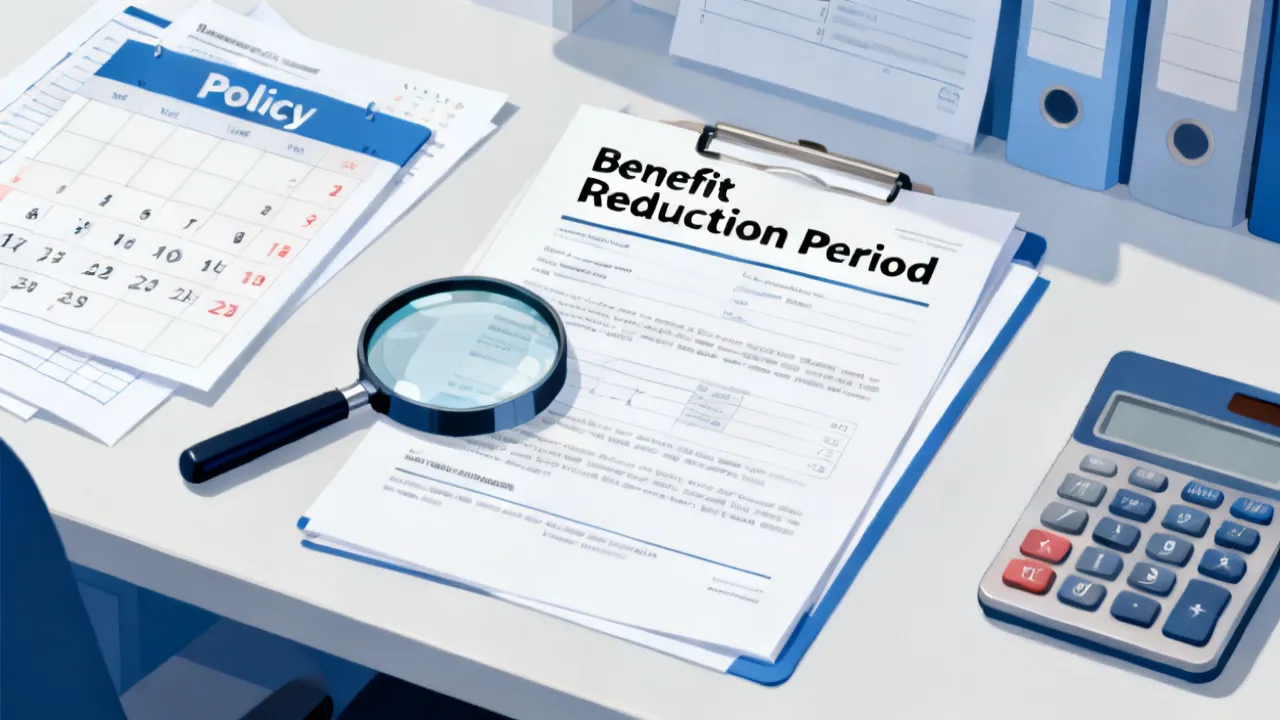
감액 기간 refers to a contractually defined period during which an insurer pays less than the full amount of a stated benefit, even though the policy is active and the insured event appears to fall within the coverage description. In English, it is commonly described as a reduced benefit period, benefit reduction period, or limited-payment period.
The exact meaning is not universal. In some Korean insurance products, 감액 기간 may apply during the initial stage of a policy. In others, it may be connected to a particular diagnosis, procedure, rider, renewal, reinstatement, or change in the insured amount. The percentage paid and the duration are determined by the policy wording rather than by the general label alone.
This distinction is essential. A consumer who sees “coverage” in a product summary may reasonably assume that the entire insured amount is payable immediately. However, a detailed policy clause may state that a reduced amount applies during a specified period. The difference can be financially significant, especially for products covering cancer, serious diseases, surgery, long-term care, disability, or other benefits that pay a lump sum.
From an industry perspective, the most important rule is simple: do not determine the effect of 감액 기간 from advertising language, a sales conversation, or a brief product brochure alone. Review the insurance policy, benefit schedule, special conditions, and any amendment documents together. If the documents conflict or appear unclear, request a written explanation from the insurer and retain the response.
It is also important to distinguish between the existence of a coverage benefit and the timing of the full payment. A benefit may be listed in the policy from the first day, but the amount payable may vary depending on how long the contract has been in force. In practical terms, the question is not merely whether the event is covered. The question is also whether the event occurred during a period in which the contract limits the amount.
Why Insurance Policies Include a Reduction Period
Insurers design products by estimating expected claims, underwriting risk, and the timing of possible losses. A reduction period can be used as one of several risk-management mechanisms. It may help distinguish an unexpected future event from a condition that existed before the contract or was known shortly before application. It can also be used to structure premiums and benefits in products with broad eligibility or simplified underwriting.
This does not mean that every 감액 기간 is intended to address pre-existing illness. The commercial and legal purpose depends on the product. Some clauses are designed around a specific diagnosis; others apply to a particular benefit regardless of the cause. Some products use reduced payment conditions for selected conditions while paying the full amount for unrelated insured events.
In products with simplified or limited underwriting, the insurer may ask fewer health questions than it would ask under a fully underwritten policy. The insurer may compensate for the uncertainty created by that process through a waiting period, an exclusion, or a reduced benefit period. This does not determine whether a particular clause is valid or fairly applied, but it explains why such provisions are frequently found in certain product designs.
A reduction period may also allow an insurer to offer different levels of affordability. A product with a lower initial payment or a shorter underwriting process may not operate in exactly the same way as a product that requires extensive medical evidence before acceptance. Consumers should compare the entire structure rather than assuming that similar premiums or product names indicate identical protection.
A careful analysis therefore asks four questions:
- Which benefit is subject to the reduction?
- When does the period begin?
- When does the period end?
- What amount or percentage is payable if a claim occurs during the period?
These questions should be answered using the contract’s definitions and schedules. A general statement such as “reduced payment applies for the initial period” is not sufficient because “initial period” may be calculated from the policy date, the risk commencement date, the reinstatement date, or another event identified in the terms.
How the Period Is Usually Structured
A 감액 기간 clause commonly contains several components. The first is the trigger date. This may be the date on which insurance coverage begins, the date after a waiting condition is satisfied, or the date a rider becomes effective. The second is the duration, which may be stated in months or years. The third is the reduction rate, such as payment of a stated fraction of the normal benefit. The fourth is the scope, identifying which diagnosis, treatment, or claim category is affected.
For illustration, a policy might state that a particular diagnosis benefit is paid at a reduced amount during a specified period after the coverage commencement date. The same policy may provide that a different benefit is not reduced, or that accidental events are treated under another provision. This example demonstrates why the word 감액 기간 cannot be interpreted separately from the benefit table.
| Contract Element | What to Check | Why It Matters |
|---|---|---|
| Trigger date | Policy date, risk commencement date, reinstatement date, or rider activation date | Affects the calculation of the start of the period |
| Duration | Number of months or years and the method used to count them | Determines when full benefits may become payable |
| Reduction rate | Specific amount, percentage, or benefit formula | Shows the payment level during the restricted period |
| Covered event | Diagnosis, surgery, disability, treatment, or other insured event | Prevents the clause from being applied too broadly |
| Exceptions | Accidental causes, particular diseases, or separately listed benefits | May change the payment result |
| Payment basis | Whether the reduction applies to the stated amount, remaining amount, or a claim-specific limit | Determines the actual calculation |
Some policies express the reduction as a percentage, while others specify a fixed amount. For example, a benefit could be paid at 50 percent of the insured amount during the relevant period. Another policy might provide a fixed payment during the first stage and a different fixed payment afterward. The phrase “reduced benefit” alone does not reveal which formula applies.
Where a policy contains several related benefits, the scope of the reduction should be mapped carefully. A major-disease benefit, a small-disease benefit, a surgery benefit, and a hospitalization benefit may all respond to the same medical episode, but they may not share the same 감액 기간. One claim can therefore produce different payment results under different riders.
감액 기간 Versus Waiting Period
감액 기간 and a waiting period are related concepts, but they are not identical. During a waiting period, a particular benefit may not be payable at all. During a reduction period, the benefit may be payable, but only at the reduced level specified in the policy.
| Concept | General Meaning | Possible Claim Result |
|---|---|---|
| 감액 기간 | A defined period in which a covered benefit is reduced | A partial or otherwise limited payment may be made |
| Waiting period | A period during which a specified benefit has not yet become payable | No payment may be available for the relevant event during that period |
| Exclusion period | A period or condition in which a stated event is excluded from coverage | The claim may be outside the covered scope |
| Contestability or review provision | A contractual or legal framework concerning investigation and disclosure | The insurer may review application facts and policy conditions |
The same policy can contain more than one of these concepts. For example, a policy might impose a waiting period for one disease category and a 감액 기간 for another benefit. It may also include an exclusion for a condition that was expressly identified in the contract. Consumers should avoid treating all early-policy limitations as interchangeable.
The distinction matters when evaluating a claim decision. If the insurer says that a benefit is “not payable,” the policyholder should determine whether the reason is a waiting period, an exclusion, failure to meet the definition, lack of evidence, or a separate reduction clause. Each reason has a different contractual basis and may require a different response.
How to Read the Relevant Policy Language
Begin with the benefit schedule. This section often lists the name of the benefit, the insured amount, and any limitations. Next, locate the definitions section. Terms such as “diagnosis,” “cancer,” “major disease,” “surgery,” “accident,” or “coverage commencement date” may have specialized meanings that differ from everyday language.
After that, review the special provisions attached to the relevant rider. A rider may have a separate commencement date or its own payment rules. The principal policy and the rider should not be assumed to share identical conditions.
Finally, inspect later documents. A policy may have been changed through a conversion, reinstatement, increase in coverage, reduction in coverage, or addition of a rider. The original certificate may not describe the current contract completely. Keep the policy schedule, amendments, premium notices, and insurer correspondence together.
- Identify the exact benefit named in the claim or question.
- Find the benefit schedule and record the stated insured amount.
- Locate every clause containing 감액, reduced payment, initial period, waiting, or similar language.
- Confirm the relevant commencement date.
- Calculate the applicable period using the contract’s stated counting method.
- Check whether the claimed event falls within an exception or separate definition.
- Ask the insurer for a written calculation if the payment amount is uncertain.
When reading the policy, pay attention to words that define the relationship between multiple conditions. Expressions such as “during,” “after,” “before,” “from the date,” “in the event of,” “except where,” and “notwithstanding” can affect how the clause operates. A sentence may contain an exception that changes the result for accidents, specific diagnoses, or particular procedures.
It is useful to create a simple document map. Write down the policy number, the relevant rider, the insured amount, the effective date, the reduction period, the full-payment date, and any exceptions. This reduces the chance of applying a condition from one rider to another benefit.
How the Start Date Can Affect the Calculation
The start date is often more complicated than the date printed on a sales application. A policy may distinguish between the application date, approval date, first premium payment date, policy issue date, and risk commencement date. These dates can be different.
For a new contract, the terms may identify the date on which the insurer accepts the risk and coverage begins. For a reinstated contract, a new condition may apply from the reinstatement date. For an increased benefit, the additional amount may have a separate effective date from the original insured amount. A 감액 기간 can therefore apply only to the newly increased portion rather than to the entire benefit, depending on the wording.
Suppose a policyholder has an existing diagnosis benefit and later increases the insured amount. The original amount and the added amount may be governed by different commencement dates. If a claim occurs during the relevant period, the insurer may assess each portion separately. The outcome depends on the policy documents, not on the fact that both amounts appear under one product name.
Calendar calculations also deserve attention. A clause expressed in months may not operate in exactly the same way as one expressed in days. The policy may explain how a period ending on a non-existent calendar date is handled. If the event occurs near the boundary, obtain a written calculation rather than relying on an informal estimate.
The event date itself may also require analysis. For a diagnosis benefit, the relevant date might be the date a physician formally confirmed the diagnosis, rather than the date symptoms first appeared or the date a test was performed. For surgery, it may be the operation date. For disability, it may be the date the policy’s disability standard was met. The correct date depends on the benefit definition.
If more than one date could reasonably apply, list all of them and ask the insurer to identify which date the contract uses. A request such as “Please explain why the diagnosis date used for this calculation is different from the examination date” is more effective than a general statement that the payment appears too low.
Common Product Areas Where the Term Appears
The term 감액 기간 is particularly relevant in discussions of health and protection insurance. It may appear in products that provide lump-sum benefits for specified diagnoses, including some cancer or serious-disease policies. It can also appear in surgery benefits, care-related benefits, disability benefits, and riders connected with simplified underwriting.
However, the presence of the term in one product category does not establish a standard rule for all products in that category. Two products with similar marketing names may have different payment triggers, durations, reduction percentages, and exceptions. Product comparisons should therefore be based on the actual benefit clauses.
Industry professionals generally compare at least the following features:
- The definition of the insured event.
- The amount payable during and after the 감액 기간.
- The duration of any waiting or reduction condition.
- Whether accidental causes receive different treatment.
- Whether the clause applies to a base contract, rider, or both.
- How renewals, reinstatement, and benefit increases affect the period.
- Whether multiple claims are subject to separate limits.
- Whether the payment is a lump sum, reimbursement, daily amount, or scheduled amount.
- Whether the benefit is reduced once per policy or separately for each claim.
In medical insurance, a single diagnosis can lead to several types of expenses. A lump-sum diagnosis benefit may be reduced during the early period, while a treatment reimbursement benefit may have a different rule. Consumers should not infer the payment result for all benefits from the treatment of one benefit.
Why Marketing Summaries Can Be Misleading Without Context
Marketing materials often emphasize the nominal insured amount because it is easy to understand. The practical payment outcome, however, may depend on conditions printed in smaller text or explained in the product description. This is not necessarily evidence of improper conduct; insurance benefits are contractual and must be described through detailed terms. Nevertheless, consumers should treat headline amounts as a starting point rather than a complete representation of the claim result.
Terms such as “first diagnosis,” “major disease,” “specified cancer,” or “full benefit” may have precise definitions. A medically serious condition may not meet the policy’s contractual definition. Conversely, an event that meets the definition may still be affected by a 감액 기간. Medical terminology, claim documentation, and policy wording must be considered together.
Before purchasing or changing a policy, ask the representative to identify the exact page and clause governing the initial payment. Request examples showing the amount payable at different points in time. Written examples do not replace the contract, but they can reveal whether the parties understand the same condition.
Consumers should also ask whether the headline amount applies to the entire policy or only to one benefit. A product may advertise a large total figure that combines several separate riders. If each rider has different definitions and reduction conditions, the total figure does not represent one guaranteed payment for every covered medical event.
Comparison of Key Contract Conditions
| Condition to Compare | Question for the Consumer | Document to Review |
|---|---|---|
| Reduced payment | Is the benefit reduced during a stated period? | Benefit schedule and special conditions |
| Waiting period | Is the benefit unavailable before a particular date? | Coverage commencement and waiting provisions |
| Exclusions | Are particular causes, diagnoses, or treatments excluded? | Exclusion and limitation clauses |
| Definitions | Does the medical or legal term have a special contract meaning? | Definitions section and rider wording |
| Changes to coverage | Does a new period apply to an increased or reinstated benefit? | Amendment certificate and change confirmation |
| Claim evidence | What records establish the insured event and its date? | Claim form, medical records, and insurer instructions |
A meaningful product comparison should use the same hypothetical facts for every product. For example, compare the payment available if a covered diagnosis occurs three months after commencement, one year after commencement, and after the stated reduction period ends. Then compare the documents required to prove the event. This method reveals the practical difference between products more clearly than comparing premiums alone.
Conditions and Requirements for a Sound Assessment
A reliable assessment of 감액 기간 requires more than knowing the policy’s purchase date. At minimum, the following information should be available:
- The complete current policy or insurance certificate.
- The benefit schedule for the relevant coverage.
- All riders and special provisions.
- Documents showing later changes, reinstatement, or benefit increases.
- The date on which the insured event was diagnosed, treated, or otherwise established.
- Medical documents that correspond to the policy’s definition.
- The insurer’s written explanation of the applicable payment calculation.
For a diagnosis benefit, the date of diagnosis may be important, but the policy may define diagnosis through a physician’s confirmation, pathology report, imaging result, or another specified record. For a surgery benefit, the date of the operation and the nature of the procedure may matter. For disability or care benefits, the relevant date may be tied to an assessment period or certification requirement.
The person reviewing the claim should separate facts from assumptions. “The disease was found during the first year” is a factual statement. “The insurer must pay the full amount because the policy was active” is a conclusion that requires contract analysis. Maintaining this distinction can make communications more precise and reduce avoidable disputes.
Document quality is also important. A hospital record may use a clinical code that differs from the policy’s wording. A medical certificate may state a diagnosis but not provide the information required by the benefit definition. Before submitting a claim, check whether the insurer requires a specific certificate, pathology report, operative record, or other supporting document.
Claims During the 감액 기간
If an insured event occurs during the reduction period, the policyholder should generally submit the claim according to the insurer’s process rather than assuming that no payment is possible. The insurer will examine the event, the relevant definition, the commencement date, and the benefit condition. If the contract provides for a reduced amount, the claim may still be payable at that level.
Prepare documents carefully. The insurer may request a claim form, identification, policy information, medical certificates, pathology or examination reports, treatment records, operative notes, or receipts, depending on the benefit. The requested documents should be limited to what is relevant under applicable procedures, and sensitive health information should be handled securely.
When the insurer communicates its decision, examine the explanation rather than focusing only on the amount. The decision should identify the benefit considered, the contractual clause applied, the period calculation, and any reason for exclusion or adjustment. If the explanation is incomplete, ask targeted questions in writing.
Useful questions include:
- Which exact clause establishes the 감액 기간?
- What date did the insurer use as the commencement date?
- How did the insurer calculate the end date?
- What reduction rate or fixed amount was applied?
- Was the benefit affected by a rider, reinstatement, or later increase?
- Which policy definition was used to evaluate the diagnosis or treatment?
- What documents would change or clarify the assessment?
If the insurer pays a reduced amount but does not clearly state whether the payment is final, ask whether the decision concerns the entire claim or only one benefit. A medical event may produce separate claims under multiple riders. One reduced payment does not necessarily resolve every potential benefit under the policy.
What to Do if the Payment Seems Incorrect
A disputed payment should be approached methodically. First, request the insurer’s written claim decision and calculation. Second, compare the decision with the current policy and amendments. Third, identify the specific point of disagreement: the trigger date, the duration, the benefit definition, the reduction rate, or the evidence.
Do not rely solely on verbal statements. A telephone discussion may be useful for clarification, but written communication creates a clearer record. Keep copies of submitted documents and note the date, department, and subject of each communication.
If the issue remains unresolved, consumers in Korea may consider the insurer’s internal complaint or review process and seek information from relevant public or consumer-protection institutions. The Financial Supervisory Service provides consumer information and complaint-related guidance within its statutory role, while the Korea Consumer Agency offers consumer guidance in applicable areas. The Korea Life Insurance Association and the General Insurance Association of Korea also publish industry and consumer information. These organizations do not replace individualized legal advice, and their role should be confirmed for the specific dispute.
For a significant claim, a licensed professional or qualified legal adviser may be appropriate. Any external review should be based on the complete policy file, not a product advertisement or a single page.
When challenging a decision, organize the issue chronologically. State when the policy began, when the rider became effective, when the event occurred, what documents were submitted, what amount was expected, what amount was paid, and which clause the insurer cited. A chronological account makes it easier to identify whether the disagreement concerns facts, interpretation, or calculation.
Renewal, Reinstatement, and Coverage Changes
Policy changes can create confusion because the original contract and the modified portion may not share the same timeline. A renewal may involve a new term and revised conditions, depending on the product structure. Reinstatement after a lapse may be subject to new underwriting or specific provisions. A rider added later may have its own commencement date and reduction period.
When a policyholder reduces coverage, the change may affect the insured amount but does not necessarily erase a period that has already applied. When coverage is increased, the additional amount may be treated separately. The policyholder should request a current benefit schedule after every material change.
Premium payment status is also relevant. A missed premium can lead to a lapse or other contractual consequence. If the policy is restored, the restoration date and conditions may affect the calculation. Consumers should not assume that the original purchase date continues to control every later event.
Conversions can be particularly complicated. A policyholder may convert one form of coverage into another, or move from one product structure to a new structure offered by the same insurer. The new document may preserve some rights while changing others. A reduction period may be carried forward, restarted, or applied only to an added portion, depending on the contract and the change agreement.
Before approving a change, ask for a side-by-side explanation of the old and new coverage. The comparison should show the effective date, insured amount, premium, definitions, exclusions, waiting conditions, reduction conditions, and termination consequences.
Financial Planning Implications
The existence of a 감액 기간 affects how a household evaluates its protection needs. A person who has recently purchased a policy may not have access to the full nominal benefit for a particular event. This does not automatically make the product unsuitable, but it means that the household should consider other available resources during the early contract stage.
A sound review includes emergency savings, employer-provided benefits, public programs, existing insurance, debt obligations, and expected medical or care costs. The purpose is not to predict a claim but to understand the financial consequences if a reduced payment applies.
Consumers should also distinguish between a policy’s insured amount and its expected household need. A higher nominal amount may come with higher premiums, additional conditions, or different definitions. Conversely, a lower premium does not necessarily indicate better value. The relevant comparison is the relationship among coverage, exclusions, payment conditions, premiums, and the consumer’s objectives.
Insurance decisions should be based on affordability over the expected policy duration. Replacing an existing policy solely to obtain a new feature can restart certain waiting or reduction conditions and may also cause the loss of valuable existing terms. Before cancellation, compare the old and new contracts in writing and confirm the consequences of replacement.
Households should avoid treating a reduced benefit as if it were immediately available for debt repayment or long-term financial planning. If a benefit is needed to protect a mortgage, education fund, or family income, the early-policy limitation should be included in the household’s contingency plan. This is especially important when the policy is the main source of protection.
Consumer Checklist Before Purchase
- Ask whether any benefit has a 감액 기간.
- Record the exact duration and the date from which it is measured.
- Confirm the amount payable during the period.
- Check whether the clause applies to every benefit or only selected riders.
- Ask how accidental events are treated.
- Review waiting periods and exclusions separately.
- Confirm the definitions of major medical terms.
- Ask whether increases, renewals, or reinstatement create a new period.
- Request the latest policy wording and benefit schedule.
- Keep a written record of explanations provided before signing.
- Confirm whether the quoted insured amount is a total of several separate benefits.
- Compare the policy with existing coverage before replacing or cancelling anything.
- Ask what evidence will be needed for a claim.
- Check whether the premium remains affordable throughout the intended policy period.
Consumer Checklist Before Filing a Claim
- Locate the current policy and all amendments.
- Identify the exact insured event and relevant benefit.
- Record the date of diagnosis, treatment, surgery, accident, or certification.
- Check whether the event occurred during the 감액 기간.
- Gather documents that establish the event under the policy definition.
- Submit the claim through the insurer’s designated channel.
- Request a written explanation of any reduced payment.
- Compare the calculation with the contract wording.
- Ask for clarification of any missing or inconsistent information.
- Use an appropriate complaint or review channel if necessary.
- Keep evidence of submission and copies of every document.
- Check whether other riders may provide separate benefits for the same event.
Industry Perspective: How to Compare Policies Responsibly
An industry expert would not compare products by looking only at premium or headline coverage. The central task is to map the policy’s promise to the conditions that activate payment. 감액 기간 is one part of that map, alongside definitions, exclusions, evidence requirements, benefit limits, and renewal terms.
A useful comparison uses identical hypothetical facts. For example, compare the amount payable for the same diagnosis on two different dates: shortly after commencement and after the reduction period ends. Then compare whether the diagnosis qualifies under each policy’s definition. This method exposes differences that a simple premium comparison can conceal.
Experts also distinguish between contract certainty and sales interpretation. A representative may explain a product accurately in general terms, but the written contract controls the legal relationship. Consumers should therefore ask for the clause reference behind each important statement.
Another professional practice is to avoid unnecessary policy replacement. A new contract may offer a different benefit structure, but it can also introduce new underwriting, new commencement dates, new exclusions, or changed definitions. Existing health information and the consumer’s current circumstances may affect acceptance and pricing. A replacement decision should be documented and reviewed carefully.
Product comparison should also consider claims administration. Two policies may promise similar amounts but require different evidence, use different diagnosis standards, or define the claim date differently. A consumer who wants predictable protection should examine not only what is covered but also how a claim will be established and calculated.
Source and Verification Framework
Because 감액 기간 is a contract-specific subject, the primary source is always the current insurance policy and its attached conditions. General consumer explanations are useful for orientation but cannot determine the result of an individual claim.
For Korean consumers, appropriate reference points may include:
- The Financial Supervisory Service, particularly its insurance consumer guidance and complaint information.
- The Korea Consumer Agency, for applicable consumer-protection resources.
- The Korea Life Insurance Association, for life-insurance-related consumer and product information.
- The General Insurance Association of Korea, for non-life-insurance-related consumer and product information.
- The insurer’s official policy wording, benefit schedule, claims guide, and written decision.
Readers should verify the current name, jurisdiction, procedure, and scope of each institution before relying on its guidance. Regulations, product forms, and administrative procedures may change. Where the value or importance of a claim is substantial, professional advice based on the complete file may be warranted.
Online explanations, comparison websites, and community posts can help a consumer recognize terminology, but they should not be treated as a substitute for the policy. A post describing one insurer’s product may not apply to another insurer’s product, an older policy form, or a rider issued under different terms.
Practical Example of a Contract Review
Consider a hypothetical policy with a diagnosis benefit, a stated insured amount, and an initial 감액 기간. A claim occurs several months after the risk commencement date. The correct analysis would not begin with the nominal insured amount. It would proceed as follows:
- Confirm that the policy was active on the event date.
- Confirm the date on which the relevant benefit became effective.
- Read the clause describing the reduction period.
- Calculate whether the event date falls inside or outside that period.
- Verify whether the diagnosis meets the policy’s contractual definition.
- Check for exceptions, such as separate treatment for accidental causes.
- Apply the stated payment formula.
- Compare the result with the insurer’s written calculation.
If the claim occurs after the reduction period but the insurer still applies a reduced amount, the policyholder should ask why. Possible explanations could include a different commencement date for a rider, a later increase in coverage, a separate condition for the claimed benefit, or a disagreement about the date of the insured event. None of these possibilities should be assumed without documentary support.
For example, assume that the original benefit became effective on January 1, while an additional rider became effective on July 1. If the policy uses different periods for each benefit, a claim in September may be outside the reduction period for the original benefit but inside the period for the rider. The insurer may therefore calculate two separate amounts. This result may appear inconsistent until the effective dates are reviewed.
A second example involves a policy that pays a reduced percentage for an illness-related diagnosis during the initial period but pays the full amount for a qualifying accidental injury. If the event involves both an accident and a medical diagnosis, the cause and the policy definition must be examined carefully. The label used in a hospital record may not by itself determine which clause applies.
Common Mistakes to Avoid
Relying on the Product Name
A product name may suggest broad protection but does not define every payment condition. Read the benefit table and special provisions.
Confusing an Active Policy with Full Immediate Benefits
A policy can be active while a particular benefit remains subject to a waiting or reduction condition. These are separate questions.
Using the Application Date Without Confirmation
The application date may not be the risk commencement date. Confirm the date specified in the contract.
Ignoring Later Changes
Riders, benefit increases, reinstatement, and renewals can affect the relevant period. Always use the current policy file.
Assuming Medical Language Is Identical to Contract Language
A clinical diagnosis and a policy definition may not correspond automatically. Review the definitions and required evidence.
Accepting an Unexplained Payment
If a payment is lower than expected, request the clause reference and calculation. A clear explanation is more useful than an informal assurance.
Assuming Every Rider Follows the Base Policy
Riders often have separate definitions, commencement dates, and claim conditions. Review each rider independently.
Waiting Too Long to Organize Records
Medical and policy documents can be difficult to collect later. Keep copies of important records and note the dates of insurer communications as soon as a claim issue arises.
FAQs About 감액 기간
What is 감액 기간 in simple terms?
It is a contractual period during which a specified insurance benefit may be paid at a reduced amount. The exact duration, percentage, and covered events depend on the policy.
Does 감액 기간 mean that the policy is inactive?
Not necessarily. The policy may be active while one benefit is subject to a reduced-payment condition. Other benefits may operate under different terms.
Is 감액 기간 the same as a waiting period?
No. A waiting period may prevent payment for a specified event before the period ends, while 감액 기간 generally indicates that a limited payment may be available. The wording of the contract controls.
When does the period begin?
It may begin on the risk commencement date, rider activation date, reinstatement date, or another date stated in the policy. Do not assume that the application date is controlling.
What happens if a claim occurs during the period?
The insurer reviews the event under the relevant clause. If the event qualifies, the policy may provide a reduced payment, subject to definitions, exclusions, evidence requirements, and any other applicable condition.
Can the reduction apply to only part of the insured amount?
Yes, depending on the policy. An original benefit and a later increase may have separate commencement dates or conditions. The benefit schedule and amendment documents should be compared.
Do accidental events receive different treatment?
Some policies distinguish between accidental and illness-related events, while others do not. This must be confirmed in the specific contract.
Can a policyholder calculate the end date independently?
A preliminary calculation is possible if the trigger date and duration are clear. However, boundary dates, reinstatement, riders, and policy amendments can complicate the result. Request written confirmation for an important claim.
Does renewal restart the 감액 기간?
That depends on whether the product is renewed under the same contractual structure or issued as a new or modified coverage arrangement. Review the renewal notice and policy terms.
What if the policy was reinstated after missed premiums?
Reinstatement may involve specific conditions or a new effective date. The policyholder should obtain the reinstatement confirmation and determine how it affects the relevant benefit.
Where can a Korean consumer seek further guidance?
The insurer should be the first source for a product-specific calculation. If a dispute continues, the consumer may review guidance from the Financial Supervisory Service, the Korea Consumer Agency, or the relevant insurance association, while confirming each institution’s current role and procedure.
Should a consumer cancel an existing policy because another product has a shorter reduction period?
Not without a full comparison. Cancellation and replacement may introduce new underwriting, new commencement dates, new exclusions, and new reduction or waiting conditions. Compare both contracts and the long-term financial effect before acting.
Does the reduction period apply to every claim?
Not always. Some clauses apply to a particular benefit, diagnosis, or insured event. Other clauses may apply once to a category of benefit or to a specific portion of the insured amount. The policy wording must be examined to determine the scope.
Can the insurer reduce a payment simply because the policy is new?
The insurer must rely on an applicable contractual provision and assess the claim under the policy terms. The fact that a policy is new is not, by itself, a complete explanation. Ask for the exact clause, dates, and calculation.
What if the policy documents use different terms?
Different documents may use shortened descriptions or updated wording. Compare the current policy, amendments, benefit schedule, and special conditions. If an inconsistency remains, request a written interpretation from the insurer and consider professional advice for a substantial dispute.
Final Takeaways
감액 기간 is a small phrase with potentially important financial consequences. It describes a limitation on the amount payable for a specified benefit during a defined contractual period. The most reliable way to understand it is to identify the relevant benefit, confirm the correct commencement date, calculate the period, examine the payment formula, and check all definitions and exceptions.
Consumers should also keep 감액 기간 separate from waiting periods, exclusions, and policy-status issues. A policy can be active without providing the full nominal amount for every event from the first day. Conversely, a reduced-payment clause may apply only to one benefit while other coverage remains governed by different terms.
The practical standard is careful documentation. Keep the current policy, amendments, benefit schedules, claim records, and written communications in one file. When the language is unclear, ask precise questions and request a written answer. This approach supports more informed insurance decisions and provides a stronger basis for reviewing a claim.
Ultimately, the phrase should be treated as a starting point for contract review, not as a complete answer. The actual result depends on the benefit involved, the timing of the event, the policy’s definitions, the history of any changes, and the evidence submitted. A careful reading before purchase and a documented review during the claims process can prevent many misunderstandings about what the insurance will pay and when it will pay the full stated amount.