Understanding the 감액 기간 in Insurance Policies
This guide explains 감액 기간, or a reduced-benefit period, and shows how it can affect insurance claims, policy interpretation, and financial planning. The term generally refers to a stated period during which an insurer pays only part of the otherwise applicable benefit, although its meaning varies by product and contract. Readers will learn how to identify the start and end dates, distinguish 감액 기간 from waiting and exclusion periods, review policy wording, assess claim implications, and document questions before making a coverage decision.
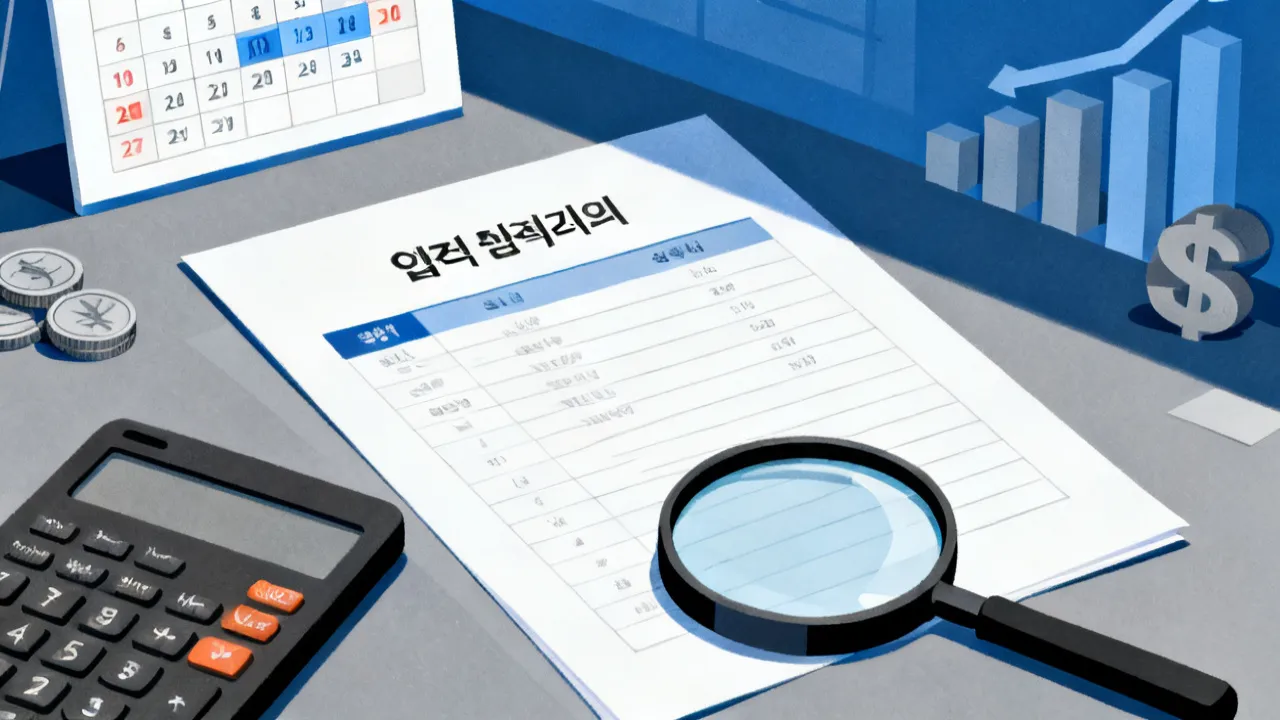
What 감액 기간 Means
감액 기간 is a Korean insurance and financial term commonly translated as “reduced-benefit period” or “benefit reduction period.” It describes a defined period during which an insurer may pay less than the full contractual benefit for a covered event. The exact effect depends on the policy, the insured event, the cause of the claim, and the wording of the insurance contract.
In practical terms, a policy may provide a stated amount after the 감액 기간 ends, while paying only a percentage or fixed reduced amount when the same type of claim occurs during the specified period. For example, a policy might state that a covered diagnosis receives a reduced payment during the first part of the contract and the full amount afterward. That example is illustrative only. Actual conditions, percentages, durations, and covered events must be confirmed in the relevant policy documents.
The most important point is that 감액 기간 is not a universal rule. It is a contract feature. Some policies apply it to selected benefits, while others do not use one at all. Certain products may apply different periods to different riders or claims. The title of a policy alone is therefore insufficient for determining whether a reduction applies.
Why the Term Requires Careful Interpretation
Consumers often encounter 감액 기간 in product brochures, insurance summaries, comparison materials, or explanatory conversations with agents. The phrase may appear simple, yet several details determine its real financial effect:
- Which benefit is subject to reduction?
- When does the period begin?
- When does it end?
- Is the payment reduced by a percentage or replaced by a fixed amount?
- Does the condition apply to every claim or only to specified diagnoses, procedures, or causes?
- Are renewals, reinstatement, policy changes, or additional riders treated differently?
- Are there separate exclusions or waiting periods that operate at the same time?
An industry specialist would normally advise readers to examine the benefit schedule and contract wording before relying on a verbal explanation. A product advertisement may summarize the principal benefit, but the policy conditions generally define the operative terms. If the summary and the contract appear inconsistent, the policyholder should ask the insurer for a written explanation and retain the response.
It is also important to distinguish the amount of coverage from the availability of coverage. A policy may advertise a benefit of a certain amount, but the amount may be subject to a reduced-benefit period, a deductible, a sub-limit, or a claim-specific condition. Conversely, a reduction provision does not necessarily mean that every related event will receive a reduced payment. The scope of the clause must be identified precisely.
How a 감액 기간 Operates
A reduced-benefit period generally involves four elements: the covered benefit, the commencement date, the reduction formula, and the completion date. These elements should be read together rather than separately.
- Covered benefit: Identify the diagnosis, treatment, disability, hospitalization, death benefit, or other event to which the condition applies.
- Commencement date: Determine whether the period begins on the application date, policy issue date, effective date, first premium payment date, or another contractually defined date.
- Reduction formula: Check whether the insurer pays a percentage of the stated benefit, a fixed monetary amount, or a separately defined early-period benefit.
- Completion date: Confirm the date on which the reduced-benefit condition ends and full contractual coverage becomes available, subject to other terms.
Suppose a benefit is listed as 10 million Korean won and the contract applies a 50 percent reduction during a specified initial period. A valid claim during that period might result in 5 million Korean won, assuming all other requirements are satisfied. After the period ends, the stated benefit may become payable. This is a simplified illustration, not a prediction of any particular insurer’s settlement.
The calculation can be more complicated where the policy includes multiple riders, deductibles, sub-limits, coinsurance provisions, or claim-specific rules. A reduction may apply before or after another contractual adjustment. The order of calculation should be confirmed in the policy conditions or through a written claim assessment.
Some contracts may state the reduced amount directly instead of describing it as a percentage. For example, the policy could list one amount for an initial period and another amount afterward. In such a case, the policyholder should not independently calculate the benefit unless the contract clearly authorizes that method. The benefit schedule may contain the controlling figures.
감액 기간 Compared with Similar Terms
One of the most common sources of confusion is the assumption that 감액 기간 means the same thing as a waiting period or exclusion period. These concepts can produce different outcomes.
| Term | General meaning | Possible claim result | Key question |
|---|---|---|---|
| 감액 기간 | A stated period during which an otherwise applicable benefit is reduced. | Part of the benefit may be payable if the claim satisfies the contract. | How is the benefit reduced, and when does the reduction end? |
| Waiting period | A period after coverage begins during which a particular benefit may not yet apply. | The claim may be deferred or unavailable under the relevant provision. | When does coverage for this event become effective? |
| Exclusion period | A period or condition under which a specified risk is excluded from coverage. | The insurer may have no liability for the excluded event. | Is the event expressly excluded, and under what circumstances? |
| Coverage exclusion | A permanent or policy-specific limitation on an event, condition, activity, or cause. | The relevant benefit may not be payable unless an exception applies. | Does the contract remove this risk from coverage altogether? |
| Deductible | An amount the policyholder must bear before insurance payment begins. | The payable amount is reduced by the deductible, subject to the contract. | Is the deductible applied per claim, per year, or in another manner? |
| Sub-limit | A lower maximum amount for a particular service or type of loss. | The payment cannot exceed the stated sub-limit. | Is there a separate cap beneath the overall policy limit? |
The distinction matters because a policyholder may take different action in each situation. During a 감액 기간, the central issue is usually the amount payable. During a waiting period or exclusion period, the central issue may be whether any benefit is payable at all. These rules can also coexist, so one provision does not automatically replace another.
For example, a policy could contain a waiting period for a particular illness and then apply a reduced-benefit rule for a separate initial period after coverage becomes available. In that situation, an event during the first period might not be payable because the waiting period has not ended. An event after the waiting period but before the 감액 기간 ends might be covered at a reduced amount. The contract must be read to determine whether such an arrangement exists.
Where 감액 기간 Commonly Appears
The term may be encountered in several types of insurance and financial products. Its use varies by market practice and product design, so the following categories should be understood as examples rather than universal classifications.
Health and Medical Insurance
Some health-related products may include reduced benefits for selected diagnoses, procedures, or conditions during an initial period. The reduction may be designed around underwriting, product structure, or the insurer’s treatment of early claims. The contract may also contain separate provisions for pre-existing conditions, medical disclosure, diagnostic criteria, and proof of treatment.
When reviewing a health policy, examine the definitions of diagnosis and treatment. A claim may depend on the recognized diagnostic method, the qualifications of the diagnosing physician, the date of diagnosis, or the medical records submitted. The date on which symptoms first appeared may not be treated the same as the date on which a covered diagnosis was formally confirmed.
Critical Illness and Diagnosis Benefits
Critical illness products often distinguish between an initial diagnosis benefit, a recurrence benefit, and benefits for related conditions. A 감액 기간 may apply to one benefit but not another. The policy may also require a survival period, a specified severity level, or a qualifying medical test.
Readers should avoid assuming that a reduced payment applies to all illnesses listed in the brochure. The detailed schedule may identify specific conditions, stages, or diagnostic standards. An expert review should compare the benefit name in the marketing material with the exact benefit definition in the contract.
Accident and Disability Coverage
Accident insurance may use different rules depending on whether a claim involves injury, disability, surgery, hospitalization, or death. A reduction could be tied to a particular benefit rather than to the entire policy. The cause of the event may also affect eligibility, especially where the contract distinguishes accidental events from illness-related conditions.
In disability claims, the definition of disability is especially important. A contract may refer to loss of ability to perform an occupation, a specified percentage of impairment, or the inability to perform activities of daily living. A reduced-benefit period does not remove the need to satisfy the underlying definition.
Life Insurance and Related Products
Some life insurance products may contain initial-period provisions or different payment structures for selected causes of death. The contract may address suicide exclusions, misrepresentation, policy reinstatement, and contestability separately. These issues should not be conflated with 감액 기간.
Because death benefits can be financially significant, beneficiaries should obtain the policy schedule, general conditions, special conditions, and any endorsements. The insurer may request official records, medical documents, or other evidence before determining whether a reduction applies.
Long-Term Care and Home-Care Benefits
Long-term care insurance may include benefits triggered by an assessment of functional limitations, cognitive impairment, or an officially recognized care grade. A reduction period may apply to an initial benefit, a daily care payment, or a lump-sum benefit. The policy may also require that the condition continue for a minimum number of days or be confirmed by a specified institution.
In this type of product, the date of first certification may not be the only relevant date. The insurer may distinguish between the date symptoms began, the date an assessment was completed, and the date the insured person first required care. Families should keep copies of assessment records and notices showing when the qualifying status was established.
How to Identify the Start Date
Determining the start date is often more difficult than locating the phrase itself. A policy may contain several relevant dates:
- Application date
- Underwriting approval date
- Policy issue date
- Policy effective date
- First premium payment date
- Date of delivery or acknowledgment
- Date of reinstatement after a lapse
- Date of rider addition or benefit increase
The contract should specify which date controls. In some cases, the basic policy and an added rider may have different effective dates. A later increase in coverage may also have a new reduction period for the increased portion, even where the original amount has completed its applicable period.
Policyholders should record the effective date in a personal insurance file and compare it with the dates shown on premium notices, policy certificates, and electronic account records. If a discrepancy appears, the policyholder should request clarification promptly rather than waiting until a claim arises.
Premium payment is another practical issue. A policy may be approved on one date but become effective only after the first premium is received or another condition is satisfied. In other circumstances, temporary coverage may exist under separate rules. Because these arrangements differ, consumers should not infer the start date from the date on which an application was submitted.
How to Identify the End Date
The end of a 감액 기간 may be expressed in months, years, anniversaries, or a specific calendar date. These formulations are not always interchangeable. A period described as “two years from the effective date” may need to be interpreted using the contract’s method for calculating anniversaries, while a date stated directly in the policy may be easier to verify.
Questions to ask include:
- Does the period end at the beginning or end of the anniversary date?
- Does the relevant event need to occur after the end date, or must the claim also be submitted afterward?
- If symptoms begin during the period but diagnosis occurs later, which date governs?
- If a hospital admission crosses the end date, is the benefit calculated by admission date, treatment date, or day of service?
- Does a policy lapse interrupt or restart the period?
- Does reinstatement create a new period for some benefits?
There is no universal answer to these questions. The applicable rule depends on the wording, applicable regulation, and facts of the claim. A clear written inquiry to the insurer can reduce uncertainty.
Crossing the end date during a course of treatment can create especially difficult questions. A procedure may be scheduled before the period ends but performed afterward. A diagnosis may be suspected during the period but confirmed later. A hospitalization may start before the reduction ends and continue afterward. The policy may use the date of diagnosis, the date of the insured event, the date of admission, or another measure. A policyholder should preserve the complete timeline rather than focusing only on the date a claim form was submitted.
Reading the Policy in the Right Order
An efficient review begins with the benefit schedule, then moves to definitions, conditions, exclusions, and claim procedures. Reading isolated sentences can produce an incomplete interpretation.
- Start with the policy schedule. Note the insured person, policyholder, beneficiary, effective date, benefit amount, riders, and premium.
- Locate the benefit provision. Identify the exact event that triggers payment.
- Search for reduction language. Look for terms such as reduced payment, initial period, partial benefit, percentage payment, or special amount.
- Read the definitions. Confirm how the contract defines diagnosis, accident, disability, hospitalization, recurrence, or other key terms.
- Review exclusions and limitations. A reduced benefit may still be unavailable if an exclusion applies.
- Check claim evidence requirements. The contract may identify medical records, certificates, receipts, or official documents.
- Review amendment and reinstatement clauses. These may affect the timing of coverage and the calculation of the 감액 기간.
This order follows an inverted-pyramid approach: first establish whether the benefit exists, then determine how much may be payable, and finally verify the procedural requirements. It prevents a reader from focusing on the reduction percentage before confirming that the claim meets the basic coverage definition.
Digital policy portals can make this review easier, but electronic summaries should be treated carefully. A mobile application may show the current benefit amount without displaying every limitation. Consumers should download the full policy conditions, endorsement documents, and notices relating to changes. If multiple versions exist, the version in force on the date of the relevant event is usually the one that requires attention, subject to applicable law and contract terms.
Illustrative Calculation
Consider a hypothetical policy with the following terms:
- Specified benefit: 20 million Korean won
- Reduced-benefit period: a defined initial period
- Payment during that period: 40 percent of the specified benefit
- Payment after that period: the stated benefit, subject to the contract
If a qualifying claim occurs during the applicable period, the illustrative payment would be 8 million Korean won before considering other contractual adjustments. If the same qualifying event occurs after the period ends, the stated amount may become payable. However, the calculation could change if the policy includes a sub-limit, deductible, waiting period, exclusion, or separate rider condition.
The example demonstrates why a headline benefit amount does not necessarily represent the amount payable for every event at every time. A responsible comparison should display the benefit amount alongside the period, reduction formula, exclusions, and evidence requirements.
A second hypothetical example illustrates a fixed-amount structure. Assume a policy lists a benefit of 15 million won but provides 3 million won during a specified initial period. If a qualifying claim occurs during that period, the contract may pay 3 million won rather than a percentage of 15 million won. If the policy later provides 15 million won, the difference between the two amounts is substantial. The consumer should identify whether the policy uses a percentage, a fixed amount, or separate benefit tables.
Calculations should also distinguish between one-time and repeated benefits. A reduced initial diagnosis payment may affect the remaining amount available for recurrence or related-condition benefits. A policy may have a lifetime maximum, an annual limit, or a rule that prevents duplicate payments for the same event. These provisions should be reviewed before assuming that multiple benefits can be added together.
How the Period Can Affect Financial Planning
A policyholder should not treat the full stated benefit as immediately available unless the contract confirms that position. During a 감액 기간, the practical level of protection may be lower than the headline amount. This can influence emergency savings, debt planning, dependent support, and decisions about overlapping policies.
Financial planning should therefore use several scenarios:
- Early-period scenario: the event occurs while the reduction applies.
- Post-period scenario: the event occurs after the reduction ends.
- Exclusion scenario: the event falls within a stated exclusion.
- Multiple-policy scenario: more than one policy may respond, but each contract is assessed independently.
- Policy-change scenario: a rider, coverage increase, lapse, or reinstatement may alter the timing.
An industry expert would normally recommend documenting the lower early-period benefit in a household risk plan. The purpose is not to predict a claim, but to avoid making commitments based on an amount that may not be available under all circumstances.
For example, a household may believe that an insurance benefit will fully repay a loan or support living expenses after a serious diagnosis. If only a reduced amount is payable during the initial period, the family may face a shortfall. Emergency savings, employer benefits, government programs, and other insurance should be considered separately. This does not mean every consumer needs additional insurance; it means the actual early-period protection should be understood before financial assumptions are made.
감액 기간 and Policy Comparisons
Comparing policies solely by premium or advertised benefit can be misleading. Two products may display similar coverage amounts but differ in their reduction periods, definitions, exclusions, and claim evidence requirements.
A meaningful comparison should examine:
| Comparison category | What to review | Why it matters |
|---|---|---|
| Duration | The length and calculation method of the 감액 기간. | A longer period may mean a lower level of early protection. |
| Reduction amount | The percentage or fixed payment available during the period. | The financial difference may be substantial for major claims. |
| Scope | The exact benefits and events subject to the rule. | A reduction may apply to one rider rather than the whole policy. |
| Start date | The contractually recognized effective date. | Different dates may apply to the basic policy and later additions. |
| End-date rule | Whether the event, diagnosis, or claim date controls. | Timing can affect the payment assessment. |
| Other limits | Waiting periods, exclusions, deductibles, and sub-limits. | These provisions may reduce or eliminate payment independently. |
| Evidence | Required medical, financial, or official documentation. | Incomplete evidence can delay assessment or require clarification. |
The best policy is not automatically the one with the shortest 감액 기간. A policyholder should consider the nature of the risk, affordability over time, definitions, exclusions, insurer service procedures, and the reliability of the information supplied before purchase.
It can be helpful to prepare a comparison worksheet with separate columns for the early-period amount and the later full amount. A single column labeled “coverage” may conceal important differences. The worksheet can also include the premium at purchase, the expected premium structure, renewal conditions, benefit duration, and circumstances under which the policy may terminate.
Questions to Ask an Insurer or Adviser
Before signing a policy, ask precise questions rather than requesting a general description. Written answers are particularly useful when the product includes several riders.
- Which exact benefits are subject to 감액 기간?
- What is the reduced payment during the period?
- What is the full payment after the period ends?
- What date starts the calculation?
- What date determines whether a claim falls inside or outside the period?
- Does the period apply separately to each rider?
- Does a coverage increase create a new reduction period?
- What happens after policy reinstatement?
- Are there separate waiting periods or exclusions?
- Which documents are needed for a claim?
- Where can the policyholder request a written claim assessment?
If the answer uses broad phrases such as “normally,” “usually,” or “in most cases,” ask the adviser to identify the specific clause. General explanations can be useful, but they should not replace the contractual text.
Another useful question concerns examples. Ask the adviser to explain what would happen if the event occurred one day before the end of the period and one day after it. This may reveal whether the controlling date is diagnosis, admission, treatment, or claim submission. The answer should be recorded and compared with the policy language.
Claim Preparation During or After the Period
When a claim arises, the policyholder should focus on accurate chronology and complete evidence. The presence of a 감액 기간 does not by itself determine the outcome.
- Confirm the policy status. Check that premiums were paid and that the policy was active on the relevant date.
- Identify the relevant benefit. A single incident may involve diagnosis, treatment, hospitalization, surgery, or disability provisions.
- Record key dates. Include the onset of symptoms, medical consultation, diagnosis, admission, procedure, discharge, and claim submission.
- Gather documents. Use the insurer’s stated list and obtain documents from the relevant medical or public authority.
- Request the calculation basis. If payment is reduced, ask which clause and formula were applied.
- Check for other applicable provisions. Review exclusions, sub-limits, deductibles, and multiple-claim rules.
- Retain correspondence. Keep application records, policy versions, emails, letters, and claim decisions.
It is generally better to submit accurate information promptly than to delay a claim while trying to interpret every clause independently. The policyholder may request clarification during the assessment process. If a dispute remains, the appropriate complaint or dispute-resolution channel depends on the jurisdiction and product type.
When submitting medical records, the policyholder should check that names, dates, diagnosis codes, and provider information are legible and consistent. If a record contains an apparent error, ask the medical institution whether it can issue a correction or explanatory document. Do not edit the original record personally. Accurate documentation is particularly important when the insurer must determine whether the event occurred inside or outside the reduction period.
Common Misunderstandings
Misunderstanding One: The Reduction Applies to the Whole Policy
In many product designs, a reduction applies only to a named benefit or rider. Other benefits may follow different rules. The policy schedule should be checked benefit by benefit.
Misunderstanding Two: The Reduction Means No Coverage
A reduced benefit and a complete exclusion are different. A claim during a 감액 기간 may still result in payment if all eligibility requirements are satisfied. The actual result depends on the contract.
Misunderstanding Three: The Application Date Always Controls
The application date may not be the effective date. Underwriting, approval, premium payment, and policy issuance can create different dates. The controlling date should be identified from the policy documents.
Misunderstanding Four: The End Date Is Obvious
Terms such as “two years” or “the initial period” may require attention to the policy’s date-calculation method. When the event, diagnosis, and claim dates differ, written clarification is appropriate.
Misunderstanding Five: A Policy Change Has No Timing Effect
Adding a rider, increasing the benefit, changing the insured person, or reinstating a lapsed policy may alter the applicable period. The endorsement or amendment should be reviewed separately.
Misunderstanding Six: A Brochure Is the Complete Contract
Marketing material can summarize a product but may not include every definition, exclusion, or procedural condition. The full policy wording and schedule are more reliable sources for detailed interpretation.
Misunderstanding Seven: The Date of Claim Submission Controls Everything
Submitting a claim after the reduction period ends does not necessarily transform an event that occurred during the period into a post-period event. The controlling date depends on the benefit and contract. Claim submission timing is important for procedure, but it may not determine the substantive benefit amount.
Misunderstanding Eight: Full Payment Is Automatic After the Period
Completion of the 감액 기간 generally removes one reduction condition, but it does not guarantee payment for every later event. The policyholder must still satisfy the definitions, exclusions, proof requirements, and other limits in the contract.
Regulatory and Documentary Perspective
Insurance contracts are governed by the applicable laws, supervisory framework, and regulatory guidance of the relevant jurisdiction. In South Korea, consumers may consult official materials from bodies such as the Financial Supervisory Service, the Financial Services Commission, and recognized consumer-protection channels for general information about insurance practices and dispute procedures. These sources can explain regulatory principles, but they do not replace the individual policy contract or a formal claim determination.
Reliable documentation is particularly important where a dispute concerns the commencement or completion of a 감액 기간. Useful records may include:
- The original policy schedule
- General and special policy conditions
- Rider certificates and amendments
- Premium payment records
- Medical records and official certificates
- Claim forms and submission confirmations
- Written explanations from the insurer
- Complaint or review correspondence
When citing industry information, readers should prefer primary or authoritative sources, including the policy itself, official regulatory publications, court or administrative decisions where relevant, and written insurer notices. Unattributed online summaries may omit important limitations.
Regulatory guidance may also change over time. A general explanation found online may describe an older product or a different class of insurance. Consumers should verify that any guidance relates to the relevant product, policy date, and jurisdiction. Where a significant financial amount is involved, qualified legal, financial, or insurance advice may be appropriate.
Step-by-Step Review Before Purchase
A disciplined review can make the term easier to understand and compare.
Step 1: Define the Risk
Clarify the financial event the policy is intended to address. Medical expenses, income interruption, long-term care, disability, and family support are different risks. The relevant benefit should match the intended purpose.
Step 2: Locate the Benefit
Find the exact benefit name and amount in the schedule. Do not rely only on a broad product label such as health, accident, or life insurance.
Step 3: Find the 감액 기간 Clause
Search the policy wording for the reduced-benefit condition. Identify the applicable benefit, duration, formula, and exceptions.
Step 4: Verify Dates
Write down the policy effective date and any separate dates for riders or increased coverage. Ask how the insurer calculates the anniversary or final day.
Step 5: Review Interacting Conditions
Check waiting periods, exclusions, deductibles, sub-limits, claim frequency rules, and evidence requirements. These may have a greater effect than the reduction provision itself.
Step 6: Compare Early and Later Protection
Calculate the potential payment during the 감액 기간 and after it ends. Use the same assumptions for each product so the comparison remains consistent.
Step 7: Obtain Written Clarification
Record unresolved questions and request answers that identify the relevant clause. Preserve the explanation with the policy documents.
Step 8: Review Affordability
A policy should remain sustainable under the policyholder’s expected budget. A benefit that cannot be maintained may create a different risk if the contract lapses or requires reinstatement.
Step 9: Organize a Policy Calendar
Record the effective date, premium due dates, rider dates, expected end of the reduction period, renewal dates, and any review deadlines. A calendar does not change the contract, but it can help the policyholder notice when clarification or document review is needed.
Conditions and Requirements for Sound Interpretation
The following conditions support a careful assessment of 감액 기간:
| Requirement | Practical action |
|---|---|
| Current policy version | Use the policy wording and amendments that apply to the relevant date. |
| Correct effective date | Verify the date shown in the schedule rather than assuming it from the application date. |
| Benefit-specific review | Read the clause for the particular benefit, including riders and sub-benefits. |
| Complete chronology | Record medical, accident, treatment, and claim dates accurately. |
| Documentary evidence | Collect the records identified by the insurer and retain submission proof. |
| Written explanation | Ask the insurer to explain any reduction and identify the calculation method. |
| Independent review when necessary | Consider qualified professional or authorized dispute-resolution assistance for complex disagreements. |
How Advisers Can Explain 감액 기간 Clearly
Advisers and customer-service representatives can improve understanding by using a timeline rather than a single sentence. The explanation should show the effective date, the reduction period, the reduced amount, the date full benefits may begin, and any overlapping limitations.
A clear explanation should also distinguish three separate questions:
- Is the event covered?
- If covered, is a reduction applicable?
- If reduced, how is the payable amount calculated?
This structure helps prevent an overly optimistic interpretation of the headline benefit and avoids treating every limitation as an exclusion. It also gives the consumer a practical checklist for future claims.
Advisers should explain examples without presenting them as guaranteed outcomes. A suitable explanation might compare a claim occurring shortly after the effective date with an identical claim occurring after the reduction period. The adviser should then identify the clause supporting each result and explain which facts could produce a different assessment.
Consumer Protection Considerations
Consumers should receive information that is accurate, comprehensible, and consistent with the policy terms. If a sales explanation appears to minimize the significance of the 감액 기간, the consumer should ask for the explanation in writing before proceeding. Important financial conditions should not be inferred from a slogan or a short comparison chart.
Where a dispute arises, the policyholder should first review the contract and request the insurer’s written reasoning. If the response is unsatisfactory, the policyholder may investigate the complaint procedures available through the insurer and the competent financial or consumer-protection authority. The appropriate route depends on the product, the facts, and the governing jurisdiction.
Readers should avoid submitting altered records, omitting relevant medical history, or relying on informal promises. Accurate disclosure and careful recordkeeping protect both the consumer and the integrity of the claim process.
Consumers should also be cautious about cancelling an existing policy solely because a new product appears to offer a larger benefit. A new policy may have a new 감액 기간, new underwriting conditions, or different exclusions. Before replacing coverage, compare the existing policy’s completed periods and contractual rights with the proposed policy’s early-period limitations. A decision to replace insurance should be made only after considering the full consequences.
Frequently Asked Questions
What is 감액 기간 in English?
It is commonly translated as “reduced-benefit period” or “benefit reduction period.” The translation describes the general concept, but the precise meaning must be determined from the individual contract.
Does 감액 기간 mean the policy provides no coverage?
No. A 감액 기간 generally concerns the amount of a benefit, whereas an exclusion or waiting period may determine whether a benefit is available. A claim during the reduction period may still be payable if it satisfies all other contractual requirements.
Does every insurance policy have a 감액 기간?
No. Some policies do not contain one, while others apply it only to selected benefits or riders. The policy schedule and conditions should be reviewed directly.
How can I find the applicable period?
Check the benefit schedule, special conditions, rider documents, and clauses describing initial or reduced payments. Look for the duration, start date, end date, and calculation formula.
What date starts the 감액 기간?
The controlling date depends on the contract. It may be the effective date, issue date, first premium payment date, or another defined date. Never assume that the application date controls without checking the wording.
What if symptoms begin during the period but diagnosis occurs later?
The answer depends on the benefit definition and the event date used by the contract. Medical chronology may be important, so the policyholder should provide accurate records and request a written explanation from the insurer.
Can the period restart after a policy lapse?
It may, depending on the reinstatement terms and the type of benefit. A lapse, reinstatement, amendment, or coverage increase should be reviewed separately from the original policy issuance.
Does the reduction apply to an increased benefit?
Some contracts may apply a separate period to newly added or increased coverage. The relevant amendment or endorsement should specify the treatment of the additional amount.
Can a claim be submitted during the 감액 기간?
Generally, a claim may be submitted when an insured event occurs, subject to the policy’s notification and evidence requirements. The insurer will determine whether the event is covered and whether a reduced payment applies.
How is the reduced amount calculated?
The contract may specify a percentage, fixed amount, or separate early-period benefit. The calculation can also be affected by deductibles, sub-limits, exclusions, and other provisions.
Is a reduced-benefit period the same as a deductible?
No. A reduction changes the benefit under a specified timing condition. A deductible is an amount borne by the policyholder under the policy’s claim calculation. Both can apply to the same claim if the contract allows it.
Should I compare policies based only on the duration of 감액 기간?
No. Duration is important, but so are the reduction amount, benefit definitions, exclusions, premiums, sustainability, claim procedures, and other limitations. A complete comparison considers the entire contractual structure.
Where can I obtain authoritative information?
Begin with the policy documents and written insurer explanations. For general consumer guidance in South Korea, consult official publications from relevant financial supervisory and consumer-protection authorities. General guidance cannot determine the outcome of a specific claim.
What should I do if the insurer’s payment appears incorrect?
Request a written calculation showing the applied clause, relevant dates, benefit amount, reduction formula, and other adjustments. Review the response against the policy and use the insurer’s complaint process or an appropriate dispute-resolution channel if necessary.
Can several insurance policies each apply their own 감액 기간?
Yes, each policy is generally assessed according to its own terms. Having more than one policy does not automatically remove a reduction period in any individual contract. The policyholder should review each schedule, effective date, and benefit provision separately.
Does renewing a policy always remove the reduction?
Not necessarily. The effect of renewal depends on whether the contract is continuous, newly issued, automatically renewed, or replaced by a new agreement. Renewal terms and notices should be examined rather than assumed.
Final Assessment
감액 기간 is best understood as a timing-based benefit limitation rather than as a simple synonym for non-coverage. Its effect depends on the named benefit, contractual dates, reduction formula, definitions, exclusions, and claim evidence. The most reliable approach is to read the policy in sequence, compare early and later protection, document all relevant dates, and obtain written clarification when the wording is uncertain.
For consumers, the practical lesson is straightforward: do not evaluate an insurance product by its headline amount alone. Identify what is payable during the 감액 기간, determine when full benefits may become available, and review the other conditions that could affect a claim. For advisers and insurers, transparent timelines and benefit-specific explanations can make a complex provision easier to understand and support more informed financial decisions.