The Complete Guide to 양치질 순서 and Dental Implant Costs
This guide explains the correct 양치질 순서, or tooth-brushing order, and examines practical ways to reduce the cost of individual dental implants. It covers brushing technique, interdental cleaning, mouthwash timing, implant maintenance, clinic comparison, treatment planning, insurance considerations, and indicative prices across English-, Spanish-, and Portuguese-speaking markets. Prices are reference ranges only and require confirmation from a qualified dental professional.
Why the Correct 양치질 순서 Matters
The Korean term 양치질 순서 refers to the order in which a person cleans the mouth. A consistent sequence helps reduce missed surfaces, improves plaque control, and makes daily oral hygiene easier to maintain. Although brushing is often treated as a simple habit, dental professionals generally view it as a structured preventive procedure involving toothbrushing, cleaning between the teeth, tongue care, and appropriate rinsing.
The most important principle is not brushing harder or longer. It is using a gentle, systematic method that reaches the gumline, the inner and outer tooth surfaces, and the chewing surfaces. The American Dental Association recommends brushing twice daily with fluoride toothpaste and cleaning between teeth regularly. A dental professional may adapt this advice for people with braces, implants, gum disease, dry mouth, crowns, bridges, or other clinical conditions.
Plaque is a soft, sticky film containing bacteria. When it remains on the teeth, the bacteria can use sugars from food and drinks to produce acids. Those acids contribute to enamel demineralization and cavities. Plaque near the gumline can also irritate the gums, causing redness, swelling, tenderness, and bleeding. If plaque hardens into tartar, ordinary brushing cannot remove it completely, and professional cleaning may be needed.
A good sequence is valuable because the mouth contains many surfaces that are easy to overlook. People commonly miss the inner sides of the lower front teeth, the outer sides of the back molars, the gumline, and the spaces between crowded teeth. A repeatable routine turns oral hygiene into a series of deliberate steps instead of a quick brushing motion performed from memory.
For most adults, a practical 양치질 순서 is:
- Remove removable appliances, such as clear aligners or dentures, when appropriate.
- Clean between the teeth with floss, an interdental brush, or another dentist-recommended device.
- Brush all tooth surfaces and the gumline for approximately two minutes.
- Clean the tongue gently if coating or odor is a concern.
- Spit out the toothpaste and avoid immediately rinsing with a large amount of water if the toothpaste contains fluoride.
- Use a therapeutic mouthwash at a separate time when recommended, rather than relying on it as a substitute for brushing.
There is no single sequence suitable for every patient. Some clinicians prefer brushing before interdental cleaning, while others recommend cleaning between the teeth first so that fluoride toothpaste can reach newly cleared spaces. The most defensible approach is the one a patient can perform accurately and consistently. For people with dental implants, the cleaning sequence should be confirmed with the treating dentist because the design of the implant crown, bridge, or overdenture affects the best tools.
Recommended 양치질 순서 Step by Step
1. Prepare the mouth and equipment
Use a soft-bristled toothbrush or an electric toothbrush with a pressure sensor. Hard bristles and excessive force can contribute to gum irritation and tooth-surface wear. Check that the brush head is small enough to reach the back teeth comfortably. Replace a manual or electric brush head when the bristles become worn, or according to the manufacturer’s instructions. A brush with splayed, flattened, or permanently bent bristles may clean less effectively even if it is still being used regularly.
Choose fluoride toothpaste unless a dental professional has advised a different formulation. Fluoride supports enamel resistance against acid attacks and is an important element of routine cavity prevention. People with sensitivity, orthodontic appliances, or gum disease may require a particular toothpaste or additional product. Children need age-appropriate supervision because swallowing large quantities of toothpaste is undesirable.
Before beginning, remove food debris that is obvious around removable appliances. Dentures and aligners should not automatically be cleaned with ordinary abrasive toothpaste, because some products can scratch acrylic or plastic surfaces. Follow the manufacturer’s or dentist’s instructions for soaking and brushing these appliances.
2. Clean between the teeth
Floss or an interdental brush can remove plaque from areas that ordinary brushing does not reach. Move floss gently through the contact point rather than snapping it against the gums. Curve it around each tooth in a C-shape and slide it slightly below the gumline without forcing it. Use a clean section of floss as you move from tooth to tooth. If the spaces are tight, waxed floss or a thinner product may be more comfortable.
Interdental brushes are often useful when there are larger spaces between teeth, periodontal pockets, bridges, or implant-supported restorations. A dentist or dental hygienist can recommend the correct diameter. Using a brush that is too small may provide limited contact, while one that is too large may injure the tissue. The brush should usually enter with gentle resistance and clean the sides of the teeth without being forced.
Bleeding during the first several days of improved interdental cleaning can occur when the gums are inflamed. Gentle, regular cleaning may help reduce inflammation, but persistent or heavy bleeding should be evaluated. Bleeding should not be used as a reason to stop cleaning altogether without professional advice, because leaving plaque in the area can maintain the inflammation.
People with bridges may need a floss threader, super floss, an interdental brush, or an oral irrigator to clean beneath the artificial tooth. The correct method depends on the amount of space under the bridge. People with braces commonly need orthodontic floss, threaders, or small proxy brushes to reach around brackets and wires.
3. Brush the outer surfaces
Place the bristles at approximately a 45-degree angle toward the gumline. Use small, controlled movements and progress methodically from one side of the mouth to the other. Divide the mouth into sections—for example, upper right, upper front, upper left, lower right, lower front, and lower left—to reduce the likelihood of overlooking a region.
With a manual toothbrush, gentle circular or short back-and-forth movements are generally more controlled than vigorous horizontal scrubbing. With an electric toothbrush, allow the moving head to remain on each area for a few seconds while guiding it along the teeth. The brush should not be pressed firmly into the enamel or gums. A pressure sensor is useful because many people apply more force than they realize.
Pay special attention to the line where the teeth meet the gums. This narrow margin often collects plaque and can be difficult to see. Clean the outer surfaces of the molars, including the cheek-side areas that may be partly hidden by the cheeks. If the mouth is dry, taking a moment to reposition the cheeks and lips can improve access.
4. Brush the inner surfaces
The inner surfaces of the front teeth are frequently missed because they are narrow and difficult to visualize. Hold the brush vertically when necessary and use gentle up-and-down strokes with the tip of the brush. Avoid aggressive horizontal scrubbing, particularly near areas where the gums have receded.
On the inside of the lower front teeth, saliva ducts can contribute to rapid tartar accumulation. The brush tip should be directed carefully around these surfaces without scraping the gums. The inner surfaces of the upper front teeth also require deliberate attention. A person who always begins and ends in the same location may benefit from occasionally changing the starting point while still following the same overall section-by-section pattern.
5. Brush the chewing surfaces
Use short strokes over the grooves and pits of the molars. These areas can retain food particles and bacterial plaque. Children, people with deep fissures, and patients with a history of cavities may need additional preventive advice from a dentist. The chewing surfaces should be cleaned even when they appear smooth, because fine grooves can hold plaque that is not easily seen.
Brushing should also reach the backmost surface of the final molar. This area is frequently omitted because the brush head feels uncomfortable or because the person assumes that the tooth is already clean. If a wisdom tooth is partly erupted, its surrounding gum tissue may trap food and require specialized cleaning or professional evaluation.
6. Clean the tongue carefully
A tongue scraper or the back of a toothbrush may remove surface debris. The motion should be gentle, beginning toward the back only as far as is comfortable and moving forward. Excessive pressure can irritate the tongue and may trigger gagging. Tongue cleaning can reduce some surface coating and may make the mouth feel fresher, but it does not replace toothbrushing or interdental cleaning.
Persistent bad breath, bleeding, pain, or a visible lesion should not be managed only by tongue cleaning; these symptoms warrant professional assessment. Bad breath may be related to gum disease, cavities, dry mouth, tonsil stones, sinus problems, digestive conditions, smoking, or dietary factors. A dental examination can help determine the cause rather than merely masking the odor.
7. Spit rather than extensively rinse
After brushing, spit out excess toothpaste. Immediately rinsing with a large volume of water can reduce the amount of fluoride remaining on the teeth. If a mouthwash has been prescribed, follow the product instructions and use it at the time recommended by the dental professional. Some mouthwashes are not suitable for children or for long-term use without supervision.
It is also sensible to avoid eating or drinking immediately after brushing when possible, particularly if the goal is to allow fluoride to remain on the teeth. However, people who experience nausea, dry mouth, or other problems should ask their dental professional for practical alternatives. Oral hygiene recommendations should be realistic enough to maintain every day.
Timing, Food, and Everyday Habits
Most people should brush in the morning and before bed. Nighttime brushing is especially important because saliva production often decreases during sleep, reducing the mouth’s natural ability to neutralize acids and wash away food debris. A thorough evening routine is therefore more than a cosmetic habit; it provides prolonged protection during a period when the mouth is relatively dry.
After consuming acidic foods or drinks, such as citrus, carbonated beverages, sports drinks, or vinegar-based products, immediate vigorous brushing may be uncomfortable and may contribute to enamel wear in some circumstances. Rinsing with water and waiting for a period of time before brushing can be appropriate. A dentist can provide individualized guidance for people with reflux, frequent vomiting, or significant enamel erosion.
Frequent snacking on sugary or acidic foods can expose teeth repeatedly to damaging conditions even when brushing technique is good. Reducing the frequency of these exposures, drinking water between meals, and choosing balanced meals can support cavity prevention. Sugar-free gum containing xylitol may stimulate saliva for some people, but it does not replace brushing and interdental cleaning.
How Implant Patients Should Adapt the Routine
A dental implant is a prosthetic replacement for a missing tooth that commonly includes an implant fixture, an abutment, and a visible crown. The implant itself is not susceptible to tooth decay in the same way as natural enamel, but the surrounding gum and bone can become inflamed. Plaque accumulation around an implant may contribute to peri-implant mucositis and, in more advanced cases, peri-implantitis.
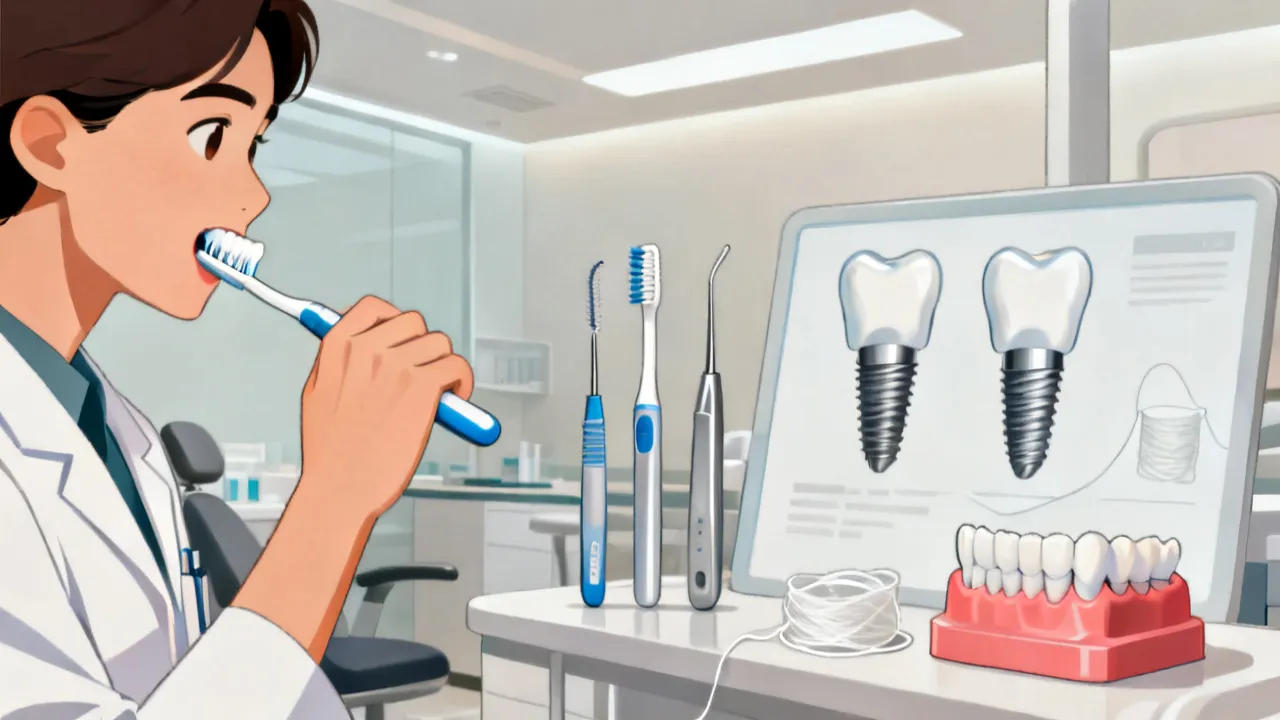
Patients with implants should therefore maintain the same core 양치질 순서 while adding implant-specific cleaning. A soft toothbrush can be directed toward the junction between the crown and gum. Interdental brushes, implant floss, oral irrigators, or specialized brushes may be useful, depending on the restoration. An oral irrigator can assist with flushing debris, but it should complement—not replace—mechanical plaque removal.
The contour of an implant crown may differ from the shape of a natural tooth. A crown that is connected to neighboring implants or supported by a bridge may create spaces that require a threader or a particularly shaped interdental brush. Patients should ask the dental team to demonstrate the exact direction of entry. A device that works well for one implant may be unsuitable for another restoration.
During the healing period after implant surgery, instructions may differ. Brushing directly over a surgical site may be restricted temporarily, and a clinician may recommend a prescribed rinse or a modified diet. Patients should not assume that a routine used before surgery is appropriate immediately afterward. Bleeding that persists, increasing swelling, pus, a loose crown, or a change in the way the teeth meet should be reported promptly.
Implant patients should also continue caring for their natural teeth. An implant does not protect adjacent teeth from cavities or gum disease. Infection around neighboring teeth can complicate the overall oral environment and may make it harder to maintain the implant. Regular professional maintenance allows the dentist to assess both the implant and the natural teeth.
What “Low-Cost Dental Implants” Really Means
Low-cost dental implants should be understood as treatment planned to control unnecessary expenditure without compromising diagnosis, infection control, materials, or professional competence. The lowest advertised price is not necessarily the lowest total cost. A quote may exclude the consultation, three-dimensional imaging, extraction, bone grafting, temporary teeth, the abutment, the crown, medications, or follow-up visits.
From an industry perspective, the appropriate comparison is the complete treatment pathway rather than the headline implant fee. Patients should request a written estimate that identifies each component and states whether the price applies to one complete tooth replacement or only to one surgical stage. A clinic that explains limitations clearly may offer better financial value than a provider using a lower but incomplete promotional figure.
Typical components of an implant estimate
- Initial examination and medical history review
- Dental radiographs and, when indicated, three-dimensional imaging
- Extraction of a damaged tooth
- Bone preservation or bone augmentation
- Implant fixture placement
- Healing and review appointments
- Abutment placement
- Custom crown fabrication and fitting
- Temporary restoration, if required
- Medication, sedation, and laboratory charges
- Maintenance appointments and management of complications
In some cases, a patient may be a candidate for an immediate implant or a less complex restoration. In other cases, periodontal therapy, extraction, sinus augmentation, or bone grafting is necessary before implant placement. Only a clinical examination and appropriate imaging can determine which pathway is suitable.
A complete price should also identify whether the restoration is screw-retained or cement-retained, whether a temporary tooth is supplied, and how many adjustments are included. The type of crown material may affect appearance, strength, laboratory cost, and repair options. Patients do not need to understand every technical term before a consultation, but they should receive an explanation in plain language.
Indicative Individual Dental Implant Prices by Language Market
The following ranges concern an individual dental implant and are intended for general orientation. They should not be interpreted as a quotation or as a direct comparison of equivalent clinical packages. Currency values are shown in the local format supplied for this guide. The cost of a complete tooth replacement may be higher when the crown, abutment, imaging, extraction, grafting, or aftercare is billed separately.
| Country | Currency and indicative range for one individual implant |
|---|---|
| United States | US dollar (USD): $3,000–$6,000 |
| United Kingdom | Pound sterling (GBP): £2,000–£2,500 |
| Australia | Australian dollar (AUD): AU$3,500–AU$6,500 |
| Canada | Canadian dollar (CAD): CA$3,000–CA$5,500 |
| Spain | Euro (EUR): €1,500–€2,500 |
| Chile | Chilean peso (CLP): CLP$800,000–CLP$1,500,000 |
| Mexico | Mexican peso (MXN): $15,000–$25,000 |
| Colombia | Colombian peso (COP): $2,000,000–$4,000,000 |
| Peru | Peruvian sol (PEN): S/ 3,000–S/ 6,000 |
| Argentina | Argentine peso (ARS): $80,000–$150,000 |
| Brazil | Brazilian real (BRL): R$3,000–R$8,000 |
| Portugal | Euro (EUR): €1,000–€2,000 |
Regional differences can be substantial. In the United States and Canada, metropolitan clinics may have higher overhead, while prices in smaller communities may differ. In Spain and Portugal, university-linked or regional clinics may have different fee structures from private practices. In Latin American markets, exchange-rate movements, laboratory choices, imported components, and the scope of the treatment package can materially affect the final amount.
These figures should be treated as starting points for questions, not as proof that one country is universally cheaper or better. A simple single-tooth case with adequate bone may fall near the lower end of a range, while a case involving infection, bone loss, sinus treatment, sedation, or a complex bite may cost substantially more. Currency fluctuations can also make an older online figure inaccurate.
Comparison of Websites Providing Implant Cost Information
The websites below represent different types of information providers. Some are dental clinics, some are insurance or dental-plan organizations, and others focus on dental tourism or general educational content. Their inclusion does not constitute an endorsement. Patients should independently verify licensing, clinician credentials, treatment guarantees, material specifications, and local regulatory compliance.
| Website or organization | Primary features and relevance |
|---|---|
| Dental Views | Discusses low-cost dental implants, treatment types, benefits, process considerations, and cost questions for patients comparing affordability. |
| Atlantic Dental Group | Clinic-based information covering general dental services, cleaning, orthodontics, implants, emergency care, appointments, and professional treatment options. |
| DentaVacation | Provides dental-tourism information, destination comparisons, treatment planning, travel coordination, and possible savings considerations. |
| ADHP / Rockville Dental Arts | Offers information related to dental plans and access to dental services; the Spanish-language clinic site also describes implants, cleaning, whitening, orthodontics, and emergency care. |
| Union City Mini Dental Implants | Focuses on mini dental implant services and presents information for Spanish-speaking patients seeking a specialized implant option. |
| Cigna | Publishes an educational Spanish-language guide to dental implants, including treatment concepts and general patient considerations. |
| Rubi Odonto | Brazilian clinic in Santo André, São Paulo, describing orthodontics, whitening, implants, experienced clinicians, and patient-oriented dental services. |
| Odontologia Velasco | São Paulo dental clinic offering implants, prostheses, aesthetic dentistry, and technology-supported treatment information. |
| DentalVidas | Brazilian dental-plan provider describing plans for individuals, families, and companies, with a network of dental professionals and emergency support. |
Source: the organizations and websites described above.
source: www.dentalviews.com/low-cost-dental-implants/
source: www.atlanticdentalgrp.com
source: www.dentavacation.com
source: rockvilledentalarts.com/es/
source: unioncityminidentalimplants.com/es/
source: www.cigna.com/es-us/knowledge-center/guide-to-dental-implants
source: www.rubiodonto.com.br
source: odontologiavelasco.com.br
source: dentalvidas.com.br
How to Obtain Dental Implants at Lower Cost in English-Speaking Markets
United States
- Request a complete treatment plan. Ask whether the quoted amount includes the implant, abutment, crown, imaging, extraction, laboratory work, and follow-up.
- Compare licensed providers. Review the dentist’s qualifications, implant experience, infection-control procedures, and the type of imaging used for planning.
- Check dental insurance limitations. Many dental plans have waiting periods, annual maximums, exclusions, or limited implant benefits. Obtain a written pre-treatment estimate before treatment begins.
- Ask about staged treatment. If clinically appropriate, a dentist may plan extraction, healing, implant placement, and final restoration in stages. Staging may assist household budgeting, although it can extend the treatment timeline.
- Investigate dental schools and community clinics. Teaching institutions may offer supervised care at different fee levels. Eligibility, waiting lists, and case acceptance vary.
- Review financing carefully. Compare total repayment, interest, administrative charges, and consequences of missed payments rather than focusing only on the monthly amount.
United Kingdom
Patients should clarify whether the treatment is being delivered privately or through a dental service arrangement. Implant treatment is not routinely available in every public dental setting, and eligibility may depend on clinical circumstances. A private consultation should include a written estimate, details of the restoring laboratory, and a discussion of maintenance. Dental practices in London and other major cities may have different fees from clinics in smaller towns, so comparing complete packages is important.
Some practices advertise a low surgical fee while listing the crown as a separate restorative charge. Patients should ask for the total anticipated amount, the timing of each payment, and the fee for replacing or repairing a restoration. The ability to return easily for review may be more useful than a modest initial discount from a distant clinic.
Australia
Ask for an itemized quote separating the surgical and restorative stages. Private health insurance may have waiting periods, annual limits, and product-specific exclusions. Patients should confirm whether the policy contributes to the crown, implant fixture, imaging, or related procedures. Dental schools and public services may have restricted eligibility and are not suitable for every urgent situation.
Canada
Canadian patients can compare private clinics, dental faculties, and applicable public or employer-supported coverage. Because provincial systems and private benefits differ, confirmation should be obtained directly from the insurer and treating clinic. A lower fee may reflect a narrower service package, a different laboratory arrangement, or additional charges for sedation and imaging.
How to Obtain Dental Implants at Lower Cost in Spanish-Speaking Markets
Spain
Patients in Spain can compare clinics in major cities and regional communities, but should avoid choosing only on the basis of a published starting price. Confirm whether the offer includes the crown and abutment, which implant manufacturer is being used, and whether maintenance visits are included. University dental faculties and multidisciplinary clinics may offer structured treatment pathways, subject to assessment and availability.
Mexico
Mexico has clinics serving both local residents and international patients. A careful patient should verify the dentist’s professional registration, the clinic’s sterilization standards, the origin and traceability of implant components, and the plan for follow-up after returning home. When treatment is combined with travel, transport, accommodation, translation, and the possibility of an additional local consultation must be included in the total budget.
Patients should be cautious when a clinic promises an immediate final result without explaining healing and review requirements. Some cases can use immediate provisional teeth, but the long-term restoration may still require later appointments. Written records, imaging, implant labels, and laboratory information should be retained so that another dentist can provide care if necessary.
Chile
Compare the cost of the full restoration and ask whether diagnostic imaging is performed on site. Patients should request documentation identifying the implant system and laboratory materials. Public or university-linked services may have eligibility requirements and waiting periods, while private clinics may offer different payment arrangements.
Colombia
Patients can seek several written opinions, especially when bone grafting or periodontal treatment has been proposed. The dentist should explain the clinical reason for each additional procedure. A price comparison is meaningful only when each quotation describes the same number of visits, components, and aftercare services.
Peru
In Peru, patients should verify the clinic’s authorization and the clinician’s credentials through relevant professional channels. Ask whether the price is stated in soles and whether laboratory or imaging fees are separate. A local provider with accessible follow-up may be financially safer than a distant clinic whose lower initial quotation does not include management of complications.
Argentina
Price changes and exchange-rate fluctuations can affect treatment planning. Obtain a dated estimate, clarify how long it remains valid, and confirm the payment schedule. Patients should also ask whether the crown will be fabricated by an in-house or external laboratory and what happens if the restoration requires adjustment.
How to Obtain Dental Implants at Lower Cost in Portuguese-Speaking Markets
Brazil
Brazilian patients may compare private clinics, dental faculties, and dental-plan networks. Rubi Odonto in Santo André and Odontologia Velasco in São Paulo illustrate the range of clinic-based information available for implants, prostheses, orthodontics, and aesthetic dentistry. DentalVidas represents another route for comparing plan-based access to dental services. Patients should still examine the exact benefit rules, network limitations, waiting periods, and exclusions before selecting a plan.
When comparing a clinic in São Paulo, Santo André, or another Brazilian city, ask for a written treatment plan in Portuguese that identifies the implant brand, crown material, laboratory, number of appointments, and revision policy. The convenience of local follow-up is a meaningful cost factor because travel for adjustments can add to the treatment budget.
Portugal
Patients in Portugal should compare private clinics, dental-plan arrangements, and university services where available. Ask whether the stated euro amount refers to the fixture alone or to a complete tooth replacement. The clinic should explain the expected healing period, the need for imaging, and the procedure for monitoring the implant after restoration.
Dental Tourism: Potential Savings and Important Conditions
Traveling abroad may reduce the quoted clinical fee in some circumstances, but it introduces additional clinical and logistical risks. A responsible dental-tourism decision requires more than comparing two advertisements. Patients should evaluate the total cost, including flights, accommodation, meals, local transport, translation, insurance, time away from work, and the possibility of a second trip.
Before traveling, request:
- The dentist’s full name, qualifications, and professional registration
- A written diagnosis and treatment proposal
- A complete quotation with inclusions and exclusions
- The implant system and restorative materials
- The expected number and length of visits
- The clinic’s infection-prevention and sterilization policies
- A plan for emergencies and complications
- Instructions for follow-up care after returning home
- Written terms for adjustments, replacement, and warranty claims
Some implant procedures require months of healing. If a clinic suggests that every patient can receive an implant and final crown during one short trip, the proposal should be examined carefully. Immediate loading is appropriate only for selected cases and depends on factors such as bone quality, implant stability, bite forces, and the overall treatment design.
Patients should also be cautious about transplanting their routine care to a distant provider without arranging local follow-up. An implant is a long-term restoration, not a one-day consumer purchase. The ability to attend maintenance visits and address early inflammation is part of the treatment’s value. A written warranty may have geographic or procedural conditions, so patients should understand who pays for travel, diagnostic work, and treatment if a problem develops.
Insurance, Dental Plans, and Payment Strategies
Insurance coverage for implants varies widely. Policies may cover the crown but not the implant fixture, or may classify implants as an excluded major service. Some plans impose waiting periods, annual maximums, missing-tooth clauses, or restrictions on specific providers. Patients should ask the insurer for a written benefit determination rather than relying on a verbal summary.
Dental plans can reduce the negotiated cost of certain services, but the patient should examine the network and the actual schedule of benefits. A plan may have a monthly premium and may not cover every part of implant treatment. The relevant question is the expected total patient responsibility after premiums, deductibles, exclusions, and annual limits.
Other cost-management approaches include:
- Obtaining two or three itemized treatment plans
- Completing necessary periodontal treatment before implant surgery
- Maintaining natural teeth when a predictable restoration is possible
- Using a local accredited laboratory when clinically suitable
- Asking about staged treatment and payment timing
- Considering a dental faculty with supervised student or resident care
- Confirming whether preventive maintenance is included in a clinic package
Cost should never be reduced by skipping diagnostic imaging, sterilization, medically necessary grafting, or professional follow-up. Cutting these steps may increase the risk of implant failure, infection, poor aesthetics, or additional procedures. A payment plan can make care more manageable, but patients should calculate the full repayment amount and confirm what happens if treatment changes after surgery.
Conditions and Requirements Before Implant Treatment
A dentist normally evaluates the missing-tooth area, adjacent teeth, gums, bite, bone volume, medical history, medications, smoking status, and expectations. Three-dimensional imaging may be recommended when the anatomy is complex or when important structures must be identified. The final treatment plan should explain alternatives, such as a conventional bridge or removable partial denture, where appropriate.
Active gum disease should generally be controlled before implant placement. Oral hygiene is also important because plaque around natural teeth and implants can affect long-term stability. Patients with diabetes, immune conditions, a history of radiation therapy, or medications that influence bone metabolism should provide a complete medical history. These conditions do not automatically exclude implant treatment, but they may alter timing, risk assessment, or monitoring.
Smoking is associated with poorer oral-health outcomes and may affect healing. A qualified clinician can discuss cessation support and individualized risk. Patients should not stop prescribed medication without consulting the prescribing physician. Likewise, patients should tell the dental team about blood thinners, osteoporosis medications, allergies, pregnancy, and previous reactions to anesthesia.
Bone grafting may be recommended when the jaw does not have sufficient volume or density to support the planned implant. This can add time and expense, but the clinical reason should be explained using examination findings and imaging. In some situations, an alternative restoration may avoid grafting. Patients are entitled to understand the benefits, risks, costs, and expected timeline of each option.
Maintaining an Implant After Treatment
The correct 양치질 순서 remains important after the crown is fitted. Brush twice daily, clean between teeth according to the restoration design, and attend professional maintenance visits at intervals recommended by the dental team. Implant maintenance may include examination of the gum, evaluation of plaque, assessment of the bite, and radiographs when clinically indicated.
Do not use metal instruments or abrasive household products on an implant crown. If a floss threader, super floss, end-tuft brush, or water irrigator is recommended, request a demonstration. The most suitable product depends on the space under a bridge, the contour of the crown, and the condition of the gum tissue.
Some patients assume that bleeding around an implant is normal because the implant cannot develop a cavity. This is incorrect. Bleeding can signal inflammation of the surrounding tissue and deserves attention, particularly if it is accompanied by swelling, odor, tenderness, or pus. The earlier the cause is identified, the more options may be available for management.
Contact a dental professional if there is persistent bleeding, swelling, tenderness, pus, bad taste, mobility, or a loose restoration. Early evaluation is generally preferable to waiting until discomfort becomes severe. A missing tooth can also affect chewing and speech, but an implant should be planned according to oral-health needs rather than cosmetic urgency alone.
Common Mistakes in 양치질 순서
- Rushing the front teeth: Spend comparable attention on the inner and outer surfaces.
- Brushing with excessive force: Pressure does not compensate for poor positioning.
- Ignoring the gumline: Plaque commonly accumulates where the tooth meets the gum.
- Using mouthwash instead of brushing: Liquid rinses cannot replace mechanical plaque removal.
- Rinsing extensively after fluoride toothpaste: This may reduce fluoride contact time.
- Using the wrong interdental brush size: A professional fitting can improve comfort and effectiveness.
- Assuming implants need no maintenance: Implant-supported teeth still require daily cleaning and professional review.
- Choosing an implant package without exclusions: A low initial number may not represent the complete treatment cost.
- Changing tools without instruction: Improvising under a bridge or around an implant can injure tissue or leave plaque behind.
- Delaying care for persistent symptoms: Small changes around an implant may become more difficult to manage when ignored.
Expert Checklist for Comparing Clinics
| Question | Why it matters |
|---|---|
| Is the dentist appropriately licensed and experienced in implant restoration? | Professional qualifications and experience support safe diagnosis and treatment planning. |
| Does the quotation include the fixture, abutment, crown, imaging, and follow-up? | It prevents comparison between incomplete and complete prices. |
| Which implant manufacturer and crown material will be used? | Traceability assists maintenance and future replacement. |
| What happens if healing is delayed or the crown needs adjustment? | A clear aftercare policy reduces uncertainty. |
| How will the clinic manage gum disease or insufficient bone? | Underlying problems may affect implant predictability. |
| How often are maintenance visits recommended? | Long-term maintenance is part of the treatment plan. |
| Who will provide care if a complication develops after returning home? | Accessible follow-up can significantly affect the practical cost and safety of treatment. |
| Are emergency, sedation, laboratory, and temporary restoration fees separate? | These charges can change the final price substantially. |
Frequently Asked Questions
What is the best 양치질 순서?
A practical sequence is interdental cleaning, thorough brushing with fluoride toothpaste, gentle tongue cleaning, and spitting without extensive rinsing. However, the best order is the one that allows consistent, careful cleaning. Patients with implants, braces, bridges, or gum disease should follow individualized instructions.
Should I floss before or after brushing?
Either can be reasonable if performed correctly. Cleaning between teeth first may help remove debris before brushing and allow fluoride toothpaste to contact those spaces. Some patients find brushing first easier to remember. Consistency and correct technique are more important than a rigid universal rule.
Can a low-cost implant be safe?
Yes, a lower total fee may reflect regional costs, clinic structure, laboratory arrangements, or a straightforward case. Safety depends on diagnosis, clinician qualifications, materials, infection control, surgical planning, and aftercare—not on price alone. An unusually low quote should be examined for omitted components.
Does the price of one implant include the crown?
Not always. Some published ranges refer only to the implant fixture or surgical placement. Ask specifically whether the abutment, crown, imaging, extraction, grafting, temporary tooth, medications, and follow-up are included.
Are mini dental implants suitable for everyone?
No. Mini dental implants have a smaller diameter and may be used in selected situations, often according to the restoration and available bone. Suitability depends on anatomy, loading requirements, medical history, and the dentist’s assessment. They should not be selected solely because the initial price appears lower.
Can dental tourism lower the overall cost?
It can lower the quoted clinical fee in some markets, but travel costs and follow-up needs may offset the difference. A patient should also consider the consequences of requiring an additional visit or local management of a complication. The complete financial and clinical plan should be assessed before travel.
How long do dental implants last?
Longevity varies according to oral hygiene, gum health, smoking, bite forces, medical factors, implant position, restoration quality, and maintenance. No responsible clinician can guarantee a fixed lifespan for every patient. Regular examinations and a careful 양치질 순서 support long-term care.
Can I brush normally after implant surgery?
Not necessarily. The surgical site may require temporary protection, and the dentist may recommend a modified routine, prescribed rinse, or special brush. Follow the postoperative instructions precisely and ask before cleaning directly over the area.
What is the main warning sign after implant treatment?
Persistent or increasing bleeding, swelling, pain, pus, a loose implant crown, or a change in bite should be assessed by a dental professional. Early contact allows the cause to be investigated before the problem progresses.
Are dental-plan benefits the same as dental insurance?
No. A dental plan may provide access to negotiated fees, while insurance generally operates through defined benefits, exclusions, deductibles, annual limits, and claim rules. Review the terms carefully and obtain a written estimate of personal responsibility.
Can I use a water flosser instead of regular floss?
An oral irrigator can be helpful for some patients, especially those with bridges, braces, or difficulty handling floss. It may remove loose debris and assist with access, but it may not provide the same surface contact as floss or an appropriately fitted interdental brush. Use it as instructed and do not assume that increased water pressure is automatically better.
When should I replace my toothbrush?
Replace a toothbrush or electric brush head when the bristles become worn, splayed, or damaged, or according to the manufacturer’s guidance. A damaged brush can be less effective and may irritate the gums. People who have been ill may also ask their dentist or physician whether replacing the brush is advisable.
Conclusion
The correct 양치질 순서 is a practical foundation for protecting natural teeth, gums, crowns, and dental implants. A systematic routine should include cleaning between teeth, brushing gently at the gumline and on every tooth surface, caring for the tongue when appropriate, and using fluoride toothpaste correctly. For patients considering low-cost dental implants, the central decision is not simply where the advertised fee is lowest. It is whether the diagnosis, materials, clinical skill, restoration, maintenance, and follow-up together provide an appropriate and transparent treatment pathway.
Comparing itemized quotations, checking professional credentials, understanding insurance or dental-plan limitations, and calculating travel-related expenses can help patients make a more informed decision. Any treatment plan should be confirmed through an examination by a qualified dental professional. Patients should also remember that daily maintenance is a continuing part of implant care. The quality of the routine performed at home, including a careful 양치질 순서, can influence the health of both the implant and the surrounding natural teeth.
Disclaimer
1. The information above is compiled from online resources, and the data is stated as of October 2023.
2. Dental implant prices are for reference only and may vary by region, clinic, doctor, treatment complexity, implant system, laboratory, insurance arrangement, and required additional procedures. This article is educational and does not replace an examination, diagnosis, or treatment plan from a qualified dental professional.
References and Links
- Dental Views: Low-Cost Dental Implants
- Atlantic Dental Group
- DentaVacation
- Rockville Dental Arts, Spanish-language website
- Union City Mini Dental Implants, Spanish-language website
- Cigna: Guide to Dental Implants in Spanish
- Rubi Odonto
- Odontologia Velasco
- DentalVidas
- American Dental Association: Home Oral Care
- Centers for Disease Control and Prevention: Oral Health