Dentalplans.com Guide to Low-Cost Dental Implants
This expert guide explains how dental care shoppers can evaluate Dentalplans.com–style resources when seeking low-cost dental implants. It covers what dental implants are, how pricing is formed, which websites help compare options, and practical steps to reduce costs in English-, Spanish-, and Portuguese-speaking countries. Cost ranges and FAQs help you plan questions before treatment.

1) Low-cost dental implants: what to prioritize before you compare prices
Dental implants can be life-changing, but “low cost” is only meaningful when it still preserves clinical quality. A cheap implant offer that compromises key steps—diagnostics, bone management, implant system selection, restoration design, or follow-up—can lead to repeat procedures, prolonged healing, additional grafting, and ultimately a higher total cost. This guide explains how to use Dentalplans.com and other reputable, information-focused resources to evaluate dental implant options, understand likely cost drivers, and reduce expenses through structured decision-making rather than shortcuts.
From an expert perspective, the highest-impact factors are usually the same across English-speaking, Spanish-speaking, and Portuguese-speaking markets: implant system selection, surgical complexity (bone quality and site), surgeon experience, prosthetic design (crown/bridge type), and the completeness of the “implant package” (diagnostics, imaging, surgical follow-ups, and restoration). When you focus on these areas first, price comparisons become more accurate and more protective of your health.
In practice, “low cost” should not be treated like a single number. It’s more like a probability distribution of outcomes—clinical outcomes and financial outcomes. Two offers that look similar on a price sheet can diverge because they include different components and different standards of pre-surgical planning or post-surgical support. Your job, before comparing prices, is to define what your treatment really requires.
That starts with eligibility, diagnostics, and the intended prosthetic result (the tooth replacement you’ll actually live with). Once you understand those elements, you can compare price packages fairly and avoid being misled by partial quotes or marketing phrases like “all-inclusive,” “same day,” or “mini implant savings,” which may be accurate only for particular clinical scenarios.
2) Why people search for Dentalplans.com and similar resources
Consumers typically arrive at Dentalplans.com (and comparable platforms) when they need clarity: What treatments are covered? Are savings limited to certain services? How can they estimate out-of-pocket spending? While dental insurance and discount plan structures vary by country, the decision logic is often similar—compare the scope of coverage, then compare the real-world cost of the implants journey: consultation → diagnostics → surgery → restoration.
In practice, “cost reduction” should be treated as an optimization problem with clinical constraints. A plan that only discounts a single component (for example, the crown but not imaging or the surgical stage) may not deliver the savings implied by a headline price. Similarly, a plan might have a low discount for implants but provide better financing, or might reduce diagnostic costs while leaving the restoration price unchanged.
A common consumer mistake is to assume discount plans work like traditional insurance. Some plans are primarily designed to reduce routine and preventive dentistry costs, while implant-specific costs might be excluded or subject to special limitations. Others may require waiting periods, limit coverage to specific provider networks, or provide reimbursement terms that are confusing. That’s why information-first resources and transparent educational articles matter: they help consumers ask better questions and reduce misunderstandings.
People also search because they feel uncertain about what drives implant costs. Dental implant costs can look inconsistent across clinics, and the market includes both premium and budget approaches. Without guidance, it’s easy to focus on the implant fixture price or “per implant” marketing, while ignoring the cost of bone grafting, the crown/abutment components, or the time and visits needed to complete treatment.
When using Dentalplans.com or similar resources, approach the information like a checklist rather than like a final answer. Use it to understand what’s potentially available, then validate every assumption with an itemized quote from a provider. That combination—plan education plus clinician-specific diagnosis—creates the strongest protection against budget surprises.
3) A grounded definition of dental implants (and what “implant cost” really means)
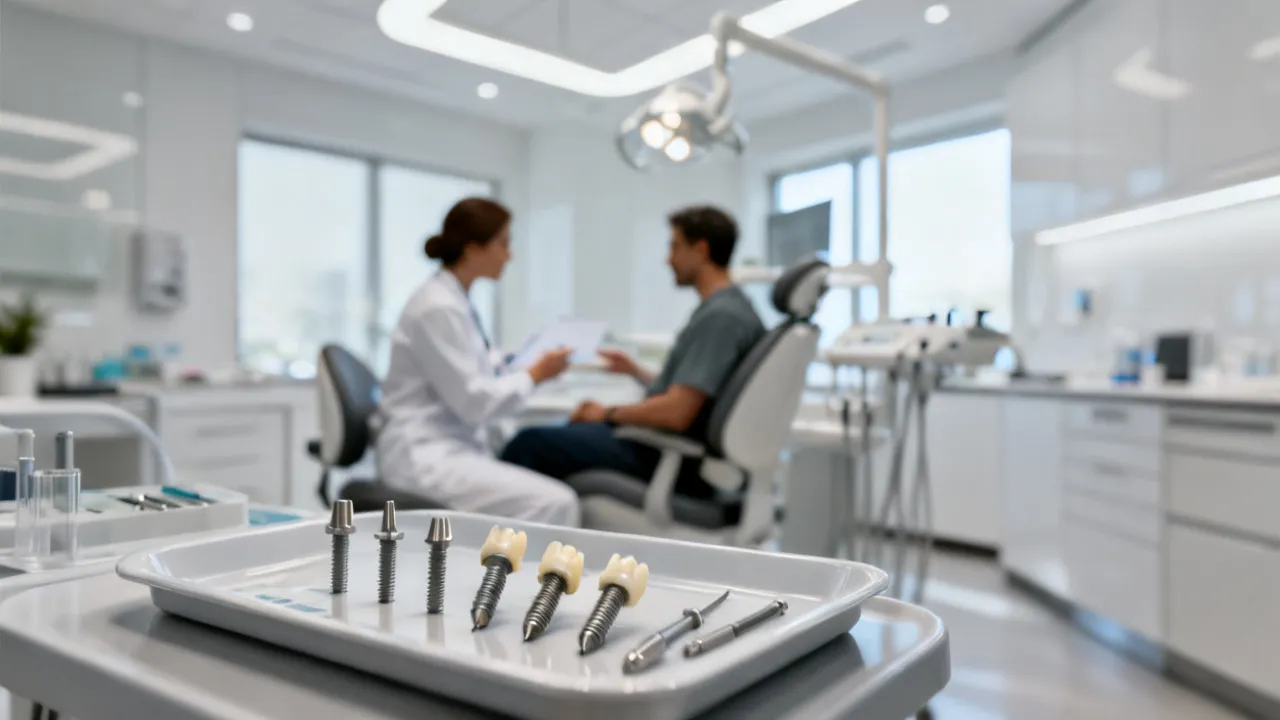
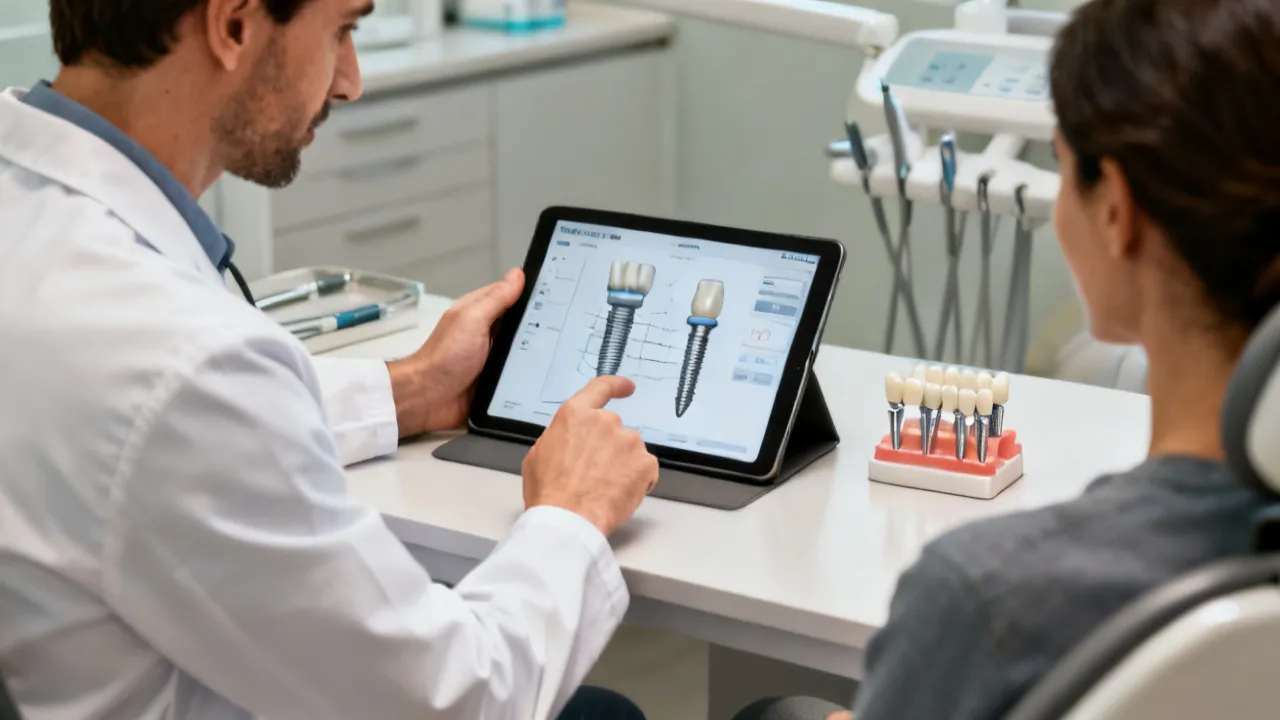
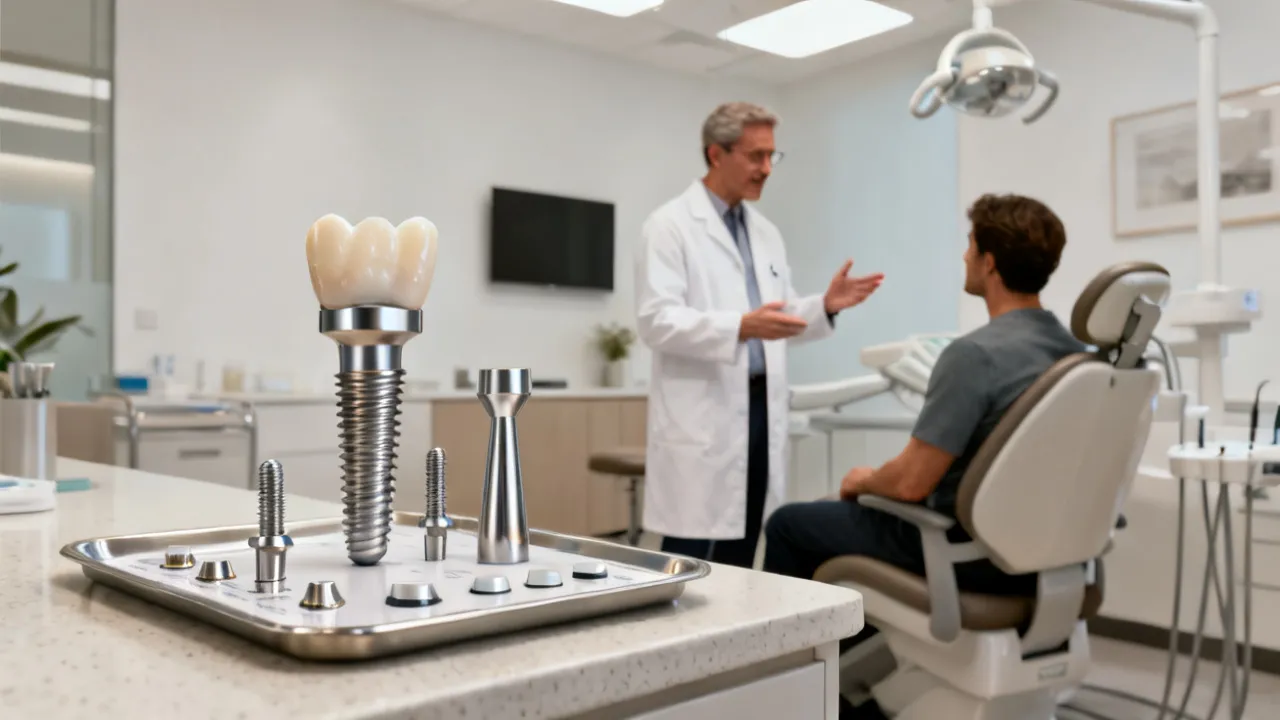
A dental implant is typically a two-stage process: (1) surgical placement of a titanium (or titanium-zirconium) fixture into the jawbone, followed by healing and osseointegration; (2) placement of an abutment and prosthetic tooth (crown, bridge, or overdenture). Costs therefore include more than the implant fixture itself.
When patients compare offers, the total quote can vary significantly due to:
- Site and complexity: molar vs. front tooth, immediate placement vs. delayed, and whether bone grafting is needed.
- Diagnostics and imaging: CBCT scans, treatment planning, and surgical guides.
- Implant components: fixture type, abutment materials, and the prosthetic design.
- Restoration quality: crown/bridge materials and fit, which influence longevity.
- Clinical pathway: post-operative visits, sutures/removal, maintenance, and contingency work.
For readers looking for a low-cost starting point, it helps to ask clinics to itemize quotes rather than comparing only a “per implant” number. If one clinic includes the crown and the other does not, the “low cost” clinic can look cheaper but become more expensive in total once you complete restoration. Itemization is also a way to ensure your plan is comparable across providers.
Another dimension that affects implant cost is whether the plan includes “future proofing,” meaning the clinic’s approach to durability and adjustments. For example, if the clinic expects potential remodeling, it might provide a specific type of abutment or restorative design that reduces stress on the implant-abutment interface. That design may cost more upfront, but it can reduce the risk of complications that create additional costs later.
From a clinical standpoint, there are multiple pathways to reach similar-looking final teeth. Some involve immediate loading (in certain cases), while others involve a staged approach. Some use classic implant approaches; others use mini implants, zygomatic/advanced methods, or specialized grafting techniques. Each pathway changes the total cost because it changes time, number of visits, and materials.
Therefore, “implant cost” should be defined as the total cost to achieve a functional and aesthetic restoration that remains stable over time with reasonable maintenance. “Low cost” should mean low total cost for the right pathway—not merely low cost for a single component.
4) What reputable online resources can do for your decision
Before you choose a clinic or package, rely on sources that explain the treatment pathway in a transparent way—especially those that cover the implant process, common FAQs, and what influences cost.
For example:
- Dental Views focuses on low-cost dental implant education, often describing benefits, treatment types, and the cost involved in a way that helps patients compare scenarios.
- Atlantic Dental Group is structured like a clinic information hub, outlining common services such as cleaning, orthodontics, implants, and urgent care—useful for understanding how a provider organizes patient access.
- DentaVacation is a dental tourism platform that emphasizes travel-enabled cost comparisons and arrangements, which can be relevant for budget-focused patients (though it requires careful verification of accreditation and follow-up plans).
- ADHP (American Dental Health Plans) is oriented around dental insurance planning, which can reduce costs if the plan aligns with implant-related coverage rules.
Reputable resources are valuable because they help you learn the vocabulary of implants: what abutments are, what grafting is for, what CBCT provides, what osseointegration means, and what “loading” refers to. When you understand terms, you can ask better questions, and you can detect when a quote is incomplete. Many budget-related problems happen because patients don’t realize a quote excludes a critical stage.
Also, good resources help you understand the difference between education and marketing. Some websites summarize costs, but few explain how costs are constructed. Your goal is to find sources that emphasize the treatment pathway and cost drivers rather than solely promoting a “lowest price.” When you combine educational sources with itemized clinician quotes, you reduce both financial and clinical risk.
Finally, reputable resources can guide you on what to verify: implant system documentation, surgeon credentialing, warranty policies, and follow-up scheduling. These aren’t “nice-to-have” details; they are the structure that turns dental implants from a one-time purchase into a complete treatment plan.
5) Comparison of low-cost dental implant information sources (features overview)
Below is a compact feature comparison of websites that provide guidance relevant to low-cost dental implant planning. This helps you evaluate whether a site is focused on education, clinic services, insurance navigation, or dental tourism.
| Website | What it emphasizes for low-cost planning | Top for |
|---|---|---|
| Dental Views | Education on implant types, process, benefits, and cost factors | Learning how pricing is formed before getting quotes |
| Atlantic Dental Group | Clinic service overview and appointment-oriented patient navigation | Understanding provider pathways and service scope |
| DentaVacation | Dental tourism framing, destination options, and travel-linked savings comparisons | Considering cross-border planning with itinerary cost awareness |
| ADHP (American Dental Health Plans) | Insurance-plan education and coverage-navigation approach | Assessing whether insurance structures can lower out-of-pocket costs |
source: [www.dentalviews.com](https://dentalviews.com/low-cost-dental-implants/) ; [www.atlanticdentalgrp.com](https://www.atlanticdentalgrp.com/) ; [www.dentavacation.com](https://www.dentavacation.com/) ; [rockvilledentalarts.com/es](https://rockvilledentalarts.com/es/)
To use these sources effectively, consider your stage of decision. If you’re early (you don’t know whether you even need grafting or whether you’re eligible), prioritize educational content that explains diagnostics and clinical pathways. If you’re mid-stage (you have quotes and are evaluating plans), prioritize resources that emphasize coverage rules, itemization, and what’s included. If you’re late-stage (you’re deciding between countries or providers), then dental tourism framing can be relevant—but you still must verify accreditation, implant system documentation, and follow-up care responsibilities.
In other words, each website type can be useful, but it solves a different part of the problem. When you map the problem (eligibility, components, coverage, follow-up) to the right type of resource, you reduce wasted time and reduce the risk of choosing the wrong low-cost option.
6) How to get dental implants at low cost (step-by-step, by decision stage)
Cost reduction works top when you manage the decision in stages: eligibility, diagnostics, treatment design, financing, and follow-up. The following step-by-step process applies across English-speaking, Spanish-speaking, and Portuguese-speaking markets, though exact pricing and coverage will differ.
Step 1: Confirm candidacy and identify cost drivers
Request a clinical assessment and imaging plan. The two very common “budget disruptors” are:
- Insufficient bone volume requiring grafting or staged procedures.
- Inadequate oral health (active periodontal disease) requiring stabilization before implant placement.
Ask the clinician to explain whether your case is suitable for a straightforward implant placement or needs additional steps. When budgets are tight, knowing that early prevents you from comparing unrealistic price quotes.
Eligibility checks also protect you from the risk of paying for the wrong solution. For instance, if periodontal disease is uncontrolled, a low-cost implant may fail sooner and require revisions. If bone volume is borderline, you might be able to proceed with a specific grafting approach; if you don’t know this, you might compare quotes that omit the graft because they’re assuming a simpler scenario. The right starting point is a written diagnosis and treatment outline.
Ask for your measurements (when possible) such as bone height/width and any sinus-related considerations. Even if you don’t fully understand the measurements, having them documented helps you confirm that the treatment plan is consistent across providers.
Because you’re focusing on low cost, you may be tempted to ask, “Can you just place an implant without grafting?” That question is legitimate to discuss, but it must be answered scientifically. The budget-friendly route is often “the simplest route that works” rather than “the cheapest route that sounds easiest.”
Step 2: Ask for an itemized written quote
When comparing providers, request a breakdown that typically includes:
- Imaging (e.g., CBCT if used)
- Surgical stage components and fees
- Prosthetic components (crown/abutment design)
- Number of visits and post-surgical follow-ups
- Maintenance expectations after restoration
This is where platforms and guides can help: a good resource makes clear what the “implant package” includes. If a quote lacks itemization, treat it as less comparable.
To make itemization truly useful, ask for it in the same format across clinics, including dates and number of visits. Some clinics quote “implant placement + crown” as one lump sum; others separate stages. You can still compare them, but only if you ensure the scope of each stage matches.
Also ask about what constitutes a “remake” or “adjustment.” Prosthetic restorations sometimes require remakes due to fit, bite alignment, or aesthetic refinement. A low-cost quote that doesn’t define what happens if a crown needs replacement might expose you to additional charges later.
Finally, check whether the quote includes anesthesia/sedation (if needed). Sedation adds cost and also affects how the appointment is scheduled. If one clinic includes sedation and another does not, the total cost comparison is skewed.
Step 3: Verify the implant system and prosthetic plan
Lower prices sometimes reflect lower-cost components or narrower prosthetic design. The medically relevant question is not only “How much for one implant?” but “What materials and design choices are included, and why?”
Ask about:
- Implant brand/system used (and whether it is widely used by the provider)
- Abutment type and material
- Prosthetic material (ceramic vs. other options) and retention method
- Any warranty or remakes process
When patients focus only on the implant fixture, they may miss that prosthetic design influences long-term comfort and durability. For example, the crown material and cementation/screw-retained design can affect maintenance and how easily future adjustments are made. A low-cost crown option that compromises fracture resistance or marginal fit could increase the chance of repair or replacement.
In addition, ask how the clinic will manage occlusion—the way your teeth meet when you bite. If occlusion is not carefully designed, you may experience stress on the implant. Stress isn’t always visible immediately; it can manifest later as discomfort or technical complications.
Another practical point is documentation. Ask whether you will receive implant system documentation (often including the type of implant and batch information) and whether the clinic’s lab partner is identified. Transparent component documentation helps you understand what you’re paying for and can be essential if replacement is needed later.
Step 4: Compare total treatment time and number of visits
Budget decisions often ignore time. However, when implants require a healing phase, you may need scheduling flexibility. Clinics that organize follow-ups efficiently can reduce indirect costs such as lost work time and repeated travel.
Time also matters for complications. If you need additional appointments for adjustments, having a clinic that can schedule promptly reduces the chance that minor issues turn into bigger ones due to delays. The “low-cost” clinic that requires long waits or far travel may end up increasing your overall expenses, even if the direct price is cheaper.
Ask the clinic to outline the timeline with approximate dates: consultation date, imaging date, surgical appointment date, healing interval, abutment appointment, and final crown delivery. If any steps depend on healing progress, ask how delays are handled and whether there are additional fees for extra checkups.
Also ask whether they coordinate multiple services (for example, implant placement and extraction if needed) into fewer visits. Efficient scheduling can reduce costs related to anesthesia, appointment fees, transportation, and time off work.
Step 5: Explore insurance or dental plan structures (including Dentalplans.com-style models)
If Dentalplans.com or a similar plan is relevant to your location, compare it against your planned treatment pathway. Dental plans can reduce costs for some services, but you must confirm whether implant-related surgery, crowns, or diagnostic imaging are included and under what conditions.
Key checks:
- Waiting periods (if applicable)
- Coverage limits (annual caps or per-procedure caps)
- Network providers vs. reimbursement terms
- Any exclusions related to implant prosthetics
To make this step actionable, request a plan quote for the exact procedure code categories the clinic uses. If you don’t know procedure categories, ask the clinic what services they typically provide and how they label them. Insurance-like plans often categorize procedures differently from what patients expect.
Also confirm whether your plan requires you to get a pre-authorization. If pre-authorization is required and you skip it, you might lose coverage and end up paying more than expected. That is one of the most common reasons consumers experience “surprise bills” when dental plans are involved.
Finally, consider the timing of plan enrollment. Some plans impose waiting periods, meaning you might need to enroll months in advance. For budgets, that timing matters because you might want to start earlier with preventive care or stabilizing gum disease so you qualify when implants become feasible.
Step 6: Consider dental tourism only with strict quality and follow-up planning
If you explore dental travel models like those described by DentaVacation, treat it as a structured project rather than a “cheaper trip.” Quality verification is essential, including:
- Clinic accreditation and surgeon qualifications
- Implant system documentation
- Post-treatment follow-up plan after you return home
- Contingency procedures if complications arise
Dental tourism can sometimes be cost-effective because the total all-in price—direct care plus travel plus follow-up—ends up lower. But it can also be risky if complications occur and coordination is poor. A major cost trap is assuming the clinic abroad will handle issues “from a distance” without clarity about who pays and how quickly care is provided.
Before committing, ask how they handle:
- Bleeding or swelling that persists beyond typical recovery
- Signs of infection
- Problems with the crown fit or bite
- Loose screws or restoration adjustments
Also ask whether they plan your restoration in-country or whether they rely on a local lab. If a crown is fabricated abroad and then adjusted at home, there should be a clear agreement about remakes and who is responsible if fit is not optimal.
From a budget perspective, you might reduce costs by booking travel with flexible schedules and by arranging follow-ups with a local dentist who agrees to review implant sites and restorations. That reduces the risk of paying again for urgent care when you return home.
Step 7: Reduce costs through prevention and periodontal stabilization
Good success is strongly connected to oral health maintenance. Investing in cleanings, periodontal stabilization, and hygiene instruction can reduce the need for additional corrective work later—often a more cost-effective “budget strategy” than selecting the lowest initial price.
Many implant failures and complications are associated with untreated or poorly controlled gum disease, smoking-related healing issues, and hygiene challenges. The best way to protect your budget is to treat implants as long-term therapy. That means your “low-cost plan” must include adequate preventive and maintenance care.
Budget-friendly does not mean skipping maintenance. Instead, it means choosing a provider who includes a maintenance plan and who sets expectations about recall intervals (for example, every 3–6 months initially, then at a maintenance schedule appropriate for your risk profile). A provider who avoids discussing maintenance might be selling price rather than quality.
Consider a practical approach: schedule a periodontal evaluation before implant planning, if not already included. If gum health needs to be stabilized, treating that first can prevent additional costs and increase the likelihood of a smooth restoration phase.
7) Cost ranges for individual dental implants by country (reference only)
Pricing for dental implants varies widely based on clinical complexity and what a “single implant” quote includes. Still, reference ranges can help readers understand the typical order of magnitude when comparing offers.
| Country | Currency | Price range (single implant reference) |
|---|---|---|
| Spain | EUR (€) | €1,500 - €2,500 |
| Chile | CLP (CLP$) | CLP$800,000 - CLP$1,500,000 |
| Mexico | MXN ($) | $15,000 - $25,000 MXN |
| Colombia | COP (COP$) | $2,000,000 - $4,000,000 COP |
| Peru | PEN (S/) | S/ 3,000 - S/ 6,000 |
| Argentina | ARS ($) | $80,000 - $150,000 ARS |
| Brazil | BRL (R$) | R$3,000 - R$8,000 |
| Portugal | EUR (€) | €1,000 - €2,000 |
Note: The ranges above are presented as country-level references for planning. Your final quote should be based on your diagnostic results and a detailed itemized plan.
Because prices differ by what’s included, it’s useful to translate these reference ranges into a “budget model.” For example, if a clinic’s low-cost offer seems far below the country reference range, ask why: is the crown excluded, are multiple follow-ups not included, is bone grafting excluded, is sedation excluded, or is the implant system different? Some clinics may have promotions or operate with efficient staffing; that can be legitimate. But the only safe way to verify is to compare itemized quotes.
Also consider that the cost of implants may correlate with the risk level of your case. Front tooth restorations may require different aesthetic materials and careful planning. Posterior molars may require different bite-load considerations. Cases with bone loss often require grafting and can move from a “single implant range” into a more involved pathway.
If you’re planning for budget, treat the reference range as the lower bound for straightforward cases and a general guideline for comparison. Then plan a buffer for potential additional procedures if needed.
8) Market-specific considerations by language region (expert perspective)
English-speaking countries: planning around coverage, components, and timeline
In the English-speaking markets, patients often compare insurance narratives and discount-plan structures. In this context, resources like ADHP can be useful for understanding how dental insurance planning may reduce out-of-pocket spending—though implant coverage rules can be more complex than routine dentistry.
A common practical pattern in English-speaking clinics is modular pricing: surgery and restoration may be quoted separately. That means you should compare the combined total, not just the surgical stage.
English-speaking patients also often face the challenge of procedure codes, prior authorizations, and network restrictions. If your plan uses a network, you may have savings only when you use specific providers. That can affect your options for comparing implant systems and prosthetic materials. If a network provider offers a lower price but uses different materials than an out-of-network provider, your “apples-to-apples” comparison requires careful checking of what’s included.
Another practical factor is financing. Many clinics offer payment plans. Even if financing doesn’t change the overall cost significantly, it changes how manageable the expenses are. Budget planning should therefore consider whether the low-cost plan requires large upfront payments or whether it spreads payments across the implant timeline.
Finally, in English-speaking markets, patients may encounter “marketing education” that sounds helpful but doesn’t specify key details. Be cautious of statements like “all-inclusive dental implant package” without itemization. Request an itemized quote that lists the implant, abutment, crown type, imaging, visits, and any warranty/redo policies.
Spanish-speaking countries: check Spanish-language clinic communication and pathway clarity
For Spanish-speaking communities, patient experience often improves when clinics provide clear, accessible explanations. Rockville Dental Arts maintains a Spanish-language version of its clinic information, which can help patients understand services such as implants and emergency care in a more comfortable format.
In addition, some specialized clinics may focus on specific implant techniques. For instance, Union City Mini Dental Implants emphasizes mini implant solutions—typically relevant when the clinical situation favors a smaller approach. If a clinic markets mini implants, ask whether it is appropriate for your bone volume, prosthetic design needs, and good maintenance expectations.
Insurance education also matters. Consumer-friendly explainers such as Cigna’s guide to dental implants (Spanish-language content) can help patients understand what to ask during consultations—an underrated way to reduce expensive misunderstandings later.
In Spanish-speaking environments, clarity of communication can affect budget outcomes. If a clinic’s explanations are hard to understand, patients may misunderstand what “included” means or assume that a crown is part of the implant price. That misunderstanding can create additional costs later. Therefore, verify in Spanish (or request translation) that each component is included in the quote.
Also, if you are comparing clinics that specialize in different implant techniques, ask for the clinical reasoning behind the chosen technique. Mini implants, for example, may not be suitable for every bite load situation. If a clinic chooses mini implants to reduce costs, they should explain the rationale and how they plan to manage prosthetic stability long term.
If your budget is tight, it may help to ask for two treatment options: a “conservative” option and an “optimized cost” option (or “minimally invasive” option). Then compare each option’s total cost, healing time, and long-term expectations. A good clinic can explain why one option is likely more cost-effective over time rather than just cheaper on day one.
Portuguese-speaking countries: evaluate plan design and network-based savings
In Portuguese-speaking regions, cost reduction may involve dental plan structures and networks. A provider like DentalVidas presents itself as a dental plan offering with a wide network and emergency availability. When you compare such options to implant needs, the key is alignment: confirm which implant components are discounted, and whether the plan reduces consultation, imaging, or the restoration stage.
Meanwhile, clinics such as Rubi Odonto and Odontologia Velasco are presented as general dentistry providers with services including implants and esthetic care. For budget-focused patients, the practical approach is to compare quotes across clinics with similar implant system choices and request itemization.
In many Portuguese-speaking markets, patients may encounter mixed pricing structures that depend on whether you use network providers. If the plan offers only partial discounts for implants, you may find that the cheapest option is not the clinic advertised as a plan partner, but a clinic outside the network that offers better overall scope. That’s why you must compare itemized costs and not rely on the plan’s headline discount.
Also consider that general dentistry clinics might offer implants, but the complexity of your case might require a specialist (or a clinic with more implant volume). Budget planning should therefore include asking about implant experience for your specific tooth position and bone situation. The most cost-effective clinic is not necessarily the one with the lowest implant fee; it’s the one with the best fit for your case complexity.
If you are considering dental plans, ask for details about what happens after the discount period. For example, the plan might provide discounted consultations but not discounted restorative work. Since implants require multiple stages, a plan that reduces only early stages could provide less savings than expected.
9) FAQs about low-cost dental implants (expert answers)
FAQ 1: Does a lower implant price always mean a better deal?
No. A lower price may reflect fewer services included (for example, less comprehensive diagnostics) or different prosthetic materials. The clinically relevant comparison is the total package: diagnostics, surgery, prosthetics, follow-ups, and what happens if adjustments are required.
A helpful way to think about “deal quality” is to ask: “What is the cost of completion and corrections?” If a quote is very low but doesn’t include the final crown or doesn’t clarify follow-up/redo terms, it may be a partial deal. True low cost is defined by what it costs to finish the treatment successfully—not just to place an implant fixture.
FAQ 2: How do I know what’s included in a “single implant” quote?
Ask for a written breakdown. A single implant quote may or may not include the crown, abutment, imaging, and post-op visits. Request clarification on each stage and any additional procedures such as bone grafting or sinus considerations.
To avoid confusion, ask the clinic to list the included items line by line: imaging type, surgical stage components, implant system name (or at least category), abutment type, crown material, number of follow-up appointments, and any lab fees (especially for the final restoration). If the clinic refuses to provide itemization, that’s a red flag for transparency, especially if the clinic also markets itself as “low cost.”
FAQ 3: Are dental discount plans suitable for implant treatment?
Sometimes, but not universally. Dental plans vary by country and contract terms. If you use a plan related to Dentalplans.com, verify whether implant-related surgery, prosthetic restoration, and imaging are covered or discounted—and whether you must use network providers.
It may also help to understand the plan’s “maximum frequency” and “exclusions.” Some plans have caps, and others limit certain procedures. Even if implants are partly discounted, you might not receive meaningful savings if you still pay full restoration costs. The only way to know is to confirm in writing or to request a benefits explanation based on the specific services you’ll need.
FAQ 4: Is dental tourism a reliable way to save on implants?
It can be cost-effective for some patients, especially when the total all-in cost is meaningfully lower. However, reliability depends on quality verification and follow-up planning. Confirm clinic qualifications, implant system documentation, and the ability to manage post-treatment care after you return home.
Dental tourism should be approached with risk management. If you can’t get a clear follow-up plan at home or if you can’t verify implant system documentation, you may be taking on clinical risk without financial clarity. A budget plan that doesn’t protect follow-up costs can become expensive if you need repairs after returning.
FAQ 5: What questions should I ask my implant provider to protect my budget?
Ask:
- What is the diagnosis and treatment plan for my specific bone condition?
- Will I need bone grafting, and is it included in the quote?
- Which implant system and prosthetic materials are used?
- What is the timeline (number of visits and healing duration)?
- Is there a warranty or remakes policy for the prosthetic restoration?
In addition, consider asking: “What are the most common reasons patients need adjustments in cases like mine?” This question prompts the clinician to explain likely complications and how they handle them. It also helps you understand whether “low cost” includes the risk of those adjustments or whether you would pay extra if issues arise.
FAQ 6: Do mini dental implants reduce cost?
Mini implants can reduce cost in certain clinical situations because of their design and potential suitability for specific cases. Still, they are not automatically the top choice. The correct approach depends on stability needs, prosthetic requirements, and good maintenance considerations.
Mini implants are not suitable for every scenario. For example, if you require a fixed crown that needs certain bite-load resistance, a mini implant approach may or may not provide the best long-term outcome. Budget savings should be evaluated in context: if mini implants reduce cost and meet stability needs, they can be a smart choice. If they don’t, you may end up with repairs or replacement costs.
10) Practical checklist: how to compare providers without being misled by “low cost” marketing
- Request itemized pricing for diagnostics, surgery, and restoration.
- Compare included follow-ups and whether complications are covered.
- Confirm implant system and prosthetic materials—ask for specifics.
- Validate provider credentials and experience with your implant scenario.
- Match service scope across quotes (avoid comparing partial packages).
- Plan for aftercare (maintenance hygiene and recall schedule).
To use this checklist effectively, print it or save it to a note app and bring it to your appointments. A checklist prevents important questions from being forgotten when you’re under financial stress or anxious about the procedure. It also makes your comparisons easier because every clinic response can be evaluated against the same criteria.
If you want an even more powerful comparison tool, create a “total treatment matrix” in a spreadsheet: columns for clinic A, B, and C; rows for imaging included, implant system details, abutment type, crown material, sedation/anesthesia, number of visits, warranty/remake policy, and maintenance plan. Then fill it in with information from the itemized quotes. This turns “low cost” into measurable differences, reducing the likelihood of being misled by vague advertising.
11) Conditions and requirements that often influence the “low-cost” pathway
Even with budget goals, certain requirements typically affect whether a lower-cost route is clinically appropriate. These commonly include:
- Oral health status: active infections or uncontrolled gum disease may need treatment first.
- Bone quality and volume: may require grafting, affecting total cost.
- Smoking and systemic health: certain health conditions can change healing timelines and risk management.
- Restoration needs: multiple missing teeth, adjacent tooth conditions, or occlusion complexity can increase prosthetic workload.
- Appointment logistics: travel or scheduling constraints may increase indirect expenses.
In other words, a “low cost” offer is very credible when it is based on an individualized plan rather than a one-size advertisement.
It’s also useful to recognize that some conditions may change your best strategy for saving money. For example, if you need significant periodontal treatment, you might save money by addressing gum health first, because implants placed into an unhealthy environment can require more expensive fixes later. Similarly, if your bone volume is borderline, choosing a plan that includes the correct grafting procedure and a well-planned timeline may cost more upfront but can reduce the likelihood of additional surgical interventions.
Another factor that influences “low cost” pathways is the type of replacement you need. Replacing one tooth with a single crown has a different cost structure than replacing multiple teeth with a bridge or full arch restoration. For multi-tooth replacement, the prosthetic planning becomes more complex, and the number of components can differ significantly. The cheapest “per implant” price might not translate to the cheapest “per tooth replaced” total.
If the clinic offers “budget implant bundles,” treat them carefully. Bundles can be legitimate, but the itemized quote must confirm that each included component is appropriate for your scenario. For example, a bundle that includes a specific crown material might not be appropriate for your bite load or aesthetic needs. A clinician should explain the tradeoffs rather than only emphasizing cost.
Finally, remember that long-term costs include maintenance, professional cleanings, and potential restorative repairs. A low-cost clinic that doesn’t emphasize maintenance could be a hidden cost multiplier. The most financially stable outcome is usually achieved when the initial plan includes good design, good materials, clear follow-up, and a realistic maintenance schedule.
Disclaimer
The above information comes from online resources, and the data is as of October 2023. Dental implant prices are for reference only and may vary by region, clinic and doctor.
Reference links
[Dentalplans.com](https://www.dentalplans.com/)
[https://dentalviews.com/low-cost-dental-implants/](https://dentalviews.com/low-cost-dental-implants/)
[https://www.atlanticdentalgrp.com/](https://www.atlanticdentalgrp.com/)
[https://www.dentavacation.com/](https://www.dentavacation.com/)
[https://rockvilledentalarts.com/es/](https://rockvilledentalarts.com/es/)
[https://rockvilledentalarts.com/es/](https://rockvilledentalarts.com/es/)
[https://unioncityminidentalimplants.com/es/](https://unioncityminidentalimplants.com/es/)
[https://www.cigna.com/es-us/knowledge-center/guide-to-dental-implants](https://www.cigna.com/es-us/knowledge-center/guide-to-dental-implants)
[https://www.rubiodonto.com.br/](https://www.rubiodonto.com.br/)
[https://odontologiavelasco.com.br/](https://odontologiavelasco.com.br/)
[https://dentalvidas.com.br/](https://dentalvidas.com.br/)