How Dentalplans.com Helps You Compare Dental Implant Options
This guide explains how Dentalplans.com can fit into your decision process for dental implant planning and cost management. It provides an objective overview of implant types, what “low-cost” typically means, and how to compare reputable information sources. It also outlines step-by-step pathways in English-, Spanish-, and Portuguese-speaking regions, plus realistic implant cost ranges.

1) Key takeaway: “Low-cost dental implants” is a planning exercise, not a single price
When people hear “low-cost dental implants,” they often imagine a single number that can be compared across clinics—like a product discount. In real dentistry, however, the phrase “low-cost” is usually the result of multiple decisions coming together: clinical eligibility, imaging and diagnostics, the type of implant system used, surgical technique, sedation needs, prosthetic design, timeline, aftercare, and the risk management plan for your specific mouth and medical history. In other words, implant affordability is rarely a single line-item price; it is a complete pathway.
That matters because dental implants are not like buying a consumer item. The same word—“implant”—can cover different clinical scenarios: varying bone volume, different tooth loss patterns, different occlusion (bite) stresses, periodontal health differences, smoking status considerations, medication interactions, and varying likelihood of needing a bone graft, a sinus lift, or additional preparatory therapy. Two patients may both receive “dental implants,” yet one may need extensive staging and complex prosthetics, while the other may be a more straightforward placement after appropriate evaluation.
So if you are exploring options through Dentalplans.com, treat it as a starting point for coverage planning, comparison, and education—not as the final authority on clinical suitability or total cost. Use the platform to organize what your plan might reimburse (and how network rules might affect your out-of-pocket amounts), then validate the details with a licensed dental professional who can review your clinical findings and imaging. A “low-cost” pathway is only genuinely low cost when it remains safe and complete across the entire treatment timeline.
“Low-cost” may come from payment structures (monthly installments), insurance plan design (what portion of restorative or surgical care might be covered), bundled value pricing (where diagnostics and prosthetic components are included), or from clinics that operate with highly standardized workflows. But it should never replace proper diagnosis, imaging, and implant suitability checks.
2) Why Dentalplans.com is relevant in implant decision-making
Dentalplans.com is commonly associated with consumer-friendly pathways to dental insurance planning and related oral healthcare cost support. While it’s not a substitute for a clinical exam, consumer-focused insurance planning tools are relevant to dental implant decision-making because implants tend to be expensive enough that financing and coverage boundaries can determine whether patients can proceed immediately, stage treatment over time, or choose between different restorative approaches.
From an industry perspective, insurance tools generally help with:
- Coverage clarity: understanding what portion of restorative or surgical care may be reimbursed, and whether implants fall into covered categories in your specific plan.
- Provider network options: identifying clinicians who participate in a plan network, which can influence out-of-pocket expenses and preauthorization requirements.
- Budget forecasting: translating treatment plans into financial expectations before scheduling procedures, rather than encountering surprise costs after treatment begins.
- Administrative guidance: clarifying whether claims require documentation, preauthorization, itemized billing, or specific coding conventions.
For dental implants specifically, the decision process usually requires two parallel tracks:
- A clinical track (eligibility, bone condition, gum health, treatment sequence, healing timeline, and whether immediate loading is appropriate).
- A financial track (coverage rules, plan limits, exclusions, network participation, preauthorization needs, and possible payment alternatives such as installments or bundled plans).
Because implants span multiple steps—diagnosis, surgery, abutment placement, and prosthetic restoration—the “financial track” needs to cover all steps, not only the surgical implant placement itself. Insurance may cover certain components differently than others. A planning tool that helps organize the financial aspects can be valuable, as long as it encourages you to confirm clinical details and written estimates directly with your provider.
3) Background: what dental implants are and what drives the total cost
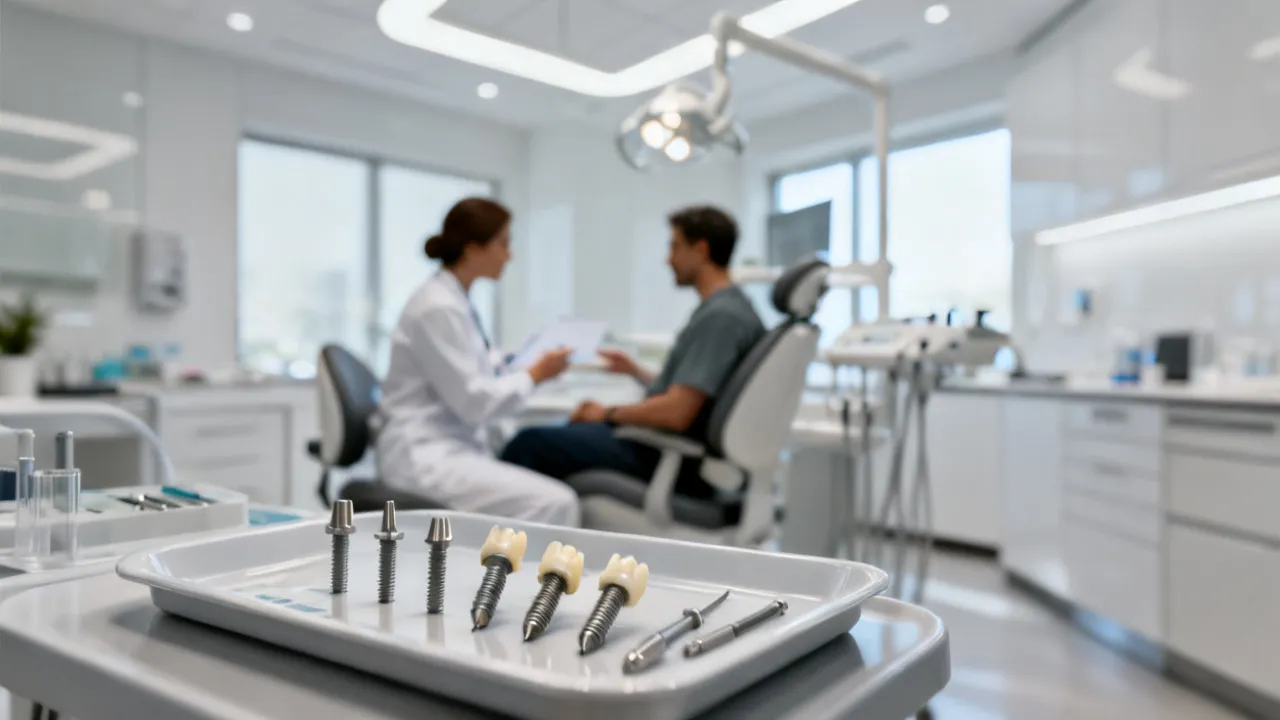
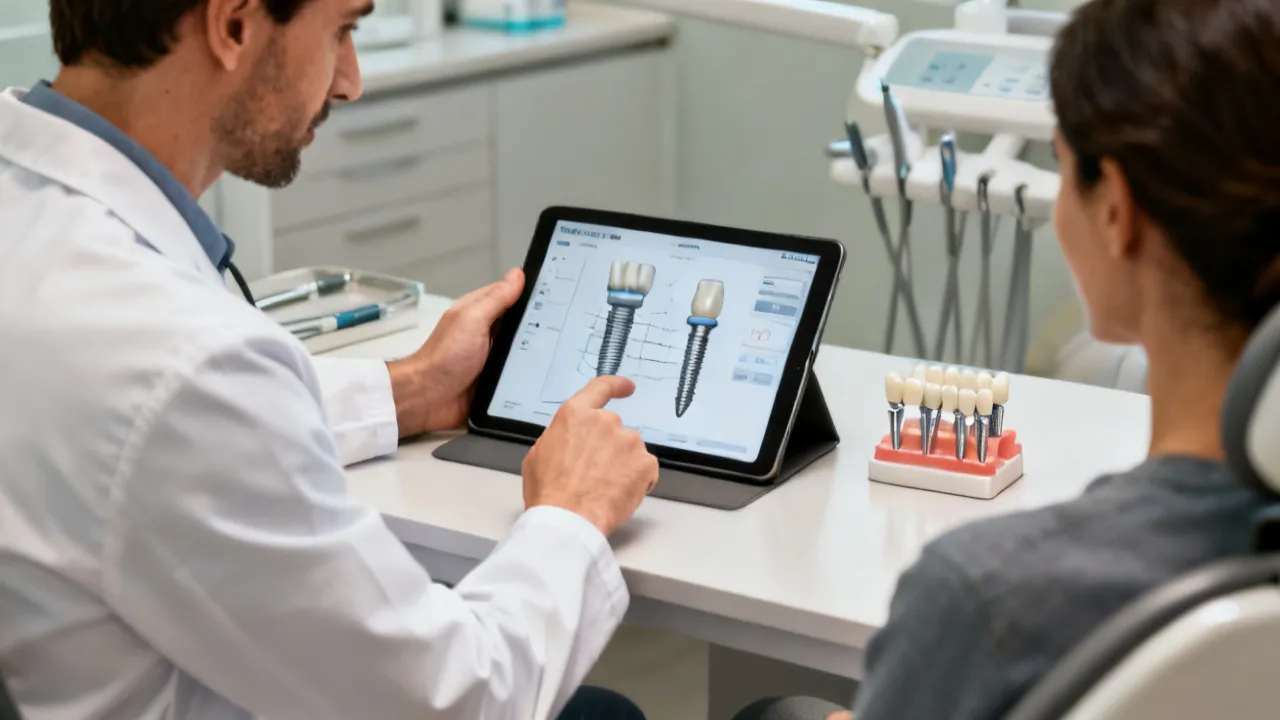
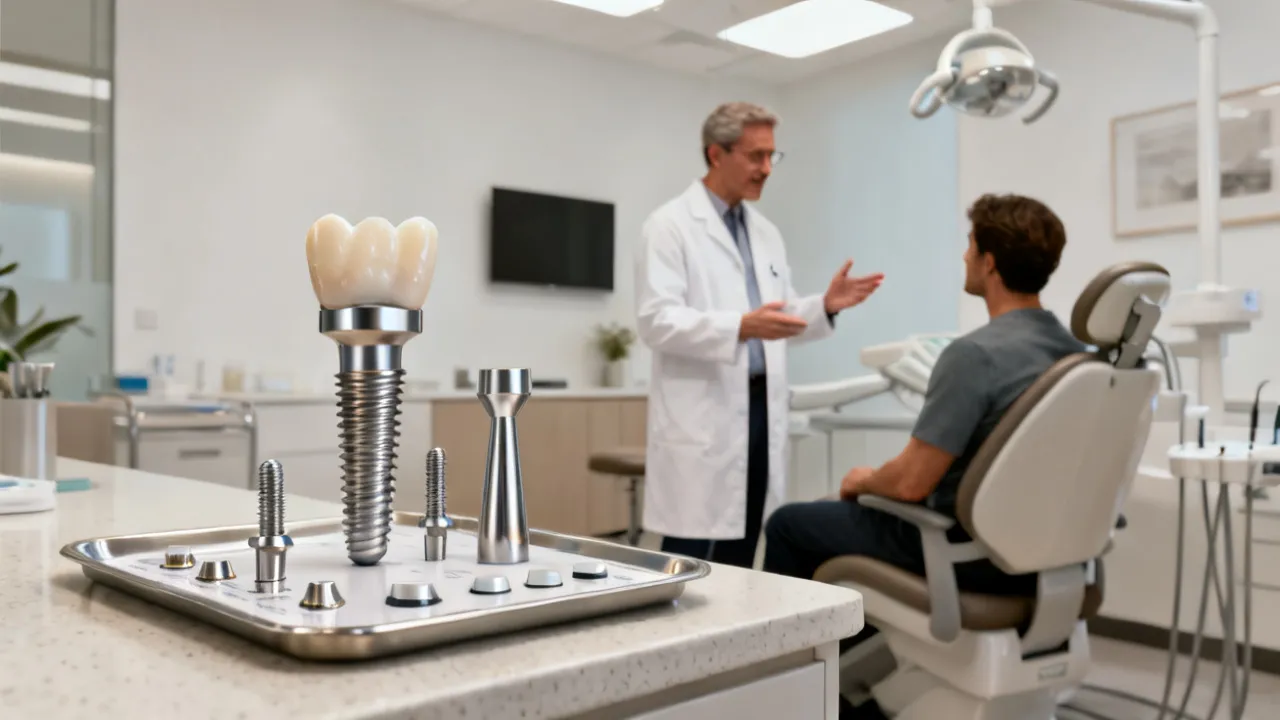
A dental implant typically consists of an implant fixture—commonly made from titanium (or sometimes a ceramic alternative)—placed into the jawbone. Over time, the implant integrates with the bone (osseointegration). After integration, an abutment connects the implant to the restoration, and then a crown (for a single tooth replacement), a bridge (for multiple missing teeth), or a full-arch prosthesis is attached.
When patients look for “low-cost implants,” they often focus on the fixture or headline surgical placement. But the total treatment cost is shaped by many components, including:
- Diagnostic work: dental exams, radiographs (and often CBCT scans), periodontal charting, bite assessment, and treatment planning. In some cases, guided-surgery workflows may require additional planning software or templates.
- Surgical complexity: bone quality and volume, need for bone grafting (for example, for horizontal or vertical ridge deficiencies), sinus lift procedures (in upper posterior regions where the sinus may limit bone height), and whether the case requires multiple implants.
- Immediate vs delayed protocols: whether immediate implant placement is possible after extraction, and whether immediate loading (placing the restoration right away) is clinically suitable. Immediate protocols may not be appropriate for every case.
- Implant system and materials: the brand/system choice, abutment type, and prosthetic component materials can change costs and sometimes influence warranty terms.
- Prosthetic design: the style and complexity of the restoration—implant-supported single crowns, multi-unit bridges, or full-arch solutions—plus the material choice for crowns (e.g., zirconia-based or other options).
- Anesthesia/sedation: whether you need local anesthesia only, conscious sedation, or other sedation options. Sedation can substantially affect price and logistics.
- Aftercare and follow-up: post-op visits, monitoring for healing and implant integration, and long-term peri-implant maintenance and professional cleanings.
- Time-to-restoration: staged treatment often means a longer calendar timeline, which can influence costs and how you plan work leave, travel, or child-care.
Because these variables differ from patient to patient, “low-cost” pricing without context can be misleading. A responsible professional clinic should document findings, explain tradeoffs, and outline alternatives. Alternatives might include: different implant timing, different prosthetic designs, removable interim restorations, or—when clinically appropriate—non-implant options.
Clinics that are truly committed to value should be able to explain why their approach is efficient and what is included, instead of only showing a low number that may exclude key steps.
4) What “low-cost dental implants” should mean (objectively)
In responsible dental practice, low-cost options usually relate to one or more of the following categories—often in combination:
- Operational efficiency: streamlined administrative processes, experienced teams, predictable scheduling, and standardized protocols that reduce unnecessary steps and overhead.
- Insurance-compatible planning: the ability to use insurance plan frameworks (when available) to reduce out-of-pocket costs for certain procedure components.
- Appropriate case selection: implant plans that match the patient’s anatomy and health, avoiding unnecessary procedures caused by poor planning or over-treatment.
- Transparent payment structures: installment options, flexible financing, or bundled treatment pricing that reflects the entire care pathway rather than a partial quote.
- Clear scope of services: written documentation of exactly what is included and what is not included.
From an expert standpoint, the ethical “low-cost” marker is transparency. That means clear scope of services, documented clinical rationale (why you are a candidate for a certain plan), a realistic healing and follow-up timeline, and specific maintenance guidance. “Low-cost” that comes with unclear scope, vague terms, or pressure to proceed without imaging or a diagnosis is not value—it’s risk.
Another objective concept is cost-effectiveness over time. A plan that appears cheaper upfront may become more expensive if it fails to account for likely additional procedures, poor prosthetic fit, insufficient maintenance planning, or inadequate follow-up documentation.
Therefore, the best “low-cost” approach is usually one that balances affordability with predictable outcomes and well-defined responsibilities for aftercare.
5) Expert perspective: how to evaluate implant information online without losing clinical rigor
The internet is full of helpful information, but it also contains marketing language that can blur the difference between education and promotion. When patients use online resources for “low-cost dental implants,” the primary risk is confusing advertising with medical evidence.
A balanced approach is to verify that any “low-cost” claim aligns with clinically relevant standards. Look for signals such as:
- Clinical screening standards: evidence of proper radiographic assessment, evaluation of gum health, and consideration of systemic factors (for example, diabetes control, smoking status, and medication history such as bisphosphonates or other bone-modifying drugs).
- Material and protocol disclosure: clear explanation of implant type, expected healing timeline, abutment selection, restoration material, and how the occlusion will be optimized.
- Outcome accountability: follow-up schedule details and peri-implant maintenance guidance that match the restoration style and patient risk factors.
- Written scope and itemization: itemized quotes with documentation of what’s included.
- Risk communication: discussion of potential complications (not to scare you, but to show realism), such as issues with osseointegration, nerve proximity concerns, or complications related to bone graft healing.
This is also where insurance planning tools and comparison platforms can help—when they encourage consumers to confirm clinical fit and understand coverage boundaries before committing to a procedure.
Online content can be valuable for learning what questions to ask, but your safety still depends on a licensed clinician who can interpret your anatomy and health profile. The most practical use of online resources is to create a checklist of topics to discuss during consultation.
For example, if a website emphasizes “low cost,” you should translate that marketing claim into clinical questions:
- What imaging will be used to plan my implant position?
- What implant system is proposed and why?
- What’s included in the fee—abutment, crown, anesthesia, follow-up visits?
- Is bone grafting required now or might it become necessary later?
- What is the maintenance schedule and who performs it?
Answering these questions is how you convert online education into clinical clarity.
6) Where the referenced websites fit (reframed as regional education)
Below is an objective comparison of how several websites position themselves to help patients understand dental implants, cost planning, or insurance navigation. Rather than assuming these are direct providers of care, they are best understood as information sources that may support decision-making, especially for patients searching in English-, Spanish-, or Portuguese-speaking contexts.
| Website focus | What it tends to cover |
|---|---|
| Dental Views (low-cost implant education) | General explanations of implant benefits, implant process overviews, and cost-related context |
| Atlantic Dental Group (service-based clinic info) | Clinic service descriptions (e.g., implants, orthodontics, emergency care) and appointment-related information |
| DentaVacation (dental tourism framework) | Dental procedure options abroad, cost comparisons, and travel/logistics considerations |
| ADHP-style dental plan information (insurance navigation) | How dental insurance plans may work, how to select coverage, and how to apply/use plans |
| Rockville Dental Arts (Spanish-language dental services) | Comprehensive clinic services with a Spanish-language patient experience |
| Union City Mini Dental Implants (mini-implant specialization) | Information focused on miniature implant solutions and suitability for smaller areas |
| Cigna (implant education for insured consumers) | Patient-friendly explanations of dental implants and related decision considerations |
| Rubi Odonto / Odontologia Velasco / DentalVidas (Portugal/Brazil-focused dental offerings & plans) | Local service descriptions or dental plan structures, including networks and emergency availability (where stated) |
source: [www.dentalviews.com](https://dentalviews.com/low-cost-dental-implants/), [www.atlanticdentalgrp.com](https://www.atlanticdentalgrp.com/), [www.dentavacation.com](https://www.dentavacation.com/), [rockvilledentalarts.com (ADHP-related insurance info page reference)](https://rockvilledentalarts.com/es/), [rockvilledentalarts.com/es](https://rockvilledentalarts.com/es/), [unioncityminidentalimplants.com/es](https://unioncityminidentalimplants.com/es/), [www.cigna.com (guide to dental implants)](https://www.cigna.com/es-us/knowledge-center/guide-to-dental-implants), [www.rubiodonto.com.br](https://www.rubiodonto.com.br/), [odontologiavelasco.com.br](https://odontologiavelasco.com.br/), [dentalvidas.com.br](https://dentalvidas.com.br/)
When you use these resources to guide your questions, you’re more likely to arrive at appointments with clarity. For instance:
- If you read general educational content about “low cost,” bring a list of cost-inclusion questions.
- If you read dental tourism frameworks, bring questions about follow-up continuity and post-procedure support.
- If you read insurance education, bring documents and ask how the plan applies to implant codes, waiting periods, and network status.
This reframing keeps the internet useful while preserving clinical rigor.
7) Step-by-step: how to get dental implants at low cost in English-, Spanish-, and Portuguese-speaking countries
Below is a structured pathway designed to help you reduce out-of-pocket expenses while maintaining clinical safety. The steps are consistent across regions, but the available options (insurance structures, clinic networks, or dental tourism models) may differ. The goal is not merely to spend less today, but to avoid “hidden” costs later that arise from incomplete scope, inadequate planning, or missed preventive maintenance.
7.1 Step 1: Confirm eligibility through a full clinical assessment
- Request an initial consultation and ask for diagnostic imaging. Depending on your case, imaging may include standard radiographs and, often, CBCT (cone beam CT) for three-dimensional planning.
- Discuss gum health. Healthy tissue and controlled periodontal disease are essential for long-term success. If gum disease is present, treatment may need to occur before implant placement.
- Review bone volume and anatomy. The clinician should explain whether bone grafting or other preparatory procedures are needed.
- Bring a list of medications and medical conditions (for example, blood sugar control for diabetes, smoking status, anticoagulants, and medication history such as bisphosphonates or other bone-related therapies).
- Ask about anesthesia/sedation options. If you are cost-sensitive, clarify what is included in the quote and whether sedation can be adjusted based on comfort and medical needs (without compromising safety).
Why this matters for “low cost”: the lowest quote is not always the safest plan. Avoid decisions that bypass assessment—because “skipping steps” can lead to extra procedures later, turning a low initial cost into a higher total cost.
Practical tip: if you speak Spanish or Portuguese and feel you might miss details, ask whether the clinic offers translated consultation materials or Spanish/Portuguese-speaking staff. Better understanding is not only about comfort; it improves informed consent and helps you follow aftercare instructions correctly.
7.2 Step 2: Build a complete “all-in” quote, not a partial quote
- Ask what is included in the price: implant placement, abutments, crown/prosthesis, anesthesia/sedation (if any), and follow-up visits.
- Request an itemized breakdown. “Implant package” language can hide exclusions such as imaging, bone graft materials, temporary restorations, or additional visits.
- Request a timeline that reflects healing and restoration phases. Dental implants often require staged healing, and understanding the calendar helps budgeting.
- Clarify warranty terms for components and workmanship. Warranty details can influence total value and your risk planning.
- Ask if the quote assumes no bone grafting and no additional complications. If so, discuss what happens if bone grafting becomes necessary.
Why this matters: two clinics may quote different “implant-only” prices, while the full treatment totals differ materially. The “low-cost” competitor might simply be quoting the surgical implant portion without the prosthetics or without the same diagnostic work.
Practical tip: bring the quotes to a follow-up appointment and ask the provider to compare side-by-side. If they can’t explain differences clearly, that may indicate poor transparency.
7.3 Step 3: Use Dentalplans.com (or equivalent insurance planning) to map coverage boundaries
- Identify whether restorative and/or surgical components have coverage in your plan. Some plans cover certain exams, extractions, or certain restorative procedures differently than implant placement itself.
- Check network rules (in-network vs out-of-network differences). If you go out of network, coverage may drop or require higher out-of-pocket costs.
- Ask whether preauthorization is required for implant-related procedures. If preauthorization is required, failing to obtain it can lead to denied claims.
- Confirm what documentation is needed for claims, including whether itemized billing and specific procedure descriptions/codes are required.
- Ask whether the plan provides any coverage for prosthetic restoration or for associated procedures such as bone grafting.
Even when insurance does not fully cover implants, it may reduce costs for parts of the overall workflow. For example, some plans may cover consultations, certain diagnostic services, or select restorative components depending on the plan design.
Make sure you receive written guidance or documentation of coverage rules. Verbal assurances can be unreliable, especially for complex procedures.
Practical tip: if you have to choose between waiting for coverage approval and moving forward quickly, ask your provider how long typical preauthorization takes, and whether interim solutions are available while claims are processed.
7.4 Step 4: Compare “low-cost models” responsibly
- Value clinics: look for centers with consistent protocols, transparent pricing, and clear written scope of care. Value does not mean “cheap.” It means predictable care delivered efficiently.
- Specialty approaches (including mini implants): in some markets, “mini” implant solutions exist. Confirm whether they meet your functional and anatomical needs. Ask about stability requirements and long-term maintenance expectations.
- Bundled care: package pricing that includes prosthetics and follow-up may reduce administrative cost and improve budgeting clarity. But you must still confirm what is included and what outcomes are expected.
- Prosthetic material choices: ask whether low-cost plans reduce cost by using lower-cost materials that may wear differently or require different maintenance.
- Time-to-treatment tradeoffs: some low-cost approaches may offer slower timelines or deferred components. Ensure you understand the sequence and what you can expect at each step.
For Spanish-language or Portuguese-language patients, clinic experiences and patient-facing explanations in local language can reduce misunderstandings and improve informed consent. This matters because you must understand instructions for oral hygiene, diet, wound care, medication adherence, and what symptoms require urgent contact.
Moreover, language access affects your ability to ask questions. When patients can communicate clearly, clinicians can tailor care—reducing the likelihood of avoidable issues and associated costs.
7.5 Step 5: Consider dental tourism only with strict standards
In certain cases, patients use dental tourism frameworks (for example, platforms like DentaVacation) to manage cost differences internationally. If you explore this route, you must treat it as a clinical and logistical project—not a simple trip.
To protect yourself financially and clinically, verify:
- Clinician credentials and the implant system used. Ask for the name of the surgical team, their experience with your case type, and the specific implant brands/components.
- What happens in case of complications. You should understand post-travel follow-up arrangements, emergency access, and whether the original clinic will review you remotely or in person if issues arise.
- What maintenance and monitoring you need after treatment. Peri-implant health requires consistent follow-up and professional cleaning schedules.
- Whether you will receive copies of your imaging and records. You need documentation for continuity of care at home.
- Who is responsible for prosthetic remakes if fit issues occur. Ask how remakes are handled and whether costs are covered.
Practical tip: if you travel for surgery, plan the trip to allow for the earliest healing checks (depending on your provider’s protocol). Do not assume that “everything is handled abroad” if you return home with responsibilities you were not advised about.
7.6 Step 6: Reduce good costs with maintenance planning
- Ask about recommended hygiene protocols and maintenance intervals. Maintenance varies depending on your risk level and restoration type.
- Discuss prosthetic materials and cleaning access. Some prosthetic designs may be easier to clean than others.
- Ask about professional maintenance frequency and what it includes (for example, professional cleaning, evaluation of gum tissue, assessment of bite/occlusion, and imaging when indicated).
- Ask whether you will receive guidance on long-term habits that affect success, such as smoking cessation support, controlling diabetes, and managing bruxism (clenching/grinding) if present.
Low cost achieved at the start can be negated by avoidable maintenance gaps. Peri-implant inflammation and long-term complications are often preventable through consistent care. Budget for maintenance as part of the implant plan, not as an afterthought.
8) Dental implant cost ranges (by country) for English-, Spanish-, and Portuguese-speaking countries
Because implant pricing varies by complexity and clinical need, the ranges below should be interpreted as reference points, not guarantees. Use them to guide your budget questions, not to finalize treatment. A quote may fall within a range but still include or exclude different components; that’s why itemization matters.
| Country | Currency | Price range (individual dental implants) |
|---|---|---|
| United States | USD ($) | $3,000 - $6,000 |
| United Kingdom | GBP (£) | £2,000 - £2,500 |
| Australia | AUD (AU$) | AU$3,500 - AU$6,500 |
| Canada | CAD (CA$) | CA$3,000 - CA$5,500 |
| Spain | EUR (€) | €1,500 - €2,500 |
| Chile | CLP (CLP$) | CLP$800,000 - CLP$1,500,000 |
| Mexico | MXN (MXN$) | $15,000 - $25,000 MXN |
| Colombia | COP (COP$) | $2,000,000 - $4,000,000 COP |
| Peru | PEN (S/) | S/ 3,000 - S/ 6,000 PEN |
| Argentina | ARS ($) | $80,000 - $150,000 ARS |
| Brazil | BRL (R$) | R$3,000 - R$8,000 BRL |
| Portugal | EUR (€) | €1,000 - €2,000 EUR |
To interpret these ranges more responsibly, ask each clinic two budget questions:
- “Does this include the crown/abutment/prosthesis, or is it implant placement only?”
- “Does this assume no bone grafting and no extra surgical steps?”
If you don’t ask those questions, two identical-looking prices might not represent the same total treatment plan.
9) Clinical pathways referenced across English-, Spanish-, and Portuguese-facing resources
Different regions often emphasize different patient touchpoints—insurance navigation in one place, clinic service transparency in another, language access in another—but the core clinical pathways remain consistent: diagnose carefully, plan prosthetics based on anatomy and bite, perform surgery safely, and maintain long-term peri-implant health.
9.1 English-speaking resources: clinic and insurance education
- Dental Views focuses on low-cost dental implant explanations and cost-context questions, which can help you understand what “low-cost” might mean and how to evaluate offers.
- Atlantic Dental Group provides clinic service information that can help patients understand available options such as implants and emergency care, potentially assisting with logistics and appointment planning.
9.2 Spanish-facing resources: language access and insurance education
- Rockville Dental Arts offers Spanish-language clinic access and describes services including implants, cleaning, orthodontics, whitening, and emergency care—useful for patients who need clear communication.
- Union City Mini Dental Implants highlights mini-implant specialization for cases involving smaller areas, which can influence treatment selection when clinically appropriate.
- Cigna’s knowledge center provides an educational overview of dental implants for consumers, including concepts that can help patients discuss options with providers in a structured way.
9.3 Portuguese-facing resources: local clinical services and plan networks
- Rubi Odonto is described as offering orthodontics, whitening, and dental implants within a local Brazilian setting.
- Odontologia Velasco provides implant and restorative services and emphasizes the use of modern technologies, which may matter when considering guided workflows or updated protocols (where applicable).
- DentalVidas is described as an organization offering dental plans, including family/employer options and emergency availability—useful if you are comparing coverage structures alongside implant affordability.
Across all languages, the best way to use these resources is to convert them into questions you bring to your appointment. A language-accessible conversation improves your ability to understand your plan, which in turn improves compliance with aftercare—supporting long-term success.
10) FAQs about Dentalplans.com and low-cost dental implants
Q1: Does Dentalplans.com directly provide dental implants?
Dentalplans.com is generally positioned as a consumer-facing resource for dental planning and related coverage understanding. Implant provision typically occurs through licensed dental clinics and specialists. Use the platform to support budgeting and plan selection, then confirm clinical details with a provider.
Q2: Why do dental implant prices vary so much between countries?
Prices can differ due to labor costs, overhead, differences in clinic networks, insurance structures, implant system pricing, and the complexity of typical case requirements in a region. Even within one country, the need for grafting, the number of implants, and prosthetic design can change totals dramatically.
Q3: Are “mini dental implants” always cheaper?
Mini-implant approaches can be cost-favorable in selected scenarios, but they are not universally appropriate. A clinician must evaluate bone quality, load distribution, and stability needs before recommending any implant design. If mini implants are suggested, ask about long-term expectations and maintenance requirements for your specific prosthetic plan.
Q4: How can I tell if a “low-cost implant” offer includes everything?
Request an itemized quote covering diagnostics, implant placement, abutment, prosthetic restoration, sedation/anesthesia (if any), and follow-up visits. Also ask about warranty terms and what is included in post-procedure care. If a clinic will not provide itemization, treat that as a transparency red flag.
Q5: Can insurance lower the cost of dental implants?
In many markets, dental insurance may cover certain components or reduce some out-of-pocket costs depending on the plan design and network rules. Coverage for implants is not universal, and some plans exclude implant placement entirely while covering certain associated services. Always check benefits details and, where applicable, preauthorization requirements.
Q6: Is dental tourism a reliable way to reduce implant costs?
It can reduce costs for some patients, but reliability depends on clinician credentials, implant system choices, complication planning, and aftercare arrangements. If you pursue it, prioritize transparent clinical protocols and clear follow-up commitments. Ask for records transfer and post-travel support plans before you book.
Q7: What should I do if my quote seems too low compared with others?
Ask what is excluded. For example: Is the crown included? Is grafting assumed to be unnecessary? Are temporary restorations included? Is sedation included? Extremely low prices can reflect simplified assumptions or incomplete scopes. A responsible clinic will clarify and provide a complete plan or revised quote that matches your needs.
Q8: What ongoing maintenance is important after implants?
Good success depends on oral hygiene, regular professional maintenance, and monitoring for peri-implant conditions. Ask your provider for a maintenance schedule and hygiene recommendations tailored to your restoration type and risk factors (for example, history of gum disease, smoking, or bruxism). Maintenance should be planned from day one.
Q9: Are there hidden “low-cost” risks I should watch for?
Common hidden risks include: incomplete diagnostic imaging, unclear scope for prosthetic restoration, lack of written timelines, absence of a maintenance plan, unclear warranty terms, and pressure to proceed quickly without discussing complications or medical considerations. The most protective approach is to demand clarity in writing before you commit.
Q10: If I have diabetes or take specific medications, can I still get low-cost implants?
Often, people with diabetes or specific medication histories can still receive implants, but the plan must be individualized and clinically safe. Medical conditions can affect healing and osseointegration. If you are on bone-modifying medications, the clinician may require additional risk assessment and coordination depending on your drug type and duration. Your quote may differ because safety steps may be required.
11) Practical checklist before you commit
- Get imaging results and a documented diagnosis. Don’t proceed without understanding your bone and gum status.
- Confirm the implant system and prosthetic plan. Ask for the brand/system name and restoration material details where applicable.
- Ask for an itemized, all-in quote with a timeline. Ensure diagnostics, implant placement, abutment, crown/prosthesis, anesthesia/sedation, and follow-up are covered or clearly excluded.
- Discuss whether bone grafting might be needed now or later and how that would change cost.
- Use Dentalplans.com to understand plan boundaries and network options (then verify with your insurer and the clinic). Request preauthorization steps if needed.
- Plan for maintenance from day one. Ask for the maintenance schedule and what each visit includes.
- Confirm warranty and remake policies for prosthetic components and workmanship.
- Ask who will handle post-procedure concerns if you experience pain, swelling, fever, or unusual symptoms.
- If language is a barrier, confirm translated materials or bilingual support to improve understanding of aftercare instructions.
12) Conclusion: use Dentalplans.com as a budgeting lens, not a substitute for clinical evaluation
Dental implant affordability is achievable for many patients, but it requires a disciplined process: clinical eligibility first, complete budgeting second, and insurance planning alongside transparent comparisons. Dentalplans.com can help consumers organize coverage considerations, network options, and budgeting questions, while specialized clinic consultations translate “low-cost” concepts into a safe, personalized implant pathway.
Ultimately, the most valuable “low-cost” plan is one that is complete: it includes the clinical steps needed for success, the prosthetic components needed for function, and the follow-up care needed for long-term peri-implant health. If you use online planning tools as a starting point—then validate details through a licensed professional—you give yourself the best chance of achieving both affordability and confidence in the outcome.
Disclaimer
1) The above information comes from online resources, and the data is as of October 2023. 2) Dental implant prices are for reference only and may vary by region, clinic and doctor.
Reference links
[Dentalplans.com](https://www.dentalplans.com)
[Dental Views – Low Cost Dental Implants](https://dentalviews.com/low-cost-dental-implants/)
[Atlantic Dental Group](https://www.atlanticdentalgrp.com/)
[DentaVacation](https://www.dentavacation.com/)
[Rockville Dental Arts (Spanish)](https://rockvilledentalarts.com/es/)
[Union City Mini Dental Implants (Spanish)](https://unioncityminidentalimplants.com/es/)
[Cigna – Guide to Dental Implants (Spanish)](https://www.cigna.com/es-us/knowledge-center/guide-to-dental-implants)
[Rubi Odonto](https://www.rubiodonto.com.br/)
[Odontologia Velasco](https://odontologiavelasco.com.br/)
[DentalVidas](https://dentalvidas.com.br/)